Authentic Bouillabaisse (The Marseille Method, Done Right)
A traditional Provençal fish stew from the south of France — saffron-stained broth, fennel, orange zest, and a mix of fresh seafood cooked in a single pot. We broke down the technique to a foolproof 55-minute method that delivers restaurant depth without the restaurant complexity.
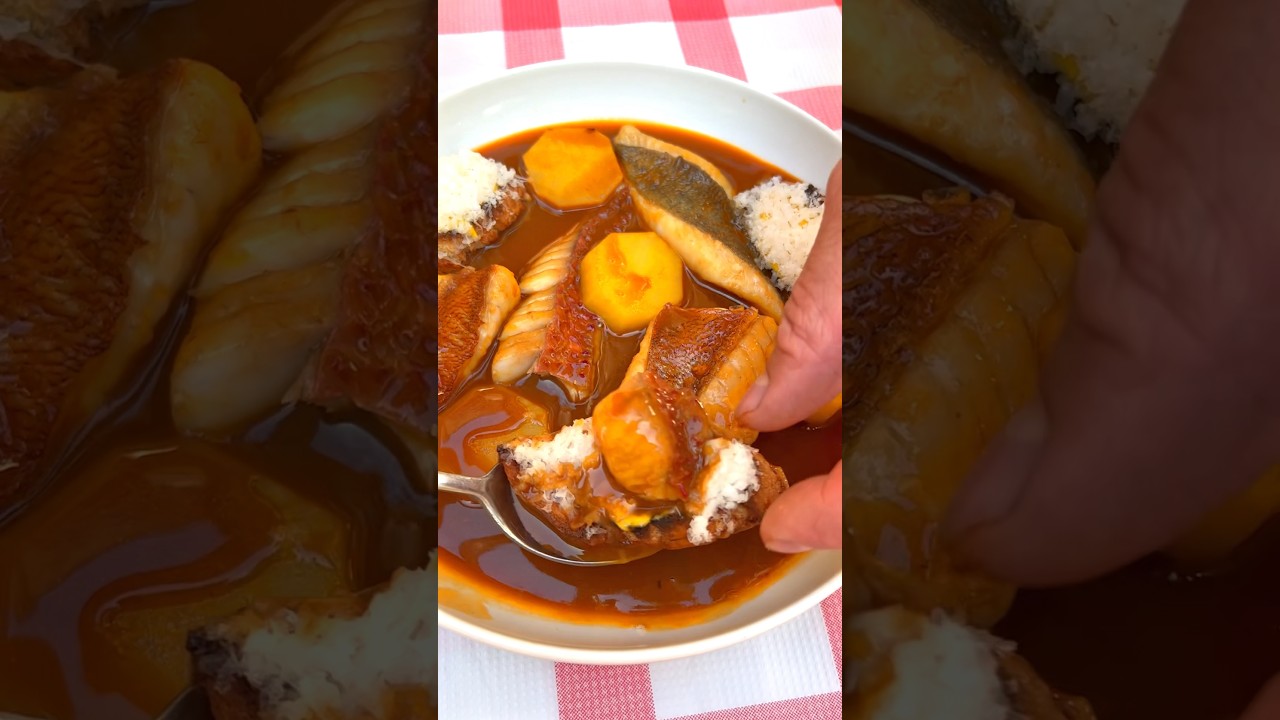
“Most home cooks are afraid of bouillabaisse. They shouldn't be. The intimidating reputation comes from restaurants that spend three days making stock and charge accordingly. The actual technique — aromatics, broth, saffron, seafood in sequence — takes under an hour and produces something that tastes like it belongs on a dock in Marseille. The only real skill is adding the seafood in the right order and knowing when to stop cooking it.”
Why This Recipe Works
Bouillabaisse is one of those dishes that restaurants have convinced home cooks they cannot make. Three-day stocks. Obscure fish varieties. A rouille that requires a mortar and forty-five minutes of arm work. The mythology serves the restaurant industry well. The reality is a one-pot fish stew with a 55-minute execution window, a defined sequence of steps, and exactly three techniques worth knowing.
The Aromatic Foundation
Every great bouillabaisse starts the same way: olive oil, onion, garlic, fennel, carrot, cooked until they're soft and slightly sweet. This is not a shortcut step. The vegetables are the structural flavor of the dish — the broth they contribute is what distinguishes bouillabaisse from a watery tomato soup with seafood dropped in. Fennel is the essential ingredient here. Its mild anise character becomes almost undetectable after cooking but adds a background note that makes the broth taste distinctly French and Mediterranean rather than generic.
The tomatoes go in next and cook for two minutes — not to soften them, but to drive off some of their raw acidity and concentrate their natural sweetness. San Marzano tomatoes are worth the premium. Their lower water content and thinner skins mean you get more tomato flavor per ounce than standard crushed tomatoes, and they won't water down the broth you're building.
Saffron Is Not Optional
There is a version of this dish that substitutes turmeric for saffron. It is not bouillabaisse. Turmeric gives you color. Saffron gives you color plus a specific floral, slightly honeyed, almost medicinal depth that is the defining aroma of the finished dish. You will smell it the moment you open the pot at the table.
The technique matters as much as the ingredient. Dropping saffron threads directly into four cups of simmering broth is wasteful — the threads need concentrated warm liquid and time to release their pigment and volatile compounds. One minute in a small cup of warm broth is all it takes, but skip that step and you're paying for color you won't see and flavor you won't taste.
Sequence Is Everything
The reason most people overcook seafood in soups is that they treat it like a stew — everything in, lid on, walk away. Bouillabaisse does not work that way. White fish needs four minutes. Shrimp needs three. Mussels need four to five in a covered pot. These are sequential additions, not simultaneous ones. Start with the fish, let it turn opaque at the edges, then add the shrimp. When the shrimp begins to curl, add the mussels and cover. By the time the mussels are fully open, everything else is cooked perfectly.
The shrimp tells you more than any timer. A loose C-shape means done. A tight O-shape means overcooked and rubbery with no recovery. Watch the shrimp, not the clock.
The 15-Minute Simmer
After the broth, wine, saffron, and aromatics come together, the recipe calls for 15 minutes of uncovered simmering before any seafood enters the pot. This step is where the dish goes from assembly to cooking. The alcohol cooks off the wine. The orange zest releases its oils into the broth. The Provençal herbs hydrate and infuse. The tomato and fennel marry. Cut this to five minutes and you'll taste every component separately. Let it run the full fifteen and you get something unified — a broth with depth, warmth, and a character that tastes like it required far more work than it did.
A Dutch oven is the right vessel for this job. Its thick walls hold heat evenly so the simmer stays gentle across the entire base rather than boiling hard in the center and barely moving at the edges. Even heat means even extraction, and even extraction is what turns a list of ingredients into a coherent soup.
What You're Really Making
Bouillabaisse is broth-first cooking. The seafood is the occasion, but the broth is the achievement. If your broth is deep, aromatic, and balanced — saffron-gold, tasting of the sea with fennel and orange in the background — the rest of the dish falls into place automatically. Everything else is sequencing. Get the broth right, add the proteins in order, serve it hot in shallow bowls with good bread. That's the whole thing.
Where Beginners Mess This Up
Before we start, read this. These are the 4 reasons your authentic bouillabaisse (the marseille method, done right) will fail:
- 1
Adding all the seafood at once: Fish, shrimp, and mussels have different cook times. White fish needs 4 minutes, shrimp needs 3, mussels need 4-5. Dump them in together and you get rubbery shrimp and overcooked fish before the mussels have even opened. Stagger them in sequence and every protein finishes at the same moment.
- 2
Skipping the saffron bloom: Saffron threads added directly to a large pot of liquid contribute almost nothing — the flavor compounds don't have time to release before they're diluted. You must steep the threads in a small cup of warm broth for at least one minute before adding. This concentrates the extraction and gives the broth its signature color and floral depth.
- 3
Rushing the base simmer: The 15-minute uncovered simmer before the seafood goes in is not optional preamble. It's where the tomato, wine, fennel, and orange zest cook down and merge into a coherent broth. Cut it short and you get a disjointed soup that tastes like its parts. Let it go and you get something unified and complex.
- 4
Serving mussels that didn't open: Any mussel that stays closed after 4-5 minutes of covered cooking is dead and should be discarded. This is not a texture preference — it's a food safety rule. Do not try to pry them open. Throw them out and move on.
The Video Reference Library
Want to see it in action? Here are the exact videos we analyzed and combined to build this foolproof recipe translation:
The primary reference for this recipe. Clear walkthrough of the aromatic base, saffron technique, and seafood sequencing. Especially useful for understanding the visual cues that tell you when each protein is done.
🛠️ Core Equipment
- Large Dutch oven or heavy-bottomed potYou need enough volume for 4+ cups of broth plus all the seafood without crowding. A [Dutch oven](/kitchen-gear/review/dutch-oven) also distributes heat evenly so the base doesn't scorch while the top of the broth barely simmers.
- Small ramekin or cup for saffron bloomNon-negotiable. Blooming the saffron in a small volume of warm broth concentrates the extraction before it hits the pot. A tablespoon of warm liquid is all you need.
- Shallow wide bowlsBouillabaisse is a presentation dish. Wide shallow bowls let you arrange the seafood visually and ladle the broth over the top so guests see the full composition before they eat.
Authentic Bouillabaisse (The Marseille Method, Done Right)
🛒 Ingredients
- ✦3 tablespoons extra virgin olive oil
- ✦1 large yellow onion, finely diced
- ✦4 cloves garlic, minced
- ✦2 medium carrots, cut into thin rounds
- ✦1 fennel bulb, thinly sliced
- ✦1 can (28 ounces) crushed San Marzano tomatoes
- ✦4 cups low-sodium fish or vegetable broth
- ✦1 cup dry white wine
- ✦1 teaspoon saffron threads
- ✦2 bay leaves
- ✦1 teaspoon dried Provençal herbs
- ✦Zest of 1 orange
- ✦1 pound firm white fish fillets, cut into 2-inch chunks
- ✦12 ounces large shrimp, peeled and deveined
- ✦8 ounces mussels, cleaned and debearded
- ✦1 teaspoon kosher salt
- ✦1/2 teaspoon freshly ground black pepper
- ✦Fresh parsley, chopped for garnish
- ✦Crusty whole grain bread for serving
👨🍳 Instructions
01Step 1
Heat extra virgin olive oil in a large [Dutch oven](/kitchen-gear/review/dutch-oven) over medium-high heat until it shimmers, about 1 minute.
02Step 2
Add the finely diced onion and sauté until softened and translucent, approximately 4 minutes, stirring occasionally.
03Step 3
Stir in the minced garlic and cook for 30 seconds until fragrant. Do not let it brown.
04Step 4
Add the sliced fennel and carrot rounds. Sauté for 5 minutes until the vegetables begin to soften.
05Step 5
Pour in the crushed tomatoes and stir to combine with the aromatics. Cook for 2 minutes to concentrate the flavors.
06Step 6
Add the fish broth and white wine. Bring to a gentle boil, about 3-4 minutes.
07Step 7
Steep the saffron threads in a small cup of warm broth for 1 minute, then add the infusion to the pot along with bay leaves, Provençal herbs, and orange zest.
08Step 8
Reduce heat to medium-low and simmer uncovered for 15 minutes to let the flavors meld.
09Step 9
Season with kosher salt and freshly ground black pepper. Taste and adjust.
10Step 10
Gently nestle the white fish chunks into the simmering broth, spacing them apart so they cook evenly. Cook for 4 minutes until they begin to turn opaque.
11Step 11
Add the shrimp and stir gently. Continue simmering for 3 minutes until the shrimp turns pink and begins to curl.
12Step 12
Add the cleaned mussels, cover partially with a lid, and cook for 4-5 minutes until the shells open wide.
13Step 13
Discard any mussels that have not opened.
14Step 14
Ladle into shallow bowls, distributing the seafood and vegetables evenly. Garnish generously with fresh chopped parsley. Serve immediately with crusty bread.
Nutrition Per Serving
Estimates based on standard preparation. Adjustments alter macros.
🔄 Substitutions
Instead of Dry white wine...
Use Low-sodium broth with 2 tablespoons lemon juice
Slightly less complex flavor but maintains the acidity that brightens the broth. A good option for those avoiding alcohol without compromising the structure of the base.
Instead of White fish fillets and shrimp...
Use Wild-caught salmon and halibut
Richer, more buttery flavor with significantly higher omega-3 content. Increases anti-inflammatory benefit. Halibut holds its shape well under heat; salmon flakes more aggressively, so handle gently.
Instead of Crusty white bread...
Use Gluten-free or sprouted grain bread
Better for blood sugar management and gut health. Sprouted grain provides fiber that standard white bread cannot. The bread's role is to soak up broth — any dense, rustic loaf works.
Instead of Regular salt...
Use Himalayan pink salt with fresh lemon juice added at the end
Reduces overall sodium load while the lemon adds brightness that aids digestion. Add lemon juice after the heat is off to preserve its fresh character.
🧊 Storage & Reheating
In the Fridge
Store leftover broth separately from the seafood for up to 2 days. The broth keeps well; the seafood does not. Reheat the broth, add fresh seafood if desired, and cook to order.
In the Freezer
The broth (without seafood) freezes well for up to 2 months. Freeze flat in zip-lock bags for efficient storage. Thaw overnight in the fridge and add fresh seafood when reheating.
Reheating Rules
Reheat the broth gently over medium-low heat. If reheating with the original seafood, warm only until just heated through — 2-3 minutes maximum. Overheated shrimp and fish turn rubbery with no recovery.
❓ Frequently Asked Questions
What fish is best for bouillabaisse?
Firm white fish that holds its shape under heat — cod, halibut, sea bass, or monkfish all work well. Avoid delicate fish like tilapia or sole that fall apart before the mussels have time to open. The traditional Marseille version uses locally caught rock fish, but any firm, fresh white fish is a valid substitute.
Do I have to use saffron?
Saffron is what makes bouillabaisse bouillabaisse. It's not decorative. A pinch of turmeric gives you color but none of the floral, slightly metallic depth that saffron contributes to the broth. If saffron is genuinely unavailable, the dish is still good — it's just not the same dish. Budget for it.
Why did my mussels stay closed?
Mussels that don't open after 4-5 minutes of covered cooking are dead and unsafe to eat. Discard them without attempting to open them. Fresh, live mussels will open when exposed to steam heat. If more than a few stayed closed, your mussels may not have been fresh when purchased.
Can I make the broth ahead of time?
Yes — and it's the smart move for dinner parties. Build the entire base through the 15-minute simmer, then cool and refrigerate for up to 24 hours. When ready to serve, bring back to a simmer and add the seafood in sequence. The broth actually deepens slightly overnight.
What is rouille and how do I make it?
Rouille is the traditional Provençal accompaniment — a thick, garlicky, saffron-spiked mayonnaise that you spread on toasted bread and float in the bowl. Blend 2 egg yolks, 3 garlic cloves, a pinch of saffron, 1 tablespoon lemon juice, and 1/2 cup olive oil until emulsified. Season with salt. It takes 3 minutes and elevates the dish dramatically.
Can I use frozen seafood?
Frozen works, but thaw it completely in the refrigerator before cooking and pat everything dry with paper towels before it goes in the pot. Excess water from frozen seafood dilutes the broth and steams the proteins instead of poaching them gently. Dry seafood finishes more evenly and maintains better texture.
The Science of
Authentic Bouillabaisse (The Marseille Method, Done Right)
We turned everything on this page into a beautiful, flour-proof PDF cheat sheet. Print it out, stick it to your fridge, and never mess up your authentic bouillabaisse (the marseille method, done right) again.
*We'll email you the high-res PDF instantly. No spam, just perfectly cooked meals.
AlmostChefs Editorial Team
We translate the internet's most popular cooking videos into foolproof, beginner-friendly written recipes. We analyze multiple methods, test them in our kitchen, and engineer a single "Master Recipe" that gives you the best possible result with the least possible stress.