Perfect Korean Bossam (The Three-Timing Method)
Melt-in-your-mouth boiled pork belly wrapped in fresh leaves with fermented condiments. We broke down the exact timing techniques used by professional bossam restaurant owners — when to add the meat, when to cover the pot, and when to kill the heat — to deliver tender, odor-free results every time.

“Bossam looks simple on paper: boil pork, wrap it in leaves, eat. But walk into any decent bossam restaurant and the difference is immediate — the meat is so tender it collapses, with no trace of gamey odor and a subtle complexity in the broth that you can't place. The secret isn't a special ingredient. It's three timing decisions that most home cooks get wrong. We extracted the method directly from the transcript of a professional bossam restaurant owner and reverse-engineered every step.”
Why This Recipe Works
Bossam is a timing dish. That's not a figure of speech — the professional who developed this method explicitly frames the entire recipe around three moments that determine whether the pork is extraordinary or mediocre. Most home recipes treat bossam as a braise-and-serve situation. They are missing the architecture.
The Blood Soak Nobody Does
The pork belly you buy comes packaged in its own blood water. That pooled liquid is the primary source of the gamey odor that makes people think they don't like pork. Two minutes of rinsing under cold water followed by a 5-10 minute cold soak draws it out before it ever enters the broth. Restaurants do this automatically with every delivery. Home cooks skip it because the recipe doesn't emphasize it. The soak is not optional — it is step zero.
Boiling Water Entry
The first timing decision: the broth must be at a full rolling boil when the pork goes in. This is protein science. When raw meat hits boiling liquid, the surface proteins denature instantly, forming a continuous seal across the entire exterior. This seal does not prevent flavor from penetrating — the long simmer handles that — but it does prevent the internal juices from leaching out into the water. Cold-water start produces flavorful broth and drier pork. Boiling-water start produces milder broth and dramatically juicier pork. You are cooking pork to eat, not broth to drink.
The Soju Window
After the broth returns to a boil following the meat's addition, you add soju and leave the pot uncovered for exactly 5 minutes. This is the second timing decision. Pork belly contains volatile sulfur compounds — the same compounds responsible for that distinct gamey note that clings to the meat and to the air above the pot. Soju's ethanol bonds with these compounds and carries them out of the pot as evaporating steam. The 5-minute open window is the purge. Cover the pot early and those compounds condense back into the broth and reabsorb into the meat surface. The soju trick only works if you let the steam escape.
Gentle Heat, Then Nothing
Once the lid goes on, the heat drops to the lowest setting that maintains 보글보글 — lazy, small bubbles, not a vigorous boil. The physics: at a hard boil, water molecules move with enough force to continuously agitate and compress the meat fibers. Over 40 minutes, that mechanical action produces toughness that no amount of rest time can reverse. A heavy-bottomed pot matters here specifically because it holds heat evenly at low settings without hot spots. Thin pots create localized high-heat zones at the base that boil aggressively even on a low flame setting.
After 40 minutes, the heat turns off and the lid stays on for 10 more minutes. This is the residual steam rest. The internal temperature of the broth is still above 85°C when the flame cuts. Over 10 minutes, that heat penetrates deeper into the center of the pork while the trapped moisture works its way into the fibers. Open the lid at minute 41 and you forfeit this — the top surface cools immediately and seals, leaving the center slightly drier than it should be.
The Apple Is Not Optional
Every professional bossam broth recipe contains one ingredient that home versions skip: a halved apple. Apple contains malic acid, which contributes gentle tenderizing activity during the long simmer. But the more important contribution is aromatic — apple's volatile esters diffuse into the broth and from there into the pork, producing a subtle, almost imperceptible fragrance that makes the finished meat taste cleaner and more refined. You will not taste apple in the finished dish. You will taste its absence if you leave it out.
Serve It Right
Bossam is not pork with a side salad. It is a composed bite: a leaf of fresh lettuce or perilla, a slice of pork, a pinch of ssamjang, a piece of kimchi. The fermented sharpness of kimchi against the mild, slightly sweet pork is the entire flavor equation. The leaf brings cool freshness and a structural wrapper. Each element has a role. Eat it as intended and you understand immediately why this has been a fixture of Korean communal dining for centuries.
Where Beginners Mess This Up
Before we start, read this. These are the 4 reasons your perfect korean bossam (the three-timing method) will fail:
- 1
Adding meat to cold or warm water: The broth must be at a full rolling boil before the pork goes in. Cold water start causes the meat's surface proteins to seize slowly, allowing the juices to leach out into the water. Boiling water flash-seals the surface in seconds, trapping the moisture inside. This is the difference between bland, dry pork and pork that stays juicy all the way through.
- 2
Covering the pot immediately after adding soju: After you pour in the soju, the pot needs 5 minutes uncovered. This is a deliberate purge window — the alcohol carries the volatile gamey compounds out of the broth as steam. Lid it immediately and those compounds get trapped and reabsorbed into the meat. Five minutes open, then cover. Not negotiable.
- 3
Simmering on high heat: Strong boiling agitates the meat fibers continuously, causing them to contract and tighten. You want just a gentle bubbling — the Korean term is 보글보글 (bogeul bogeul). This low, steady heat keeps the collagen converting slowly to gelatin without the protein fibers seizing up. High heat produces tough pork every time.
- 4
Skipping the resting steam: After 40 minutes of simmering, you turn off the heat and leave the lid on for 10 more minutes. This isn't optional. The residual heat and trapped moisture penetrate deeper into the meat fibers, producing a texture that a hard simmer alone cannot achieve. Open the lid early and the top half of the pork will be noticeably drier than the bottom.
The Video Reference Library
Want to see it in action? Here are the exact videos we analyzed and combined to build this foolproof recipe translation:
🛠️ Core Equipment
- Large heavy-bottomed pot with tight-fitting lidNeeds to hold 1.5 liters of water plus the pork and all aromatics comfortably. The heavy base distributes heat evenly so the broth maintains a consistent gentle simmer without hot spots that could toughen the meat.
- Large container for soakingYou need enough room to fully submerge the pork in fresh water for the blood-removal soak. A mixing bowl or stockpot works. This step directly affects the final odor level of the finished dish.
- Aluminum foil (for storage)Wrapping the cooked pork immediately in foil while it rests traps moisture during cooling. Skip this and the outer surface dries out as it cools, which changes the texture when you reheat.
- Sharp slicing knifeClean slices matter for texture. A dull knife tears the meat fibers instead of cutting them, which affects mouthfeel. The zigzag cut technique only works cleanly with a sharp blade.
Perfect Korean Bossam (The Three-Timing Method)
🛒 Ingredients
- ✦600g (1 geun) pork belly, whole slab for boiling (수육용 삼겹살)
- ✦1.5 liters water
- ✦3 tablespoons doenjang (Korean fermented soybean paste) (된장)
- ✦3 tablespoons ganjang (Korean soy sauce) (진간장)
- ✦5 whole dried red chili peppers (건고추)
- ✦1 tablespoon whole black peppercorns (통후추)
- ✦1 apple, stem and seeds removed, halved (사과)
- ✦1 whole onion, unpeeled and uncut (양파)
- ✦1 large green onion stalk, cut to fit the pot (대파)
- ✦10 cloves garlic, whole (통마늘)
- ✦1/2 cup soju (소주)
- ✦Fresh lettuce or perilla leaves, for wrapping
- ✦Kimchi and ssamjang, for serving
👨🍳 Instructions
01Step 1
Rinse the pork belly slab under cold running water, gently rubbing the surface until the water runs mostly clear of blood.
02Step 2
Submerge the rinsed pork in a large container of fresh cold water. Let it soak for 5-10 minutes.
03Step 3
While the pork soaks, prepare the aromatics: halve the apple and remove the stem and seeds. Leave the onion completely whole and unpeeled. Cut the green onion to fit your pot. Peel the garlic but leave the cloves whole.
04Step 4
Pour 1.5 liters of water into a large heavy-bottomed pot. Add the doenjang, ganjang, dried chili peppers, black peppercorns, apple halves, whole onion, green onion, and garlic.
05Step 5
Bring the broth to a full rolling boil over high heat. Do not add the pork yet.
06Step 6
Remove the soaked pork from the water, drain briefly, and add it to the boiling broth. The boiling will subside. Wait until the broth returns to a full rolling boil.
07Step 7
Once the broth is back to a full boil, pour in the soju. Leave the pot uncovered and maintain the boil for 5 minutes.
08Step 8
After 5 minutes, cover the pot with a tight-fitting lid. Reduce the heat to the lowest setting that maintains a gentle, steady bubbling simmer.
09Step 9
Simmer covered on low heat for 40 minutes. Do not lift the lid.
10Step 10
After 40 minutes, turn off the heat completely. Leave the lid on and let the pork rest in the residual steam for 10 minutes.
11Step 11
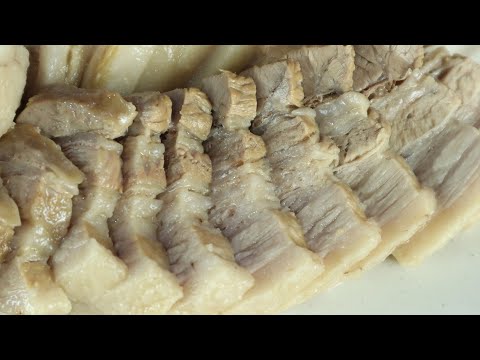
Remove the pork from the broth. It should be pale, extremely tender, and visibly moist.
12Step 12
Slice the pork against the grain. For a more interesting, slightly chewy texture, slice in a zigzag pattern following the natural layers. For maximum tenderness, slice straight through in a single clean cut.
13Step 13
Serve immediately with fresh lettuce or perilla leaves, kimchi, and ssamjang for wrapping.
Nutrition Per Serving
Estimates based on standard preparation. Adjustments alter macros.
🔄 Substitutions
Instead of Doenjang...
Use White miso
Lower salt content and milder fermentation character. Use the same quantity but expect a subtler broth — the bossam flavor will be present but less assertive. Korean doenjang has a stronger, earthier profile than Japanese miso.
Instead of Soju...
Use Dry sake or Shaoxing wine
Both contain alcohol that performs the same gamey-compound purge function. Sake produces a slightly cleaner result. Shaoxing adds a faint sweetness. Either works. Clear rice wine (미림 without sugar) is also a solid option.
Instead of Dried red chili peppers...
Use Chili seeds in a mesh bag
Same heat and flavor contribution, easier to remove cleanly from the broth. The restaurant owner specifically endorses this swap. A mesh tea ball works perfectly.
Instead of Pork belly...
Use Pork shoulder (Boston butt)
Lower fat content produces a leaner result. Requires the same cooking time but the texture will be slightly firmer. Still excellent — some prefer it. Not traditional, but functional.
🧊 Storage & Reheating
In the Fridge
Wrap the whole cooked slab tightly in aluminum foil while still warm, then refrigerate once cool. Keeps for up to 3 days. The flavor improves on day two as the aromatics settle further into the meat.
In the Freezer
Slice into portions, wrap each in foil, and freeze for up to 2 months. Thaw overnight in the refrigerator — never at room temperature, as the fat texture degrades.
Reheating Rules
Place the foil-wrapped portion in a steamer or on a rack over simmering water for 8-10 minutes. Microwave reheating dries out the fat and changes the texture significantly. Steaming is the only method that restores the original mouthfeel.
❓ Frequently Asked Questions
Why does my bossam smell gamey even after cooking?
You skipped or shortened one of the two odor-removal steps. The blood soak (5-10 minutes in fresh cold water before cooking) removes the primary source. The open-pot window after adding soju (5 minutes uncovered) removes what's left. If you covered the pot immediately after the soju, the volatile compounds got trapped and reabsorbed. Both steps are required.
Can I use pork shoulder instead of pork belly?
Yes. Pork shoulder is leaner and slightly firmer but works well with the same technique and the same cook time. The fat-to-meat ratio in belly is what produces the silkiest texture, but shoulder makes an excellent lighter version. It's also easier to slice cleanly when cold.
What's the difference between bossam and suyuk?
They're the same cooking method — boiled pork belly — but bossam specifically refers to the wrapping preparation: the pork served with leaves, kimchi, and condiments for assembly at the table. Suyuk is just the boiled pork itself as a standalone dish. All bossam pork is suyuk, but not all suyuk becomes bossam.
Why add an apple to the broth?
Apple does two things. Its natural malic acid gently tenderizes the exterior of the pork during the long simmer. And its volatile aromatic compounds infuse the broth with a faint, elegant sweetness that you can't identify as apple but which makes the finished pork taste noticeably more refined. The restaurant owner tested numerous fruits and ingredients before settling on apple as the single best addition.
My pork is tough. What went wrong?
Either the heat was too high during the simmer, or you skipped the 10-minute resting steam at the end. High heat causes continuous protein fiber contraction, which produces toughness regardless of time. The rest period after heat-off allows the residual steam and heat to finish the job gently. Both mistakes produce the same symptom: meat that's cooked through but not tender.
Do I have to use soju?
The soju serves a specific chemical function — its alcohol content volatilizes the sulfur compounds responsible for gamey pork smell. Any neutral spirit works: sake, dry rice wine, or even a neutral vodka. What you cannot do is skip it entirely if odor control matters to you. Non-alcoholic substitutes do not perform the same purge function.
The Science of
Perfect Korean Bossam (The Three-Timing Method)
We turned everything on this page into a beautiful, flour-proof PDF cheat sheet. Print it out, stick it to your fridge, and never mess up your perfect korean bossam (the three-timing method) again.
*We'll email you the high-res PDF instantly. No spam, just perfectly cooked meals.
AlmostChefs Editorial Team
We translate the internet's most popular cooking videos into foolproof, beginner-friendly written recipes. We analyze multiple methods, test them in our kitchen, and engineer a single "Master Recipe" that gives you the best possible result with the least possible stress.