The Real Bolognese (Stop Using Jarred Sauce Forever)
A rich, slow-simmered Italian meat sauce built on the soffritto trinity, red wine deglazing, and a final hit of whole milk that transforms it from good to unforgettable. We broke down the most popular methods to deliver one technique that works on a weeknight without sacrificing depth.

“Most people think Bolognese is just spaghetti meat sauce with a fancier name. It isn't. True Bolognese is an emulsified, slow-reduced ragu where the meat, vegetables, wine, and dairy merge into something that tastes like it simmered for six hours even when it didn't. The difference between a flat, acidic tomato meat sauce and a round, complex Bolognese comes down to three things: browning the soffritto properly, letting the wine reduce completely, and adding the milk late. Get those three right and everything else takes care of itself.”
Why This Recipe Works
Bolognese has been simplified into oblivion. At its worst, the recipe becomes: brown beef, add jarred sauce, simmer until bored. The result is a chunky tomato meat sauce that's fine, forgettable, and nothing like what you'd eat in an Italian home. The actual technique is not complicated — but it has a specific sequence, and every step in that sequence exists for a reason.
The Soffritto Is the Foundation
Onion, carrot, and celery. This is the soffritto, and it is the flavor backbone of Bolognese before a single piece of meat hits the pan. The mistake most cooks make is treating it like a preliminary step — something to get through before the "real" cooking starts. It isn't. These three vegetables spend six to eight minutes in hot olive oil transforming their raw, sharp vegetable flavor into something sweet, mellow, and deeply aromatic. The carrot contributes natural sugar that balances the tomato acidity. The celery adds a clean herbal note. The onion provides the savory base. Together they create a flavor platform that supports everything layered on top.
Undercooked soffritto is the most common reason home Bolognese tastes flat.
The Meat Browning Problem
Ground beef releases a significant amount of moisture as it cooks, which means it often steams rather than browns — especially when crowded in the pan. The solution is patience. Add the meat in an even layer, let it sit undisturbed for two minutes before breaking it up, and use a pan large enough that the meat has room. The browned crust that forms on the bottom of the pot is fond — concentrated protein and fat that gets scraped up when you deglaze with wine. Every particle of that fond is flavor. A Dutch oven or heavy braiser is the right tool because its thick base maintains consistent temperature even after the cold meat hits the pan.
Wine Reduction Is Not Optional
Red wine adds acidity, tannin structure, and aromatic complexity that tomatoes alone cannot provide. But wine has to earn its place in the sauce by reducing almost completely before you move on. This is where most cooks rush — they pour in the wine and immediately add tomatoes, trapping residual alcohol in the sauce that registers as sharp and winey all the way to the table. Let the wine reduce until the pan is nearly dry and the alcohol smell has dissipated. Three to four minutes over medium-high heat. Then you'll smell what the wine actually contributes: a deep, slightly fruity, savory base note that integrates invisibly into the finished sauce.
The Milk Science
This is the step that separates Bolognese from every other red meat sauce, and it's the step most people leave out entirely. Whole milk, added slowly after the tomatoes have simmered for 30 minutes, does two things simultaneously. The fat in the milk emulsifies into the rendered meat fat and olive oil, creating a silky, cohesive texture that coats pasta rather than sliding off it. And the milk proteins mildly tenderize the meat fibers during the final 15-20 minute simmer, producing that characteristic soft, integrated texture where the meat feels inseparable from the sauce.
Add it too early and it curdles. Add it too fast and it breaks. Stream it in slowly, stir constantly, and let it incorporate gradually. Done correctly, you won't even taste it — but you'll absolutely notice its absence.
The Long Game
Bolognese rewards time. Thirty-five minutes of low simmering for the tomatoes, twenty minutes after the milk. That's an hour of patient, largely hands-off cooking. During that time the sauce reduces, concentrates, and the dozens of individual flavor compounds produced during browning and reduction knit together into something that tastes like a single coherent thing rather than a list of ingredients. High heat at this stage evaporates liquid too aggressively, produces a grainy protein texture in the meat, and short-circuits the process. Low heat, partial lid, occasional stir. Trust the clock.
Finished Bolognese should coat the back of a spoon, hold a trail when you drag a finger through it, and smell like it's been cooking for hours longer than it has. That's the target. Everything in this recipe is aimed at that single outcome.
Where Beginners Mess This Up
Before we start, read this. These are the 4 reasons your the real bolognese (stop using jarred sauce forever) will fail:
- 1
Rushing the soffritto: The onion, carrot, and celery base needs 6-8 full minutes over real heat to soften and begin sweetening. Pulling it early means raw vegetable sharpness lives in the sauce forever. These three ingredients are the flavor foundation — they cannot be rushed without consequence.
- 2
Not reducing the wine completely: Red wine adds depth and acidity, but only if you let it cook down until the pan is nearly dry before moving on. Add the tomatoes too soon and you get a winey, sharp sauce that never fully integrates. The wine should reduce by at least half before anything else goes in.
- 3
Adding milk too early: Milk goes in after the tomatoes have had their 30-35 minute simmer. Added too early, it curdles and separates. Added at the right moment — slowly streamed in off aggressive heat — it emulsifies into the fat and creates the signature silky richness of authentic Bolognese.
- 4
Using high heat throughout: Bolognese is a low-and-slow sauce. After the initial browning, everything should happen at a gentle simmer — small lazy bubbles, not a rolling boil. High heat evaporates liquid too fast, tightens the proteins, and produces a dry, grainy texture instead of a cohesive ragu.
The Video Reference Library
Want to see it in action? Here are the exact videos we analyzed and combined to build this foolproof recipe translation:
The primary reference video. Clear technique on soffritto color, wine reduction timing, and the milk addition sequence. Essential watch before your first attempt.
🛠️ Core Equipment
- Heavy-bottomed Dutch oven or braiserEven heat distribution is non-negotiable for a sauce that spends an hour on the stovetop. A thin pan creates hot spots that scorch the bottom while the center stays underdeveloped. A [Dutch oven](/kitchen-gear/review/dutch-oven) is the single best tool for this job.
- Wooden spoon or flat-edged spatulaFor breaking up the meat as it browns and scraping up the fond (the browned bits stuck to the pot bottom) when you deglaze with wine. Those bits are concentrated flavor — you want every one of them back in the sauce.
- Fine grater or MicroplaneParmigiano-Reggiano should be grated to order, directly over the plate. Pre-grated cheese is drier, less aromatic, and coated in anti-caking agents that affect how it melts. A [Microplane](/kitchen-gear/review/microplane-grater) takes ten seconds and makes a real difference.
- LadleFor portioning the sauce over pasta without destroying the texture. Bolognese is thick — spooning it directly with a ladle controls the coating better than pouring from the pot.
The Real Bolognese (Stop Using Jarred Sauce Forever)
🛒 Ingredients
- ✦2 tablespoons extra virgin olive oil
- ✦1 medium yellow onion, finely diced
- ✦3 medium carrots, finely diced
- ✦3 stalks celery, finely diced
- ✦4 cloves garlic, minced
- ✦1 pound lean ground beef
- ✦4 oz ground pancetta or bacon, optional
- ✦1 cup dry red wine
- ✦3 tablespoons tomato paste
- ✦2 cans (28 oz each) crushed San Marzano tomatoes
- ✦2 teaspoons dried Italian seasoning
- ✦1 teaspoon kosher salt
- ✦1/2 teaspoon freshly ground black pepper
- ✦1/4 teaspoon red pepper flakes
- ✦1 bay leaf
- ✦1 cup whole milk
- ✦1/4 cup fresh basil, chopped
- ✦2 tablespoons grated Parmigiano-Reggiano cheese
👨🍳 Instructions
01Step 1
Heat the olive oil in a large heavy-bottomed pot or Dutch oven over medium-high heat until shimmering, about 1 minute.
02Step 2
Add the diced onion, carrot, and celery. Sauté, stirring occasionally, until softened and translucent, 6-8 minutes.
03Step 3
Stir in the minced garlic and cook until fragrant, 1-2 minutes. Do not let it brown.
04Step 4
Increase heat to medium-high. Add the ground beef and pancetta if using. Break up the meat with a wooden spoon and cook until no pink remains and the meat is well browned, 8-10 minutes.
05Step 5
Pour in the red wine and scrape up all the browned bits from the bottom of the pot. Let the wine reduce by half, 3-4 minutes.
06Step 6
Add the tomato paste and stir to coat the meat and vegetables evenly. Cook for 2 minutes, stirring constantly, until the paste darkens slightly.
07Step 7
Pour in the crushed tomatoes along with the Italian seasoning, salt, black pepper, red pepper flakes, and bay leaf. Stir to combine.
08Step 8
Reduce heat to low. Simmer gently, partially covered, for 30-35 minutes, stirring occasionally.
09Step 9
Slowly stream in the whole milk while stirring constantly. Continue simmering uncovered for another 15-20 minutes until the sauce thickens and the color deepens.
10Step 10
Taste and adjust seasoning with additional salt and pepper as needed.
11Step 11
Remove from heat. Discard the bay leaf. Stir in the fresh basil.
12Step 12
Serve over pasta topped with freshly grated Parmigiano-Reggiano.
Nutrition Per Serving
Estimates based on standard preparation. Adjustments alter macros.
🔄 Substitutions
Instead of Ground beef...
Use Ground turkey or ground chicken breast
Milder flavor and leaner profile. May need an extra minute or two of browning time. The soffritto does heavier lifting when the meat is leaner — don't rush it.
Instead of Whole milk...
Use Unsweetened oat milk, or low-fat Greek yogurt stirred in off heat
Oat milk creates similar creaminess without dairy. Greek yogurt adds tanginess and must be added completely off heat to prevent curdling.
Instead of Red wine...
Use Low-sodium beef broth with 1 tablespoon balsamic vinegar
Maintains the acidity and depth needed to balance the tomatoes. The balsamic approximates the tannin structure of wine reasonably well.
Instead of Pancetta or bacon...
Use Smoked paprika plus a small splash of liquid smoke
Delivers smoky, savory notes without the added saturated fat or nitrates. The sauce becomes fully lean-protein-friendly with this swap.
🧊 Storage & Reheating
In the Fridge
Store in an airtight container for up to 4 days. Flavor improves significantly by day two.
In the Freezer
Freeze in portioned containers for up to 3 months. Thaw overnight in the refrigerator.
Reheating Rules
Reheat gently in a saucepan over low heat with a splash of water or pasta water to loosen. Stir frequently. Avoid high microwave heat — it dries the sauce and breaks the emulsion.
❓ Frequently Asked Questions
Why does my Bolognese taste flat and acidic?
Two likely causes. First, the wine didn't reduce enough before you added the tomatoes — residual alcohol registers as sharp and acidic in the finished sauce. Second, the soffritto was undercooked, meaning the natural sugars in the onion and carrot never developed. Both problems come from moving through the steps too fast.
Do I have to use San Marzano tomatoes?
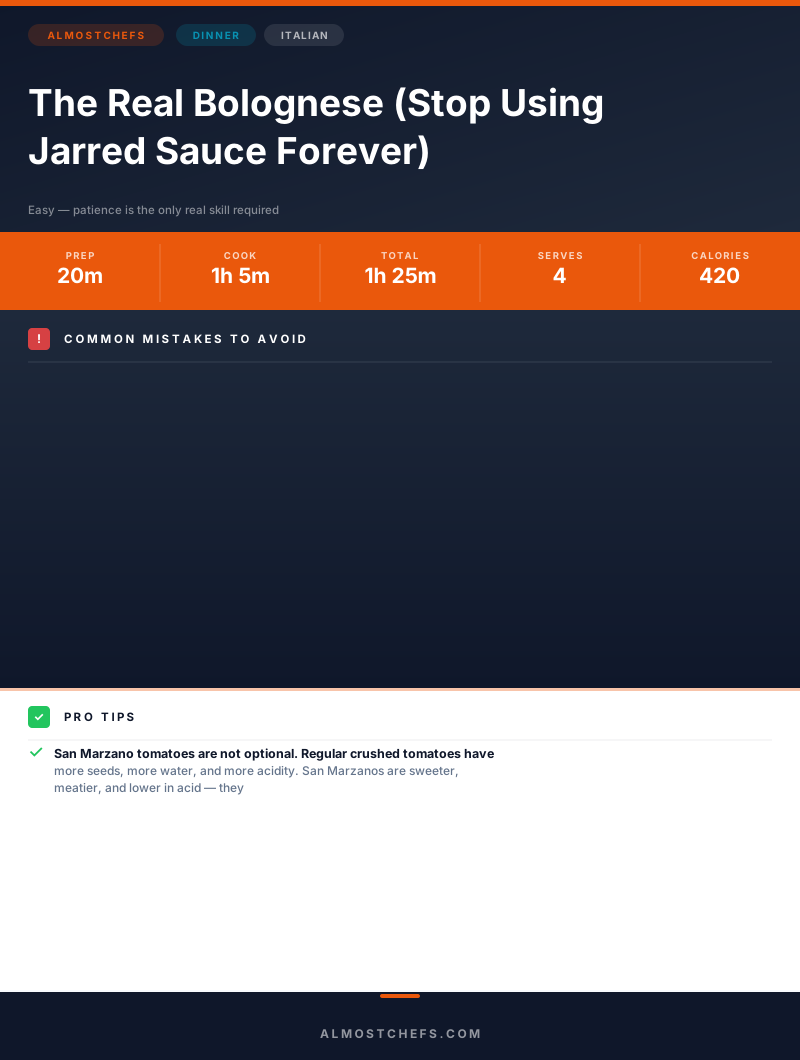
Technically no, but practically yes if you want the right result. Regular crushed tomatoes contain more seeds, more water, and significantly more acidity. San Marzanos are meatier and naturally sweeter, which is why they're the standard for Italian red sauces. At minimum, use a quality whole-peeled variety and crush them yourself.
Why does real Bolognese use milk?
Milk serves two functions. The fat content emulsifies into the sauce and creates a round, silky texture that no amount of olive oil alone achieves. And the milk proteins subtly tenderize the meat during the final simmer, producing a sauce that feels cohesive rather than like meat floating in tomato sauce.
What pasta shape works best with Bolognese?
Flat, broad pasta: tagliatelle, pappardelle, or rigatoni. The textured surfaces and ridges hold thick ragu better than smooth shapes like spaghetti or linguine. Traditionalists in Bologna use tagliatelle exclusively — and they're not wrong.
Can I make this in a slow cooker?
Partially. Complete all steps through the wine reduction on the stovetop — the browning and deglazing cannot be replicated in a slow cooker. Then transfer to a slow cooker and cook on low for 4-6 hours before adding the milk in the final 30 minutes. Skipping the stovetop browning steps produces a noticeably flat sauce.
How do I know when the sauce is done?
The sauce should be thick enough that a spoon dragged across the bottom of the pot leaves a trail that holds for 2-3 seconds before filling back in. The color will have deepened from bright red to a dark brick-red. The fat should be partially visible on the surface as tiny golden pools — a sign the emulsion is working correctly.
The Science of
The Real Bolognese (Stop Using Jarred Sauce Forever)
We turned everything on this page into a beautiful, flour-proof PDF cheat sheet. Print it out, stick it to your fridge, and never mess up your the real bolognese (stop using jarred sauce forever) again.
*We'll email you the high-res PDF instantly. No spam, just perfectly cooked meals.
AlmostChefs Editorial Team
We translate the internet's most popular cooking videos into foolproof, beginner-friendly written recipes. We analyze multiple methods, test them in our kitchen, and engineer a single "Master Recipe" that gives you the best possible result with the least possible stress.