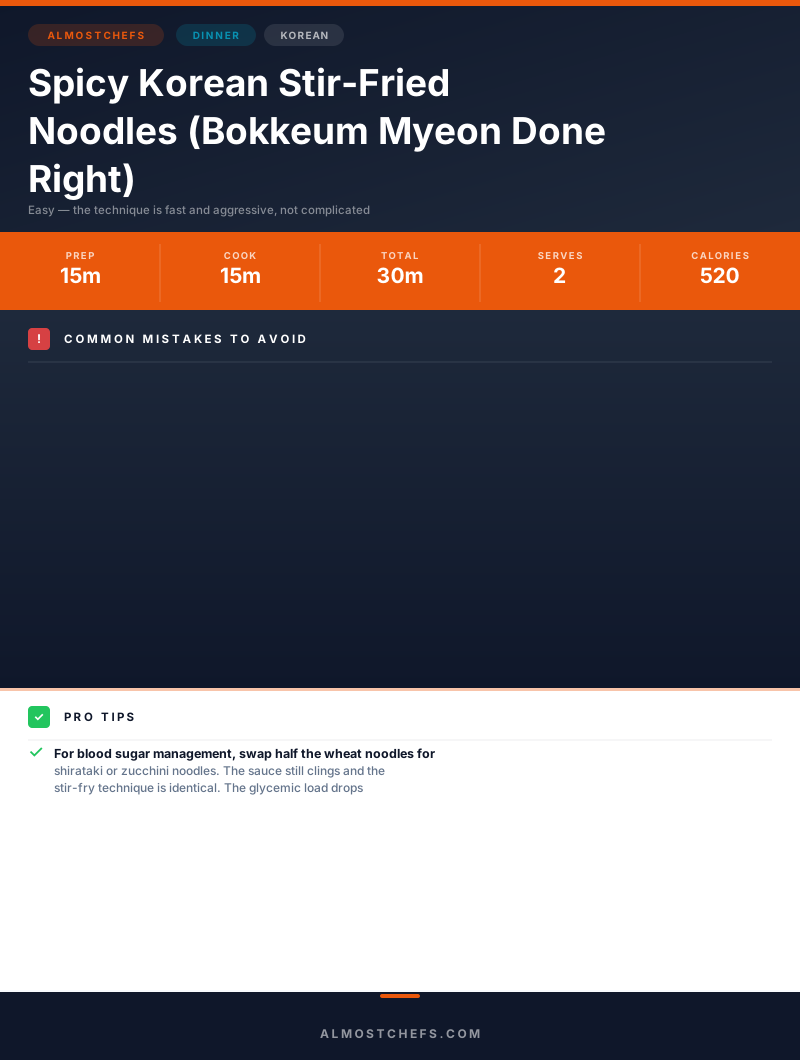
Spicy Korean Stir-Fried Noodles (Bokkeum Myeon Done Right)
A high-heat Korean noodle stir-fry where chewy wheat noodles are tossed in a gochujang-soy glaze with crisp vegetables and caramelized edges. We broke down the technique behind the wok hei effect so you can nail it on a home burner without a commercial flame.

“Bokkeum myeon is the dish Korean home cooks make when they need something satisfying in twenty minutes. It looks simple — noodles, sauce, heat — but most attempts come out wet, clumped, and flavorless. The difference between restaurant-quality stir-fried noodles and a soggy bowl is almost entirely about water control and heat management. Get those two things right and everything else is trivial.”
Why This Recipe Works
Bokkeum myeon is a twenty-minute dish that defeats most home cooks not because it is complicated, but because it is unforgiving. The window between good and mediocre is about ninety seconds of heat management. Understand the physics behind what is happening in the pan and the dish becomes nearly foolproof.
The Noodle Problem Is a Water Problem
Every stir-fried noodle failure traces back to water. Water in the noodles. Water on the vegetables. Water in the sauce that hasn't had time to reduce. In a commercial wok over a 150,000 BTU burner, excess moisture evaporates almost instantly. On a home stove running 15,000 BTU, it pools in the pan and you end up braising your noodles in their own liquid.
The solution is not a better stove. It is pre-eliminating the water before it becomes a problem. Parboil the noodles to 80% done, rinse, dry, and coat with a thin film of sesame oil. Pat the vegetables completely dry. Mix the sauce ahead of time so you are not pouring liquid into the pan from multiple vessels. Reduce every source of moisture before you turn the burner on and your home stove becomes adequate.
Sauce Caramelization Is the Entire Flavor
Gochujang contains roughly 25% sugar by weight. When that sugar hits a screaming hot pan, it undergoes the Maillard reaction and produces the complex, slightly smoky flavor profile that makes Korean stir-fry taste like itself rather than a generic spicy noodle dish. When gochujang hits a warm pan, it just sits there, slightly acidic, staining the noodles orange without caramelizing at all.
This is why pan temperature is non-negotiable. A carbon steel wok preheated for three full minutes will hold significantly more heat when cold noodles hit it than a nonstick pan that has been on the burner for thirty seconds. The noodles drop the pan temperature the moment they land. If you start at 450°F, the drop lands you at 350°F — still enough to caramelize. If you start at 350°F, the drop lands you at 250°F, which is steaming territory.
The Underdone Noodle Principle
Restaurant bokkeum myeon has a bite — a distinct resistance when you chew — that home versions almost never achieve. The reason is almost always overcooking in the boiling stage. If the noodles are fully cooked before they enter the wok, they have nowhere to go but softer. The additional heat, the tossing, the sauce absorption — all of it continues the cooking process.
Pull the noodles two minutes early, rinse under cold water to shock them, and they will finish in the pan exactly where you want them: chewy, distinct, with enough surface starch left to let the sauce bond rather than pool.
The Char Is Not Optional
The charred bits that form on the bottom of the pan are not burning. They are the point. This is as close as a home cook gets to wok hei — the smoky breath of the wok that defines professional stir-fry. The technique requires nerve: put the noodles in the pan, add the sauce, toss once to distribute, then leave everything alone for thirty to forty-five seconds while the bottom layer makes contact with direct heat.
You will hear crackling. It will smell faintly of caramel and smoke. This is correct. Resist the impulse to stir. Then lift and toss, and use a pair of kitchen scissors to cut through the noodle mass two or three times — this creates more surface area, distributes the charred edges throughout the dish, and prevents the long strands from trapping steam in the center.
The Egg Timing Question
The egg goes in last, scrambled directly in the center of the pan after the noodles are cooked, then folded in rather than mixed. Thirty seconds from raw to soft-scrambled, off heat before they look completely done. Residual pan heat finishes them. This produces egg in loose, silky folds woven through the noodles rather than rubbery chunks. The difference between thirty seconds and ninety seconds is the difference between a dish that feels cohesive and one that feels like scrambled eggs dumped on top of noodles.
The dish is done when everything looks slightly too dark. Trust that judgment. Bokkeum myeon is a dish that rewards confidence at the stove.
Where Beginners Mess This Up
Before we start, read this. These are the 4 reasons your spicy korean stir-fried noodles (bokkeum myeon done right) will fail:
- 1
Cooking the noodles all the way through before stir-frying: If you fully cook the noodles in boiling water, they finish cooking again in the wok and turn to paste. Parboil them to 80% done — they should still have a distinct bite — then finish them in the hot pan with the sauce. The residual starch on slightly undercooked noodles also helps the sauce cling.
- 2
Adding sauce to a cold or crowded pan: Gochujang is high in sugar and needs direct heat to caramelize. A warm pan produces steamed noodles. An overcrowded pan drops the temperature the moment food hits it. Use a wide skillet or wok, work in a single layer, and let the noodles sit undisturbed for 30 seconds before tossing.
- 3
Not drying the vegetables: Water on vegetables turns stir-frying into steaming. Pat everything dry after washing, and cut to uniform size so everything finishes at the same time. Wet vegetables release moisture into the pan and you lose the caramelized edges that make the dish.
- 4
Pulling the noodles too early: The charred, slightly crispy bits that form on the bottom of the pan are not burning — they are the point. Let the noodles sit on high heat long enough to develop color before tossing. This is the closest you will get to wok hei on a home stove.
🛠️ Core Equipment
- Carbon steel wok or large cast iron skilletRetains high heat far better than a thin nonstick pan. The slight char on the noodles requires sustained temperatures that non-stick coatings cannot handle. A [carbon steel wok](/kitchen-gear/review/carbon-steel-wok) preheated for 3 minutes will outperform any pan at lower heat.
- Wok spatula or wide metal turnerYou need to scrape the bottom of the pan to lift the caramelized noodles without breaking them. A silicone spatula is too soft. Metal on metal, confidently.
- Kitchen scissorsKorean cooks use scissors to cut noodles mid-cook. Long noodle strands tangle, trap steam, and cook unevenly. Two cuts after the noodles hit the pan creates more surface area and better sauce distribution.
- Prep bowlsStir-frying moves faster than prep. Have your sauce mixed, vegetables cut, and noodles drained before you turn on the heat. A [mise en place setup](/kitchen-gear/review/prep-bowls) is not optional here — it is the technique.
Spicy Korean Stir-Fried Noodles (Bokkeum Myeon Done Right)
🛒 Ingredients
- ✦7 oz fresh wheat noodles (or 2 bundles dried udon noodles)
- ✦2 tablespoons gochujang (Korean chili paste)
- ✦1.5 tablespoons soy sauce
- ✦1 tablespoon gochugaru (Korean chili flakes)
- ✦1 tablespoon toasted sesame oil
- ✦1 tablespoon honey or brown rice syrup
- ✦1 teaspoon fish sauce (or soy sauce for vegetarian)
- ✦3 cloves garlic, minced
- ✦1 teaspoon fresh ginger, grated
- ✦1.5 tablespoons neutral oil (avocado or rice bran)
- ✦1/2 medium yellow onion, thinly sliced
- ✦1 cup cabbage, thinly shredded
- ✦1 large scallion, cut into 2-inch pieces
- ✦1 medium carrot, julienned
- ✦2 large eggs
- ✦1 tablespoon toasted sesame seeds
- ✦Sliced scallions for garnish
👨🍳 Instructions
01Step 1
Whisk together gochujang, soy sauce, gochugaru, sesame oil, honey, and fish sauce in a small bowl. Set aside.
02Step 2
Bring a large pot of water to a boil. Cook noodles for 1-2 minutes less than package directions. They should be firm with a slight chalkiness in the center. Drain, rinse briefly under cold water, and toss with a few drops of sesame oil to prevent sticking.
03Step 3
Heat a wok or large skillet over high heat until it begins to smoke — about 2-3 minutes. Add neutral oil and swirl to coat.
04Step 4
Add onion and carrot. Stir-fry on high heat for 2 minutes until the edges begin to char slightly. Add cabbage and cook 1 minute more.
05Step 5
Push vegetables to the edges. Add garlic and ginger to the center of the pan and cook for 30 seconds until fragrant.
06Step 6
Add drained noodles to the pan. Pour sauce over the noodles immediately. Toss everything together using tongs or a wok spatula.
07Step 7
Use kitchen scissors to cut through the noodles 2-3 times. Let the noodles sit undisturbed on high heat for 30-45 seconds to develop char on the bottom.
08Step 8
Toss again, then push noodles to the sides. Crack eggs into the center of the pan and scramble them briefly — about 30 seconds — before folding into the noodles.
09Step 9
Add scallion pieces and toss once more for 30 seconds.
10Step 10
Transfer to bowls. Top with toasted sesame seeds and sliced scallions. Serve immediately.
Nutrition Per Serving
Estimates based on standard preparation. Adjustments alter macros.
🔄 Substitutions
Instead of Fresh wheat noodles...
Use Dried udon or ramen noodles
Dried udon is thicker and chewier — reduce cooking time adjustment to 3 minutes under package directions. Ramen noodles are thinner and absorb sauce faster; watch them carefully.
Instead of Gochujang...
Use Doenjang mixed with sriracha (1:1 ratio)
Changes the flavor profile significantly — earthier and less sweet. Add a half teaspoon of honey to compensate for gochujang's natural sweetness.
Instead of Fish sauce...
Use Soy sauce with a pinch of seaweed flakes
Keeps the dish fully vegetarian while preserving the umami depth. The seaweed flakes approximate the oceanic note fish sauce provides.
Instead of Eggs...
Use Firm tofu, pressed and cubed
Pan-fry the tofu separately until golden before adding to the noodles. It won't fold in the same way as scrambled egg but provides comparable protein and texture contrast.
🧊 Storage & Reheating
In the Fridge
Store in an airtight container for up to 2 days. The noodles absorb sauce overnight and the dish intensifies in flavor.
In the Freezer
Not recommended — noodles turn spongy and the texture is unrecoverable after freezing.
Reheating Rules
Heat a dry pan over medium-high, add noodles with 2 tablespoons of water, cover for 1 minute to steam, then uncover and toss for 1 minute to restore some char.
❓ Frequently Asked Questions
What noodles work best for bokkeum myeon?
Fresh wheat noodles (somyeon or udon-style) are ideal because their surface starch helps sauce adhesion. Dried noodles work well with a slightly shorter parboil time. Avoid rice noodles or glass noodles — they don't hold up to high-heat stir-frying and become gummy.
How do I reduce the sodium without losing flavor?
Cut the soy sauce by half and compensate with a teaspoon of doenjang, which provides equal umami depth with less sodium per gram. Finishing with a squeeze of fresh lemon juice tricks the palate into perceiving the dish as more seasoned than it is.
Why are my noodles sticking together before I can stir-fry them?
Drain them, rinse briefly with cold water, then toss immediately with a few drops of sesame oil. The oil creates a thin barrier that prevents clumping. Don't let drained noodles sit for more than 5 minutes before they hit the pan.
Can I make this without a wok?
Yes. Use the largest skillet you own — a 12-inch cast iron is excellent. The key is preheating the pan until it smokes before adding oil. The pan shape matters less than the temperature.
Is this dish suitable for blood sugar management?
The standard version is moderate in glycemic load due to the protein from eggs and fiber from the vegetables. For more active blood sugar management, substitute half or all wheat noodles with shirataki noodles, add more cabbage, and reduce the honey in the sauce by half.
Why does my bokkeum myeon taste flat even when I follow the recipe?
Almost always a heat problem. If your pan is not genuinely hot — the kind of hot where water droplets skitter and evaporate instantly — the noodles will steam instead of sear and the sauce will sit on the surface instead of caramelizing. Preheat longer than feels comfortable, then add the oil.
The Science of
Spicy Korean Stir-Fried Noodles (Bokkeum Myeon Done Right)
We turned everything on this page into a beautiful, flour-proof PDF cheat sheet. Print it out, stick it to your fridge, and never mess up your spicy korean stir-fried noodles (bokkeum myeon done right) again.
*We'll email you the high-res PDF instantly. No spam, just perfectly cooked meals.
AlmostChefs Editorial Team
We translate the internet's most popular cooking videos into foolproof, beginner-friendly written recipes. We analyze multiple methods, test them in our kitchen, and engineer a single "Master Recipe" that gives you the best possible result with the least possible stress.