Perfect Homemade Boba Tea (Stop Paying $8 a Cup)
Chewy tapioca pearls, sweetened brown sugar syrup, and cold-brewed black tea layered over ice with creamy milk — the full bubble tea experience built in your own kitchen. We broke down the most-watched YouTube methods to give you one technique that nails pearl texture every single time.
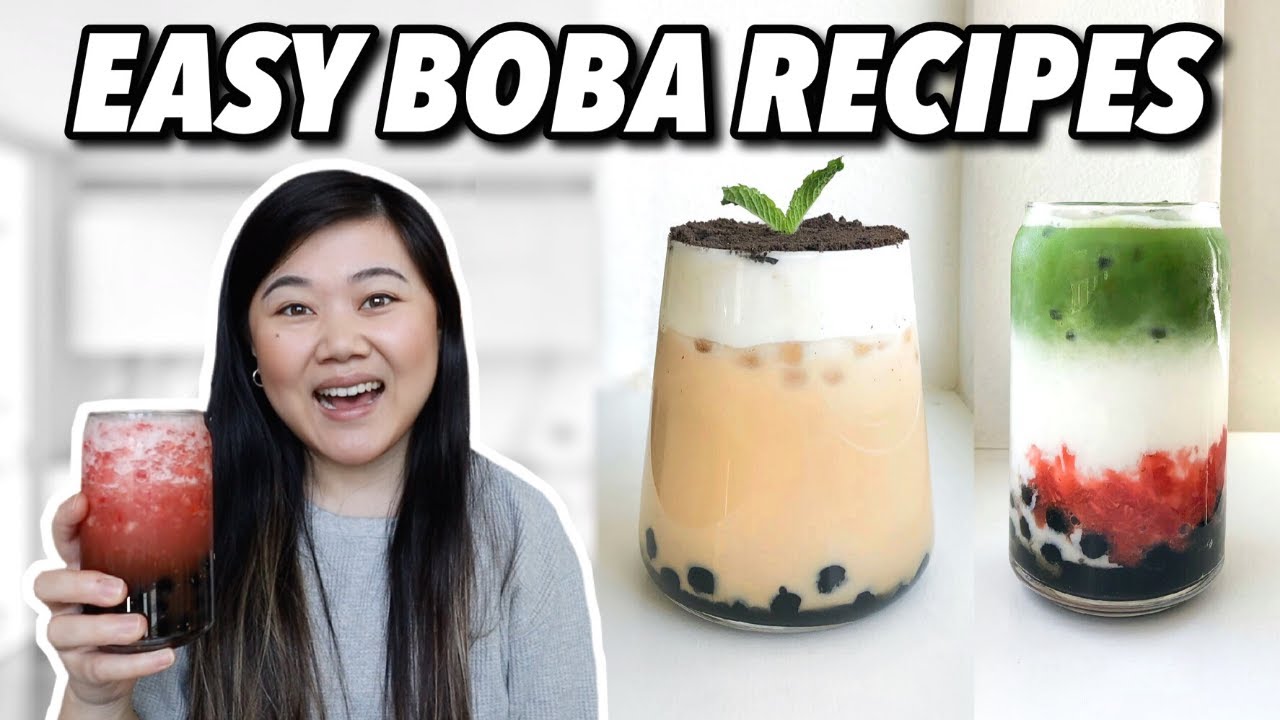
“Bubble tea shops charge a premium for something you can make better at home in under two hours. The secret everyone skips: tapioca pearls are alive. They have a window — roughly 2-4 hours after cooking — where they sit at peak chewiness. Outside that window they either dissolve into mush or harden into rubber. Every good boba recipe is built around managing that window. This one does.”
Why This Recipe Works
Bubble tea looks simple — it's tea, milk, sugar, and chewy balls of starch. But the reason most homemade attempts taste like a disappointing approximation of the shop version comes down to one thing: tapioca pearls are a perishable product with a brutally short peak window, and nobody tells you that. They're not like pasta, which holds for days, or rice, which survives the fridge. Cooked boba pearls exist in their ideal form for roughly two to four hours. Understanding that constraint reorganizes how you approach the entire recipe.
The Pearl Problem
Tapioca pearls are made from cassava starch — the same starch used to make tapioca pudding — formed into small spheres and dried. When you drop them into boiling water, the outer starch granules gelatinize almost immediately, creating a soft exterior. The center takes longer. This is why the boil time and the off-heat steaming step are non-negotiable: you need to get heat to the core without turning the exterior into a formless gel.
The steaming rest is the step most recipes either omit or treat as optional. It is not optional. The off-heat rest with a covered large heavy-bottomed pot lets the retained heat in the water and the pearl itself slowly finish the center without the aggressive agitation of a rolling boil. Pearls pulled straight from the boil and rinsed immediately are cooked on the outside and underdone in the middle — they have the texture of a soft-boiled egg that someone left on the counter: wrong in both directions.
Once cooked, the pearls' enemy is time and temperature. At room temperature in syrup, they hold their chew for four hours. Refrigerated, they harden within an hour as the starch retrogrades — a process where the gelatinized starch molecules re-form crystalline structures that cannot be reversed by reheating. This is the same process that makes day-old bread stale. For bread, you can toast it back to life. For boba pearls, there is no recovery. Make them last, assemble immediately, and never refrigerate leftovers with any expectation of using them later.
The Syrup Coat Is Not Optional
Fresh-cooked tapioca pearls taste like nothing. They are a vehicle for texture, not flavor, and they require external seasoning in the same way that plain pasta requires salt in the cooking water plus sauce in the bowl. The brown sugar syrup solves both problems simultaneously: it seasons the pearls and coats them in a thin film that prevents clumping.
Dark brown sugar is the correct choice here. It contains roughly 6.5% molasses by weight, compared to light brown sugar's 3.5%. That molasses is where the complexity lives — it brings a faint bitterness, a mineral depth, and a caramel-adjacent flavor that turns an otherwise flat sweetener into something interesting. The pinch of salt in the syrup isn't seasoning in the traditional sense; it's flavor amplification, suppressing the perception of sweetness while elevating the other flavor compounds. Skip it and the syrup tastes flat and one-dimensional.
Tea Strength and Temperature
The tea is doing structural work in this drink. It's the only bitter, astringent component in a glass that's otherwise all sweetness and fat. Under-brewed tea disappears the moment it hits ice and milk, leaving you with something that tastes like sugared milk. Brewing at double strength — two bags where you'd normally use one — gives you the backbone to survive dilution.
Chilling is equally non-negotiable. Hot tea over ice does not produce iced tea; it produces diluted tea with floating ice chips. The thermodynamics are straightforward: the ice melts to absorb the heat of the tea, converting its thermal energy into the latent heat of phase change. Every degree you fail to pre-chill your tea is another few grams of ice that melts prematurely into your drink. Brew ahead. Chill fully. Then assemble.
The Assembly Sequence
Pearls go in first — they need to be at the bottom where the boba straw can reach them. Ice on top of the pearls keeps them cool without crushing them under the weight of liquid. Tea over ice so it cools instantly on contact. Milk poured last so it layers on top, creating the visual gradient that makes bubble tea look like it belongs on a café menu rather than a kitchen counter.
The sequence isn't aesthetic theater. Pearls under ice stay mobile — they don't get packed and compressed by the weight of liquid above them, which is what causes them to stick together in a single lump at the bottom. Pour liquid first and the pearls float up, cluster, and weld themselves into an impenetrable mat that no straw can break through. Architecture matters even when it's just a drink.
Where Beginners Mess This Up
Before we start, read this. These are the 4 reasons your perfect homemade boba tea (stop paying $8 a cup) will fail:
- 1
Undercooking the tapioca pearls: Pearls need a full rolling boil and then a covered rest period. Pulling them early gives you a dense, chalky center with no chew. The exterior looks cooked while the core is still raw starch. The fix: boil for the full time, then let them steam off-heat for 15 minutes with the lid on before tasting.
- 2
Skipping the brown sugar syrup coat: Cooked tapioca pearls are nearly flavorless on their own. They depend entirely on being tossed in warm brown sugar syrup immediately after cooking. This step both seasons the pearls and keeps them from clumping into a single sticky mass at the bottom of your cup.
- 3
Using hot tea over the ice: Hot tea melts the ice instantly, diluting every sip. Your tea needs to be brewed strong and fully chilled before it hits the glass. Brew at double strength and chill in the fridge for at least 30 minutes, or cold-brew overnight for cleaner flavor.
- 4
Drinking boba pearls too late: Tapioca pearls are best within 2 hours of cooking and undrinkable after 6. They harden as they cool and cannot be revived by reheating. Make pearls last, assemble right before serving, and never refrigerate cooked pearls.
The Video Reference Library
Want to see it in action? Here are the exact videos we analyzed and combined to build this foolproof recipe translation:
The reference video for this recipe. Clear technique for cooking pearls to peak chewiness and building the brown sugar syrup coat that seasons them properly.
Detailed walkthrough of the tiger-stripe brown sugar technique, showing exactly how to swirl the syrup up the glass walls for that signature visual effect.
For anyone who wants to go deeper — making raw tapioca pearls from tapioca starch and brown sugar. Labor-intensive but the texture is noticeably superior to store-bought dried pearls.
🛠️ Core Equipment
- Large heavy-bottomed potTapioca pearls need abundant boiling water — at least 8 cups per serving of pearls. A cramped pot causes them to clump and cook unevenly. The volume matters as much as the heat source.
- Fine-mesh sieveFor rinsing the cooked pearls immediately after draining. This stops the starch from making them gummy on the outside while the inside finishes steaming.
- Wide-mouth glasses or mason jarsBoba straws need a wide-mouth vessel. A narrow glass traps pearls at the bottom and makes the drink frustrating to consume. The visual layering effect — which is half the appeal — also requires a clear, straight-sided glass.
- Boba strawsStandard straws are too narrow for tapioca pearls. You need at least a 12mm diameter straw. Paper straws collapse under suction. Reusable stainless or silicone boba straws are worth the investment.
Perfect Homemade Boba Tea (Stop Paying $8 a Cup)
🛒 Ingredients
- ✦1/2 cup dried black tapioca pearls (boba)
- ✦8 cups water, for boiling pearls
- ✦1/3 cup dark brown sugar
- ✦3 tablespoons water, for syrup
- ✦2 black tea bags (Assam or English Breakfast)
- ✦1.5 cups water, for brewing tea
- ✦1 cup whole milk or oat milk
- ✦1/4 cup sweetened condensed milk (optional, for extra richness)
- ✦2 cups ice cubes
- ✦Pinch of salt
👨🍳 Instructions
01Step 1
Brew the tea: bring 1.5 cups of water just to a boil, add both tea bags, and steep for 5 minutes. Remove the bags without squeezing them. Let the tea cool to room temperature, then refrigerate until fully chilled — at least 30 minutes.
02Step 2
Bring 8 cups of water to a full rolling boil in a large heavy-bottomed pot. Add the dried tapioca pearls and stir immediately to prevent clumping.
03Step 3
Boil the pearls uncovered for 20-25 minutes, stirring every 5 minutes. The pearls should become mostly translucent with just a faint dark center.
04Step 4
Turn off the heat, place the lid on the pot, and let the pearls steam for 15 minutes without lifting the lid.
05Step 5
While the pearls steam, make the brown sugar syrup: combine dark brown sugar, 3 tablespoons water, and a pinch of salt in a small saucepan over medium heat. Stir until the sugar dissolves completely. Simmer for 2-3 minutes until slightly thickened. Remove from heat.
06Step 6
Drain the pearls through a fine-mesh sieve and rinse briefly under warm water to remove excess surface starch.
07Step 7
Immediately transfer the warm pearls into the brown sugar syrup. Toss gently to coat every pearl. Let them sit in the syrup for at least 5 minutes before assembling.
08Step 8
Add the pearls and syrup to the bottom of two wide-mouth glasses. Pack in the ice cubes on top of the pearls.
09Step 9
Pour the chilled tea over the ice. Add milk or oat milk to fill the glass, leaving half an inch at the top. Stir gently or leave layered for visual effect.
10Step 10
Insert a wide boba straw, give one gentle stir at the bottom to free any stuck pearls, and serve immediately.
Nutrition Per Serving
Estimates based on standard preparation. Adjustments alter macros.
🔄 Substitutions
Instead of Whole milk...
Use Oat milk or full-fat coconut milk
Oat milk is the closest in body and sweetness. Coconut milk adds a tropical note that works well with taro or matcha variations but can overwhelm plain black tea boba.
Instead of Dark brown sugar...
Use Coconut sugar or palm sugar
Both have lower glycemic index and more complex mineral flavor. Palm sugar is traditional in Southeast Asian boba. The syrup will be slightly less sweet — add 10% more by volume.
Instead of Black tea bags...
Use Jasmine green tea or oolong tea
Jasmine tea produces a lighter, floral version. Oolong sits between black and green — slightly oxidized with a honey-like character. Both work well; neither needs double-strength brewing.
Instead of Dried black tapioca pearls...
Use Quick-cook white tapioca pearls
Cook time drops to 5-8 minutes but texture is slightly less chewy. White pearls don't hold color from the brown sugar syrup as visibly, so the tiger-stripe effect is less dramatic.
🧊 Storage & Reheating
In the Fridge
Cooked pearls cannot be stored — they harden irreversibly within 6 hours. Brewed tea keeps in the fridge for up to 3 days. Brown sugar syrup keeps refrigerated for up to 2 weeks.
In the Freezer
Dried uncooked tapioca pearls store in a sealed bag at room temperature for up to 2 years. Do not freeze cooked pearls.
Reheating Rules
There is no reheating cooked boba. Plan to cook only what you'll use within 2-4 hours. The tea can be made days ahead and chilled; only the pearls must be made fresh.
❓ Frequently Asked Questions
Why are my boba pearls hard in the center?
You either undercooked them or skipped the steaming rest. The pearls need the full boil time plus 15 minutes of off-heat steaming to cook all the way through. A dense, gummy center means the starch inside never fully gelatinized.
Why did my pearls dissolve into mush?
Overcooked or left in the syrup too long. At a certain point the outer starch continues to absorb liquid and the pearls fall apart. Pull them from the boiling water when they still have a faint center opacity, and serve within 4 hours of cooking.
Can I make boba pearls from scratch instead of using dried ones?
Yes — tapioca starch, brown sugar, and water is all you need. Homemade pearls have superior texture but take 45 extra minutes. They follow the same cooking method once shaped. Worth doing once you've mastered the base recipe.
What tea works best for boba?
Assam black tea is the traditional base — strong, malty, and robust enough to stand up to milk and ice dilution. English Breakfast is a suitable blend. Avoid delicate single-origin teas; they disappear under milk and sugar.
Why is my boba tea watery?
Your tea wasn't chilled before hitting the ice, so the ice melted immediately and diluted everything. Always chill the tea fully before assembling. Brewing at double strength also gives you buffer room against dilution.
Can I make this dairy-free?
Completely. Oat milk is the best swap — use a barista-grade version for the right body. The condensed milk can be skipped or replaced with sweetened condensed coconut milk, which is widely available and nearly identical in function.

The Science of
Perfect Homemade Boba Tea (Stop Paying $8 a Cup)
We turned everything on this page into a beautiful, flour-proof PDF cheat sheet. Print it out, stick it to your fridge, and never mess up your perfect homemade boba tea (stop paying $8 a cup) again.
*We'll email you the high-res PDF instantly. No spam, just perfectly cooked meals.
AlmostChefs Editorial Team
We translate the internet's most popular cooking videos into foolproof, beginner-friendly written recipes. We analyze multiple methods, test them in our kitchen, and engineer a single "Master Recipe" that gives you the best possible result with the least possible stress.