Easy Black Bean Soup (30-Minute Gut Health Powerhouse)
A hearty Latin American classic built on black beans, aromatic spices, and fresh vegetables — naturally vegan, gluten-free, and ready in 40 minutes. We analyzed the most common home cook mistakes to give you one bulletproof technique that delivers deep, complex flavor without the fuss.
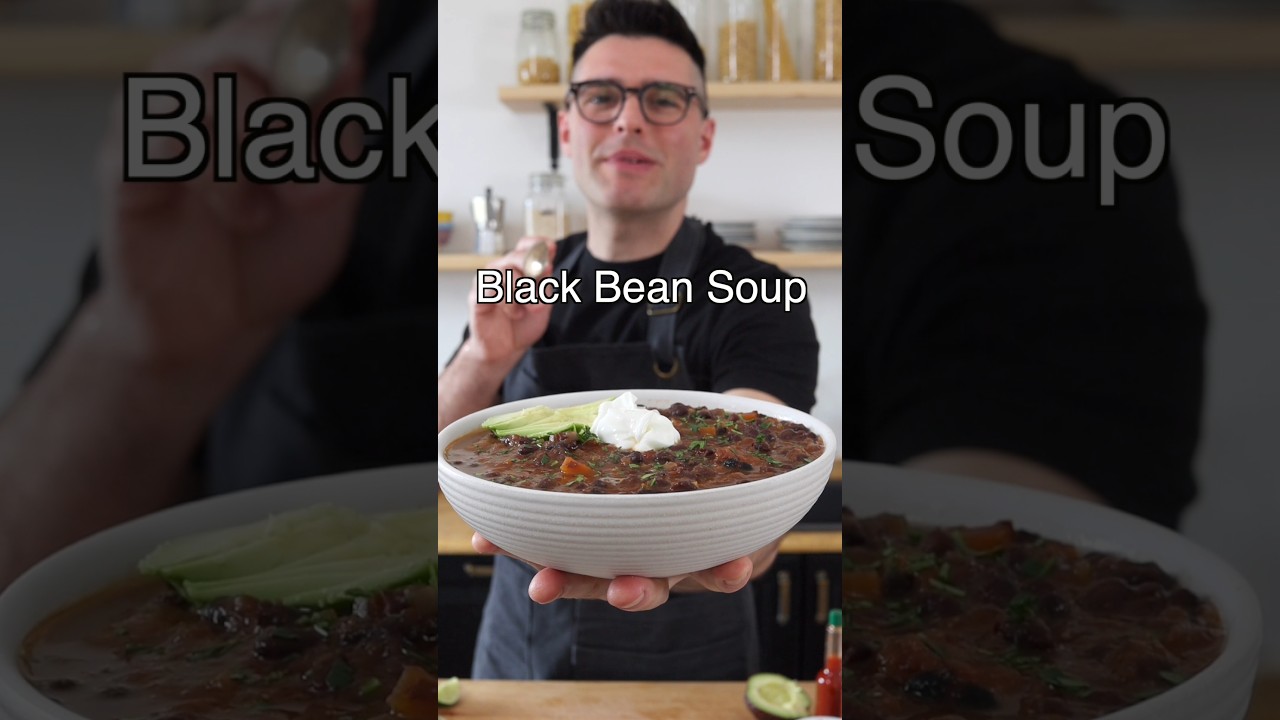
“Black bean soup is one of those recipes that looks simple on paper and still manages to disappoint. The usual culprits: under-seasoned beans, rushed vegetables that taste raw under a veneer of broth, and skipped spice-blooming that leaves the whole pot tasting flat. Thirty minutes is genuinely all you need — but those thirty minutes have to be done right. Here's the method that actually works.”
Why This Recipe Works
Black bean soup is the kind of recipe that gets underestimated. It's cheap. It's fast. It's vegetarian. Food culture has trained us to assign those qualities to dishes that don't require real technique. That assumption is why most homemade black bean soup is boring.
The dish has a clear flavor architecture: a deeply sautéed aromatic base, bloomed whole spices, beans that absorb rather than float, and a hit of acid at the finish to tie everything together. Execute those four things correctly and you get something that tastes like it simmered all afternoon. Rush any one of them and the soup announces itself as thirty-minute food in the worst possible way.
The Soffritto Is Not Optional
Onion, carrot, and celery — the holy trinity of Western cooking — need time. Five to seven minutes over medium-high heat transforms them from sharp raw vegetables into something sweet, yielding, and aromatic. What's happening is the Maillard reaction: the amino acids and sugars in the vegetables react under sustained heat to produce hundreds of new flavor compounds that don't exist in raw ingredients. Translucent onion means you're halfway there. You want the edges beginning to color before you add anything else.
The garlic goes in after, alone, for exactly one minute. Garlic burns fast and tastes acrid when it does. One minute of constant stirring is the window between fragrant and ruined.
Bloom the Spices — Every Time
The cumin, smoked paprika, oregano, and cayenne go directly onto the hot vegetables — not into the liquid. Fat-soluble aromatic compounds in dried spices need contact with oil and heat to activate. Thirty seconds of stirring over high heat extracts more flavor than twenty minutes of simmering in water. You'll know it's working when the smell shifts from raw spice to something toasted and complex. That transformation is the entire point.
The Bean Question
Canned black beans are the right call here. They're fully cooked, consistent, and — rinsed properly — indistinguishable from home-cooked dried beans in a finished soup. The rinse matters: the starchy liquid in the can tastes slightly metallic and muddies the broth. Ten seconds under cold water eliminates it.
During the 15-20 minute simmer, the beans are not just heating through — they're absorbing the spiced broth and contributing starch back into the liquid. This exchange is what gives the finished soup body. Cut the simmer short and the soup tastes like broth with beans in it. Give it the full time and it becomes something unified.
For a thicker texture, an immersion blender run through one-third of the pot creates creaminess without any dairy. The blended beans emulsify into the broth, giving it weight and depth that reads as much richer than the ingredient list suggests.
Acid Architecture
Lime juice at the end is not garnish. It is a flavor tool. Acid suppresses bitterness, amplifies sweetness, and makes every other flavor in the pot more legible. A soup that tastes flat or one-dimensional almost always needs acid before it needs more salt. Add the lime off heat or at the very end of cooking — earlier and it cooks off into bitterness, taking its brightness with it.
The Greek yogurt garnish operates on the same principle: its tanginess echoes the lime, adds creaminess, and cuts through the earthy weight of the beans. Skip it if you're keeping the dish vegan, but understand what you're losing and compensate with a more generous pour of lime.
The Overnight Effect
This soup is better the next day. Not marginally — noticeably. The beans continue absorbing the spiced broth overnight, the vegetables fully integrate into the liquid, and the smoked paprika and cumin deepen into something that tastes like it was slow-cooked for hours. Make it the night before if you have the option. Reheat gently and finish with a fresh squeeze of lime to restore the brightness that cooking always mutes.
Where Beginners Mess This Up
Before we start, read this. These are the 4 reasons your easy black bean soup (30-minute gut health powerhouse) will fail:
- 1
Not blooming the spices: Cumin, smoked paprika, and cayenne added to liquid do almost nothing. They need 30 seconds of direct contact with hot oil or dry heat to activate their fat-soluble aromatic compounds. Skip this step and your soup tastes like seasoned water instead of something that smells like it was built over two hours.
- 2
Rushing the soffritto base: Onion, carrot, and celery need 5-7 full minutes over medium-high heat to soften and develop sweetness. Pulling them early — when the onion is still opaque — means the base of your soup tastes sharp and raw. Those minutes are not optional padding. They are flavor construction.
- 3
Adding lime juice too early: Acid kills aromatics when added to a simmering pot. Lime goes in at the end, off or near the end of heat, to brighten the finished soup. Add it early and it cooks off into bitterness while dulling every other flavor you worked to build.
- 4
Skipping the simmer: Fifteen to twenty minutes of uncovered simmering is when the beans absorb the spiced broth and the vegetables finish softening into the soup rather than sitting in it. Cutting this short produces a soup that tastes assembled, not cooked.
The Video Reference Library
Want to see it in action? Here are the exact videos we analyzed and combined to build this foolproof recipe translation:
The clearest walkthrough of the spice-blooming technique and proper vegetable sauté timing. Demonstrates exactly what the soffritto should look like before you add liquid.
🛠️ Core Equipment
- Large heavy-bottomed potEven heat distribution across the base prevents hot spots that scorch the soffritto before the liquid goes in. A thin pot turns your onions into charcoal in the time it takes to open a can of beans.
- Wooden spoon or silicone spatulaFor constant stirring when blooming spices and cooking garlic. Spices burn in under a minute if left unattended — you need to keep them moving.
- Immersion blender (optional)Blend one-third of the soup directly in the pot for a creamier texture without any cream. Gives the broth body and depth while keeping whole beans intact for texture contrast.
- Fine-mesh sieve or colanderFor draining and rinsing the canned black beans. Rinsing removes excess sodium and the starchy liquid that makes canned beans taste tinny.
Easy Black Bean Soup (30-Minute Gut Health Powerhouse)
🛒 Ingredients
- ✦2 tablespoons extra-virgin olive oil
- ✦1 large yellow onion, finely diced
- ✦3 medium carrots, cut into small chunks
- ✦2 celery stalks, diced
- ✦4 cloves garlic, minced
- ✦2 cans black beans, drained and rinsed
- ✦1 can diced tomatoes with green chiles
- ✦4 cups vegetable broth
- ✦1 teaspoon ground cumin
- ✦1 teaspoon smoked paprika
- ✦1/2 teaspoon dried oregano
- ✦1/4 teaspoon cayenne pepper
- ✦1 red bell pepper, diced
- ✦2 cups fresh spinach
- ✦1 lime, juiced
- ✦Sea salt and black pepper to taste
- ✦Fresh cilantro for garnish
- ✦Greek yogurt for serving
👨🍳 Instructions
01Step 1
Heat extra-virgin olive oil in a large heavy-bottomed pot over medium-high heat until shimmering, about 1 minute.
02Step 2
Add the diced yellow onion, carrots, and celery. Sauté until the onion becomes translucent and the vegetables begin to soften, approximately 5-7 minutes.
03Step 3
Stir in the minced garlic and cook, stirring constantly, for about 1 minute until fragrant.
04Step 4
Sprinkle the cumin, smoked paprika, dried oregano, and cayenne directly over the vegetables. Stir well to coat everything evenly and cook for 30 seconds to bloom the spices.
05Step 5
Add the drained black beans, diced red bell pepper, and canned tomatoes with green chiles. Stir to combine.
06Step 6
Pour in the vegetable broth and bring the mixture to a gentle boil over medium-high heat.
07Step 7
Reduce heat to medium-low and simmer uncovered for 15-20 minutes, until the vegetables are fully tender and the flavors have melded.
08Step 8
Stir in the fresh spinach and cook until completely wilted, about 2-3 minutes.
09Step 9
Taste and season with sea salt and black pepper. Remember the broth already carries sodium — taste before you season.
10Step 10
Squeeze in the lime juice and stir thoroughly.
11Step 11
Ladle into bowls and serve hot, topped with fresh cilantro and a dollop of Greek yogurt.
Nutrition Per Serving
Estimates based on standard preparation. Adjustments alter macros.
🔄 Substitutions
Instead of Vegetable broth...
Use Bone broth or mushroom broth
Bone broth adds collagen and amino acids for gut health. Mushroom broth layers in umami depth that reads as meatier without changing the dish's dietary profile significantly.
Instead of Canned diced tomatoes...
Use Fresh tomatoes or low-sodium canned tomatoes
Reduces sodium by approximately 300mg per serving. Fresh tomatoes provide brighter flavor but less body — add an extra tablespoon of tomato paste to compensate.
Instead of Greek yogurt garnish...
Use Cashew cream or sliced avocado
Keeps the dish fully vegan. Cashew cream mimics the tang and creaminess. Avocado adds richness and heart-healthy fats without dairy.
Instead of Olive oil...
Use Avocado oil
Higher smoke point makes it more forgiving during the sauté phase. Flavor is nearly neutral — won't change the finished soup.
🧊 Storage & Reheating
In the Fridge
Store in an airtight container for up to 4 days. The soup thickens as it sits — add a splash of broth when reheating.
In the Freezer
Freeze in portions for up to 3 months. Black beans freeze exceptionally well. Thaw overnight in the fridge.
Reheating Rules
Reheat gently on the stovetop over medium-low heat, stirring occasionally. Add broth or water to loosen if needed. Add a fresh squeeze of lime after reheating to restore brightness.
❓ Frequently Asked Questions
Can I use dried black beans instead of canned?
Yes, but it changes the timing dramatically. Dried black beans need 6-8 hours of soaking and 1.5-2 hours of cooking before they're ready. Canned beans are already fully cooked — they just need to absorb the spiced broth during the simmer. If using dried, cook them separately first, then proceed with the recipe using cooked beans.
Why does my black bean soup taste flat?
Almost always one of three causes: the spices weren't bloomed in hot oil, the lime juice was skipped or added too early, or the soup didn't simmer long enough for the flavors to meld. Taste after the full simmer, then finish with lime juice. If it still tastes dull, add a pinch of smoked paprika and let it cook for two more minutes.
How do I make it thicker without blending?
Mash roughly a quarter of the beans against the side of the pot with the back of a spoon while the soup simmers. The starch releases directly into the broth and thickens it naturally. This gives body without changing the chunky texture of the rest of the soup.
Is this soup actually filling enough as a main?
Yes. Two cans of black beans across four servings gives you roughly 12-15 grams of protein and 11 grams of fiber per bowl. That combination — protein plus high fiber — creates sustained satiety. Serve with cornbread or a slice of crusty bread if you want more volume.
Can I add meat to this?
Absolutely. Sliced andouille sausage browned in the pot before the vegetables adds smoky, spiced depth. Shredded rotisserie chicken stirred in during the last five minutes adds protein without changing the cooking method. Both work well with the existing spice profile.
Why do you add spinach at the end?
Spinach wilts to nothing in 2-3 minutes and turns gray-green and bitter if cooked longer. Adding it last preserves its color, texture, and the majority of its heat-sensitive nutrients. The same principle applies to any delicate green — kale and chard, which are tougher, can go in 5 minutes earlier.

The Science of
Easy Black Bean Soup (30-Minute Gut Health Powerhouse)
We turned everything on this page into a beautiful, flour-proof PDF cheat sheet. Print it out, stick it to your fridge, and never mess up your easy black bean soup (30-minute gut health powerhouse) again.
*We'll email you the high-res PDF instantly. No spam, just perfectly cooked meals.
AlmostChefs Editorial Team
We translate the internet's most popular cooking videos into foolproof, beginner-friendly written recipes. We analyze multiple methods, test them in our kitchen, and engineer a single "Master Recipe" that gives you the best possible result with the least possible stress.