Perfect Biscuits and Gravy (The Southern Diner Secret)
Flaky, buttery biscuits smothered in a rich, peppery sausage gravy — the Southern breakfast that turns any morning into an occasion. We broke down every major technique failure so you can nail the texture on your first try, from scratch, in under 45 minutes.
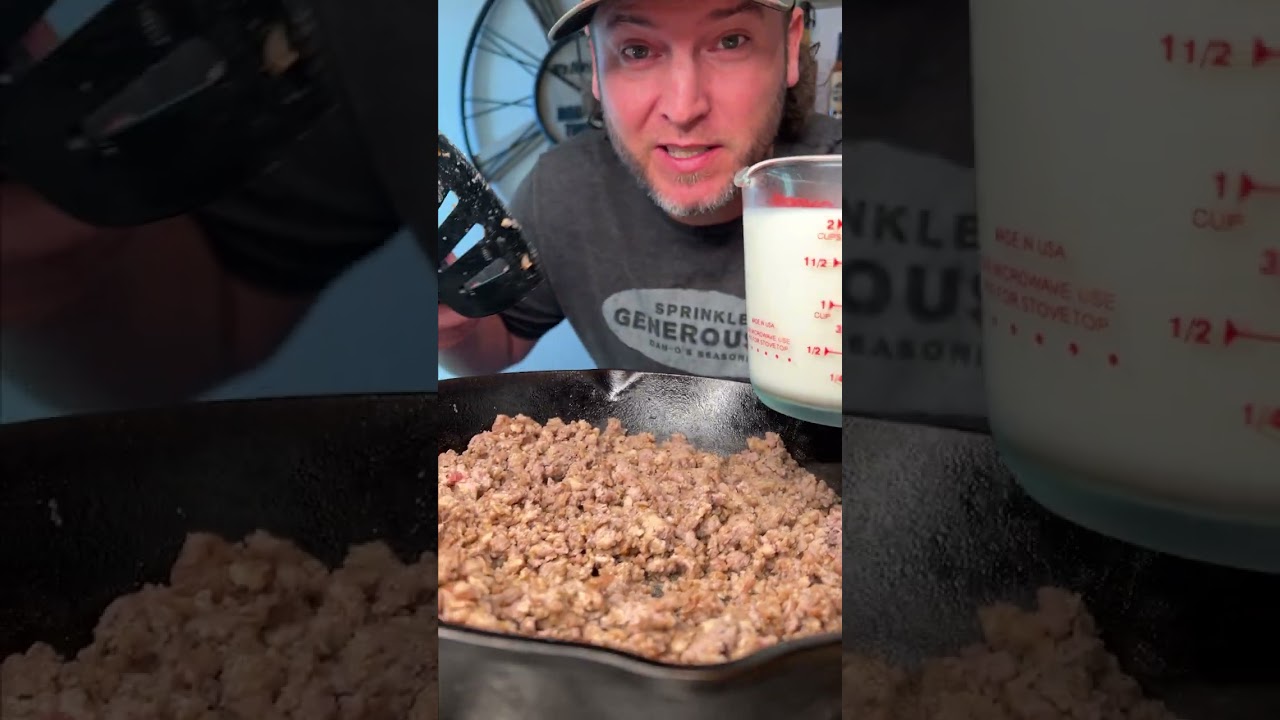
“Every diner in the South has a version. Most home cooks have tried it once, gotten dense biscuits or lumpy gravy, and decided it was too hard. It isn't hard. It's two simple recipes that share a pan and twenty minutes. The failures are always the same: overworked dough and a roux that got rushed. Fix those two things and you get buttery, layered biscuits under a velvet sausage gravy that makes people stop talking mid-bite.”
Why This Recipe Works
Biscuits and gravy is a dish that looks simple and hides genuine technique. Two components, each requiring a specific set of conditions to succeed, assembled at the last moment and served immediately. Most home attempts fail on one or both counts — dense, cracker-like biscuits under a gluey, floury gravy — and the cook blames the recipe. The recipe isn't the problem.
The Cold Butter Problem
A biscuit is not a bread. You are not trying to develop gluten. You are not trying to create a uniform, cohesive dough. You are trying to distribute chunks of cold butter through a flour matrix such that when the oven heat hits them, they vaporize into steam and physically separate the layers of dough apart. That is the entire mechanism behind flakiness.
Cold butter stays solid until the oven forces it to change state. Warm butter melts into the flour during mixing and produces a homogenous paste. The paste bakes into something resembling a dense cracker, not a biscuit. The rule is absolute: butter must be cold. Cube it and freeze it for ten minutes if your kitchen is warm. Work quickly once it hits the flour. Use a pastry cutter instead of your hands if you can — your fingertips run at body temperature and transfer heat to the butter faster than you'd expect.
The second law: mix less than feels right. Biscuit dough should look shaggy, lumpy, and slightly sticky when you turn it out. If it looks smooth and well-combined, you've already developed too much gluten and the biscuits will be tough. This is the hardest instinct to override — every other baking context rewards thorough mixing. Biscuits punish it.
The Roux Is Non-Negotiable
The gravy side has one critical step that most recipes underemphasize: cooking the roux. When you sprinkle flour over hot sausage drippings, the starch granules need to be fully hydrated by the hot fat before any liquid is added. This takes one full minute of stirring over medium heat. Skip it or rush it, and the raw starch flavor — that chalky, paste-like coating — survives into the finished gravy no matter how long you simmer it afterward.
You'll know the roux is ready when it smells faintly nutty and has shifted from pale white to a light tan. That color change represents the Maillard reaction beginning to develop flavor in the flour itself. It's also the signal that adding milk is now safe.
Add the milk in a slow, continuous stream while whisking. The whisk isn't decoration — it's mechanically breaking apart any starch clumps as they form, before they can set into lumps. A thick pour of cold milk into a hot roux produces lumps so fast that no amount of whisking fixes them. Slow and steady is the only approach that works.
The Assembly Logic
Biscuits and gravy is not a dish you hold. Split the biscuits the moment they rest, ladle the gravy while both components are hot, and serve immediately. The gravy tightens as it cools and will continue to tighten on top of the biscuits. By the time a plated portion sits for three minutes, the gravy should still be loose enough to pool between the biscuit halves. If it's already thick and set before plating, add milk and heat it up.
Black pepper is not a background seasoning here — it's a primary flavor. Southern sausage gravy should have an identifiable pepper presence that cuts through the richness of the sausage fat and milk. If you're tasting your gravy and thinking "this is fine," add more black pepper. That's what separates a good gravy from a memorable one.
Every technique in this recipe exists to solve a physical problem. Cold butter creates steam. A cooked roux binds without paste. Slow milk addition prevents lumps. Understand the why and you'll adapt instinctively when something starts going sideways.
Where Beginners Mess This Up
Before we start, read this. These are the 4 reasons your perfect biscuits and gravy (the southern diner secret) will fail:
- 1
Overworking the biscuit dough: Biscuit dough should be mixed until it just barely comes together — lumpy, shaggy, and slightly sticky. Every extra fold develops gluten, and developed gluten means dense, tough biscuits instead of the flaky, pull-apart layers you're after. Mix less than you think you need to. Stop the moment the dough holds together.
- 2
Using warm butter: Cold butter is the entire architecture of a flaky biscuit. When cold butter hits the oven, it releases steam and creates distinct layers. Warm or melted butter integrates into the flour and produces a dense, crumbly texture with no lift. Cube the butter and freeze it for 10 minutes before starting if your kitchen runs warm.
- 3
Rushing the roux: After sprinkling flour over the sausage drippings, you must cook it for a full minute before adding any milk. An undercooked roux produces pasty, floury-tasting gravy that coats your mouth in the worst possible way. The roux should smell faintly nutty and look slightly golden before the first drop of milk goes in.
- 4
Adding the milk too fast: Pour cold milk into a hot roux all at once and you get lumps. Every time. Add the milk in a slow, steady stream while whisking constantly, and the starch in the roux hydrates evenly into a smooth, pourable sauce. Patience here costs you thirty seconds and saves you a broken gravy.
The Video Reference Library
Want to see it in action? Here are the exact videos we analyzed and combined to build this foolproof recipe translation:
The primary source for this recipe. Clear technique demonstration of the roux method and biscuit lamination. Pay close attention to the butter size and how briefly the dough gets handled.
🛠️ Core Equipment
- Large cast iron skilletHandles both the sausage browning and the gravy in the same pan. Cast iron retains heat evenly, which prevents the gravy from breaking when you add the milk. A thin stainless skillet can create hot spots that scorch the roux.
- Pastry cutterCuts cold butter into flour without warming it with your hands. Fingertips work in a pinch but transfer body heat to the butter — a pastry cutter keeps everything cold and produces more consistent crumb.
- 2-inch round biscuit cutterA sharp cutter pressed straight down severs the dough cleanly and lets the layers rise vertically. Twisting the cutter seals the edges and prevents rise. A sharp knife works if you don't have a round cutter.
- Wire whiskNon-negotiable for lump-free gravy. A spoon can't break down starch clumps the way a whisk does. Keep it moving constantly while the milk goes in.
Perfect Biscuits and Gravy (The Southern Diner Secret)
🛒 Ingredients
- ✦2 cups all-purpose flour
- ✦½ cup whole wheat flour
- ✦2 teaspoons baking powder
- ✦½ teaspoon salt
- ✦6 tablespoons cold unsalted butter, cubed
- ✦¾ cup cold buttermilk
- ✦1 pound ground pork sausage (or turkey sausage)
- ✦2 tablespoons sausage drippings or butter
- ✦2 tablespoons all-purpose flour
- ✦2 cups whole milk
- ✦½ cup Greek yogurt (optional, for lighter version)
- ✦½ teaspoon black pepper, freshly ground
- ✦¼ teaspoon cayenne pepper
- ✦Salt to taste
👨🍳 Instructions
01Step 1
Preheat your oven to 450°F and line a baking sheet with parchment paper.
02Step 2
Whisk together the all-purpose flour, whole wheat flour, baking powder, and salt in a large mixing bowl.
03Step 3
Add the cold cubed butter to the flour mixture and use a pastry cutter or your fingertips to work it in until the texture resembles coarse breadcrumbs with some pea-sized pieces remaining.
04Step 4
Pour the buttermilk into the flour mixture and stir gently with a fork until the dough just comes together, being careful not to overwork it.
05Step 5
Turn the dough out onto a lightly floured surface and gently pat it to about ¾-inch thickness, then use a 2-inch round cutter to cut out biscuits, pressing straight down without twisting.
06Step 6
Place the biscuits on your prepared baking sheet and bake until golden brown on top, approximately 12 to 15 minutes.
07Step 7
While the biscuits bake, brown the ground sausage in a large [cast iron skillet](/kitchen-gear/review/cast-iron-skillet) over medium-high heat, breaking it into small pieces as it cooks for about 6 to 8 minutes until no pink remains.
08Step 8
Drain most of the fat from the sausage, leaving about 2 tablespoons of drippings in the pan.
09Step 9
Sprinkle the flour over the sausage and drippings, then stir constantly for 1 full minute to create a roux and cook off the raw flour taste.
10Step 10
Slowly pour the milk into the roux in a thin, steady stream while whisking continuously to prevent lumps, allowing the gravy to thicken gradually over medium heat.
11Step 11
Reduce heat to medium-low and simmer the gravy for 3 to 4 minutes, stirring frequently, until it reaches a smooth, pourable consistency.
12Step 12
Stir in the Greek yogurt if using, then season with black pepper, cayenne, and salt. Taste before adding salt — the sausage is already seasoned.
13Step 13
Let the biscuits rest for 5 minutes after pulling from the oven, then split each one in half and ladle the gravy generously over the top. Serve immediately.
Nutrition Per Serving
Estimates based on standard preparation. Adjustments alter macros.
🔄 Substitutions
Instead of Ground pork sausage...
Use Ground turkey or chicken sausage
Noticeably leaner and slightly less rich. The gravy will be lighter in color and texture. Compensate with an extra pinch of black pepper and a splash of Worcestershire to build back the savory depth.
Instead of All-purpose flour only (in biscuits)...
Use 75% all-purpose, 25% whole wheat flour
Adds fiber and a subtle nuttiness. Biscuits will be marginally denser but still flaky if the butter stays cold. This is already reflected in the ingredient list above.
Instead of Buttermilk...
Use Plain Greek yogurt thinned with 2 tablespoons milk
Adds slight tang and extra protein. The acidity activates the baking powder identically to buttermilk. Works seamlessly — most people can't tell the difference.
Instead of Whole milk (in gravy)...
Use Half whole milk, half unsweetened oat milk
Oat milk adds creaminess without a strong flavor signature. The gravy will be slightly thinner — let it reduce an extra minute to compensate.
🧊 Storage & Reheating
In the Fridge
Store biscuits and gravy separately in airtight containers for up to 3 days. Combined, they turn soggy overnight.
In the Freezer
Freeze biscuits (unbaked) for up to 2 months. Gravy freezes well for 1 month — thaw overnight in the fridge and whisk over low heat to recombine.
Reheating Rules
Reheat gravy in a skillet over low heat with a splash of milk, whisking until smooth. Reheat biscuits in a 350°F oven for 8 minutes — never microwave, or the exterior turns rubbery.
❓ Frequently Asked Questions
Why are my biscuits dense instead of flaky?
Two causes: warm butter or overworked dough. Cold butter is structural — it creates steam pockets that separate the layers. Warm butter melts into the flour and produces a uniform, dense crumb. Overworking activates gluten, which makes biscuits tough. Handle the dough as little as possible and keep everything cold.
My gravy is lumpy. Can I fix it?
Yes. Transfer the gravy to a blender and blend briefly, or press it through a fine-mesh sieve. Prevention is better: always add milk slowly to a hot roux while whisking constantly, never all at once.
Can I make the biscuits ahead of time?
Cut the raw biscuits and freeze them on a sheet pan, then bake straight from frozen. Pre-baked biscuits get soft and lose their texture within a few hours. The freezer method gives you fresh-baked results on demand.
What sausage works best for the gravy?
Spicy pork breakfast sausage produces the most flavorful gravy because of its fennel, sage, and chili seasoning profile. Mild sausage works but produces a blander result. Turkey sausage is significantly leaner but needs extra seasoning to compensate for the reduced fat content.
Why does my gravy taste like flour?
You didn't cook the roux long enough. After adding flour to the drippings, you must stir it over heat for a full minute before adding any liquid. This cooks out the raw starch taste. The roux should smell faintly toasted and look slightly golden — not pale and pasty.
How do I get the biscuits to rise taller?
Three factors: baking powder freshness, oven temperature, and cut technique. Old baking powder loses its lift — replace it if it's been open more than six months. A fully preheated 450°F oven causes immediate rise. Pressing the cutter straight down (never twisting) keeps the layers unsealed so they can separate vertically during baking.

The Science of
Perfect Biscuits and Gravy (The Southern Diner Secret)
We turned everything on this page into a beautiful, flour-proof PDF cheat sheet. Print it out, stick it to your fridge, and never mess up your perfect biscuits and gravy (the southern diner secret) again.
*We'll email you the high-res PDF instantly. No spam, just perfectly cooked meals.
AlmostChefs Editorial Team
We translate the internet's most popular cooking videos into foolproof, beginner-friendly written recipes. We analyze multiple methods, test them in our kitchen, and engineer a single "Master Recipe" that gives you the best possible result with the least possible stress.