Crispy Birria Quesa Tacos (The Dip-and-Fry Method That Changes Everything)
Slow-braised beef short ribs and chuck in a deep chile-tomato consommé, stuffed into cheese-crisped corn tortillas and fried until shatteringly crunchy. We broke down the most-watched birria taco methods to engineer one technique that nails the consommé depth and crispy cheese shell every time.
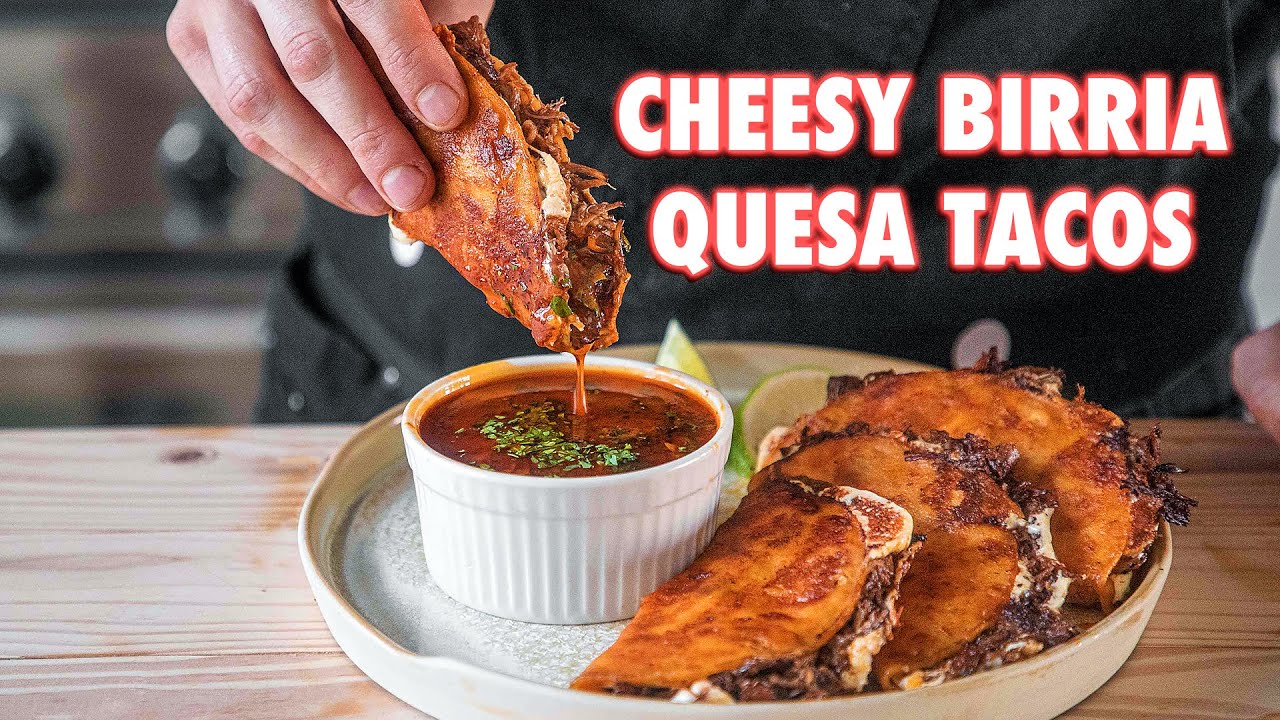
“Birria quesa tacos went viral for a reason — the combination of chile-braised beef, molten cheese, and a shatteringly crispy tortilla dipped in rich bone consommé is genuinely unlike anything else in taco culture. But most home attempts produce soggy tortillas, bland broth, and beef that tastes like pot roast. The difference comes down to three things: which chiles you use and how you prepare them, how long you let the beef render in its own fat before braiding, and whether you actually let the consommé reduce to the right consistency before dipping.”
Why This Recipe Works
Birria quesa tacos are not complicated food. They are, however, precise food — and the gap between the viral video that made you want to make them and the soggy, bland result you got on your first attempt is almost entirely explained by two overlooked techniques: how you prepare the dried chiles, and how you manage the consommé fat during frying. Get those two things right and everything else is just assembly.
The Chile Stack Is Architecture
The consommé is the soul of birria, and the consommé is built from dried chiles. Not one. Four. This is not about heat tolerance or showing off — it's about the fact that each dried chile variety contributes a completely different flavor compound that exists nowhere else in the ingredient list. Guajillo brings fruity, slightly tart backbone that gives the broth its characteristic bright red color and acidic lift. Ancho — which is simply a dried poblano — contributes dark, earthy, almost chocolate-adjacent depth. Árbol is pure capsaicin heat without much flavor nuance, used sparingly for the back-of-throat warmth that keeps you dipping. Pasilla adds a dried raisin sweetness that rounds all the sharp edges.
Every element is load-bearing. You cannot swap "three dried chiles, any kind" and get the same result, because you're not building flavor in layers — you're building it in dimensions. The finished consommé should taste complex enough that you can't isolate any individual note. That's the target.
The preparation of those chiles is equally non-negotiable. Dried chiles come with a layer of dusty, acrid bitterness on their surface that must be driven off before anything else happens. A 30-45 second dry toast in a screaming hot skillet — pressing each chile flat with a spatula to maximize contact — volatilizes those bitter compounds and activates the sweet, smoky aromatics underneath. Then the chiles must soak in boiling water for 20 minutes to rehydrate fully. Underprepared chiles produce harsh broth. Properly prepared chiles produce consommé you want to drink straight from the bowl.
The Braise Is About Time, Not Attention
Bone-in beef short ribs and chuck are the right cut combination for birria, and the reason is collagen. Both cuts are loaded with connective tissue that, over three hours of low, slow braising in the chile consommé, converts to gelatin. That gelatin is what gives the finished broth its silky, lip-coating body. It's what makes the dipped tortilla cling to the fat instead of sliding off. It's the difference between broth and consommé.
You need a proper Dutch oven here — not a thin stockpot, not a sauté pan with a lid. The mass and conductivity of cast iron or enameled cast iron creates a stable, even heat environment where the liquid simmers uniformly without scorching spots. Scorched consommé develops bitter, acrid notes that no amount of additional chile or seasoning can mask. Use the right vessel and the braise essentially manages itself.
The sear that precedes the braise is not optional. High-heat browning on all sides of the beef — in batches, with space between pieces — triggers the Maillard reaction on the meat's surface, generating hundreds of flavor compounds that dissolve into the consommé during the long cook. Unseared birria beef tastes boiled. Properly seared birria beef tastes like something you'd order twice.
The Fat Layer Is the Secret Weapon
After three hours of braising, the surface of your consommé will be covered in a red-orange fat layer — rendered beef fat thoroughly infused with every chile, spice, and aromatic compound in the pot. Most first-time cooks skim this off and throw it away, reasoning that less fat means healthier tacos. This is a catastrophic mistake.
That fat is your frying medium. When you dip a corn tortilla in hot consommé and then lay it on a cast iron skillet greased with that rendered birria fat, two things happen simultaneously: the fat on the tortilla surface begins to render and crisp the corn, and the residual consommé moisture generates steam that keeps the interior of the tortilla pliable enough to fold without cracking. The result is a shell that is simultaneously crispy on the outside and just flexible enough to hold its shape under the weight of beef and melted cheese.
This is the technique that made quesabirria go viral — not the cheese, not the consommé dipping cup on the side, but the physics of a fat-coated, heat-crisped tortilla that shatters when you bite it. Replicate that and you have the dish. Ignore the fat layer and you have a mildly interesting beef taco.
The Assembly Window Is Short
Once the tortillas hit the pan, you have about four minutes of working time before the cheese goes from melted to overcooked and the tortilla transitions from crispy to charred. Work fast. Lay the tortilla, add cheese immediately, add beef on top of the cheese, and watch the edges. When the cheese closest to the rim starts to bubble and brown against the pan, fold and flip. That caramelized cheese edge is not a mistake — it's the best bite on the plate. Every component in this dish is engineered to reward urgency. Don't overthink the assembly. Move.
Where Beginners Mess This Up
Before we start, read this. These are the 4 reasons your crispy birria quesa tacos (the dip-and-fry method that changes everything) will fail:
- 1
Using a single chile variety: Birria consommé gets its complexity from layering dried chiles — not one, but three or four. Guajillo provides fruity backbone. Ancho adds earthy depth. Árbol brings heat. Pasilla contributes a raisin-like sweetness. Using only guajillo or only ancho gives you a one-dimensional broth that tastes like enchilada sauce. You need the full stack.
- 2
Skipping the toast-and-rehydrate step: Dried chiles have an acrid, dusty bitterness locked into their skin. Toasting them dry in a hot skillet for 30-45 seconds activates their oils and drives off that bitterness. Then they need to soak in hot water for 20 minutes to fully rehydrate before blending. Skipping either step produces a broth with a harsh, papery aftertaste that no amount of salt will fix.
- 3
Dipping cold or thin consommé: The consommé must be hot and slightly reduced — thick enough to coat a spoon — when you dip the tortilla. Cold or watery consommé doesn't cling to the tortilla surface, which means no color, no flavor transfer, and a soggy rather than crunchy fry. Skim the fat layer and keep the consommé at a rolling simmer throughout service.
- 4
Overcrowding the pan during frying: Each dipped tortilla needs direct contact with the hot griddle surface to develop the cheese crust. If you crowd the pan, the temperature drops and the cheese steams instead of crisping. Work in batches of two, maximum.
The Video Reference Library
Want to see it in action? Here are the exact videos we analyzed and combined to build this foolproof recipe translation:
The foundational video for this recipe. Covers the chile stack, braise technique, consommé reduction, and the dip-and-fry method with clear visual cues for each stage.
A detailed walkthrough of the chile preparation and blending stage, with close-up shots of the correct toasting color and rehydration consistency.
Focused on the frying stage and consommé service. Shows exactly what a properly reduced, dip-ready consommé looks like and how to build the cheese layer before folding.
🛠️ Core Equipment
- Dutch oven or heavy braising potThe three-hour braise requires sustained, even heat with no hot spots. A thin pot will scorch the bottom of the consommé and turn the chiles bitter. A [Dutch oven](/kitchen-gear/review/dutch-oven) with at least a 6-quart capacity is the right tool.
- Blender (high-powered)The rehydrated chiles, tomatoes, and aromatics need to blend into a completely smooth purée before entering the braise. An underpowered blender leaves chile skin fragments that give the consommé a gritty texture. A [high-powered blender](/kitchen-gear/review/blender) does this in 60 seconds.
- Cast iron skillet or comalThe dip-and-fry step requires a pan that holds heat aggressively and recovers fast between batches. A [cast iron skillet](/kitchen-gear/review/cast-iron-skillet) or traditional comal is ideal — it stays hot even when you lay a cold dipped tortilla on it.
- Fine-mesh skimmer or ladleYou need to skim the fat that rises to the top of the consommé during the braise — then save it. That rendered beef-and-chile fat is what you brush or spoon into the pan before frying each taco. It is liquid gold.
Crispy Birria Quesa Tacos (The Dip-and-Fry Method That Changes Everything)
🛒 Ingredients
- ✦3 pounds beef short ribs, bone-in
- ✦1.5 pounds beef chuck, cut into 3-inch chunks
- ✦5 dried guajillo chiles, stems and seeds removed
- ✦3 dried ancho chiles, stems and seeds removed
- ✦2 dried chiles de árbol, stems removed
- ✦1 dried pasilla chile, stem and seeds removed
- ✦4 Roma tomatoes, halved
- ✦1 medium white onion, quartered (plus extra for serving)
- ✦8 garlic cloves, peeled
- ✦2 teaspoons dried Mexican oregano
- ✦1 teaspoon ground cumin
- ✦1/2 teaspoon ground cinnamon
- ✦1/4 teaspoon ground cloves
- ✦2 bay leaves
- ✦4 cups beef broth
- ✦2 cups water
- ✦2 tablespoons apple cider vinegar
- ✦2 tablespoons neutral oil
- ✦Salt and black pepper to taste
- ✦18 small corn tortillas
- ✦3 cups Oaxacan cheese or low-moisture mozzarella, shredded
- ✦1/2 cup fresh cilantro, chopped
- ✦Lime wedges, for serving
👨🍳 Instructions
01Step 1
Heat a dry skillet over medium-high heat. Toast the guajillo, ancho, árbol, and pasilla chiles in batches for 30-45 seconds per side until fragrant and slightly darkened — but not blackened.
02Step 2
Transfer toasted chiles to a bowl and cover with boiling water. Submerge with a small plate and soak for 20 minutes until fully softened.
03Step 3
While chiles soak, char the tomatoes, onion quarters, and garlic cloves in the same dry skillet over high heat for 8-10 minutes, turning occasionally, until charred in spots.
04Step 4
Drain the rehydrated chiles (discard soaking liquid — it's bitter). Blend chiles, charred tomatoes, onion, garlic, oregano, cumin, cinnamon, cloves, and 1 cup beef broth until completely smooth, 60-90 seconds.
05Step 5
Pat the short ribs and chuck dry with paper towels. Season aggressively with salt and pepper. Heat 2 tablespoons oil in a [Dutch oven](/kitchen-gear/review/dutch-oven) over high heat. Sear the meat in batches until deeply browned on all sides, 3-4 minutes per side.
06Step 6
Pour the chile purée into the pot with the seared meat. Add remaining beef broth, water, bay leaves, and apple cider vinegar. Stir to combine. Bring to a boil, then reduce heat to low, cover, and braise for 3 hours.
07Step 7
Remove meat from the pot and let cool slightly. Shred with two forks, discarding bones and any large fat pieces. Taste and season with salt.
08Step 8
Strain the consommé through a fine-mesh sieve into a clean pot. Bring to a simmer over medium heat. Use a ladle or skimmer to collect the red-orange fat layer from the surface — save this in a small bowl for frying.
09Step 9
Heat a [cast iron skillet](/kitchen-gear/review/cast-iron-skillet) or comal over medium-high heat. Spoon a thin layer of reserved birria fat into the pan. Working one or two at a time, briefly dip each tortilla into the hot consommé, then lay flat on the hot skillet.
10Step 10
Immediately add a handful of shredded cheese to one half of the tortilla. Pile shredded birria beef on top of the cheese. Let cook for 2 minutes until the cheese begins to melt and the bottom crisps and takes on color.
11Step 11
Fold the tortilla in half over the filling, pressing gently. Cook another 60-90 seconds per side until the exterior is shatteringly crispy and the cheese is fully melted and slightly caramelized at the edges.
12Step 12
Serve immediately with a small cup of hot consommé for dipping, topped with fresh cilantro, diced white onion, and a squeeze of lime.
Nutrition Per Serving
Estimates based on standard preparation. Adjustments alter macros.
🔄 Substitutions
Instead of Beef short ribs and chuck...
Use Bone-in lamb shoulder or goat shoulder
More traditional. Adds gamey complexity. Increase braise time by 45-60 minutes until meat slides off the bone.
Instead of Oaxacan cheese...
Use Low-moisture mozzarella or Chihuahua cheese
Mozzarella melts well but lacks the stringy pull of quesillo. Chihuahua is the closest in flavor profile and widely available in the US.
Instead of Dried árbol chiles...
Use Dried cayenne or a pinch of crushed red pepper flakes
Árbol has a clean, bright heat. Cayenne is hotter and more one-dimensional. Use half the quantity and taste before adding more.
Instead of Beef broth...
Use Chicken broth or water with a tablespoon of soy sauce
Chicken broth lightens the consommé considerably. Water-plus-soy gives umami body without the beefy flavor. Both work but yield a noticeably different depth.
🧊 Storage & Reheating
In the Fridge
Store braised beef and consommé separately in airtight containers for up to 4 days. Do not pre-assemble tacos — they cannot be stored once fried.
In the Freezer
Freeze beef and consommé in separate containers for up to 3 months. The fat layer in the consommé protects it during freezing. Thaw overnight in the fridge.
Reheating Rules
Reheat beef gently in a covered skillet with a splash of consommé over low heat. Reheat consommé in a small saucepan. Fry fresh tacos to order — never reheat a birria taco. The texture cannot be recovered.
❓ Frequently Asked Questions
Why are my birria tacos soggy instead of crispy?
Two likely causes: the consommé is too thin and watery when you dip, so it soaks the tortilla instead of coating it, or the pan wasn't hot enough when you laid the tortilla down. The consommé should simmer actively and coat a spoon. The pan should be screaming hot before each batch.
Can I make birria in a slow cooker?
Yes, with caveats. Set it on high for 6-7 hours or low for 9-10 hours. The braise will work fine, but you won't get as much Maillard depth from the sear, and the consommé won't reduce naturally. After cooking, transfer the liquid to a saucepan and reduce it on the stovetop for 15-20 minutes before serving.
What's the difference between birria tacos and quesabirria tacos?
Birria tacos are just the braised meat in a tortilla. Quesabirria adds cheese — and more importantly, the dip-and-fry technique where the tortilla is coated in consommé fat before being crisped on a griddle. The 'quesa' prefix signals cheese and the crispy-fried method. Most viral birria taco content is technically quesabirria.
Do I need all four types of dried chiles?
Technically no, but practically yes. Each chile contributes something distinct — fruity acidity, earthy sweetness, heat, and body. If you can only find guajillo and ancho, the consommé will still taste good but will be noticeably simpler. Don't try to make birria with a single chile variety.
Is the fat skimmed from the consommé safe to cook with?
Yes — this rendered beef-and-chile-infused fat is the secret weapon of the whole recipe. It's what you use to fry the dipped tortillas, and it's what gives them their distinctive red-orange color and deep flavor. It's not a waste product; it's an ingredient.
Can I use flour tortillas instead of corn?
You can, but the texture is fundamentally different. Flour tortillas don't crisp the same way after the consommé dip — they tend to get chewy rather than crunchy. Corn tortillas have the structural rigidity and starch content that creates the signature shatter when fried correctly. For authentic quesabirria texture, corn is non-negotiable.

The Science of
Crispy Birria Quesa Tacos (The Dip-and-Fry Method That Changes Everything)
We turned everything on this page into a beautiful, flour-proof PDF cheat sheet. Print it out, stick it to your fridge, and never mess up your crispy birria quesa tacos (the dip-and-fry method that changes everything) again.
*We'll email you the high-res PDF instantly. No spam, just perfectly cooked meals.
AlmostChefs Editorial Team
We translate the internet's most popular cooking videos into foolproof, beginner-friendly written recipes. We analyze multiple methods, test them in our kitchen, and engineer a single "Master Recipe" that gives you the best possible result with the least possible stress.