Better Than Takeout Chicken Fried Rice (30-Minute Wok Masterclass)
Tender chicken, scrambled eggs, and day-old rice hit a screaming-hot wok for that signature slightly-charred, separated-grain texture you can never quite get from a delivery box. We broke down the technique so you can nail restaurant-quality fried rice at home in under 30 minutes.

“Every home cook has tried to make fried rice and ended up with something steamed, clumped, and vaguely sad. The gap between that and the slightly smoky, separated-grain version at your favorite spot comes down to two things: cold rice and a pan that's actually hot. Get those right and everything else is just mise en place.”
Why This Recipe Works
Fried rice is one of those dishes that looks deceptively simple and consistently disappoints when you actually make it at home. The ingredients are cheap and familiar. The technique looks like controlled chaos. Yet the result is almost always underdone, gummy, or flavorless compared to the version sitting in a container on your counter twenty minutes after a phone call.
The gap is not about secret ingredients. It's about two physical conditions — cold rice and violent heat — that almost no home cook actually achieves.
The Rice Problem
Every variable in this recipe is negotiable except one: the rice must be cold, dry, and separated before it touches the wok. Day-old rice that's spent a night in the refrigerator has lost most of its surface moisture. Each grain is firm, individual, and ready to take on color instead of steam. Fresh rice, by contrast, is saturated. The moment it hits oil, it releases that moisture into the pan, drops the temperature, and the entire batch steams itself into a clumped, gummy mass. No technique rescues it from there.
If you don't plan ahead, the sheet pan shortcut is your only option: spread fresh rice in a single layer, toss to separate, and refrigerate uncovered for at least an hour. It's not as effective as overnight, but it's significantly better than nothing.
The Heat Equation
A restaurant wok burner runs at roughly 150,000 BTU. A standard home range tops out around 12,000-18,000. That gap is not just about speed — it's about the Maillard reaction, the same chemical process that makes seared meat taste different from boiled meat. At restaurant temperatures, the surface of each rice grain browns almost instantly on contact. At home temperatures, the grain just warms through.
You compensate with two tactics. First, get your pan — ideally a carbon steel wok or a cast iron skillet — as hot as your burner allows before anything goes in. The oil should ripple and smoke slightly. Second, work in smaller batches. A crowded pan drops in temperature immediately as the cold ingredients absorb the heat. Half the rice, properly browned, is better than all the rice steamed together.
The Sauce Architecture
The instinct is to pour the soy sauce and oyster sauce directly onto the rice. Resist it. By the time the sauce touches the rice, you want it to have already hit the hot metal of the wok edge and started to caramelize. That brief contact — liquid hitting 400-degree carbon steel — concentrates the sugars in the oyster sauce and adds a roasted depth that you completely bypass when you dump the sauce straight onto rice sitting in the middle of the pan.
The sesame oil is the other critical timing call. It goes on at the very end, off or barely on the heat, as a finishing drizzle. Sesame oil is extracted from toasted sesame — that toasted aroma is what you're buying. Cooking it burns off the aromatic compounds entirely. You're left with plain oil and a bill for something that no longer tastes like anything.
The Egg Strategy
Scramble the eggs separately and add them back at the end. This is not optional. Eggs scrambled directly in the wok with the rice turn into wet, rubbery pieces distributed unevenly through the dish. Scrambled separately in a hot pan with a touch of oil, pulled slightly before they look done, and returned at the last moment — they stay tender, fluffy, and distinct. The residual heat of the wok finishes them without overcooking.
The Mise en Place Imperative
This dish cooks in twelve minutes at high heat with constant motion. There is no pause to chop the garlic. There is no moment to measure the oyster sauce. If you haven't staged every ingredient before the wok gets hot, you will be scrambling while something burns, and the recovery options are limited. Every serious fried rice recipe tells you to prep everything first. Every home cook skips this step the first time and deeply regrets it.
The good news: once the prep is done, the actual cooking is fast, satisfying, and significantly better than delivery.
Where Beginners Mess This Up
Before we start, read this. These are the 4 reasons your better than takeout chicken fried rice (30-minute wok masterclass) will fail:
- 1
Using freshly cooked rice: Fresh rice is full of surface moisture. The moment it hits oil, it steams instead of fries, turning the whole pan into a clumpy, gummy mess. Day-old rice that's been refrigerated has dried out — each grain is separate, firm, and ready to take on color. If you don't have day-old rice, spread freshly cooked rice on a sheet pan and refrigerate for 1 hour minimum.
- 2
Cooking on medium heat: Fried rice lives and dies by wok hei — the smoky, slightly charred quality that comes from sustained high heat. Medium heat steams everything in its own moisture. Crank the burner as high as it goes, let the oil ripple and shimmer, then add your ingredients. If the pan isn't hot enough that you hear an immediate sizzle, nothing you do after will fix it.
- 3
Crowding the wok: This recipe is sized for a large wok or 14-inch skillet. If you use a standard 10-inch pan, the rice will pile up, trap steam, and stew. Work in two batches if your pan is small. A crowded wok drops temperature immediately and you never recover.
- 4
Adding sauce too early: Soy sauce and oyster sauce added before the rice has browned just stains everything brown and prevents any Maillard reaction from happening. Get the rice properly fried first — you should see light browning on the grains — then pour the sauce around the outer edge of the wok so it hits hot metal before coating the rice.
The Video Reference Library
Want to see it in action? Here are the exact videos we analyzed and combined to build this foolproof recipe translation:
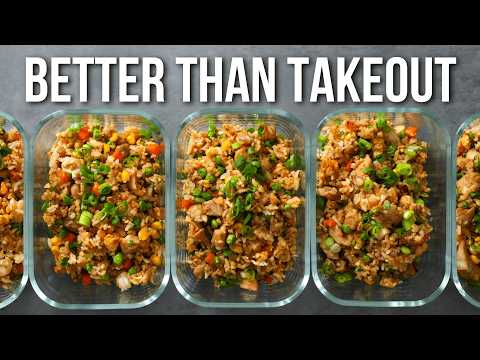
The source video that nails the high-heat technique and demonstrates exactly what properly separated, lightly charred rice should look like before the sauce goes in.
2. Wok Hei Technique at Home
Deep dive into achieving wok hei on a standard home range — covers heat management, batch sizing, and the toss technique that gets air into the rice.
3. Day-Old Rice ExplainedWhy refrigerated rice behaves differently than fresh, and the quick-dry sheet pan shortcut when you don't have time to plan ahead.
🛠️ Core Equipment
- Large wok or 14-inch skillet ↗Surface area is everything. A wide pan keeps rice spread out in a thin layer, which is how you get even browning. A small pan means stacking, which means steaming. Carbon steel woks heat faster and develop seasoning that adds flavor over time.
- Wooden spatula or wok spatula ↗You need to scrape the bottom constantly without scratching. A flat wooden or metal wok spatula lets you press clumps apart and keep everything moving. Silicone won't survive the heat and doesn't give you the scraping control you need.
- High-BTU burner or outdoor propane setup ↗Home ranges top out around 15,000 BTU. Restaurant woks run at 150,000. You can compensate by working in smaller batches, but a [cast iron skillet](/kitchen-gear/review/cast-iron-skillet) retains more heat than thin pans and helps bridge the gap when indoor cooking.
Better Than Takeout Chicken Fried Rice (30-Minute Wok Masterclass)
🛒 Ingredients
- ✦3 cups cooked chicken breast, cut into bite-sized pieces
- ✦3.5 cups day-old white rice, cold and separated
- ✦3 large eggs
- ✦3.5 tablespoons soy sauce
- ✦3.5 tablespoons vegetable oil, divided
- ✦3 cloves garlic, minced
- ✦1 tablespoon fresh ginger, minced
- ✦1.5 teaspoons sesame oil
- ✦1.75 cups frozen mixed vegetables (peas, carrots, corn)
- ✦4 scallions, chopped (white and green parts separated)
- ✦0.5 teaspoon white pepper
- ✦1.5 tablespoons oyster sauce
- ✦0.25 cup low-sodium chicken broth
- ✦0.5 teaspoon garlic powder
👨🍳 Instructions
01Step 1
Prepare all ingredients and arrange them within arm's reach of your cooking station before turning on the heat.
02Step 2
Crack the eggs into a bowl and whisk with a pinch of white pepper until fully combined.
03Step 3
Heat 1 tablespoon of vegetable oil in a large wok or skillet over medium-high heat until shimmering, about 1 minute.
04Step 4
Pour the whisked eggs into the hot oil and scramble, breaking into small pieces, until just set and no longer wet, about 2-3 minutes. Transfer to a clean plate.
05Step 5
Add the remaining 2.5 tablespoons of vegetable oil to the same wok and increase heat to high until the oil ripples across the surface.
06Step 6
Add minced garlic and ginger to the hot oil and cook for about 30 seconds, stirring constantly, until fragrant.
07Step 7
Add the diced chicken and cook, stirring occasionally, for about 2 minutes until the edges are lightly charred.
08Step 8
Pour the cold rice into the wok and use a spatula to break apart any clumps by pressing and turning continuously.
09Step 9
Stir-fry the rice over high heat for 3-4 minutes, tossing and scraping the bottom of the wok to ensure even heating and light browning.
10Step 10
Add the frozen vegetables and continue cooking, stirring, for about 2 minutes until heated through.
11Step 11
Return the scrambled eggs to the wok along with the white parts of the scallions. Mix everything together thoroughly.
12Step 12
Pour the soy sauce, oyster sauce, and chicken broth around the outer edge of the wok — not directly onto the rice — and toss everything together for 1-2 minutes until absorbed and well-coated.
13Step 13
Taste and adjust seasoning with additional soy sauce or white pepper as needed.
14Step 14
Drizzle sesame oil over the top and toss gently to distribute.
15Step 15
Transfer to a serving platter and garnish with the green parts of the scallions.
Nutrition Per Serving
Estimates based on standard preparation. Adjustments alter macros.
🔄 Substitutions
Instead of Vegetable oil...
Use Avocado oil or light olive oil
Avocado oil has a higher smoke point than most vegetable oils and a neutral flavor — a straightforward swap. Light olive oil works but extra virgin does not; the polyphenols burn and turn bitter at wok temperatures.
Instead of Cooked chicken breast...
Use Cooked turkey breast or firm tofu
Turkey is essentially a neutral swap — same lean protein, nearly identical texture. For tofu, press it dry, cube it, and let it develop a crust in the wok before adding the rice. It absorbs the soy-oyster sauce beautifully.
Instead of Soy sauce and oyster sauce...
Use Low-sodium soy sauce and reduced-sodium oyster sauce
Drops the sodium profile significantly without gutting the umami. The flavor is slightly less aggressive. Add a tiny pinch of salt at the end if it tastes flat.
Instead of White rice...
Use Brown rice or a 50/50 brown rice and cauliflower rice blend
Brown rice must be cooked, chilled, and fully separated before it goes in the wok — it needs even more drying time than white rice. The cauliflower blend reduces carbs considerably but gets soft faster; keep your heat very high and move fast.
🧊 Storage & Reheating
In the Fridge
Store in an airtight container for up to 4 days. The flavor actually improves on day two as the sauce fully penetrates the rice.
In the Freezer
Freeze in single-serving portions for up to 2 months. Spread on a sheet pan to freeze flat before transferring to bags — prevents clumping.
Reheating Rules
A hot skillet with a small splash of water and a tight lid for 3-4 minutes is ideal. The steam re-hydrates the rice without making it greasy. Microwave works but softens the texture — add 30 seconds at a time, covered.
❓ Frequently Asked Questions
Why is my fried rice soggy?
Either your rice was too fresh, your pan wasn't hot enough, or you crowded the wok. All three cause steaming instead of frying. Day-old refrigerated rice, maximum heat, and enough pan surface area to spread the rice in a thin layer are the only fixes.
Do I have to use a wok?
No. A 14-inch stainless steel or [cast iron skillet](/kitchen-gear/review/cast-iron-skillet) works well. What you actually need is a large, heavy surface that holds high heat without cooling down the moment ingredients hit it. Thin non-stick pans fail here because they can't take the heat and they lose temperature too fast.
Can I use freshly cooked rice?
Technically yes, but the results will be noticeably inferior. Fresh rice is saturated with moisture. If you have no other option, spread it on a sheet pan, toss it to separate the grains, and refrigerate uncovered for at least 1 hour. Still not as good as overnight, but usable.
What is wok hei and can I achieve it at home?
Wok hei literally means 'breath of the wok' — the smoky, slightly charred quality from cooking at extreme heat in a seasoned carbon steel wok. Home ranges can't fully replicate it, but you can get closer by using a carbon steel wok on your highest burner, working in smaller batches, and letting the rice sit still against the surface between tosses to develop browning.
Why does restaurant fried rice taste different from mine?
Three main reasons: they use significantly more oil than recipes admit, their BTU output is ten times higher than a home stove, and they're using woks that have been seasoned for years. You can close most of the gap with cold rice, maximum heat, and slightly more oil than feels comfortable.
Can I add more vegetables?
Yes, but keep total vegetable volume similar or cook them separately first. Adding a large quantity of cold vegetables drops the wok temperature dramatically and you lose all the browning you built. Pre-cook anything dense (broccoli, snap peas, bell pepper) in a separate pan or blanch briefly, then add to the wok at the same stage as the frozen vegetables.
The Science of
Better Than Takeout Chicken Fried Rice (30-Minute Wok Masterclass)
We turned everything on this page into a beautiful, flour-proof PDF cheat sheet. Print it out, stick it to your fridge, and never mess up your better than takeout chicken fried rice (30-minute wok masterclass) again.
*We'll email you the high-res PDF instantly. No spam, just perfectly cooked meals.
AlmostChefs Editorial Team
We translate the internet's most popular cooking videos into foolproof, beginner-friendly written recipes. We analyze multiple methods, test them in our kitchen, and engineer a single "Master Recipe" that gives you the best possible result with the least possible stress.