Better Than PF Chang's Chicken Lettuce Wraps (30-Minute Weeknight Fix)
Seasoned ground chicken with crisp water chestnuts, mushrooms, and a balanced umami-forward sauce served in cold lettuce cups. We broke down the restaurant formula to give you the same savory-sweet-tangy filling at home in under 30 minutes — no reservations, no markup.

“PF Chang's chicken lettuce wraps have a cult following for a reason: the filling hits every flavor note simultaneously — salty, sweet, acidic, savory — while the cold lettuce provides a crunch that no side dish can replicate. Most copycat recipes get within 70% of the original. The missing 30% is always the same: overcrowded pan, undercooked aromatics, and sauce added too early. Fix those three things and you're past 100%.”
Why This Recipe Works
Chicken lettuce wraps are one of those dishes that seems deceptively simple — ground meat, some vegetables, sauce, leaves — until you try to replicate the restaurant version and get something that tastes like a deconstructed stir-fry with no real identity. The gap between mediocre homemade lettuce wraps and the PF Chang's version that people order on every visit comes down to three specific technical decisions, and none of them involve exotic ingredients.
Heat Management Is the Whole Recipe
This is a high-heat dish and it needs to be treated like one. The ground chicken has to sear, not steam. The aromatics have to bloom in hot fat, not sweat in a crowd. The sauce has to reduce and coat, not pool at the bottom of the pan.
The first bottleneck is pan size. Ground chicken releases moisture aggressively as it cooks — roughly 15-20% of its weight in liquid in the first few minutes of heat. In a 10-inch pan with 1.25 pounds of meat, that liquid has nowhere to go. The temperature in the pan drops, the meat starts simmering instead of browning, and you end up with grey, spongy crumbles in a watery base. A large wok or 12-inch skillet solves this by giving that liquid enough surface area to evaporate before it accumulates. Maximum surface contact, maximum evaporation, actual browning.
The Aromatics Window
Garlic and ginger are the backbone of this dish's flavor, and they have an extremely narrow cooking window before they cross from fragrant to acrid. That window is approximately 60-90 seconds over medium-high heat with constant movement. This is why they go in after the chicken is already out of the pan — a fresh film of oil, lower starting temperature, and your full attention. Add them into a pan still crowded with chicken and they'll steam instead of bloom, producing a dull, muted flavor instead of the sharp, floral punch that defines the dish.
The mushrooms serve a structural function as much as a flavor one. Finely diced cremini add body and a meaty, umami-forward chew that bulk out the filling without adding fat or changing the protein balance. Dice them fine — the same size as the water chestnuts — so every bite has a consistent texture rather than alternating chunks of soft mushroom and crunchy water chestnut.
Pre-Building the Sauce
The sauce has to be pre-mixed in a small bowl before anything touches heat. This isn't a suggestion — it's a structural requirement of the recipe. Cornstarch, which is what gives this sauce its glossy, clingy finish, will form lumps the instant it contacts hot liquid if it isn't dissolved in cold liquid first. You cannot whisk those lumps out. You end up with a starchy, grainy coating instead of a smooth glaze.
The ratio matters too. Hoisin brings sweetness and fermented depth. Soy sauce brings salt and umami. Rice vinegar cuts through both with brightness and keeps the sauce from tasting flat. Sesame oil goes in as a finishing fat — it carries aromatic compounds rather than acting as a cooking medium. Sriracha is optional on paper and essential in practice. The heat doesn't read as spicy; it reads as complexity.
The Temperature Contrast Is the Dish
The filling goes in warm. The lettuce goes in cold. This is not a preference — it's the entire sensory experience of the dish. Warm, savory, yielding filling against a cold, crisp, neutral leaf creates the kind of textural contrast that makes people stop mid-conversation to comment on their food. Skip the refrigeration step, serve room-temperature lettuce, and the dish becomes a lukewarm salad bowl that happens to come in a leaf.
Chill the leaves before you start cooking. By the time the filling is done, they'll be perfectly cold.
Where Beginners Mess This Up
Before we start, read this. These are the 4 reasons your better than pf chang's chicken lettuce wraps (30-minute weeknight fix) will fail:
- 1
Overcrowding the pan: Ground chicken releases a significant amount of moisture when it cooks. If your pan is full, that moisture has nowhere to go and you end up braising instead of searing. The result is grey, rubbery meat with no browning and a waterlogged sauce. Use a large skillet or wok with enough surface area to spread the meat in a single layer.
- 2
Adding garlic and ginger too early: Both burn fast over medium-high heat. Add them after the chicken is out of the pan, into a fresh film of oil, and keep them moving. Thirty seconds of undisturbed burnt garlic will push a bitter, acrid note through the entire dish that no amount of soy sauce can fix.
- 3
Skipping the cornstarch in the sauce: The cornstarch is what turns a loose, watery pan sauce into a glossy coating that clings to every piece of chicken and vegetable. Without it, the sauce pools at the bottom of the lettuce cup and drips down your arm on the first bite. One teaspoon, dissolved completely before it hits the heat, is the difference between a professional finish and a mess.
- 4
Serving warm lettuce: The temperature contrast between hot filling and cold, crisp lettuce is half the experience. If your lettuce is room temperature or wilted, you lose the textural payoff. Separate the leaves and chill them in the refrigerator while you cook the filling.
The Video Reference Library
Want to see it in action? Here are the exact videos we analyzed and combined to build this foolproof recipe translation:
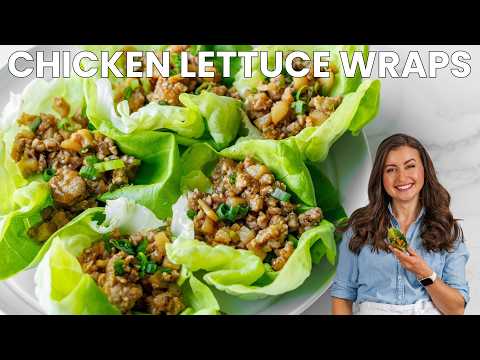
The source video for this recipe. Clear technique demonstration with good close-ups of sauce consistency and the correct browning level for the chicken filling.
2. Wok Technique for Beginners
A breakdown of high-heat wok cooking that directly applies to this dish — how to control searing temperature, when to add aromatics, and why pan choice changes the outcome.
3. Sauce Ratios and Cornstarch ExplainedCovers the chemistry behind cornstarch slurries and how hoisin-based sauces behave under heat. Useful context for understanding why the sauce is mixed cold and added last.
🛠️ Core Equipment
- Large wok or 12-inch skillet ↗Surface area is the entire game. A crowded pan steams instead of sears. A wok's sloped sides also let you push aromatics up the wall while the chicken finishes browning below.
- Wooden spoon or stiff spatula ↗You need to break the ground chicken into small, even crumbles as it cooks. A flexible silicone spatula won't apply enough pressure. A flat wooden spoon works the meat more aggressively and produces a better, more uniform texture.
- Small mixing bowl ↗The sauce must be pre-mixed and the cornstarch fully dissolved before anything hits the pan. There is no time to whisk cornstarch lumps out of a sauce once it's already in contact with hot food. Mix first, always.
Better Than PF Chang's Chicken Lettuce Wraps (30-Minute Weeknight Fix)
🛒 Ingredients
- ✦1.25 pounds ground chicken
- ✦1 head butter lettuce or iceberg lettuce, leaves separated and chilled
- ✦2 tablespoons vegetable oil, divided
- ✦4 cloves garlic, minced
- ✦1.5 tablespoons fresh ginger, minced
- ✦1 small yellow onion, finely diced
- ✦6 ounces cremini mushrooms, finely diced
- ✦1 can (8 ounces) water chestnuts, drained and diced
- ✦3.5 tablespoons low-sodium soy sauce
- ✦2.5 tablespoons rice vinegar
- ✦2.5 tablespoons hoisin sauce
- ✦1.5 tablespoons sesame oil
- ✦1 teaspoon cornstarch
- ✦1 teaspoon sriracha or chili garlic sauce
- ✦3 scallions, thinly sliced
- ✦3 tablespoons water
👨🍳 Instructions
01Step 1
Combine soy sauce, rice vinegar, hoisin sauce, sesame oil, sriracha, cornstarch, and water in a small bowl. Stir until the cornstarch dissolves completely. Set aside.
02Step 2
Separate the lettuce leaves and refrigerate them while you cook.
03Step 3
Heat 1 tablespoon vegetable oil in a large skillet or wok over medium-high heat until it shimmers, about 1 minute.
04Step 4
Add ground chicken and cook, breaking it into small pieces with a wooden spoon, until no pink remains and the meat develops light browning, about 5-7 minutes.
05Step 5
Transfer the cooked chicken to a clean plate using a slotted spoon, leaving any accumulated juices in the pan.
06Step 6
Add the remaining 1 tablespoon of oil to the skillet. Add minced garlic, ginger, and diced onion. Stir constantly until fragrant and the onion turns translucent, about 2 minutes.
07Step 7
Stir in the diced mushrooms and water chestnuts. Cook over medium-high heat, stirring occasionally, until the mushrooms release their moisture and begin to soften, about 3 minutes.
08Step 8
Return the cooked chicken to the skillet with the vegetables. Pour the reserved sauce over everything and stir to combine.
09Step 9
Simmer for 1-2 minutes, stirring gently, until the sauce thickens and coats all the ingredients evenly.
10Step 10
Remove from heat. Taste and adjust with additional soy sauce or rice vinegar as needed. Fold in the sliced scallions, reserving a small handful for garnish.
11Step 11
Arrange the chilled lettuce cups on a serving platter. Spoon warm filling into each leaf, garnish with reserved scallions, and serve immediately.
Nutrition Per Serving
Estimates based on standard preparation. Adjustments alter macros.
🔄 Substitutions
Instead of Ground chicken...
Use Ground turkey or lean ground pork
Turkey produces a milder result; pork adds richer depth. Both cook identically. Avoid extra-lean turkey — it dries out faster than chicken under high heat.
Instead of Hoisin sauce...
Use Low-sodium miso paste mixed with a touch of honey
More complex fermented flavor, roughly 20% less sodium. Use a 2:1 ratio of miso to honey to approximate hoisin's sweetness level.
Instead of Sesame oil...
Use Avocado oil or walnut oil
Loses the toasted sesame aroma but gains mild nutty notes. Add a small pinch of toasted sesame seeds at the end to partially compensate.
Instead of Water chestnuts...
Use Diced jicama or sliced snap peas
Slightly fresher, crisper texture. Jicama is the closer match in terms of neutral flavor and crunch. Both hold up under the heat better than most vegetables.
🧊 Storage & Reheating
In the Fridge
Store filling in an airtight container for up to 3 days. Store lettuce separately — never assemble and refrigerate, or the lettuce will wilt and the filling will make it soggy.
In the Freezer
Freeze the filling only, in portions, for up to 2 months. Thaw overnight in the fridge. Do not freeze assembled wraps.
Reheating Rules
Reheat filling in a skillet over low heat with 1-2 tablespoons of water, stirring until warmed through. Microwave works but dries the meat — cover with a damp paper towel and use 50% power.
❓ Frequently Asked Questions
Why is my chicken filling watery and not saucy?
Two causes: pan was too crowded when you cooked the chicken, or the cornstarch wasn't fully dissolved before the sauce hit the heat. Fix both on the next round — large pan, cold sauce pre-mixed. If you're already mid-cook, remove the lid and simmer on high heat to drive off excess water.
Can I use ground turkey instead of ground chicken?
Yes. Turkey is slightly milder and dries out faster, so pull it off the heat as soon as no pink remains. Don't wait for browning the way you would with chicken — it'll be too dry by then.
Can I make this gluten-free?
Swap the soy sauce for tamari or coconut aminos, and confirm your hoisin sauce is certified gluten-free. Most other ingredients in this recipe are naturally gluten-free. The cornstarch is fine.
What lettuce works best for cups?
Butter lettuce has naturally cupped leaves that hold filling without collapsing. Iceberg is crisper and sturdier but the leaves are flatter — you'll need to double-layer two leaves for structural support. Romaine hearts work but are awkward to hold.
Can I prep this ahead for a party?
Yes — the filling holds well for 3 days. Reheat gently and serve in fresh chilled lettuce cups at the last minute. Set up a build-your-own station with the warm filling in a bowl and the lettuce cups alongside. It travels and presents better than pre-assembled wraps.
My sauce turned into a thick paste instead of a glaze. What happened?
You cooked it too long after adding the sauce. Cornstarch activates fast over high heat — once you see everything glossy and coated, pull the pan immediately. An extra 60-90 seconds past that point and the cornstarch over-gels into paste. Add a tablespoon of water and stir over low heat to loosen it.
The Science of
Better Than PF Chang's Chicken Lettuce Wraps (30-Minute Weeknight Fix)
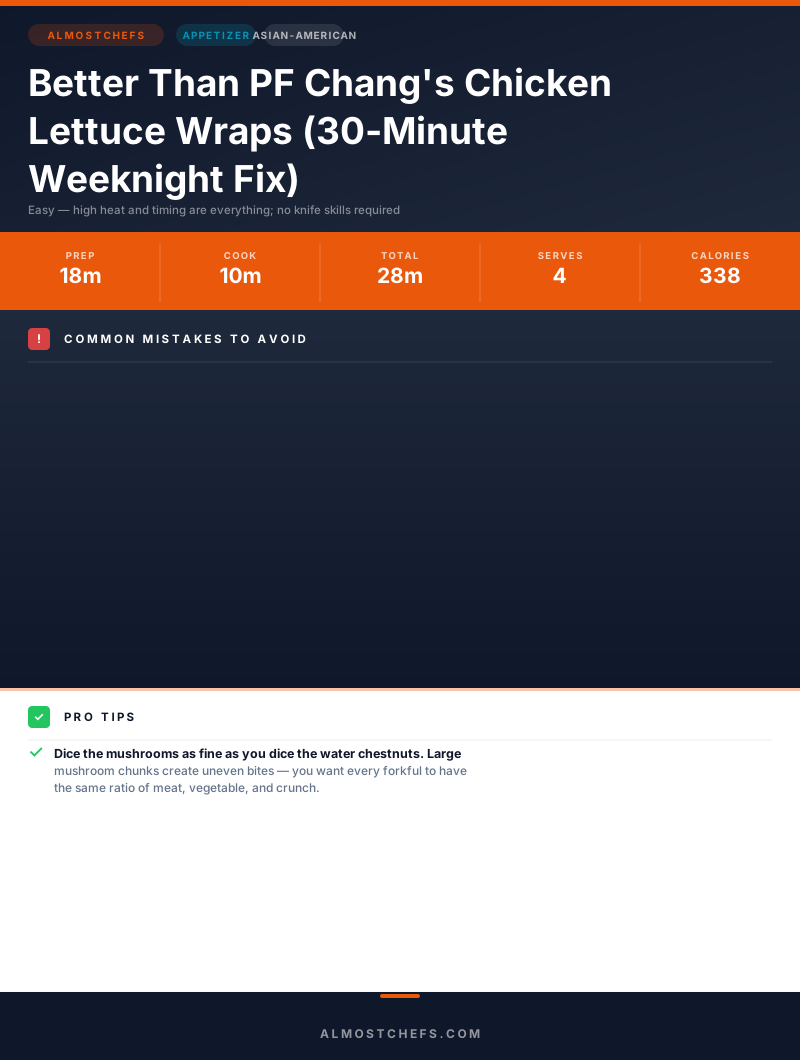
We turned everything on this page into a beautiful, flour-proof PDF cheat sheet. Print it out, stick it to your fridge, and never mess up your better than pf chang's chicken lettuce wraps (30-minute weeknight fix) again.
*We'll email you the high-res PDF instantly. No spam, just perfectly cooked meals.
AlmostChefs Editorial Team
We translate the internet's most popular cooking videos into foolproof, beginner-friendly written recipes. We analyze multiple methods, test them in our kitchen, and engineer a single "Master Recipe" that gives you the best possible result with the least possible stress.