Smash Burger Done Right (Crispier Than Fast Food, Every Time)
A cast iron smash burger with a shatteringly crispy crust, melted American cheese, and caramelized onions — done in 16 minutes flat. We broke down the technique so you stop getting steamed patties instead of seared ones.
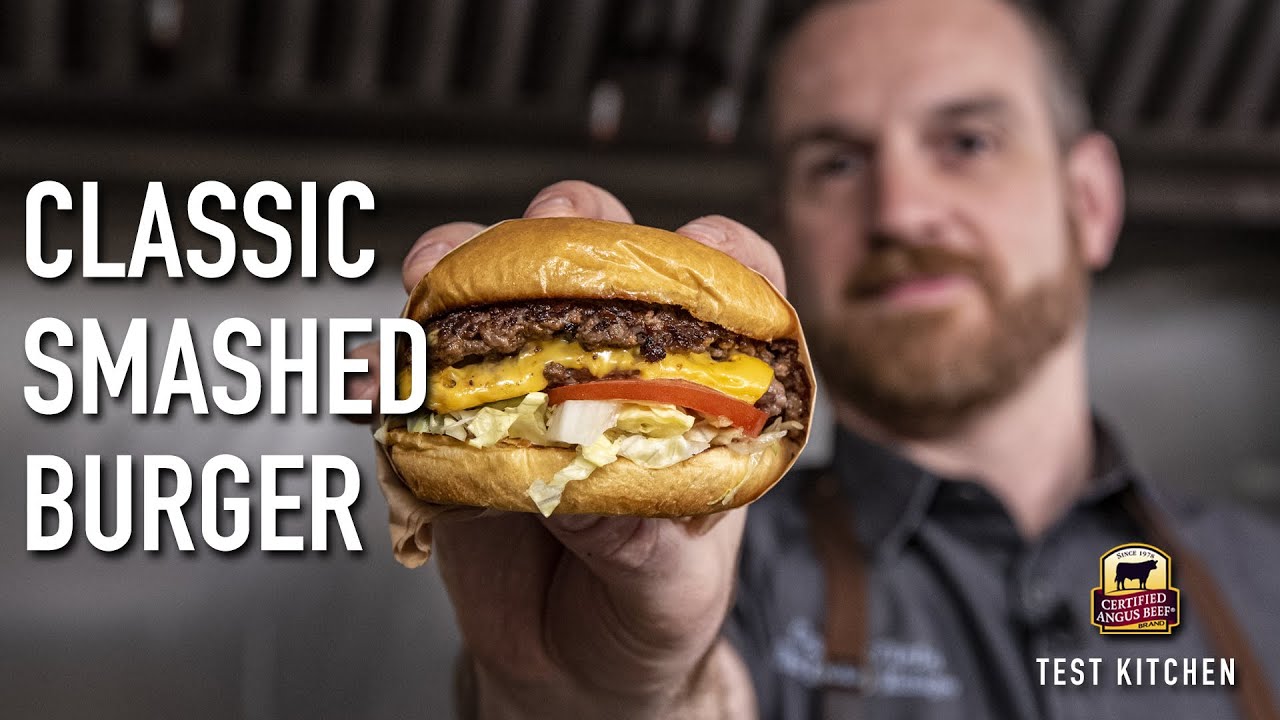
“Fast food smash burgers are popular for one reason: the crust. That dark, lacey, deeply savory edge you get from a thin patty slammed onto a screaming hot griddle. Most home cooks never replicate it because they use the wrong heat, the wrong fat ratio, or they wait too long to smash. This recipe fixes all three.”
Why This Recipe Works
The smash burger is not a shortcut. It is a deliberate technique that uses physics to create flavor — specifically, the Maillard reaction, which is the chemical cascade that turns amino acids and reducing sugars into hundreds of new flavor compounds when exposed to high dry heat. The entire architecture of this recipe exists to maximize that reaction and get out of its way.
The Crust Is the Point
Fast food chains don't have better beef than you. They have hotter, flatter cooking surfaces and decades of process optimization. The smash burger became popular because flattening the patty increases surface area contact with the cooking surface. More contact means more Maillard reaction. More Maillard reaction means more of that dark, lacey, umami-rich crust that people associate with a legitimately good burger.
At home, the two variables you control are pan temperature and smash timing. Get both wrong and you have steamed ground beef on a bun. Get them right and you have something that outperforms a drive-through at a fraction of the cost.
The pan must reach 400-450°F before the beef touches it. Below that threshold, the meat releases moisture faster than the surface can evaporate it. The moisture creates a layer of steam between the beef and the pan, effectively boiling the patty from below and preventing crust formation. This is the most common home cook failure, and it's invisible — you can't tell it's happening until you flip the burger and find a gray, soft bottom instead of a brown, crispy one.
Why 80/20 Is Non-Negotiable
Fat is not optional in a smash burger. The 80/20 beef blend — 80% lean meat, 20% fat — renders during the high-heat sear and creates a self-basting effect. As the fat liquefies, it pools around the patty and heats the edges from the sides while the cast iron skillet heats from below. The result is a patty that cooks from three directions simultaneously.
Leaner blends skip the self-basting. The edges dry out, the interior becomes chalky, and the crust — if it forms at all — tastes flat because fat carries flavor compounds that lean muscle tissue cannot. The substitution to 85/15 is viable but represents a measurable downgrade in texture and richness. Anything leaner than that is a different recipe.
The Smash Window
You have five seconds from the moment the beef contacts the hot pan. That is the entire window. Within those five seconds, the exterior proteins are still pliable and the fat is just beginning to render. Press the patty firmly and flat — 1/4 inch thickness — using a heavy flat spatula and your body weight.
After five seconds, the surface proteins begin to denature and set. The patty becomes rigid. Pressing it now tears the forming crust, forces out moisture that should stay inside, and produces an uneven surface that won't cook consistently. This is why you don't ease into the smash. You commit immediately, completely, and then you leave the patty alone.
American Cheese Is the Right Choice
This is not a compromise. American cheese is a processed product specifically engineered to melt evenly at low temperatures without breaking into grease and solids. Natural cheeses — cheddar, gouda, Swiss — contain less emulsifying salts and can split when heated aggressively, leaving oily puddles and grainy chunks instead of a smooth, cohesive melt.
On a smash burger, the cheese goes on immediately after the flip and melts from residual heat alone. The window is 1-2 minutes. American cheese handles this reliably. If you want sharper flavor from a natural cheese, add it 30 seconds earlier than the recipe specifies and watch closely.
The rest of the assembly — mayonnaise on the bottom bun, pickles for acid, mustard and ketchup on the top — exists to balance the richness of the beef and cheese. The pickles are doing real work here: their acidity cuts through fat and resets the palate between bites. Don't skip them.
Where Beginners Mess This Up
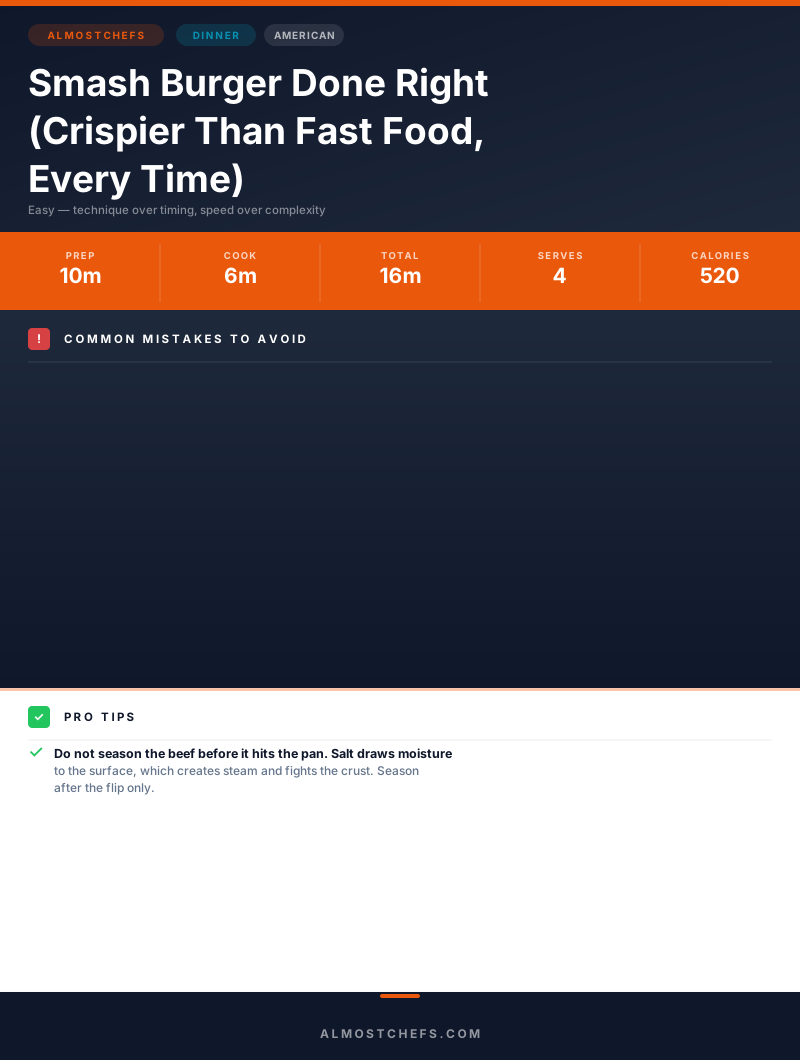
Before we start, read this. These are the 4 reasons your smash burger done right (crispier than fast food, every time) will fail:
- 1
Not getting the pan hot enough: The Maillard reaction — the browning that creates flavor — requires surface contact above 300°F. Most home burners take 3-4 minutes to bring a cast iron skillet to 400-450°F. If you add the beef before the pan is there, you steam the patty instead of searing it. The result is gray, soft, and flavorless. Use a thermometer or the water-drop test: a drop should skitter and evaporate in under a second.
- 2
Smashing too late: You have about 5 seconds from the moment the beef hits the pan to execute the smash. After that, the surface proteins begin to set and you can no longer flatten the patty without tearing it. Smash immediately. Hard. Don't ease into it.
- 3
Moving the patty before the crust forms: The patty will release from the pan when the crust is ready. If you're prying it up, it's not done. Leave it alone for the full 2-3 minutes. A burger that sticks is a burger that isn't ready. Wait.
- 4
Using lean beef: 80/20 is the minimum fat content for smash burgers. The fat renders during the high-heat sear and bastes the meat from within. Leaner blends produce dry, chalky patties that lack the richness the technique is designed to create.
🛠️ Core Equipment
- Cast iron skillet or flat griddleRetains and distributes heat evenly at the temperatures required for proper crust formation. Non-stick pans cannot handle 450°F and warp. Stainless works but cast iron is the standard for a reason.
- Heavy-duty flat spatulaYou need a stiff, wide blade to execute the smash with force and to scrape the crust cleanly off the pan. Thin, flexible spatulas bend under pressure and can't get under the crust without breaking it.
- Instant-read thermometerThe only reliable way to confirm pan temperature before you add the beef. Guessing costs you the crust. A $15 thermometer removes all guesswork.
Smash Burger Done Right (Crispier Than Fast Food, Every Time)
🛒 Ingredients
- ✦1 pound ground beef (80/20 blend)
- ✦1 teaspoon kosher salt, divided
- ✦1 teaspoon freshly cracked black pepper, divided
- ✦4 slices American cheese
- ✦4 hamburger buns
- ✦1 large yellow onion, thinly sliced
- ✦2 tablespoons unsalted butter
- ✦8 to 12 dill pickle slices
- ✦3 tablespoons ketchup
- ✦2 tablespoons yellow mustard
- ✦2 tablespoons mayonnaise
- ✦2 leaves fresh lettuce (optional)
- ✦2 large tomato slices (optional)
👨🍳 Instructions
01Step 1
Divide the ground beef into four equal portions of about 4 ounces each. Handle the meat as little as possible — do not roll into balls or pack tightly.
02Step 2
Heat a [cast iron skillet](/kitchen-gear/review/cast-iron-skillet) or flat griddle over high heat for 3-4 minutes until it reaches 400-450°F.
03Step 3
Slice the yellow onion into thin rings and prepare all toppings and condiments within arm's reach before the beef goes in.
04Step 4
Add 1 tablespoon of butter to the hot skillet. Let it melt and coat the surface, then place all four beef portions directly in with 2 inches of space between them.
05Step 5
Immediately press each portion firmly with a [heavy flat spatula](/kitchen-gear/review/burger-spatula) for 2-3 seconds, smashing to about 1/4 inch thickness.
06Step 6
Do not touch the patties. Let them sear undisturbed for 2-3 minutes until a deep golden-brown crust forms on the bottom and you can see the color creeping up the sides.
07Step 7
Season the top (cooked) side with 1/4 teaspoon salt and 1/4 teaspoon black pepper per patty.
08Step 8
Flip each patty with a firm scrape — you want the full crust to transfer to the spatula. Immediately lay one slice of American cheese on top of each patty.
09Step 9
Cook the second side for 1-2 minutes without pressing. The cheese will melt from residual heat.
10Step 10
Transfer burgers to a plate and tent loosely with foil. In the same pan, add the remaining tablespoon of butter and toast the buns cut-side down for 1-2 minutes until golden.
11Step 11
Spread mayonnaise on the bottom bun. Layer on sautéed onions, the smashed patty with cheese, and 2-3 pickle slices. Dress the top bun with ketchup and mustard. Serve immediately.
Nutrition Per Serving
Estimates based on standard preparation. Adjustments alter macros.
🔄 Substitutions
Instead of American cheese...
Use Sharp cheddar or smoked gouda
More complex flavor but slower to melt. Add the cheese 30 seconds earlier than you would American. Gouda adds a smoky note that works particularly well with caramelized onions.
Instead of Ground beef 80/20...
Use Ground beef 85/15
Slightly leaner patty with marginally less richness. Still viable with the smash technique but add an extra 15 seconds on the first side to compensate for lower fat content.
Instead of Mayonnaise...
Use Greek yogurt mixed with Dijon mustard (2 tablespoons combined)
Tangier, lighter base with added protein. Works well if you want to reduce richness without losing creaminess.
Instead of Standard white hamburger buns...
Use Whole wheat or sprouted grain buns
Denser texture that holds up better to juice runoff. Toast for 30 seconds less than white buns — they brown faster.
🧊 Storage & Reheating
In the Fridge
Cooked patties keep in an airtight container for up to 3 days. Store separately from buns and toppings.
In the Freezer
Freeze raw portioned beef (unsmashed) for up to 3 months. Thaw overnight in the fridge and cook straight from cold.
Reheating Rules
Reheat patties in a hot dry skillet for 60-90 seconds per side. Microwave turns the crust to rubber — avoid.
❓ Frequently Asked Questions
Why is my smash burger gray and soft instead of crusty?
The pan wasn't hot enough. Gray, soft patties are steamed, not seared. The Maillard reaction needs surface contact above 300°F. Preheat your cast iron for a full 3-4 minutes over high heat before any beef goes in.
Do I have to use 80/20 beef?
For smash burgers, yes. The fat content is structural — it renders at high heat and bastes the meat from within while the exterior crust forms. Leaner beef produces dry, chalky patties that taste like nothing.
Can I smash the burger more than once?
No. One smash, immediately after contact. Pressing again after the crust starts forming breaks the crust apart and forces out moisture. You only get one shot.
Why American cheese and not something better?
American cheese melts at a lower temperature and more evenly than natural cheeses. It forms a smooth, cohesive layer over the patty without breaking into grease puddles. If you want flavor complexity, use cheddar — but add it 30 seconds earlier.
Can I make these on an outdoor grill?
Only with a cast iron griddle insert or a flat top attachment. Grill grates don't provide enough surface contact for the smash technique and the patties fall apart. The flat surface is non-negotiable.
Why do my patties shrink into thick rounds instead of staying flat?
Two causes: the beef was too warm before cooking (pull straight from the fridge), or you didn't smash fast enough. You have about 5 seconds from contact to execute the press before the exterior proteins set.
The Science of
Smash Burger Done Right (Crispier Than Fast Food, Every Time)
We turned everything on this page into a beautiful, flour-proof PDF cheat sheet. Print it out, stick it to your fridge, and never mess up your smash burger done right (crispier than fast food, every time) again.
*We'll email you the high-res PDF instantly. No spam, just perfectly cooked meals.
AlmostChefs Editorial Team
We translate the internet's most popular cooking videos into foolproof, beginner-friendly written recipes. We analyze multiple methods, test them in our kitchen, and engineer a single "Master Recipe" that gives you the best possible result with the least possible stress.