The Only Berry Crumble You Need (Crispy Top, Jammy Middle Every Time)
A buttery oat crumble over a bubbling, barely-sweetened berry filling that holds its shape when scooped. We broke down the most-watched crumble videos to isolate the three variables — fat temperature, sugar ratio, and fruit moisture — that determine whether you get a shattering crust or a soggy disappointment.

“Berry crumble sounds foolproof until you pull one out of the oven that's half raw dough on top and watery fruit soup on the bottom. The topping looked beautiful going in. What happened? Three things happened: the butter was too warm, the berries released too much liquid, and the oven temperature was too low to set the top before the filling boiled over. We fixed all three.”
Why This Recipe Works
A crumble is the most forgiving bake in the canon — fruit, butter, sugar, flour, done — and yet it produces more disappointment than almost any other simple recipe. The failure mode is always the same: a topping that absorbs moisture from below and turns into a dense, gummy layer that tastes like undercooked dough pressed over warm jam. This is not a recipe problem. It is a physics problem, and physics problems have precise solutions.
The Cold Butter Principle
The entire texture of a crumble topping depends on one thing: the state of the butter when it enters the oven. Cold butter — properly cold, straight from the refrigerator and cut into small cubes — does not blend smoothly into the dry ingredients. Instead, it creates irregular pockets and clumps that hold their structure in the initial minutes of heat. As the oven temperature rises, those cold butter pockets release steam, expanding outward and creating the airy, shattering texture that defines a great crumble. By the time the butter is fully melted, the structure has already set.
Melted or softened butter does the opposite. It coats every oat and every flour particle evenly, binding the mixture into a uniform paste that bakes into a dense slab. It looks like a crumble going in. It does not eat like one coming out. Work quickly, work cold, and stop mixing before the mixture looks finished — the residual warmth of your hands will continue softening the butter for another thirty seconds after you put the bowl down.
Managing the Fruit Layer
Berries are mostly water. Blueberries are 84% water by weight. Raspberries are 86%. When heat hits them in the oven, that water becomes steam and then liquid, pooling in the bottom of the dish and, if left unchecked, wicking upward into the topping from below. Cornstarch is the intervention. Mixed directly with the cold fruit, cornstarch gelatinizes as the fruit liquid heats above 180°F, thickening it into a glossy, scoopable filling rather than a thin, watery pool.
One tablespoon of cornstarch for four cups of berries is the correct ratio for fresh fruit. For frozen, which releases substantially more liquid as ice crystals melt into the filling, a tablespoon and a half gives you more insurance without making the filling stiff or gummy. The lemon juice serves a dual purpose: its acidity brightens the berry flavor considerably, and it activates the pectin naturally present in the fruit skins, contributing additional body to the finished filling.
The Temperature Argument
Every low-and-slow crumble recipe is optimizing for the wrong variable. At 325°F, the topping has twenty minutes to absorb moisture before it begins to set. At 375°F, the surface crust forms within the first ten minutes, locking out the moisture climbing from below. The fruit still cooks through — it just cooks under a topping that has already committed to being crisp.
The visual cue is non-negotiable: deep, even golden-brown across the topping surface, and bubbling filling visible through the gaps and around the edges of the dish. The bubbling matters because it tells you the cornstarch has reached activation temperature and the filling has thickened. A crumble pulled from the oven before the filling boils will be runny when you serve it, no matter how beautiful the topping looks. Both conditions — color and bubbling — must be present before you pull the dish.
The Oat Ratio
Old-fashioned rolled oats, not quick oats, are the correct choice here. Quick oats have been cut into smaller pieces and partially cooked — they absorb liquid faster and turn mushy. Rolled oats maintain their structure through the full bake, giving the topping a textural contrast between the crispy flour-butter crust and the chewy individual oat pieces underneath. The ratio of one cup oats to three-quarters cup flour produces a topping that is predominantly grain-forward with enough starchy binder to hold together when scooped.
Brown sugar rather than white is worth the minor inconvenience of measuring. The molasses in brown sugar caramelizes at a slightly lower temperature than sucrose, which means the topping develops color and flavor faster in the oven without risking burnt edges. It also contributes a subtle toffee note that elevates the whole dish from pleasant to memorable. A pastry cutter makes short work of the butter incorporation, but the more important instruction is to stop before the mixture looks uniform. Craggy, irregular, uneven: that is what you are aiming for, and it will feel wrong until you taste the result.
Where Beginners Mess This Up
Before we start, read this. These are the 4 reasons your the only berry crumble you need (crispy top, jammy middle every time) will fail:
- 1
Using melted or room-temperature butter: Cold butter, cut into the dry topping mixture, creates steam pockets as it melts in the oven. Those steam pockets produce a crumble that shatters when you press a spoon through it. Melted butter produces a dense, greasy slab that sits on top of the fruit without ever crisping. The butter must go in cold — straight from the fridge, cut into small cubes, worked in quickly with your fingertips.
- 2
Not accounting for berry water content: Frozen berries release two to three times more liquid than fresh as they thaw in the oven. Without a starch to thicken that liquid, you end up with a watery filling that steams the bottom of the crumble from below, making it soggy before it can bake through. A tablespoon of cornstarch mixed directly with the fruit solves this in ten seconds.
- 3
Baking at too low a temperature: Recipes that call for 325°F are optimizing for even cooking, not for texture. At 325°F, the crumble top sets slowly while the fruit liquid has time to saturate it from below. At 375°F, the top crisps before the moisture can climb. Higher heat is your friend here — it locks in the texture.
- 4
Under-sweetening the fruit and over-sweetening the topping: Most recipes reverse this. The topping already contains sugar — adding more makes it cloying and prone to burning before the fruit cooks through. The fruit needs enough sugar to coax out its natural juices and balance acidity, but not so much that it tastes like jam. Two tablespoons in the fruit, three in the topping: that's the split.
The Video Reference Library
Want to see it in action? Here are the exact videos we analyzed and combined to build this foolproof recipe translation:
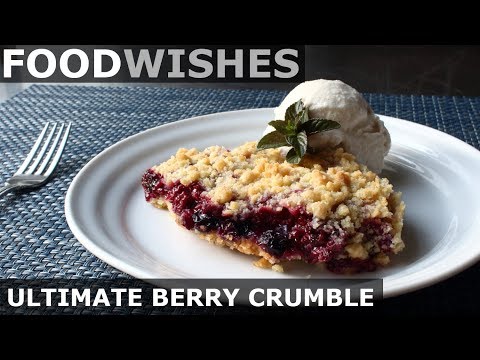
The foundational walkthrough that nails the cold-butter technique and explains exactly how the topping should look and feel before it goes into the oven. Clear close-ups of the correct clump size.
2. Crispy Oat Crumble Tips and Tricks
Focused breakdown of the oat-to-flour ratio and why brown sugar outperforms white for topping crunch and color. Good detail on visual cues for when the crumble is actually done.
3. Mixed Berry Breakfast Bake — No-Fuss MethodA streamlined morning version with guidance on using frozen berries directly from the freezer and adjusting bake time accordingly. Useful if you're building this into a weekend brunch routine.
🛠️ Core Equipment
- 8x8 or 9x9 inch baking dishThe surface area matters. Too small and the crumble piles thick and never crisps through. Too large and the fruit layer spreads thin and dries out before the topping is done. An 8x8 is the sweet spot for six servings.
- Pastry cutter or forkFor working cold butter into the dry topping ingredients without warming it with your hands. A [pastry cutter](/kitchen-gear/review/pastry-cutter) is faster and more controlled than fingertips alone, though fingertips work if you move quickly.
- Large mixing bowlYou need room to toss the fruit with sugar and cornstarch without bruising the berries. A cramped bowl leads to aggressive mixing, which breaks down the fruit before it hits the oven.
- Wire rackResting the hot baking dish on a [wire cooling rack](/kitchen-gear/review/wire-rack) immediately after baking allows air to circulate under the dish and prevents the bottom of the filling from continuing to cook. Ten minutes of rest makes the filling scoopable rather than soupy.
The Only Berry Crumble You Need (Crispy Top, Jammy Middle Every Time)
🛒 Ingredients
- ✦4 cups mixed berries (fresh or frozen — blueberries, raspberries, blackberries, strawberries)
- ✦2 tablespoons granulated sugar
- ✦1 tablespoon cornstarch
- ✦1 tablespoon fresh lemon juice
- ✦1 teaspoon lemon zest
- ✦1 cup old-fashioned rolled oats
- ✦3/4 cup all-purpose flour
- ✦3 tablespoons packed light brown sugar
- ✦1/4 teaspoon ground cinnamon
- ✦1/4 teaspoon fine sea salt
- ✦6 tablespoons cold unsalted butter, cut into 1/2-inch cubes
- ✦1 teaspoon pure vanilla extract
👨🍳 Instructions
01Step 1
Preheat your oven to 375°F. Place an oven rack in the center position.
02Step 2
If using frozen berries, do not thaw them first. Toss the berries in a large bowl with the granulated sugar, cornstarch, lemon juice, and lemon zest until evenly coated.
03Step 3
Pour the berry mixture into an ungreased 8x8 inch baking dish and spread into an even layer.
04Step 4
In a separate bowl, combine the rolled oats, flour, brown sugar, cinnamon, and sea salt. Whisk briefly to distribute evenly.
05Step 5
Add the cold butter cubes to the dry mixture. Using a pastry cutter or your fingertips, work the butter into the oat mixture until it resembles coarse, irregular clumps — some pea-sized, some smaller. You want texture, not uniform sand.
06Step 6
Drizzle the vanilla extract over the topping mixture and toss once or twice with a fork to incorporate. The mixture will clump slightly more — that's desirable.
07Step 7
Scatter the crumble topping evenly over the berries in a loose, uneven layer. Do not press it down.
08Step 8
Bake at 375°F for 40-45 minutes, until the topping is deep golden brown and the berry filling is visibly bubbling through the edges and any gaps in the topping.
09Step 9
Transfer to a wire rack and cool for at least 10 minutes before serving. The filling sets significantly as it cools.
Nutrition Per Serving
Estimates based on standard preparation. Adjustments alter macros.
🔄 Substitutions
Instead of All-purpose flour...
Use Almond flour or oat flour
Almond flour produces a richer, slightly denser topping with a pleasant nuttiness. Oat flour keeps it grain-forward and is naturally gluten-free if paired with certified GF oats.
Instead of Unsalted butter...
Use Refined coconut oil, cold and solid
Works structurally the same as cold butter. Adds subtle coconut undertone that pairs well with the berries. Use the same quantity and keep it cold.
Instead of Mixed berries...
Use Stone fruit — peaches, plums, cherries
Stone fruit releases less liquid than berries, so reduce cornstarch to 1.5 teaspoons. Slice fruit into 1-inch pieces for even cooking.
Instead of Brown sugar...
Use Coconut sugar
One-to-one swap with slightly more caramel depth and a lower glycemic index. Color will be slightly darker — pull the crumble 2-3 minutes earlier if you're watching browning.
🧊 Storage & Reheating
In the Fridge
Cover tightly and refrigerate for up to 4 days. The topping softens slightly overnight but remains flavorful.
In the Freezer
Freeze the fully baked and cooled crumble for up to 2 months in an airtight container. Thaw overnight in the refrigerator.
Reheating Rules
Reheat uncovered in a 350°F oven for 12-15 minutes to re-crisp the topping. Microwave reheating makes the topping chewy and damp — worth the extra time for the oven method.
❓ Frequently Asked Questions
Can I use frozen berries instead of fresh?
Yes, and often frozen berries are preferable because they were picked at peak ripeness and immediately frozen. Do not thaw them before baking — add them frozen directly to the dish. Expect to add 5-7 minutes to the total bake time and make sure the filling is actively bubbling before you pull it.
Why is my crumble topping soggy in the middle?
Two likely causes: the butter was too warm when you worked it in, or the oven temperature was too low. Cold butter creates steam voids that produce crunch. Soft butter makes paste. Make sure your oven is fully preheated to 375°F and that the filling is bubbling vigorously before removing.
Do I need to grease the baking dish?
No. The fruit releases enough liquid to prevent sticking, and the sugar in the filling caramelizes against the dish edges in a way that lifts cleanly after a brief rest. Greasing adds unnecessary fat and can make the bottom of the filling greasy.
Can I make this ahead for brunch?
Yes — assemble the dish completely the night before, cover tightly, and refrigerate. Pull it out 20 minutes before baking to take the chill off, then bake as directed. Alternatively, make the topping and filling separately and combine right before baking.
What's the difference between a crumble and a crisp?
Largely regional and semantic. In the US, a crisp typically includes oats in the topping; a crumble may not. In the UK, crumble refers to any buttery streusel-style topping, with or without oats. This recipe uses oats, so it qualifies as both depending on where you're standing.
How do I know when the crumble is actually done?
Two signals must be present simultaneously: the topping must be a deep, even golden brown across most of its surface (not just the edges), and the filling must be visibly bubbling through the gaps and around the perimeter. If only one of those conditions is met, give it more time. A pale topping over inactive filling means both the crust and the cornstarch thickening are unfinished.
The Science of
The Only Berry Crumble You Need (Crispy Top, Jammy Middle Every Time)
We turned everything on this page into a beautiful, flour-proof PDF cheat sheet. Print it out, stick it to your fridge, and never mess up your the only berry crumble you need (crispy top, jammy middle every time) again.
*We'll email you the high-res PDF instantly. No spam, just perfectly cooked meals.
AlmostChefs Editorial Team
We translate the internet's most popular cooking videos into foolproof, beginner-friendly written recipes. We analyze multiple methods, test them in our kitchen, and engineer a single "Master Recipe" that gives you the best possible result with the least possible stress.