Roasted Beet Salad (The One That Actually Earns Its Place on the Table)
Tender roasted beets, peppery arugula, crumbled goat cheese, and toasted walnuts tied together with an emulsified Dijon-honey vinaigrette. We broke down the roasting technique so the beets caramelize properly instead of steaming into mush. Anti-inflammatory, gluten-free, and genuinely worth making.

“Beet salad has a reputation problem. Most versions are either underdone beets that taste like dirt or overdone beets that taste like canned nothing. The fix is simple: wrap each beet individually in foil, roast at high heat until completely yielding, and let carryover heat finish the job before you peel. One technique change separates a forgettable salad from one that tastes like it belongs on a restaurant menu.”
Why This Recipe Works
Beet salad is one of those dishes that sounds effortless until you make it and wonder why it tastes like a hospital cafeteria. The beets are chalky. The greens are limp. The dressing pools at the bottom of the bowl. None of this is a mystery — each failure has a specific cause and a straightforward fix.
The Roasting Problem
Beets are dense root vegetables with a high water content. That combination means they need sustained, enclosed heat to cook through without losing moisture. Wrapping each beet individually in foil before roasting creates a steam environment inside the foil — the beet's own moisture turns to steam, surrounds the flesh, and cooks it from multiple directions simultaneously. The result is a beet that's caramelized on the outside and uniformly tender throughout, not crusty on the outside and raw in the middle.
The temperature matters too. At 400°F, the natural sugars in the beet begin to caramelize before the outer flesh breaks down. This is what gives properly roasted beets their concentrated sweetness — the sugars are physically transforming, not just softening. Lower temperatures produce tender beets without any of that depth. Higher temperatures cook the outside before the inside has any chance to catch up.
The test for doneness is non-negotiable: zero fork resistance, zero. Not "mostly done." Not "close enough." A fully roasted beet feels like inserting a fork into room temperature butter. Anything firmer goes back in the oven.
The Dressing Architecture
A broken vinaigrette is an insult to a good salad. Oil and vinegar are immiscible — they don't naturally combine. Without an emulsifier, the oil floats to the top, the vinegar sinks to the bottom, and every bite is uneven. Dijon mustard contains lecithin and mucilage compounds that act as emulsifiers, bridging the oil and water phases into a stable, creamy dressing that clings to every leaf.
The technique: build the vinegar base first (vinegar, garlic, mustard, honey), then add the olive oil in a slow, steady stream while whisking constantly. This mechanical agitation breaks the oil into microscopic droplets that the mustard holds suspended in the vinegar. The result is a dressing that coats rather than pools.
Red wine vinegar is the right call here because its acidity is bright enough to cut through the earthy sweetness of the beets without overwhelming the goat cheese. Balsamic is a legitimate substitute — sweeter and richer — but it changes the flavor profile significantly toward a more Mediterranean direction.
The Textural Contract
What makes this salad satisfying rather than just healthy is the textural range. You have tender beets, crisp raw greens, creamy goat cheese, and crunchy walnuts — four distinct textures in every bite. Remove any one of them and the salad collapses into monotony.
The arugula does specific work here. Its peppery bitterness counterbalances the beets' sweetness and the goat cheese's tang. Replacing it entirely with mild greens makes the salad taste flat. If you can only find one green, use arugula over the mixed salad base — it has more structural flavor than romaine or butter lettuce.
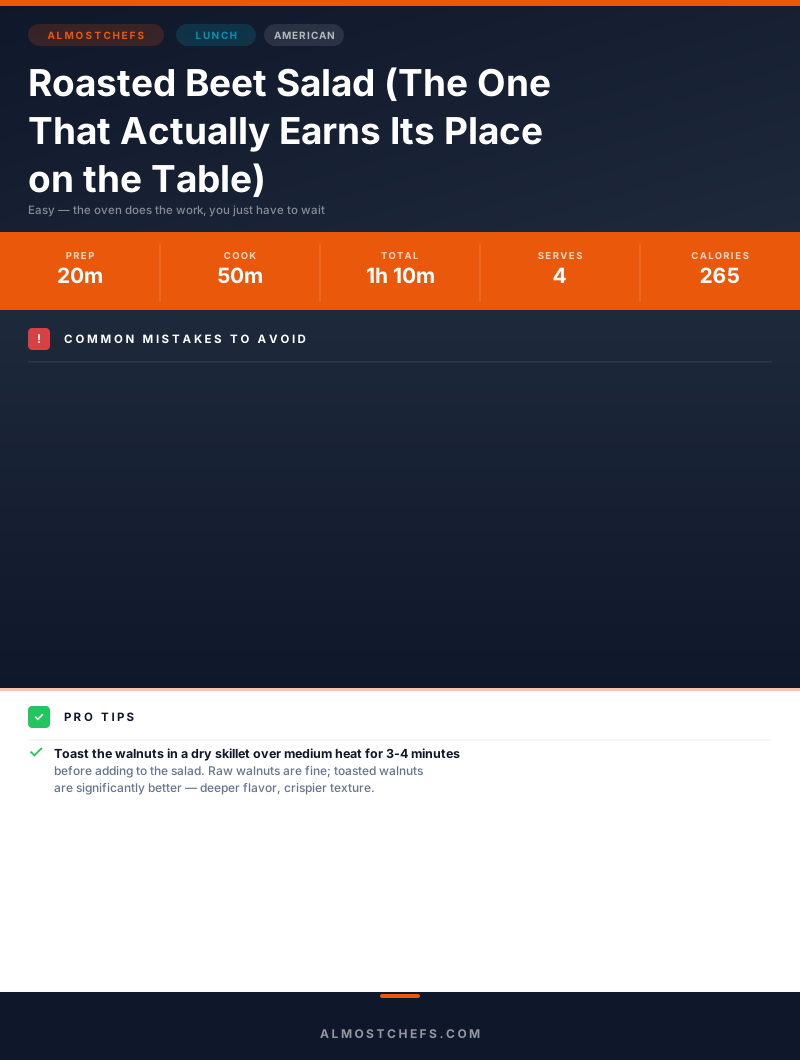
Toasting the walnuts in a dry skillet takes three minutes and makes a measurable difference. Raw walnuts are slightly bitter and soft. Toasted walnuts are nutty, crisp, and rich. The heat drives off moisture and triggers the same Maillard browning that improves any nut. Don't skip it.
Timing Is Everything
Every component of this salad has an optimal window. Roasted beets: best at room temperature, slightly warm. Greens: best cold and crisp. Goat cheese: best at room temperature so it crumbles cleanly. The vinaigrette: best applied at the last possible moment.
This is not a salad you can assemble an hour early and refrigerate. The vinegar wilts the greens, the beet juice bleeds into the cheese, and the walnuts absorb moisture and go soft. Prep everything in advance — roast the beets, make the dressing, slice the onion, chop the dill — but assemble only when you're ready to eat. That discipline is what separates a beautiful salad from a soggy bowl of intentions.
Where Beginners Mess This Up
Before we start, read this. These are the 4 reasons your roasted beet salad (the one that actually earns its place on the table) will fail:
- 1
Pulling the beets too early: A fork should slide through the thickest part with zero resistance — not 'mostly there' resistance, zero. Underroasted beets are starchy, mealy, and taste raw. The full 45-55 minutes at 400°F is non-negotiable. If your beets are large, go longer.
- 2
Dressing the salad too early: Vinaigrette wilts delicate greens in under five minutes. Everything should be prepped and plated before the dressing goes on. Dress right before serving. Not 'a few minutes before.' Right before.
- 3
Skipping the emulsification step: Vinegar and oil don't mix on their own. Whisking the olive oil slowly into the vinegar-mustard base creates an emulsified dressing that clings to every leaf. If you just pour everything in together and shake, you get greasy puddles on the bottom of the bowl.
- 4
Peeling hot beets: Let the beets cool for 10 minutes after coming out of the foil. Hot beets are both impossible to handle and still actively cooking. The skin slips off with your fingers once they're warm — no peeler needed. Burning yourself to save five minutes is not a trade worth making.
The Video Reference Library
Want to see it in action? Here are the exact videos we analyzed and combined to build this foolproof recipe translation:
The primary reference for this recipe. Clear demonstration of the foil-wrap roasting method and how to tell when beets are properly done.
🛠️ Core Equipment
- Heavy baking sheetProvides a stable surface for the foil-wrapped beets and conducts heat evenly. Thin cookie sheets warp at 400°F and create uneven roasting.
- Aluminum foilWrapping each beet individually creates a steam pocket that cooks the interior through while the outside caramelizes. Without the foil, beets dry out before they're tender.
- Small whiskThe Dijon-honey vinaigrette needs proper emulsification. A fork technically works but a [small whisk](/kitchen-gear/review/whisk) gets you there in half the time with better results.
- Large salad bowlYou need room to toss without launching goat cheese across your kitchen. A bowl that's too small means the dressing never distributes evenly.
Roasted Beet Salad (The One That Actually Earns Its Place on the Table)
🛒 Ingredients
- ✦4 medium red beets, unpeeled
- ✦5 cups mixed salad greens
- ✦1 cup fresh arugula
- ✦1/4 cup raw walnuts, roughly chopped
- ✦3 ounces crumbled goat cheese
- ✦1/4 red onion, thinly sliced
- ✦2 tablespoons fresh dill, chopped
- ✦1/4 cup red wine vinegar
- ✦3 tablespoons extra virgin olive oil
- ✦1 teaspoon Dijon mustard
- ✦1 tablespoon honey
- ✦2 cloves garlic, minced
- ✦1/2 teaspoon kosher salt
- ✦1/4 teaspoon black pepper
👨🍳 Instructions
01Step 1
Preheat oven to 400°F and line a baking sheet with foil.
02Step 2
Rinse the beets under cold water and scrub away any soil with a vegetable brush.
03Step 3
Wrap each beet individually in a double layer of aluminum foil, sealing the edges tightly to trap steam.
04Step 4
Roast on the prepared baking sheet for 45-55 minutes until a fork pierces the flesh with no resistance at all. Larger beets may need up to 65 minutes.
05Step 5
Remove from the oven and let the wrapped beets sit for 10 minutes before unwrapping.
06Step 6
Unwrap each beet and use your fingers or a paper towel to slip the skins off. Cut into 1-inch wedges or cubes.
07Step 7
Whisk together the red wine vinegar, minced garlic, Dijon mustard, and honey in a small bowl until the honey fully dissolves.
08Step 8
Drizzle the olive oil into the vinegar mixture in a slow, steady stream while whisking constantly to emulsify the dressing. Season with salt and pepper.
09Step 9
Combine the mixed greens and arugula in a large serving bowl.
10Step 10
Arrange the roasted beet pieces over the greens. Scatter the sliced red onion and walnuts on top.
11Step 11
Crumble the goat cheese evenly across the salad.
12Step 12
Pour the vinaigrette over the salad immediately before serving and toss gently to coat without bruising the greens.
13Step 13
Finish with fresh dill scattered across the top. Serve immediately.
Nutrition Per Serving
Estimates based on standard preparation. Adjustments alter macros.
🔄 Substitutions
Instead of Goat cheese...
Use Crumbled feta or ricotta salata
Feta brings a sharper, saltier brine that plays well against sweet beets. Ricotta salata is milder and nuttier. Both maintain the creamy-crumbly textural contrast.
Instead of Red wine vinegar...
Use Balsamic vinegar or apple cider vinegar
Balsamic deepens the sweetness and adds a syrupy body to the dressing — pairs beautifully with beets but is a different flavor profile. Apple cider vinegar is brighter and lighter.
Instead of Walnuts...
Use Pumpkin seeds or sunflower seeds
Better option for nut-free tables. Seeds are crunchier and more neutral in flavor. Toast them the same way — dry skillet, 3-4 minutes.
Instead of Honey...
Use Pure maple syrup or date paste
Maple syrup emulsifies almost as well as honey and adds a woody sweetness that works particularly well with the earthy beet flavor.
🧊 Storage & Reheating
In the Fridge
Store roasted beets separately in an airtight container for up to 4 days. Once dressed and assembled, the salad doesn't hold — eat immediately.
In the Freezer
Roasted beets freeze well for up to 2 months. Cool completely, slice, and freeze in a single layer before transferring to a container. Thaw overnight in the fridge.
Reheating Rules
This salad is served at room temperature or with slightly warm beets — there's nothing to reheat. If your beets came from the fridge, let them sit at room temperature for 15 minutes before assembling.
❓ Frequently Asked Questions
Do I need to peel the beets before roasting?
No. Roasting beets in their skins protects the flesh, locks in moisture, and makes peeling dramatically easier afterward. The skin slips off with your fingers once they're roasted. Never peel before roasting.
How do I know when the beets are fully roasted?
Insert a fork or knife into the thickest part of the beet. It should slide through with absolutely no resistance — like a fully cooked potato. If you feel any firmness, wrap them back up and return to the oven for 10 more minutes.
Can I use golden beets instead of red beets?
Yes, and they're actually easier to work with because they don't stain everything crimson. Golden beets have a milder, slightly less earthy flavor. The recipe is identical — just expect a softer golden-yellow color in the finished salad.
My dressing separated in the bowl. What went wrong?
You either added the oil too fast or skipped the Dijon. The mustard is the emulsifier — without it, oil and vinegar won't bind. Drizzle the oil in slowly while whisking constantly. If it breaks, start the dressing over rather than pouring broken dressing on your salad.
Can I make this salad ahead of time?
Components, yes. Fully assembled, no. Roast the beets up to 4 days ahead, make the dressing up to 3 days ahead, and prep all toppings the morning of. Assemble and dress only right before serving.
Is this salad good warm, room temperature, or cold?
Room temperature is the sweet spot. Cold beets are flat and dense. Warm beets are great but wilt the greens within minutes. Let roasted beets cool for 15-20 minutes before assembling — that's the target temperature.
The Science of
Roasted Beet Salad (The One That Actually Earns Its Place on the Table)
We turned everything on this page into a beautiful, flour-proof PDF cheat sheet. Print it out, stick it to your fridge, and never mess up your roasted beet salad (the one that actually earns its place on the table) again.
*We'll email you the high-res PDF instantly. No spam, just perfectly cooked meals.
AlmostChefs Editorial Team
We translate the internet's most popular cooking videos into foolproof, beginner-friendly written recipes. We analyze multiple methods, test them in our kitchen, and engineer a single "Master Recipe" that gives you the best possible result with the least possible stress.