Foolproof Beef Wellington (The Technique That Actually Works)
Tender beef tenderloin wrapped in earthy mushroom duxelles and encased in golden puff pastry. We broke down the most-watched YouTube methods to build one reliable technique that delivers a crispy crust, properly cooked beef, and a filling that doesn't turn your pastry to mush.
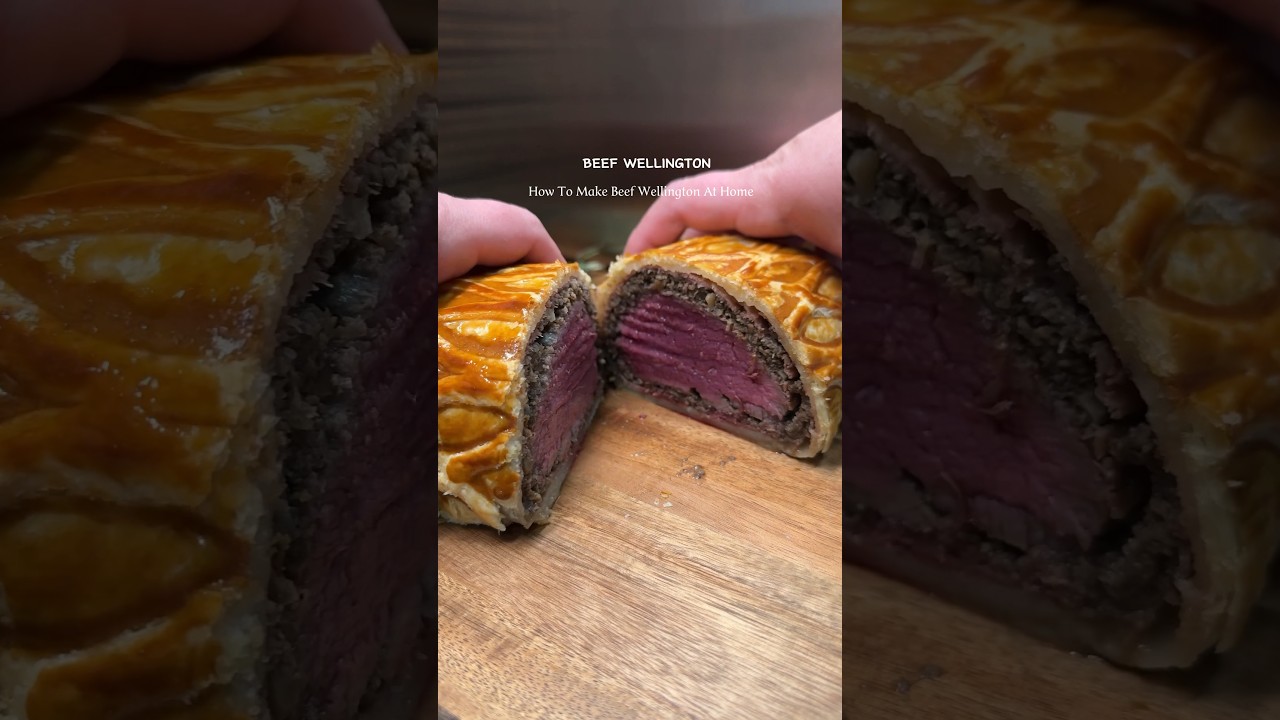
“Beef Wellington has a reputation for being restaurant-only. That reputation exists because most home cook attempts produce soggy pastry, grey beef, or a filling that slides out the moment you slice it. None of those failures are inevitable. They're all technique problems with specific, fixable causes. Master the duxelles, the sear, and the chill time — and you have a showstopper that costs a fraction of what a restaurant charges.”
Why This Recipe Works
Beef Wellington is not a complicated recipe. It is a sequencing problem — six discrete components that each need to be in exactly the right state before the next step begins. Do them in order, get each one right, and the result is genuinely remarkable. Rush any single step and the whole structure fails in ways that are hard to diagnose from the finished plate.
The Duxelles Is the Dish
The mushroom filling — called duxelles — is the most underestimated component in the recipe and the cause of more failed Wellingtons than any other factor. Cremini mushrooms are approximately 90% water by weight. When you chop a pound of them finely and cook them, you are managing the controlled extraction of roughly a cup and a half of liquid. That liquid needs to leave the pan before you ever touch the pastry.
The visual cue people miss: properly cooked duxelles doesn't look like cooked mushrooms. It looks like a dark, concentrated spread — nearly a paste. The color shifts from pale grey-brown to deep mahogany. The volume reduces by more than half. When you press it with the back of a spoon, no moisture pools. If the mixture is still loose and wet, it's not done. Keep it on medium heat and keep stirring. Twelve to fifteen minutes is typical, but some batches take eighteen. Follow the visual, not the clock.
The shallots and garlic aren't flavor afterthoughts — they create an aromatic base that the mushrooms absorb during the long cook. The thyme added at the end preserves its volatile oils rather than cooking them off. The sherry deglaze lifts the concentrated fond from the pan and incorporates it into the filling, which is where a significant portion of savory depth comes from.
The Sear Is Structural
The sear on the beef serves two functions that most recipes mention but don't explain. First, it creates the Maillard-reaction crust that provides flavor complexity absent in boiled or roasted beef. Second, and more importantly for Wellington, it creates a physical protein barrier that slows moisture migration from the beef into the surrounding duxelles layer during baking.
Raw, unseared beef releases considerable juice during the high-heat oven phase. That juice saturates the mushroom layer from the inside even if you've cooked the duxelles perfectly dry. The sear reduces this significantly. It doesn't eliminate it — which is why the prosciutto layer exists as an additional moisture barrier — but it materially slows it down, buying you the time you need to get the pastry cooked through before saturation sets in.
A cast-iron skillet is the right tool because it holds temperature when cold meat hits the surface. A thin pan drops 50-100 degrees and the meat steams rather than sears. You need aggressive, sustained contact heat for the full 2-3 minutes per side.
The Assembly Logic
The layering order — pastry, pâté, duxelles, prosciutto, mustard-coated beef — isn't arbitrary. Each layer has a physical job. The pâté creates an adhesive base that holds the duxelles in place and prevents sliding. The duxelles is the primary flavor layer. The prosciutto wraps around the beef to create the moisture barrier discussed above. The Dijon mustard bonds the duxelles to the beef surface so the filling doesn't shift inside the pastry when you slice.
Tight seams are load-bearing. Any gap in the pastry assembly allows steam to escape during baking, which causes the pastry to separate, the filling to shift, and the slice presentation to collapse. Wet the seam edges with water, press firmly, and chill the whole assembly before baking so everything firms up into a coherent unit.
The 20-minute refrigeration step is where most impatient cooks cut corners. The meat thermometer tells you when the beef is done — the pastry color only tells you the outside is cooked. Pull at 128°F internal and let carry-over heat do the final work during the rest. Every degree of rest time is a degree of juice that stays in the meat instead of flooding the pastry from the inside.
Wellington is forgiving of imprecision in flavor but unforgiving of imprecision in technique. Get the technique right and the flavor follows automatically.
Where Beginners Mess This Up
Before we start, read this. These are the 4 reasons your foolproof beef wellington (the technique that actually works) will fail:
- 1
Wet mushroom duxelles: This is the single most common Beef Wellington failure. Mushrooms are 90% water by weight. If you don't cook out every drop of that moisture, it steams into the pastry during baking and turns the bottom crust into wet cardboard. The duxelles needs to cook for a full 12-15 minutes until it's dark, concentrated, and nearly paste-like. If it still looks loose and wet when you take it off the heat, keep cooking.
- 2
Skipping the refrigeration step: Wrapping the beef and going straight into the oven is a shortcut that costs you the pastry. Twenty minutes in the fridge firms up the whole assembly — the pastry re-chills, the layers compress, and everything holds its shape during the high-heat bake. Skip it and the pastry puffs unevenly, the filling shifts, and the seams split open.
- 3
Not drying the beef before searing: Surface moisture is the enemy of the Maillard reaction. Wet meat steams instead of sears, and you get a grey outer layer with no crust. The crust matters structurally — it creates a barrier that slows moisture from the beef from migrating into the duxelles layer. Pat the tenderloin completely dry with paper towels. Every surface. Then season it.
- 4
Cutting immediately after baking: Resting is not optional. The beef needs 8-10 minutes off heat before slicing. Cut too early and the internal juices flood the pastry from the inside, saturating it. The filling shifts and the slices fall apart. Set a timer. Let it rest on a rack, not a flat surface, so air circulates underneath.
The Video Reference Library
Want to see it in action? Here are the exact videos we analyzed and combined to build this foolproof recipe translation:
The most thorough breakdown of the duxelles technique available — close-ups of the correct color and consistency at every stage. Essential for understanding what 'dry enough' actually looks like.
🛠️ Core Equipment
- Cast-iron skilletThe only pan that can achieve the sustained high heat needed to sear a 2-pound beef tenderloin on all sides without losing temperature when the cold meat hits. Non-stick and thin stainless drop temperature too fast, resulting in steamed rather than seared meat. A [cast-iron skillet](/kitchen-gear/review/cast-iron-skillet) is non-negotiable for this step.
- Meat thermometerBeef Wellington is done when the internal temperature hits 130-135°F for medium-rare, not when the pastry looks golden. Pastry color and beef doneness are independent variables. The only way to track both simultaneously is a [meat thermometer](/kitchen-gear/review/meat-thermometer). Pull the beef at 128°F — it will carry-over cook to 132°F during the rest.
- Parchment paperEssential for both the rolling step and the baking sheet. The Wellington is difficult to move once assembled — building it on parchment means you can slide the whole thing onto the pan without disturbing the seams.
- Pastry brushAn even egg wash coat is what gives the pastry its uniform deep-gold color. A brush gets into the scored lines and seam edges where fingers cannot. Uneven wash means patchy browning.
Foolproof Beef Wellington (The Technique That Actually Works)
🛒 Ingredients
- ✦2 lbs beef tenderloin, center cut
- ✦3 tablespoons extra virgin olive oil, divided
- ✦1 teaspoon sea salt
- ✦1/2 teaspoon freshly ground black pepper
- ✦1 lb cremini mushrooms, finely chopped
- ✦4 cloves garlic, minced
- ✦2 large shallots, finely diced
- ✦1/4 cup dry sherry or white wine
- ✦2 tablespoons fresh thyme leaves
- ✦1 tablespoon Dijon mustard
- ✦8 oz pâté or mushroom-walnut spread
- ✦2 oz prosciutto, thinly sliced
- ✦1 lb whole wheat puff pastry, thawed
- ✦2 tablespoons whole wheat flour, for dusting
- ✦1 large egg, beaten (for egg wash)
- ✦1/2 cup beef broth
👨🍳 Instructions
01Step 1
Pat the beef tenderloin completely dry with paper towels on all surfaces. Season generously with sea salt and black pepper.
02Step 2
Heat 2 tablespoons of olive oil in a cast-iron skillet over medium-high heat until the oil just begins to smoke. Sear the beef on all sides for 2-3 minutes per side until deeply golden-brown. Transfer to a plate and cool for 10 minutes.
03Step 3
Brush the cooled beef lightly with Dijon mustard on all surfaces. This creates an adhesive layer that holds the duxelles to the meat.
04Step 4
In the same skillet, sauté the diced shallots in the remaining tablespoon of olive oil over medium heat until softened, about 3 minutes. Add the garlic and cook 30 seconds until fragrant.
05Step 5
Add the finely chopped cremini mushrooms and cook, stirring frequently, for 12-15 minutes until the mixture is dark, concentrated, and completely dry. No moisture should pool when you press it with a spoon.
06Step 6
Pour in the sherry and deglaze, scraping up browned bits. Simmer until fully evaporated, about 2 minutes. Stir in the thyme leaves and remove from heat. Cool at least 5 minutes.
07Step 7
Lay puff pastry on parchment paper and dust lightly with flour. Spread the pâté or mushroom-walnut spread in a rectangle across the center. Layer the cooled duxelles evenly over the top.
08Step 8
Arrange the prosciutto slices across the pastry to wrap around the meat. Place the mustard-coated beef on top of the mushroom mixture.
09Step 9
Roll the pastry up and over the beef, sealing the seams with a little water and pressing firmly. Trim any excess pastry. Ensure there are no gaps or air pockets.
10Step 10
Transfer the wrapped Wellington to a parchment-lined baking sheet. Brush the entire surface with beaten egg wash. Refrigerate uncovered for at least 20 minutes.
11Step 11
Preheat oven to 400°F. Bake for 25-35 minutes — 25 minutes for medium-rare (130°F internal), 35 minutes for medium (145°F internal) — until pastry is deep golden brown.
12Step 12
Remove from oven and rest on a wire rack for 8-10 minutes before slicing. Do not cut on a flat surface — the airflow underneath keeps the bottom crust from going soft.
Nutrition Per Serving
Estimates based on standard preparation. Adjustments alter macros.
🔄 Substitutions
Instead of All-butter puff pastry...
Use Whole wheat puff pastry or layered phyllo sheets brushed with olive oil
Whole wheat adds a slightly nuttier flavor and more fiber. Phyllo requires more layers (8-10 sheets) for structural integrity and browns faster — watch it closely after 20 minutes.
Instead of Traditional pâté...
Use Mushroom and walnut spread or hummus
The walnut spread replicates the richness and adhesive texture of pâté without the liver flavor. Hummus works but adds a subtle chickpea note. Either option keeps the duxelles layer in place.
Instead of Beef tenderloin...
Use Salmon fillet or grass-fed beef tenderloin
Salmon Wellington is a legitimate and impressive alternative — it cooks in 15-20 minutes and benefits from the same duxelles technique. Reduce oven time aggressively and pull at 125°F internal temperature.
Instead of Prosciutto...
Use Thinly sliced smoked paprika-seasoned mushrooms or sun-dried tomatoes
For a vegetarian-friendly version, overlap the sliced mushrooms tightly to form a moisture barrier. Sun-dried tomatoes add deep umami and hold their structure during baking.
🧊 Storage & Reheating
In the Fridge
Store sliced Wellington in an airtight container for up to 2 days. The pastry will soften — reheat in the oven to restore crispness.
In the Freezer
Freeze the assembled, unbaked Wellington (before the egg wash) for up to 1 month. Thaw overnight in the fridge, egg-wash, and bake from cold.
Reheating Rules
Reheat slices in a 375°F oven on a wire rack for 10-12 minutes. Avoid the microwave — it makes the pastry limp and the beef rubbery. The oven is the only method that restores any crust texture.
❓ Frequently Asked Questions
Why is the bottom of my Wellington always soggy?
Two causes, both fixable. First: your duxelles contained too much moisture when you assembled the Wellington. It must be cooked until completely dry — nearly paste-like. Second: you cut or rested the Wellington on a flat surface, which traps steam underneath the pastry. Always rest on a wire rack.
How do I know when the beef is medium-rare without opening the pastry?
You use a meat thermometer inserted through the side of the pastry into the center of the beef. Target 130-135°F for medium-rare. The pastry doesn't telegraph beef doneness — golden brown outside can mean anything from raw to overcooked inside.
Can I make Beef Wellington the night before?
Yes — and it's actually better that way. Assemble and wrap the Wellington, refrigerate overnight without the egg wash, then egg-wash and bake directly from the fridge the next day. Add 5 minutes to the bake time to account for the cold start.
What's the purpose of the Dijon mustard?
The mustard serves as an adhesive that bonds the duxelles layer to the beef surface. Without it, the mushroom mixture slides off the meat during assembly and you get an uneven distribution inside the pastry. It also adds a faint acidity that cuts through the richness of the filling.
Can I use a different cut of beef?
Center-cut tenderloin is specified because it's the most uniformly cylindrical cut, which means it cooks evenly inside the pastry. Other cuts like eye of round can work but have more irregular shapes — you'll get uneven doneness from one end to the other. If you use a different cut, tie it with twine to create a uniform shape.
Why does my pastry split open during baking?
The seams weren't sealed tightly enough, or the Wellington wasn't chilled before baking. Wet the seam edges with water and press firmly — the water activates the gluten in the pastry and creates a proper bond. The 20-minute chill time firms the whole assembly and prevents seams from opening under oven heat.
The Science of
Foolproof Beef Wellington (The Technique That Actually Works)
We turned everything on this page into a beautiful, flour-proof PDF cheat sheet. Print it out, stick it to your fridge, and never mess up your foolproof beef wellington (the technique that actually works) again.
*We'll email you the high-res PDF instantly. No spam, just perfectly cooked meals.
AlmostChefs Editorial Team
We translate the internet's most popular cooking videos into foolproof, beginner-friendly written recipes. We analyze multiple methods, test them in our kitchen, and engineer a single "Master Recipe" that gives you the best possible result with the least possible stress.