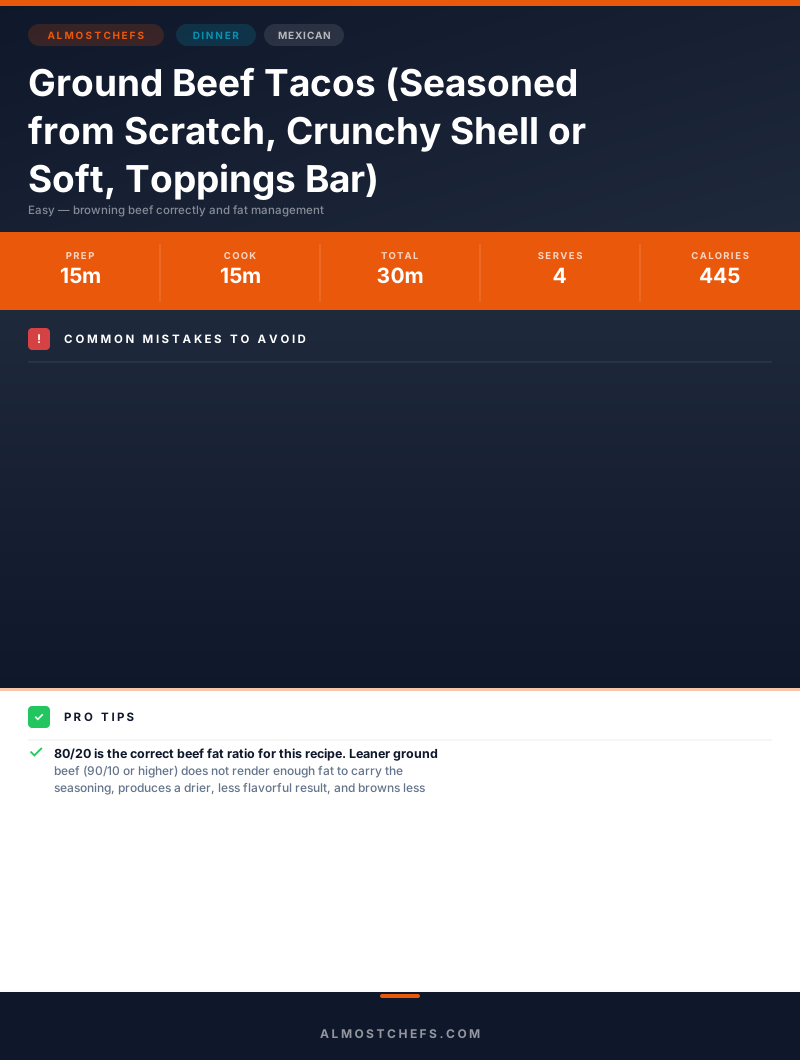
Ground Beef Tacos (Seasoned from Scratch, Crunchy Shell or Soft, Toppings Bar)
Ground beef tacos built on a homemade taco seasoning that beats any packet, with properly browned beef and the full toppings setup. The Maillard browning on the beef and the fat rendering are what make these taste like something.

“The difference between a taco that tastes like a packet of powder and one that actually tastes like beef is in the first three minutes of cooking. Most home cooks stir the beef constantly, preventing browning, and then drain all the fat before the seasoning can emulsify into anything. Stop stirring. Leave the fat.”
Why This Recipe Works
Ground beef tacos are the most made and most underestimated dish in the American home cook repertoire. They are also the most commonly made incorrectly in a very specific way: the beef is gray, texturally uniform, and tastes primarily of the seasoning packet rather than the beef itself. This is a technique failure, and it begins in the first 90 seconds of cooking.
The Browning Problem: Maillard on Ground Beef
The Maillard reaction is the non-enzymatic chemical reaction between amino acids and reducing sugars that begins above approximately 280°F and produces the hundreds of aromatic compounds associated with seared, roasted, and browned food. It is the reason a properly seared steak tastes fundamentally different from a poached one, and it operates the same way on ground beef — with one critical difference in how most people approach ground beef cooking.
Ground beef has more total surface area than a steak of equivalent weight because it is many small pieces rather than one solid mass. This is an advantage — more surface area means more potential Maillard reaction. The problem is that home cooks treat ground beef like it needs constant stirring, which prevents the reaction from occurring. Every time the beef is moved away from the hot pan surface, the surface contact breaks. The temperature of the beef piece drops immediately upon leaving the hot surface. The Maillard chemistry stops. When the piece contacts the hot surface again, it must first reheat to browning temperature before any further reaction can occur.
Constant stirring produces gray, uniformly cooked beef because you are continuously cycling the surface contact and preventing any single area of the beef from spending enough time at the hot surface to develop a brown crust. The solution is deliberate inaction: press the beef flat against the pan and leave it completely undisturbed for 90 seconds. The areas in contact with the hot pan develop a Maillard crust. The volatile compounds produced — pyrazines, furans, thiazoles — create the beefy, slightly caramelized aroma that distinguishes properly browned ground beef from steamed ground beef.
Fat Rendering and Fat as Spice Carrier
80/20 ground beef contains 20% fat by weight. During browning, this fat renders out of the muscle tissue and pools in the pan. This is the moment where most home cooks make the critical error of draining all of it before adding seasoning.
Fat-soluble compounds are a distinct category from water-soluble ones. The primary flavor and aroma compounds in chili powder, cumin, smoked paprika, and oregano are fat-soluble — they dissolve into fat rather than water. When the taco seasoning blend hits beef fat in a hot pan, the fat-soluble compounds bloom: the heat drives them out of the ground spice particles and into the liquid fat, which then coats every surface of every piece of beef in the pan. The fat physically transports the spice flavor into direct contact with the protein surface.
Drain all the fat and you have eliminated the transport medium. The seasoning sits on top of the beef in a dry coating, partially in contact with the protein surface and partially suspended in air where it cannot bond to anything. The result tastes like the spice powder rather than seasoned beef. The spice and the beef are separate things rather than integrated flavors.
The correct approach is partial drainage. If there is more than 3 tablespoons of pooled fat — the volume where the taco filling becomes greasy on the palate — drain the excess. Leave what remains. The seasoning goes into fat, not into a drained pan.
What's Actually in a Taco Seasoning Packet
A standard commercial taco seasoning packet contains chili powder, cumin, salt, cornstarch, garlic powder, and silicon dioxide as an anti-caking agent. The cornstarch is the problem. Cornstarch is a thickening agent — it is included to create a sauce-like coating on the beef when water is added. In practice, it produces a gluey, slightly starchy texture that coats the beef uniformly but without complexity. The starch gelatinizes in the water and creates a thick, bland sauce base that carries spice flavor but also dilutes it with starch flavor.
Homemade seasoning has no cornstarch. The water addition at the end creates a light sauce by deglazing the browned bits from the pan bottom — the fond — which are concentrated Maillard reaction compounds. Those compounds dissolve into the water and create a sauce that is rich with beef flavor rather than thickened by starch. This is why the same spice ratios produce a different result when made from scratch: the sauce mechanism is fundamentally different.
The spice freshness issue is also real. Pre-ground spices lose volatile aroma compounds continuously from the moment they are ground. Commercial taco seasoning packets may have sat in a warehouse and then on a grocery shelf for months before purchase. Freshly purchased ground cumin from a grocery store spice section is not necessarily fresh either — but it is fresher than a blended packet that has been sitting in a sealed foil pouch. If you want to maximize the seasoning quality, buy whole cumin and coriander seeds and grind them in a spice grinder immediately before use.
The Onion and Garlic Sequence
The onion goes in after the beef has browned, not before or simultaneously. This is a deliberate sequence for a specific reason: raw onion in the pan before beef goes in causes the moisture from the onion to create steam, which drops the pan temperature and prevents browning of the beef. The beef needs a dry, hot pan surface to brown. Onion introduces water that defeats this.
After the beef has browned and been broken into pieces, pushing it to the edges of the pan and sautéing the onion in the center uses the residual beef fat as the cooking medium for the onion. The onion picks up Maillard-browned beef flavor from the fat, and the beef fat conducts heat to the onion more efficiently than dry heat alone. This sequence also prevents the onion from burning — it enters a pan with established fat and moderate heat rather than high heat reserved for the beef.
Garlic goes in after the onion because garlic burns significantly faster than onion. At the temperatures being used here — medium-high — raw minced garlic in direct contact with the hot pan surface for more than 60-90 seconds crosses from toasted to acrid. Adding it after the onion has moderated the pan temperature slightly gives it 60 seconds in the fat without risk of burning.
The Cast Iron Skillet for Heat Retention
The reason a cast iron skillet outperforms other pans for browning ground beef is thermal mass. When 1.5 lbs of cold ground beef hits a hot pan, it drops the pan temperature significantly. A thin aluminum or nonstick pan drops below the Maillard threshold almost immediately and then takes time to recover. A cast iron skillet with its substantial iron mass resists the temperature drop and maintains a surface temperature above 280°F even under the cold load of fresh ground beef. The beef begins browning almost immediately on contact rather than first spending time bringing the pan temperature back up.
Nonstick pans cannot be used for this application. Nonstick coatings begin degrading at approximately 500°F, which means manufacturers recommend keeping them below that temperature. But Maillard browning on ground beef requires surface temperatures well above 300°F, and a nonstick pan at high heat is both potentially unsafe and structurally compromised by the treatment. Use cast iron or stainless steel and get actual browning.
Where Beginners Mess This Up
Before we start, read this. These are the 3 reasons your ground beef tacos (seasoned from scratch, crunchy shell or soft, toppings bar) will fail:
- 1
Stirring the beef constantly during browning: Ground beef browns by the Maillard reaction — the non-enzymatic reaction between amino acids and reducing sugars at temperatures above approximately 280°F. This reaction requires sustained contact between the protein surface and the hot pan. Every time you stir the beef, you move it away from the hot surface and introduce room-temperature meat that drops the pan temperature. The result is beef that steams in its own released liquid rather than browning. Press the beef into a flat layer when it hits the pan and leave it completely undisturbed for at least 90 seconds before breaking it up.
- 2
Draining all the fat before adding seasoning: 80/20 ground beef renders approximately 2-3 tablespoons of fat during browning. This fat is not waste — it is the carrier for fat-soluble spice compounds. The cumin, chili powder, and smoked paprika in the seasoning blend contain fat-soluble aroma compounds that dissolve into the beef fat and coat every surface of the meat with flavor. Drain all the fat and the seasoning sits on the surface of the beef in a water-based slurry that dries out rather than integrating. Drain excess if necessary — if there is more than 3 tablespoons of pooled fat — but leave enough for the seasoning to work in.
- 3
Using a taco seasoning packet: The standard commercial taco seasoning packet contains chili powder, cumin, salt, and a significant quantity of cornstarch used as a filler and thickener. The cornstarch creates a gluey coating on the beef rather than a seasoned surface. The spice ratios are calibrated for mass-market palatability, not flavor complexity. Homemade seasoning takes 60 seconds to assemble from pantry spices and produces a categorically different result.
The Video Reference Library
Want to see it in action? Here are the exact videos we analyzed and combined to build this foolproof recipe translation:
The primary technique reference for this recipe, covering the browning method, seasoning integration, and toppings approach. Pay particular attention to the sequence: brown first, season second, never both simultaneously.
🛠️ Core Equipment
- Cast iron skillet or stainless steel panA [cast iron skillet](/kitchen-gear/review/cast-iron-skillet) maintains high, even heat across its entire surface and does not have the temperature-drop problems of thin aluminum pans under a large mass of cold ground beef. Browning 1.5 lbs of beef requires a pan that can hold its temperature when hit with that cold mass. Cast iron's thermal mass is the asset here. Stainless steel works well too. Nonstick pans cannot get hot enough for proper Maillard browning on beef.
- Wooden spoon or stiff spatulaAfter the initial browning period, you need a tool rigid enough to break the browned beef into pieces against the pan surface. A wooden spoon with a flat edge or a stiff spatula accomplishes this without tearing the browned crust off the meat.
- Sheet pan with wire rack (for crunchy shells)Store-bought hard taco shells benefit from 3-4 minutes in a 350°F oven before serving. Placing them on a wire rack allows air circulation inside the shells as they heat, crisping the interior surface rather than just the exterior. Warmed shells hold their crunch significantly longer once filled.
Ground Beef Tacos (Seasoned from Scratch, Crunchy Shell or Soft, Toppings Bar)
🛒 Ingredients
- ✦1.5 lbs 80/20 ground beef
- ✦1 medium yellow onion, finely diced
- ✦4 cloves garlic, minced
- ✦2 teaspoons chili powder
- ✦1 teaspoon ground cumin
- ✦1 teaspoon smoked paprika
- ✦1/2 teaspoon dried oregano
- ✦1/4 teaspoon cayenne pepper
- ✦1 teaspoon salt
- ✦1/4 cup water
- ✦8-12 taco shells or small corn/flour tortillas
- ✦Shredded cheese (cheddar or Monterey Jack)
- ✦Shredded iceberg lettuce
- ✦Diced tomatoes
- ✦Sour cream
- ✦Salsa
- ✦Sliced jalapeños
- ✦Lime wedges
- ✦Fresh cilantro
👨🍳 Instructions
01Step 1
Mix the taco seasoning in a small bowl: chili powder, cumin, smoked paprika, oregano, cayenne, and salt. Set aside.
02Step 2
Heat a cast iron skillet or heavy pan over medium-high heat for 2 minutes until very hot. There is no oil needed — the beef fat will render immediately on contact with the hot surface.
03Step 3
Add the ground beef in one mass. Press it flat against the pan surface with a spatula. Do not touch it for 90 seconds.
04Step 4
After 90 seconds, use a wooden spoon or spatula to break the beef into large chunks, then press each chunk flat again. Cook undisturbed for another 60 seconds.
05Step 5
Continue breaking the beef into smaller pieces and cooking until no pink remains. The beef should have visible dark brown areas — this is the Maillard crust. If it is uniformly gray, the pan was not hot enough or the beef was stirred too early.
06Step 6
If there is more than 3 tablespoons of pooled fat in the pan, drain the excess — tilt the pan and spoon out the excess, leaving the rest.
07Step 7
Push the beef to the edges of the pan and add the diced onion to the center. Cook, stirring the onion, for 3-4 minutes until softened and translucent.
08Step 8
Add the minced garlic and cook for 60 seconds, stirring constantly.
09Step 9
Add the taco seasoning blend to the pan. Stir to coat every piece of beef with the spice mixture. Cook for 60 seconds to bloom the spices in the residual fat.
10Step 10
Add the water to the pan and stir. The liquid deglazes any browned bits from the bottom and creates a light sauce that coats the beef. Simmer for 2-3 minutes until most of the liquid has evaporated and the mixture is saucy rather than wet.
11Step 11
If using hard taco shells, warm them in a 350°F oven on a wire rack for 3-4 minutes while the beef finishes. Serve immediately after assembly.
Nutrition Per Serving
Estimates based on standard preparation. Adjustments alter macros.
🔄 Substitutions
Instead of 80/20 ground beef...
Use Ground turkey or ground chicken
Ground turkey works as a direct substitution but requires a tablespoon of oil added to the pan at the start — turkey renders almost no fat during cooking and will scorch without it. The flavor is lighter and requires slightly more seasoning to produce the same depth. The browning technique is identical.
Instead of Chili powder...
Use Ancho chili powder or pasilla powder
Standard chili powder is typically a blend of dried chilis, cumin, and garlic. Ancho chili powder is made from a single dried poblano and has a deeper, fruitier, slightly chocolatey quality. The substitution ratio is 1:1 but the flavor character shifts noticeably toward more complexity and less generic heat.
Instead of Hard taco shells...
Use Corn tortillas, fried flat or folded
Store-bought hard shells are a convenience product. Frying small corn tortillas in 1/4 inch of oil for 30 seconds per side produces a superior result — fresher, crispier, less cardboard-tasting. Fold them in half immediately after frying, while still pliable, and hold in the shape for 10 seconds until they set.
🧊 Storage & Reheating
In the Fridge
Store cooked seasoned beef in an airtight container for up to 4 days. The seasoning deepens slightly over 24 hours as the spices continue to permeate the beef. Reheat in a skillet over medium heat with a splash of water.
In the Freezer
Freeze cooked beef in portions for up to 3 months. Thaw overnight in the refrigerator. The texture is essentially unchanged after freezing and reheating.
Reheating Rules
Reheat in a skillet over medium heat with 2 tablespoons of water, stirring until heated through. Microwave works but produces slightly dry beef — add a tablespoon of water and cover before microwaving.
❓ Frequently Asked Questions
Why is my beef gray instead of brown?
Gray beef is steamed beef. Three causes: the pan wasn't hot enough before the beef went in, the beef was too cold when it hit the pan (straight from refrigerator into a moderately warm pan drops the temperature below browning threshold), or the beef was stirred immediately after adding. Heat the pan for 2 full minutes over medium-high before the beef goes in, allow the beef to warm slightly on the counter beforehand, and leave it undisturbed for at least 90 seconds on first contact.
Can I make the beef filling ahead of time for a taco bar?
Yes, and it holds well. The seasoned beef actually improves over several hours as the spices continue to penetrate. Keep it warm in a slow cooker on the low setting, or reheat on the stovetop with a splash of water just before serving. The toppings should always be assembled fresh — pre-cut tomatoes and lettuce wilt rapidly and pre-sauced tacos become soggy.
Hard shell or soft tortilla — which is correct?
Both are American constructions with no authentic Mexican precedent. Hard shell tacos originate from American fast food standardization in the mid-20th century. Soft corn tortilla tacos are closer to street taco tradition but are still a distinct category from regional Mexican preparations. Choose based on what you like. The beef filling works in both. The technique for each is different and covered in the instructions.
My taco shells are soggy. What went wrong?
Soggy hard taco shells result from contact with wet toppings too early, or from shells that weren't heated before filling. Warm the shells immediately before filling. Add wet toppings — salsa, sour cream — on top of the dry ingredients (cheese, beef) rather than directly on the shell. And eat tacos within 5 minutes of assembly — there is no technique that keeps a filled hard shell crispy indefinitely.
Is store-bought taco seasoning really that different from homemade?
Yes. Commercial taco seasoning contains cornstarch as a filler that creates a gluey, slightly sticky coating on the beef rather than integrated spice flavor. The spice freshness is lower — commercial blends sit in warehouses and on shelves for months, and pre-ground spices lose volatile aroma compounds over time. Homemade seasoning from recently purchased ground spices produces noticeably more aroma and flavor complexity. The time cost is under 60 seconds.
The Science of
Ground Beef Tacos (Seasoned from Scratch, Crunchy Shell or Soft, Toppings Bar)
We turned everything on this page into a beautiful, flour-proof PDF cheat sheet. Print it out, stick it to your fridge, and never mess up your ground beef tacos (seasoned from scratch, crunchy shell or soft, toppings bar) again.
*We'll email you the high-res PDF instantly. No spam, just perfectly cooked meals.
AlmostChefs Editorial Team
We translate the internet's most popular cooking videos into foolproof, beginner-friendly written recipes. We analyze multiple methods, test them in our kitchen, and engineer a single "Master Recipe" that gives you the best possible result with the least possible stress.