Beef Stroganoff (Seared Sirloin, Mushroom-Dijon Sauce, Sour Cream Finish)
Beef stroganoff done right — sirloin seared hot and quickly, mushrooms cooked in the beef fond, and sour cream added off heat to prevent curdling. The sour cream timing is the difference between silky and broken sauce.

“Beef stroganoff fails at the finish line more than anywhere else. The beef is done, the mushrooms are golden, the sauce smells right — and then the sour cream goes in over high heat and curdles into white lumps floating in brown liquid. One rule prevents this entirely: the sour cream goes in off the heat. Everything else is technique, but that rule is physics.”
Why This Recipe Works
Beef stroganoff is a dish that fails at the last step. Most home cooks get through the beef sear, get through the mushrooms, build the sauce correctly — and then add sour cream over a boiling pan and watch it curdle into grainy white lumps. This is not a random outcome. It is a predictable consequence of protein chemistry, and it happens for a specific reason that can be prevented by a single rule.
Searing Thin Beef: Speed Is the Point
Sirloin sliced to 1/4 inch is not supposed to be cooked through during the sear. The sear is building crust — the Maillard reaction requires the meat surface to reach at least 280°F (140°C), which happens in 60 to 90 seconds on a screaming-hot pan. In that same time, the interior of a thin slice reaches approximately 120–130°F, which is rare to medium-rare. This is exactly where you want it.
The beef re-enters the sauce at the end of cooking, where it warms through to 135–145°F (medium to medium-well) without any additional high-heat cooking. Thin beef that started at medium-rare finishes at medium in a warm sauce — tender, juicy, and still pink. Thin beef that started overcooked finishes as something closer to shoe leather. The margin is narrow and the sear timing is where you set yourself up for success or failure.
Medium-rare beef in a cream sauce is not an accident. Cream sauces are served hot but not scalding — around 160–165°F. Beef at that temperature, having started seared to medium-rare, is appropriately medium and still retains enough moisture to be pleasant. Beef that was cooked to medium during the sear finishes overdone and dry. Sear fast, sear hot, and pull the beef while it's still pink.
Mushroom Moisture and the Browning Problem
Mushrooms contain 88–92% water by weight. That is not a small amount. When mushrooms enter a hot pan, that water begins releasing immediately — and if the pan is even slightly crowded, the water releases faster than it can evaporate, and the mushrooms effectively braise in their own moisture. The pan temperature drops to 212°F (100°C), the boiling point of water, and stays there until all the liquid evaporates. Browning cannot happen until the surface moisture is gone because water physically prevents the surface from reaching the temperatures required for Maillard reactions.
The solution is a single layer with space between pieces, no stirring for the first 4–5 minutes, and patience. Once the water evaporates — you'll hear the sizzling change from a wet steam sound to a dry, crispier sound — the surface temperature jumps and browning begins. Golden-brown mushrooms have a nutty, savory depth that pale mushrooms don't. The difference between 5 minutes and 10 minutes of mushroom cooking is the difference between a stroganoff that tastes of mushrooms and one that just has soft things floating in it.
Building the Pan Sauce from Fond
After the beef sears and comes out of the pan, the bottom of a stainless or cast iron skillet is covered in dark brown deposits — caramelized proteins and reduced beef drippings that stuck to the metal during cooking. This is fond, and it is the most concentrated source of flavor in the entire recipe.
When cold broth hits the hot pan during deglazing, it causes rapid steam generation that physically lifts the fond deposits off the metal. The Maillard compounds in those deposits dissolve into the liquid and become the base of the sauce. A flat wooden spoon accelerates this — scraping the deposits into suspension rather than waiting for them to dissolve on their own. Nothing else in this recipe contributes as much direct, concentrated beef flavor as properly-scraped fond.
A stainless skillet shows fond clearly — the brown deposits contrast sharply against the silver metal and you can see exactly how much has built up. This makes it easy to judge whether the fond is caramelized (brown) or burnt (black). Black fond is bitter and makes a bitter sauce. Brown fond makes a rich, savory one.
Why Sour Cream Breaks at High Heat
Sour cream is a cultured dairy product — milk fat and proteins that have been fermented by lactic acid bacteria, producing a thick emulsion with a pH around 4.5. The low pH (acidity) makes its proteins inherently less stable than those in sweet cream, because acidic conditions lower the temperature at which those proteins begin to denature and aggregate.
Protein denaturation in dairy is the same process that happens when you scramble eggs. At some threshold temperature, the protein chains unfold and begin to cross-link with neighboring proteins, forming aggregates that are visible as white lumps. In sour cream added to a hot sauce, this typically happens around 145°F (63°C). Once the proteins aggregate, they cannot be re-dispersed — the sauce is broken and there is no recovery.
The fix is heat management, not technique. Remove the pan completely from the burner. Wait 30 seconds. The sauce temperature drops below the danger threshold. Stir in room-temperature sour cream — room temperature matters because cold sour cream added to a warm sauce creates a localized temperature spike that can trigger curdling even in an otherwise-safe pan. The result is a sauce that finishes smooth, silky, and exactly the right temperature to serve.
Dijon Mustard as Emulsifier
Dijon mustard does two things in this sauce. First, it contributes flavor — a sharp, slightly bitter, vinegar-bright note that cuts through the richness of the sour cream and heavy cream. Second, and less obviously, Dijon mustard contains mucilage from mustard seeds — a complex polysaccharide that acts as an emulsifier. Emulsifiers are molecules with one water-attracting end and one fat-attracting end; they sit at the boundary between fat droplets and water, keeping them suspended in a uniform mixture rather than separating.
In a cream sauce that contains both beef fat (from the sear), butter, sour cream fat, and an aqueous broth base, the tendency to separate is real. The Dijon contributes emulsification that helps the sauce stay cohesive and glossy rather than breaking into greasy pools with thin liquid. It's not the only stabilizer — the flour roux also contributes — but it's an active one that works throughout the final sauce.
Why This Is Worth the Technique
Every element of this recipe has a mechanical explanation. The thin-seared beef stays tender because of how meat proteins behave at different temperatures. The mushrooms brown because you give the moisture time to evaporate before expecting browning reactions. The fond builds flavor because Maillard compounds are soluble in the broth. The sour cream stays silky because you manage the temperature below the protein aggregation threshold. None of it is magic. All of it is physics applied correctly, and the result is a stroganoff that actually tastes like what the dish is supposed to be.
Where Beginners Mess This Up
Before we start, read this. These are the 4 reasons your beef stroganoff (seared sirloin, mushroom-dijon sauce, sour cream finish) will fail:
- 1
Adding sour cream over high heat: Sour cream is an emulsion of fat, water, and denatured proteins. Above approximately 145°F (63°C), the proteins in the sour cream denature further and aggregate — they clump together and separate from the fat, producing visible white curds in a greasy, broken sauce. This cannot be fixed once it happens. Remove the pan completely from the heat, let it cool for 30 seconds, then stir in the sour cream.
- 2
Not cooking mushrooms long enough: Raw mushrooms are 90% water. If you add them to the pan and immediately move on, they release that water into the sauce, diluting the fond and producing a soggy, pale mushroom with no texture or flavor contribution. Cook mushrooms in a single layer over medium-high heat, without stirring, until the water evaporates and the surface is golden brown. This takes 7–10 minutes and is not a step you can rush.
- 3
Slicing the beef too thick or cooking it too long: Thin beef — 1/4 inch slices — sears in 60 to 90 seconds per side and stays tender. Thick beef takes longer, dries out before browning occurs evenly, and becomes tough. The goal is medium-rare to medium interior with a Maillard-browned exterior. Stroganoff with overcooked beef is chewy and dry regardless of how good the sauce is.
- 4
Using a nonstick pan for the beef: Nonstick pans prevent fond from forming. The caramelized protein deposits stuck to the pan bottom are the primary flavor source for the sauce — the mushrooms and Worcestershire sauce build on top of them. No fond means no sauce depth. Use stainless steel or cast iron for the sear.
The Video Reference Library
Want to see it in action? Here are the exact videos we analyzed and combined to build this foolproof recipe translation:
The best available walkthrough of the sear-remove-deglaze-finish technique. Watch specifically for how he handles the mushroom cooking time — he lets them go significantly longer than most cooks would, and the color difference is the point.
🛠️ Core Equipment
- 12-inch stainless steel or cast iron skilletThe fond is everything in this recipe. Stainless steel and cast iron build caramelized protein deposits from the beef sear that dissolve into the liquid to become the sauce base. A [stainless skillet](/kitchen-gear/review/stainless-skillet) also makes it easy to monitor the fond color — you can see it clearly against a light-colored surface.
- Sharp chef's knife and cutting boardSlicing sirloin thin against the grain requires a sharp knife. Dull knives tear rather than cut, producing ragged edges that cook unevenly and release more liquid during searing. Slice the beef partially frozen (20 minutes in the freezer before cutting) for the cleanest, most uniform slices.
- Wooden spoon or flat-edged spatulaFor deglazing — scraping the browned fond from the pan bottom when the broth goes in. A flat-edged wooden spoon gets into the corners and releases every caramelized deposit. Missing even part of the fond means leaving flavor in the pan.
- Instant-read thermometerFor checking that the sauce temperature has dropped below 145°F before sour cream is added. This removes the guesswork from the single most critical step in the recipe.
Beef Stroganoff (Seared Sirloin, Mushroom-Dijon Sauce, Sour Cream Finish)
🛒 Ingredients
- ✦1.5 lbs sirloin steak or beef tenderloin, sliced 1/4-inch thick against the grain
- ✦1 lb cremini mushrooms, sliced
- ✦1 large onion, thinly sliced
- ✦4 cloves garlic, minced
- ✦2 tablespoons all-purpose flour
- ✦1.5 cups beef broth
- ✦1/2 cup sour cream, room temperature
- ✦1/4 cup heavy cream
- ✦2 tablespoons Dijon mustard
- ✦2 tablespoons Worcestershire sauce
- ✦2 tablespoons unsalted butter
- ✦2 tablespoons neutral oil
- ✦Salt and black pepper
- ✦Egg noodles or mashed potatoes, for serving
- ✦Fresh parsley, chopped, for garnish
👨🍳 Instructions
01Step 1
Slice the beef 1/4-inch thick against the grain. Pat completely dry with paper towels and season generously with salt and pepper.
02Step 2
Heat 1 tablespoon of oil in a large stainless or cast iron skillet over high heat until just beginning to smoke. Add beef in a single layer — work in batches if needed. Sear without touching for 60 seconds, flip, and sear 30–45 seconds more until medium-rare. Remove immediately to a plate.
03Step 3
Reduce heat to medium-high. Add the remaining tablespoon of oil. Add mushrooms in a single layer and cook without stirring for 4–5 minutes until the bottom sides are golden brown. Stir and cook 3–4 more minutes until the moisture has evaporated and the mushrooms are golden throughout.
04Step 4
Add the butter to the mushrooms. Once melted, add the sliced onion. Cook over medium heat for 5–6 minutes until softened and slightly caramelized. Add garlic and cook 1 more minute.
05Step 5
Sprinkle the flour over the mushroom and onion mixture. Stir constantly for 60–90 seconds until the flour coats everything and cooks out the raw starch smell.
06Step 6
Add the beef broth while scraping the bottom of the pan vigorously to dissolve all the fond. Add the Worcestershire sauce, Dijon mustard, and heavy cream. Stir to combine and bring to a gentle simmer.
07Step 7
Simmer uncovered for 5–6 minutes until the sauce thickens enough to coat a spoon.
08Step 8
Return the seared beef to the pan along with any accumulated juices. Stir gently to coat and warm through for 1–2 minutes. Do not boil.
09Step 9
Remove the pan completely from the heat. Wait 30 seconds. Stir in the sour cream until fully incorporated and the sauce is smooth. Taste and adjust seasoning.
10Step 10
Serve immediately over egg noodles or mashed potatoes, garnished with fresh parsley.
Nutrition Per Serving
Estimates based on standard preparation. Adjustments alter macros.
🔄 Substitutions
Instead of Sirloin...
Use Beef tenderloin or ribeye
Tenderloin is the softest option and has the least flavor. Ribeye has more marbling and more beef flavor but is more expensive. Both work with the same technique. Avoid flank or skirt steak — too fibrous for quick searing in stroganoff.
Instead of Sour cream...
Use Full-fat Greek yogurt
Slightly lower fat content means it's marginally more prone to curdling — off-heat technique is even more important. The flavor is tangier and slightly less rich than sour cream. Use full-fat only; non-fat Greek yogurt will curdle reliably.
Instead of Cremini mushrooms...
Use Mixed mushrooms (shiitake, oyster, king trumpet)
A mix produces more complex mushroom flavor. Shiitakes contribute umami; oyster mushrooms have a lighter, cleaner taste; king trumpets hold their texture particularly well. Keep total mushroom weight the same.
Instead of Beef broth...
Use Dry red wine (3/4 cup) plus water (3/4 cup)
Red wine adds acidity and tannins that cut through the richness of the sour cream sauce. Add the wine first, let it reduce for 2 minutes, then add the water. The flavor profile shifts toward French-style rather than Russian-style.
🧊 Storage & Reheating
In the Fridge
Store in an airtight container for up to 3 days. The sour cream sauce may separate slightly in the fridge — stir while reheating to re-emulsify. Do not store with the noodles mixed in, as they absorb the sauce.
In the Freezer
Not recommended with sour cream — the dairy will separate on thawing and the sauce texture will be grainy. If you must freeze, do so before adding the sour cream and add fresh sour cream when reheating.
Reheating Rules
Reheat in a saucepan over low heat, stirring constantly. Do not bring to a boil — the sour cream will curdle. A splash of beef broth or water loosens the sauce if it has thickened too much during storage.
❓ Frequently Asked Questions
Why did my sour cream curdle?
The sauce was too hot when you added it. Sour cream proteins denature and aggregate (clump) at temperatures above approximately 145°F (63°C). The fix is to remove the pan completely from heat, wait 30 seconds for the temperature to drop, then stir in room-temperature sour cream. Once curdled, the sauce cannot be recovered — the protein aggregation is irreversible.
Can I use Greek yogurt instead of sour cream?
Yes, but it's even more prone to curdling because it has slightly less fat than sour cream. The off-heat technique becomes non-negotiable. Use full-fat Greek yogurt, bring it to room temperature before using, and add it only after the pan has been off the heat for at least 30 seconds.
Why are my mushrooms wet and pale instead of golden?
You crowded the pan or stirred too frequently. Mushrooms are 90% water — when you crowd them, they release that water faster than it can evaporate, and they steam in their own liquid rather than browning. Use a large pan, add mushrooms in a single layer, and do not stir for the first 4–5 minutes. The browning happens only after the surface moisture has evaporated.
Can I make this with ground beef?
Technically yes, but the dish becomes a different recipe — closer to American goulash than Russian stroganoff. The thin-seared sirloin technique is what gives this dish its texture. Ground beef produces a thicker, meatier sauce that is less refined. If you use it, brown it well in batches and drain excess fat before continuing.
What's the best cut of beef for stroganoff?
Sirloin is the best balance of tenderness and flavor for this application. Tenderloin is softer but less flavorful. Ribeye is more flavorful but more expensive. The key is that the cut needs to be tender enough to cook to medium-rare in 90 seconds per side — tougher cuts like chuck require much longer cook times and won't work in a quick pan-sear method.
Why does the recipe use both sour cream and heavy cream?
Heavy cream stabilizes the sour cream. The fat content of heavy cream creates a buffer that makes the overall dairy component more tolerant of heat variation. Sour cream alone, even added off heat, can be delicate. The heavy cream raises the total fat percentage and gives the sauce a margin of safety. It also contributes richness and a slightly thicker base sauce before the sour cream goes in.
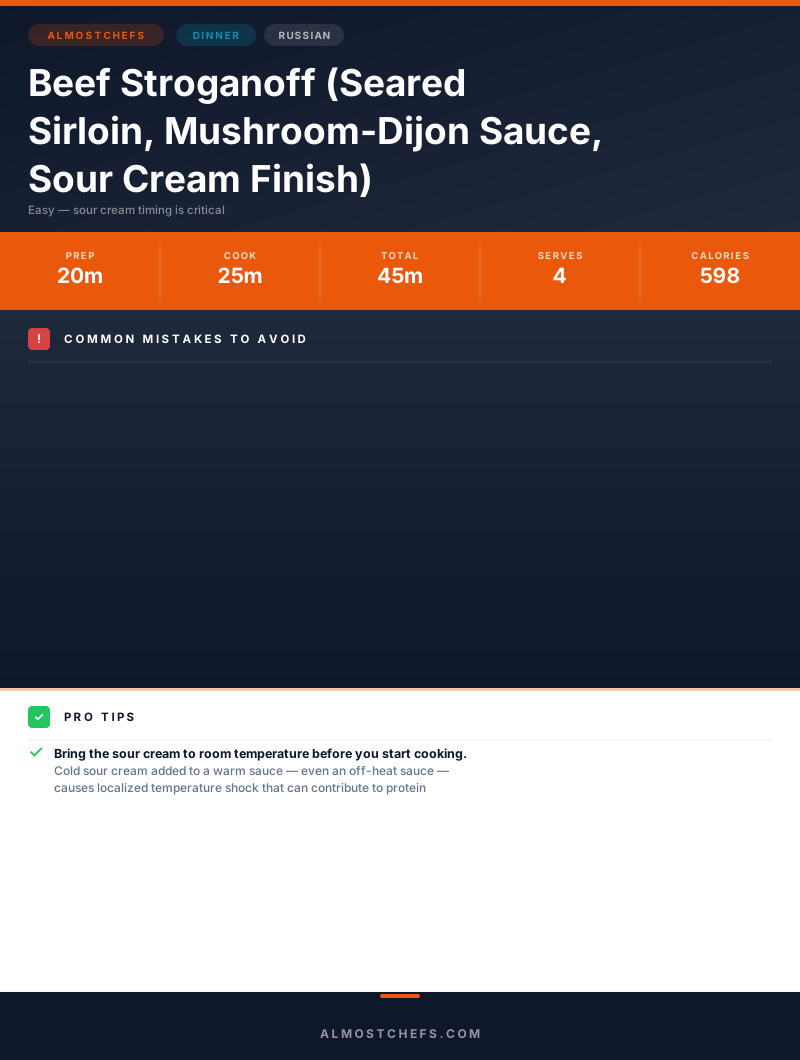
The Science of
Beef Stroganoff (Seared Sirloin, Mushroom-Dijon Sauce, Sour Cream Finish)
We turned everything on this page into a beautiful, flour-proof PDF cheat sheet. Print it out, stick it to your fridge, and never mess up your beef stroganoff (seared sirloin, mushroom-dijon sauce, sour cream finish) again.
*We'll email you the high-res PDF instantly. No spam, just perfectly cooked meals.
AlmostChefs Editorial Team
We translate the internet's most popular cooking videos into foolproof, beginner-friendly written recipes. We analyze multiple methods, test them in our kitchen, and engineer a single "Master Recipe" that gives you the best possible result with the least possible stress.