Classic Beef Bourguignon (The French Stew Worth Every Minute)
Tender beef chuck braised in red wine with bacon, pearl onions, mushrooms, and aromatics — slow-cooked until the sauce turns glossy and the beef falls apart. We broke down the classic Julia Child technique into a foolproof weeknight method that doesn't cut corners on flavor.
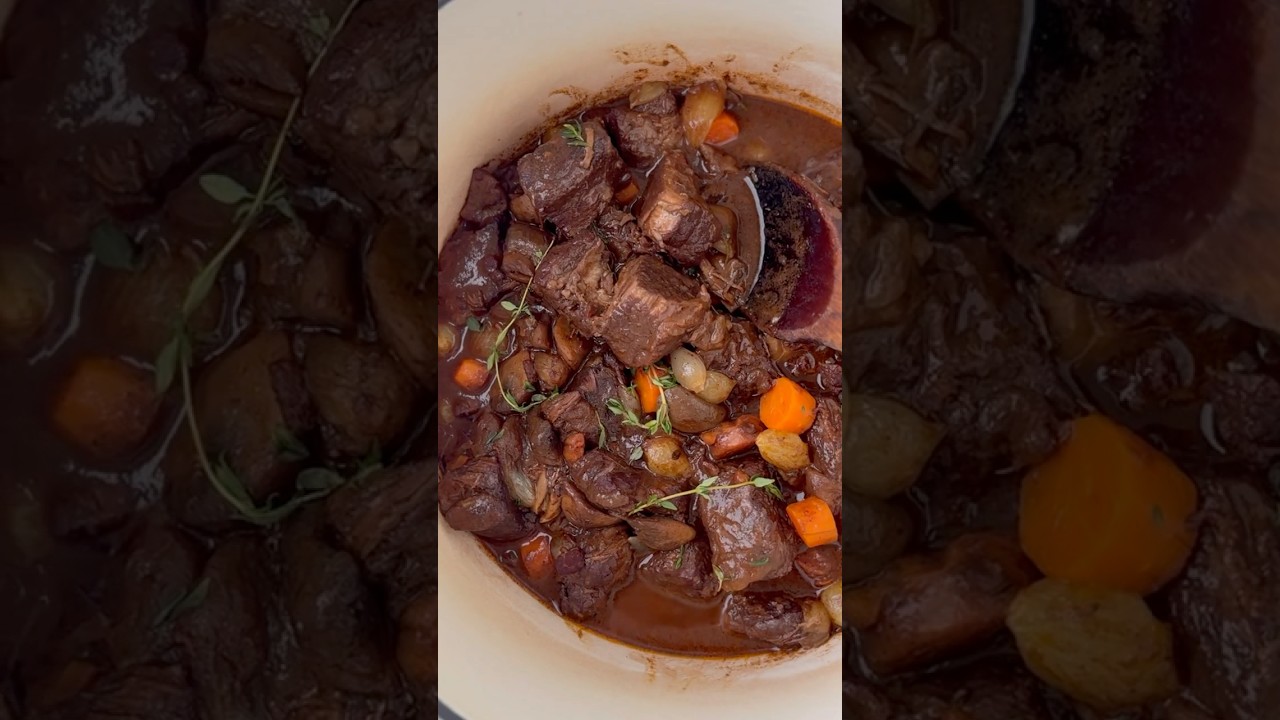
“Beef Bourguignon has a reputation for being fussy, precious, and reserved for Sunday afternoons when you have nothing else to do. That reputation is wrong. The dish is almost entirely hands-off — the oven does the work. What it demands is that you do three things correctly: dry the beef before searing, deglaze every last brown bit off the pot, and never rush the simmer. Get those right and the rest is just time.”
Why This Recipe Works
Beef Bourguignon is not a complicated dish. It is a patient one. The technique is almost entirely passive — you do the work in the first thirty minutes, then the stove finishes the job for the next two hours. What separates a transcendent bourguignon from a forgettable beef stew is not a secret ingredient or a chef's trick. It's understanding what each step is actually doing and not skipping the ones that feel optional.
The Sear Is Not Optional
Dry beef equals browned beef equals flavor. This is Maillard chemistry, and it is unconditional. When beef hits a hot pan with surface moisture, it steams. The water must evaporate before the surface temperature can reach the 280°F required to trigger the browning reaction. By the time that happens in a crowded pan, the temperature has dropped and you're back to steaming. The result: gray, cottony cubes that contributed nothing to the pot.
Pat the beef dry. Work in batches. Give each piece 3 minutes of uninterrupted contact with the hot fat. When it releases cleanly and shows deep mahogany color, flip it. Do this right and you've already built half the dish's flavor architecture before a drop of wine hits the pot.
The Fond Is the Sauce
After searing, the bottom of your Dutch oven is coated in dark brown residue. This is fond — concentrated proteins and sugars from the beef and bacon that caramelized under high heat. Most home cooks look at it and worry they've burned the pot. Experienced cooks look at it and feel relief.
When the wine hits the hot pot and you scrape with a wooden spoon, every bit of that fond dissolves into the liquid. This is the deglaze, and it is the moment when the sauce is born. The wine provides acid and tannins; the fond provides body and depth. Together they create something the wine alone never could. Do not skip this step. Do not rush it.
Time Converts Tough to Tender
Chuck roast is loaded with collagen — the connective tissue that makes it the wrong choice for a quick sauté but exactly right for a braise. At sustained temperatures between 160–180°F over several hours, collagen hydrolyzes into gelatin, which disperses through the braising liquid and gives it that signature glossy, body-rich consistency. This is not something you can accelerate. High heat tightens muscle fibers and squeezes out moisture — the beef gets tough instead of tender. Low and slow is not a preference. It is a physical requirement.
Vegetable Timing
Carrots, mushrooms, and pearl onions go in during the last 45 minutes. Put them in at the start and they disintegrate into the sauce — not inherently wrong, but not what this dish is. Added late, they retain their shape and texture while absorbing the concentrated braising liquid. The mushrooms in particular: added early, they vanish. Added late, they become these intensely savory, wine-soaked bites that compete with the beef for best thing in the bowl.
The balsamic vinegar also goes in with the vegetables, not at the start. It's a finishing acid — it lifts and brightens the sauce after hours of reduction. Added at the beginning, it competes with the wine and turns sharp. Added at the end, it rounds everything out.
The Day-After Rule
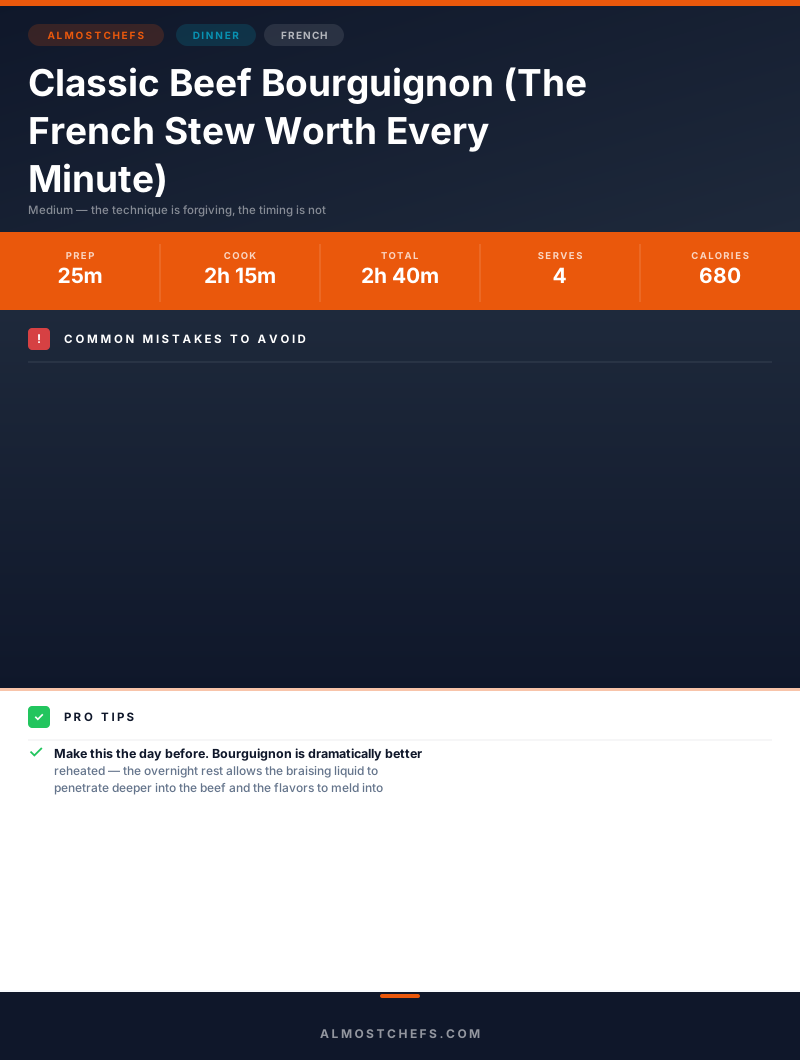
Make this the night before you plan to serve it. The physics are straightforward: braising liquid is hot and the beef is hot, so osmotic exchange between them is active but limited. Overnight in the refrigerator, the temperature drops and the liquid slowly penetrates deeper into the beef fibers. By the next day, every piece of beef has absorbed significantly more of the sauce. The flavors also meld — the individual contributions of wine, thyme, bay, and bacon stop competing and start harmonizing.
This is not a workaround for mediocre cooking. This is how the dish is meant to be eaten. Plan accordingly.
Where Beginners Mess This Up
Before we start, read this. These are the 4 reasons your classic beef bourguignon (the french stew worth every minute) will fail:
- 1
Skipping the beef pat-dry: Wet beef steams instead of sears. A gray, moisture-logged exterior cannot develop the Maillard crust that creates the dish's depth. Paper towels and patience before the beef hits the pan — this step changes everything about the final sauce color and richness.
- 2
Crowding the pan during browning: More than two layers of beef in the pot drops the temperature instantly and you're back to steaming. Work in batches, giving each piece room to develop a genuine sear on all sides. This takes longer. It is worth it unconditionally.
- 3
Using cheap or acidic wine: The wine reduces by more than half and its flavor concentrates dramatically. Cooking wine is not wine — it's salted, acidic liquid that produces a harsh sauce. Use something you'd drink. A $12 Côtes du Rhône or Merlot is all this dish needs.
- 4
Adding vegetables at the start: Carrots, pearl onions, and mushrooms added at the beginning turn to mush by hour two. They go in during the last 45 minutes — firm enough to hold their shape, soft enough to have absorbed the braising liquid. Timing the vegetable addition is the difference between a stew and a braise.
The Video Reference Library
Want to see it in action? Here are the exact videos we analyzed and combined to build this foolproof recipe translation:
The primary reference video used to build this recipe. Clear walkthrough of the browning and deglazing technique, with useful visual cues for sauce consistency at the finish.
🛠️ Core Equipment
- Dutch oven or heavy-bottomed braising potDual-purpose: browns the beef on the stovetop, then braises low and slow. The heavy base prevents scorching during the long simmer. A thin pot will destroy the bottom layer before the beef tenderizes.
- Wooden spoonFor deglazing — scraping the fond (browned bits) off the bottom after adding the wine. Those bits are not burnt; they are concentrated flavor. A wooden spoon gets under them without scratching the pot.
- Fine-mesh sieve or ladleFor skimming fat from the surface during the last 30 minutes if needed. Not strictly necessary, but the difference between a clean, glossy sauce and a greasy one.
Classic Beef Bourguignon (The French Stew Worth Every Minute)
🛒 Ingredients
- ✦3 pounds beef chuck roast, cut into 2-inch cubes
- ✦6 slices bacon, chopped
- ✦2 medium yellow onions, finely diced
- ✦4 large carrots, cut into 1-inch pieces
- ✦8 ounces cremini mushrooms, halved
- ✦3 cloves garlic, minced
- ✦2 cups dry red wine
- ✦2 cups low-sodium beef broth
- ✦2 tablespoons tomato paste
- ✦2 bay leaves
- ✦1 teaspoon dried thyme
- ✦1 teaspoon dried rosemary
- ✦2 tablespoons olive oil
- ✦1 tablespoon balsamic vinegar
- ✦12 pearl onions, peeled
- ✦2 tablespoons cornstarch
- ✦3 tablespoons cold water
- ✦Salt and black pepper to taste
👨🍳 Instructions
01Step 1
Cut the beef chuck into 2-inch cubes and pat completely dry with paper towels.
02Step 2
Cook the chopped bacon in a large Dutch oven over medium heat until crispy, about 8 minutes. Transfer to a paper towel-lined plate, leaving the rendered fat in the pot.
03Step 3
Increase heat to medium-high. Working in batches, brown the beef cubes on all sides until deeply golden, about 3 minutes per side. Do not crowd the pan. Set aside on a plate.
04Step 4
Reduce heat to medium. Sauté the diced yellow onions in the remaining fat until softened and translucent, about 5 minutes.
05Step 5
Add the minced garlic and cook 1 minute until fragrant. Stir in the tomato paste and cook 2 minutes to caramelize slightly.
06Step 6
Pour in the red wine and scrape up every browned bit from the bottom with a wooden spoon. Let the liquid bubble gently for 2 minutes.
07Step 7
Return the beef and bacon to the pot. Add the beef broth, bay leaves, thyme, and rosemary. Stir to combine.
08Step 8
Bring to a simmer, partially cover, and reduce heat to low. Cook for 1 hour and 30 minutes, stirring occasionally.
09Step 9
Add the carrots, pearl onions, mushrooms, and balsamic vinegar. Cover again and simmer for 45 minutes more.
10Step 10
Whisk the cornstarch and cold water into a slurry. Stir into the pot to thicken the sauce.
11Step 11
Simmer uncovered for 10 minutes, stirring gently, until the sauce coats the back of a spoon.
12Step 12
Season with salt and black pepper. Remove bay leaves. Serve immediately in deep bowls with crusty bread or over egg noodles.
Nutrition Per Serving
Estimates based on standard preparation. Adjustments alter macros.
🔄 Substitutions
Instead of Dry red wine...
Use Low-sodium beef broth with 2 tablespoons balsamic vinegar
Less tannic and complex, but still rich. Add an extra tablespoon of tomato paste to compensate for the lost body. Alcohol-free result.
Instead of Bacon...
Use 1 teaspoon smoked paprika added with the onions
Loses the rendered fat base and the textural contrast, but adds smokiness without processed meat. Add 2 tablespoons olive oil to compensate for lost fat.
Instead of Pearl onions...
Use Cipollini onions or shallots, quartered
Sweeter caramelization and far less prep time. Shallots break down more during the braise, thickening the sauce slightly — not a bad outcome.
Instead of Cornstarch slurry...
Use Mashed white beans stirred in at the finish
Adds fiber and a creamier texture to the sauce. Mash about 1/4 cup of white beans with a fork before stirring in. Changes the character of the sauce but not unpleasantly.
🧊 Storage & Reheating
In the Fridge
Store in an airtight container for up to 4 days. Flavor improves significantly by day two.
In the Freezer
Freeze in portions for up to 3 months. The braising liquid protects the beef from freezer burn. Thaw overnight in the refrigerator.
Reheating Rules
Reheat gently on the stovetop over low heat with a splash of broth to loosen the sauce. Avoid the microwave — it tightens the beef and breaks the sauce emulsion.
❓ Frequently Asked Questions
Why is my beef tough after two hours of cooking?
Either the heat was too high or the cut was wrong. Chuck needs low, sustained heat to convert collagen to gelatin. At a rolling boil, the muscle fibers seize and tighten instead of relaxing. Keep the liquid at a bare simmer — just the occasional lazy bubble. Also confirm you used chuck, not a lean cut.
Can I make this in a slow cooker?
Yes, but you must still do the browning and deglazing on the stovetop first. Transfer everything to the slow cooker after the wine deglaze step and cook on low for 7-8 hours. Skip the sear and you have gray, flavorless beef in wine-colored water.
What wine should I use?
Any dry red you'd actually drink. Burgundy is traditional, but a Côtes du Rhône, Merlot, or Cabernet Sauvignon all work. Avoid anything labeled 'cooking wine' — it's salted, acidic, and will produce a harsh, unbalanced sauce.
Can I make this ahead of time?
You should make this ahead of time. Bourguignon made a day in advance is noticeably better — the beef absorbs more of the braising liquid overnight and the flavors integrate in a way that just-cooked stew can't replicate. Reheat gently on the stovetop.
My sauce is too thin. How do I fix it?
Whisk one tablespoon of cornstarch with two tablespoons of cold water and stir it into the simmering pot. Give it 5 minutes of uncovered simmering to activate. Alternatively, remove the beef and vegetables and reduce the liquid alone over medium heat until it reaches the right consistency.
Do I need to use a Dutch oven?
You need a heavy-bottomed pot with a lid that can go from stovetop to low heat. A [Dutch oven](/kitchen-gear/review/dutch-oven) is ideal — the enameled cast iron distributes heat evenly and prevents the bottom layer from scorching during the long simmer. A thin stockpot will burn the bottom before the beef tenderizes.
The Science of
Classic Beef Bourguignon (The French Stew Worth Every Minute)
We turned everything on this page into a beautiful, flour-proof PDF cheat sheet. Print it out, stick it to your fridge, and never mess up your classic beef bourguignon (the french stew worth every minute) again.
*We'll email you the high-res PDF instantly. No spam, just perfectly cooked meals.
AlmostChefs Editorial Team
We translate the internet's most popular cooking videos into foolproof, beginner-friendly written recipes. We analyze multiple methods, test them in our kitchen, and engineer a single "Master Recipe" that gives you the best possible result with the least possible stress.