Batch Lemon Herb Chicken Breast (52g Protein Meal Prep)
A Greek yogurt-marinated chicken breast recipe engineered for meal prep — 52g protein per serving, tender texture, and a pan sauce that keeps it from tasting like sad gym food. We broke down the science behind yogurt marinades and high-heat searing to build one batch-cook method that works all week.

“Most meal-prep chicken is punishment food. Dry, rubbery, flavorless — the kind of thing you eat because you said you would, not because you want to. This recipe fixes all three problems at once: Greek yogurt marinade keeps the protein content high while actively tenderizing the meat, a proper high-heat sear builds the crust that retains moisture, and a quick pan sauce turns leftover marinade into something worth eating five days in a row.”
Why This Recipe Works
Meal prep chicken has a reputation problem, and it deserves it. Most batch-cooked chicken breast tastes like something produced at a commercial scale under fluorescent lights — edible, technically, but not food you'd choose to eat if anything else were available. The problem isn't the ingredient. Chicken breast is a genuinely excellent protein source. The problem is that people treat batch cooking as an afterthought rather than a technique.
This recipe is built around three specific engineering decisions that separate chicken you'll actually look forward to eating from chicken you'll tolerate.
The Yogurt Marinade Is Doing Real Work
Greek yogurt is not a trendy addition. It's the mechanism that makes lean chicken breast viable for five-day meal prep. Here's the science: yogurt contains lactic acid, which gently denatures the proteins on the surface of the meat. This is meaningfully different from what citrus-heavy marinades do — lemon juice and vinegar break down proteins aggressively, and extended exposure turns the exterior of the chicken pasty and slightly mushy. Lactic acid works slowly and evenly, tenderizing without degrading.
The thickness matters too. A thin liquid marinade pools at the bottom of whatever container you're using. Greek yogurt clings. Every surface of the chicken gets uniform coverage, which means uniform flavor penetration. After 4 hours minimum — 6 is better, overnight is ideal — the marinade has worked far enough into the meat that the interior tastes as seasoned as the exterior.
The secondary benefit: yogurt adds 5-6 grams of protein per serving to the dish before you've even touched the chicken. Combined with 2 pounds of breast, that's how this recipe reaches 52 grams per serving without any protein powder or supplement additions.
The Sear Is Non-Negotiable
Lean proteins punish impatience at the stove more than fatty cuts do. A chicken thigh has intramuscular fat that buffers it from a few degrees of overcooking. A breast has almost none. Which means the crust you build during the initial sear is doing double duty: it creates flavor through Maillard reaction, and it creates a moisture barrier that slows the internal moisture loss during the simmer phase.
You need a heavy-bottomed skillet at true medium-high heat — not what most home cooks call medium-high, which is usually medium. The oil should shimmer and move easily before the chicken touches the pan. Then leave it alone. Pressing down on the chicken or moving it around drops the pan temperature and breaks the crust formation. Let it stick. When it's ready to flip, it releases on its own.
The chicken also needs to be dry before it hits the pan. Pat it with paper towels regardless of the marinade coating. Excess surface moisture creates steam, and steam is the enemy of browning. This seems counterintuitive — you just marinated it — but the yogurt coating will caramelize beautifully on a dry surface and steam-burn on a wet one.
The Pan Sauce Is the Preservation Layer
Most meal prep recipes stop at "cook the chicken, put it in containers." This is why day-four meal prep chicken tastes like a punishment. Lean protein dries out in cold storage even in sealed containers, because there's nothing protecting the surface from the refrigerator's humidity-stripping effect.
The reserved yogurt marinade, cooked down with chicken broth and the fond from the sear, creates a sauce with enough body to coat the chicken in each container. When stored with sauce spooned directly over the meat, that layer acts as a physical moisture barrier. The chicken on day five tastes dramatically better than chicken stored dry.
This also means reheating matters. Use 70% microwave power with a splash of additional broth. Full power microwaving hits the outside of the chicken far harder than the center, rapidly dehydrating the surface while the interior barely warms. Low and slow — even in a microwave — preserves what the pan sauce worked to protect.
Where Beginners Mess This Up
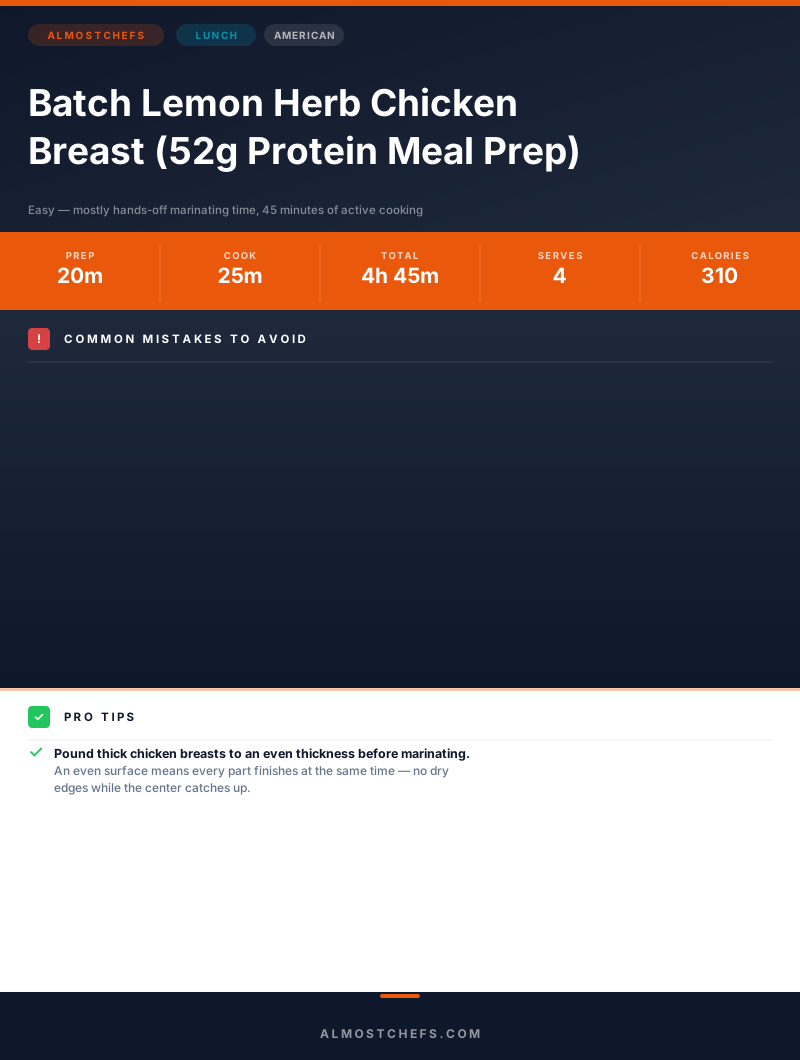
Before we start, read this. These are the 4 reasons your batch lemon herb chicken breast (52g protein meal prep) will fail:
- 1
Skipping the marinade time: Four hours is the minimum, not a suggestion. The lactic acid in Greek yogurt needs time to gently denature the surface proteins and work inward. Less than 4 hours and you get flavored chicken, not marinated chicken. The texture difference is significant.
- 2
Cooking cold chicken straight from the fridge: Cold chicken dropped into a hot pan drops the pan temperature immediately, killing your sear. The exterior goes pale and steams instead of browning. Fifteen minutes on the counter before cooking is all you need to bring the surface up enough for proper Maillard reaction.
- 3
Pouring marinade into the pan too early: The yogurt marinade goes in after both sides are seared — not before. Adding it to an unseared surface means it sticks, burns, and turns bitter. Sear first, build the crust, then add the marinade to create the pan sauce.
- 4
Overcooking to 'be safe': 165°F internal temperature is the target — not a floor to exceed. Every degree past that squeezes moisture out of the muscle fibers permanently. Get an instant-read thermometer. Pull at 163°F and let carryover heat finish the job during the 5-minute rest.
The Video Reference Library
Want to see it in action? Here are the exact videos we analyzed and combined to build this foolproof recipe translation:

Step-by-step walkthrough of the yogurt marinade technique and pan sauce method.
2. How to Sear Chicken Breast Perfectly Every TimeCovers the science of Maillard reaction on lean proteins and why pan temperature matters more than cooking time.
3. Meal Prep Like a Pro — Sunday Batch Cooking BasicsContainer selection, cooling technique, and storage strategies for keeping batch-cooked proteins fresh all week.
🛠️ Core Equipment
- Large heavy-bottomed skillet ↗Even heat distribution is essential for searing four large chicken breasts simultaneously. A thin pan creates hot spots — one breast gets caramelized while the next steams. Cast iron or heavy stainless steel are ideal.
- Instant-read thermometer ↗The only reliable way to hit 165°F without overcooking. Slicing to check doneness releases all the juice you just worked to preserve. A good thermometer pays for itself in one batch.
- Zip-top bag or shallow dish with lid ↗For marinating. The key is surface contact — every part of the chicken should be coated. A bag lets you massage the marinade in; a shallow dish works if you flip the chicken halfway through.
- Meal-prep containers with lids ↗Airtight containers keep the chicken from drying out in the fridge. Store with pan sauce spooned over the top — it acts as a moisture barrier during reheating.
Batch Lemon Herb Chicken Breast (52g Protein Meal Prep)
🛒 Ingredients
- ✦2 lbs boneless, skinless chicken breasts (about 4 large breasts)
- ✦1 cup nonfat Greek yogurt
- ✦3 tablespoons fresh lemon juice
- ✦4 cloves garlic, minced
- ✦2 tablespoons fresh rosemary, finely chopped
- ✦2 tablespoons fresh thyme leaves
- ✦1 tablespoon Dijon mustard
- ✦2 teaspoons kosher salt
- ✦1 teaspoon freshly cracked black pepper
- ✦1/2 teaspoon red pepper flakes
- ✦2 tablespoons olive oil
- ✦1 medium yellow onion, thinly sliced
- ✦1 cup low-sodium chicken broth
- ✦2 tablespoons fresh lemon zest
- ✦2 bay leaves
👨🍳 Instructions
01Step 1
Whisk together Greek yogurt, lemon juice, minced garlic, rosemary, thyme, Dijon mustard, salt, pepper, and red pepper flakes in a large bowl until smooth and fully combined.
02Step 2
Pat the chicken breasts completely dry with paper towels, then place them in a large zip-top bag or shallow dish.
03Step 3
Pour the marinade over the chicken, seal the bag or cover the dish, and massage to ensure every surface is coated.
04Step 4
Refrigerate for at least 4 hours, or overnight. Do not exceed 24 hours — the acid will start breaking down the meat fibers excessively.
05Step 5
Remove the chicken from the refrigerator 15 minutes before cooking. Do not rinse off the marinade.
06Step 6
Heat olive oil in a large heavy-bottomed skillet over medium-high heat until it shimmers, about 2 minutes.
07Step 7
Transfer chicken breasts from the marinade to the hot skillet, reserving all remaining marinade. Sear for 5-6 minutes on the first side without moving them.
08Step 8
Flip each breast and sear for another 4-5 minutes until the second side is deeply golden.
09Step 9
Add the sliced onion around the chicken and sauté for 2 minutes until it begins to soften and become fragrant.
10Step 10
Pour the reserved marinade and chicken broth into the skillet and add the bay leaves. Bring to a gentle simmer.
11Step 11
Reduce heat to medium-low, partially cover the skillet, and simmer for 12-15 minutes until the thickest point of each breast reads 165°F on an instant-read thermometer.
12Step 12
Remove from heat, scatter fresh lemon zest over the top, and let rest uncovered for 5 minutes.
13Step 13
Divide the chicken and pan sauce evenly among meal-prep containers. Let cool completely before sealing and refrigerating.
Nutrition Per Serving
Estimates based on standard preparation. Adjustments alter macros.
🔄 Substitutions
Instead of Nonfat Greek yogurt...
Use Nonfat plain yogurt mixed with 1 tablespoon cornstarch
Slightly less tangy, equally creamy. The cornstarch stabilizes the marinade at high heat so it doesn't break in the pan.
Instead of Fresh rosemary and thyme...
Use 2 tablespoons Italian herb seasoning blend
Slightly more concentrated flavor. No meaningful difference in the finished dish — dried herbs are just as effective in marinades.
Instead of Olive oil...
Use Avocado oil or ghee
Both have higher smoke points, which means a cleaner sear with no burnt yogurt residue. Ghee adds richness without extra carbohydrates.
Instead of Low-sodium chicken broth...
Use Bone broth or collagen-boosted broth
Richer, more savory pan sauce. Adds gelatin and extra amino acids — pushes protein per serving closer to 55g.
🧊 Storage & Reheating
In the Fridge
Store in airtight containers with pan sauce spooned over the chicken for up to 5 days. The sauce acts as a moisture barrier.
In the Freezer
Freeze individual portions for up to 2 months. Thaw overnight in the refrigerator — do not thaw at room temperature.
Reheating Rules
Add 2 tablespoons of water or chicken broth to the container, cover loosely, and microwave at 70% power for 90 seconds. Full power microwaving dries out lean chicken rapidly.
❓ Frequently Asked Questions
Why use Greek yogurt in the marinade instead of just olive oil and lemon?
Yogurt does three things oil can't. Its lactic acid gently tenderizes the surface proteins without the mushiness that heavy citrus marinades cause. Its thick consistency clings to the meat for even coverage. And it contributes 5-6g of additional protein per serving to the finished dish. Oil-based marinades add fat and flavor — yogurt adds all of that plus structural benefits.
Can I skip the marinating time if I'm in a hurry?
You can cook it, but you're making a different dish. The yogurt needs a minimum of 4 hours to penetrate the meat and do its job. A 30-minute marinade produces flavored chicken, not properly tenderized chicken. If you're pressed for time, pound the breasts thin — more surface area means faster penetration.
Is it safe to use the marinade as a pan sauce after it's touched raw chicken?
Yes, because you're cooking it. The marinade goes into a hot skillet where it simmers at temperatures that kill any bacteria. What you cannot do is use it as a cold dipping sauce or drizzle it raw on the finished dish.
Why is my chicken still dry even though I hit 165°F?
You may have cooked it past 165°F before checking, or you cut into it immediately without resting. Every degree past the target squeezes moisture out permanently. Pull the chicken at 163°F and let carryover heat finish the job during a 5-minute rest. Also ensure you're not skipping the pan sauce — storing dry chicken in a dry container is a recipe for rubbery leftovers.
Can I grill this instead of cooking it in a skillet?
Yes. Grill over medium-high heat for 6-7 minutes per side, targeting the same 165°F internal temperature. You lose the pan sauce, but the char adds a smokiness that works well with the lemon herb profile. Baste with extra marinade (set aside before adding raw chicken) during the last 2 minutes.
How do I scale this recipe for more servings?
Double the recipe with one important caveat: do not crowd the skillet. Sear in two batches with the same pan if you're making 8 breasts. Crowding drops the pan temperature and causes steaming — you lose the crust that seals in the moisture.
The Science of
Batch Lemon Herb Chicken Breast (52g Protein Meal Prep)
We turned everything on this page into a beautiful, flour-proof PDF cheat sheet. Print it out, stick it to your fridge, and never mess up your batch lemon herb chicken breast (52g protein meal prep) again.
*We'll email you the high-res PDF instantly. No spam, just perfectly cooked meals.
AlmostChefs Editorial Team
We translate the internet's most popular cooking videos into foolproof, beginner-friendly written recipes. We analyze multiple methods, test them in our kitchen, and engineer a single "Master Recipe" that gives you the best possible result with the least possible stress.