Crispy Homemade Banana Chips (No Fryer Required)
Oven-baked banana chips with minimal oil, natural sweeteners, and a satisfying crunch. We broke down the technique so your chips actually crisp up instead of turning into chewy banana leather.

“Most homemade banana chip attempts produce one of two failures: chewy banana leather that never crisps up, or burnt edges with a raw center. The difference isn't the recipe — it's the banana ripeness, the slice thickness, and the willingness to bake low and slow without rushing. Get those three things right and you have a snack that outperforms anything in a bag.”
Why This Recipe Works
Banana chips should be a simple thing. Four ingredients, one pan, an oven. And yet the failure rate among first-time makers is remarkably high — not because the recipe is difficult, but because the physics of drying fruit in an oven are counterintuitive in specific ways that most recipes never explain.
The Ripeness Problem
Bananas are one of the highest-sugar fruits in a grocery store. A medium banana contains roughly 14 grams of sugar, and that number climbs significantly as the fruit ripens. For banana bread, that sugar is the whole point. For chips, it is the enemy.
When sugar-dense slices hit oven heat, they caramelize faster than they dry. The outside browns and becomes sticky while the interior is still loaded with moisture. The result is a chip that looks done, won't release from the pan cleanly, and turns chewy the moment it cools. This isn't a timing problem — it's a chemistry problem. You can't bake your way out of an overripe banana.
The fix is structural: buy bananas that are just turning yellow, before the starch-to-sugar conversion has run its course. Firm, slightly underripe bananas have less free sugar and more intact cell walls, which means they dry evenly and hold their shape. This single variable accounts for the majority of banana chip failures.
Why 300°F Is the Entire Technique
Most snack recipes run hot — 400°F or higher to get browning and texture quickly. Banana chips are the exception. At high heat, the outside surface sets before internal moisture has had time to migrate toward the surface and evaporate. The chip looks golden. It is not done. It is a caramelized shell around a chewy core.
At 300°F, the heat is gentle enough that moisture moves through the slice and exits the surface gradually over 35-40 minutes. Every part of the chip — edge to center — dries at roughly the same rate. The rimmed baking sheet creates just enough airflow underneath that the bottom doesn't steam while the top dries. The result is a chip that's uniformly dry all the way through, which is what produces the snap.
The cooling period after baking isn't optional rest time — it's the final phase of crisping. As the chip temperature drops below 212°F, the last of the surface moisture evaporates and the cell structure locks into place. A chip that bends when hot but snaps when cool is a correctly made chip. A chip that's still soft after 10 minutes of cooling went into the oven too ripe.
The Coating's Real Job
The coconut oil, honey, and cinnamon mixture looks like flavoring. It is also a heat conductor. A thin coat of fat on the surface of each slice ensures that heat transfers evenly across the entire face of the chip rather than just the points of direct pan contact. This is why the pastry brush matters — pooled oil creates uneven browning, while a thin, consistent coat promotes uniform color from edge to edge.
The honey contributes both flavor and a very small amount of surface caramelization that gives finished chips their characteristic sheen. Use too much and it competes with drying. The ratio in this recipe — 1 tablespoon to 4 bananas — is calibrated to add flavor without impeding moisture loss.
The Single-Layer Rule
Air circulation between chips is not a nicety — it's the mechanism. Chips stacked or touching create a microclimate of trapped steam between them. That steam re-hydrates the adjacent surfaces and prevents crisping on the contact edges. With four bananas spread across two pans at half-inch spacing, every surface of every chip is exposed to dry oven air throughout the entire bake.
If you only have one pan, bake in two batches. The 40-minute investment is the same. The texture difference between properly spaced and crowded chips is not subtle.
Where Beginners Mess This Up
Before we start, read this. These are the 4 reasons your crispy homemade banana chips (no fryer required) will fail:
- 1
Using ripe, spotted bananas: Ripe bananas are great for bread. They are terrible for chips. High sugar content means they caramelize fast, stick to the pan, and turn chewy instead of crispy. You want firm, just-yellowed bananas — the ones most people would leave on the counter for another two days. That firmness is structural. It's what holds the chip shape through 40 minutes of heat.
- 2
Slicing too thick: Anything over 1/8-inch stays chewy in the center no matter how long you bake it. A mandoline slicer is the right tool here — consistent thickness means every chip finishes at the same time. Knife-cut slices vary too much and you end up with half crispy, half rubbery results.
- 3
Skipping the flip: Banana slices release moisture from both sides. If you don't flip halfway through, the bottom sits in its own steam and stays soft while the top browns normally. One flip at the 20-minute mark fixes this completely.
- 4
Pulling them from the oven too soon: Banana chips don't fully crisp until they cool. If you taste one fresh from the oven and it bends, that doesn't mean it's underdone — it means it hasn't cooled yet. The final crunch happens in the 10 minutes after you pull the pan. Resist the urge to add more time based on in-oven texture alone.
The Video Reference Library
Want to see it in action? Here are the exact videos we analyzed and combined to build this foolproof recipe translation:
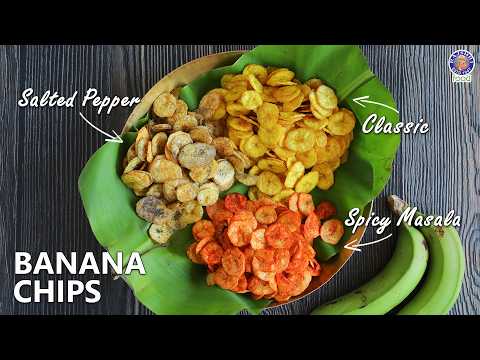
The source video for this technique. Shows slice thickness, the coating application, and the visual cues for doneness you can't get from a written recipe alone.
2. How to Make Crispy Banana Chips at Home
A useful side-by-side comparison of fried versus baked banana chips. Good for understanding how the low oven temperature replicates the drying effect of oil without the fat.
3. Banana Chips Without a DehydratorCovers the cooling science and why chips that seem soft in the oven end up fully crispy at room temperature. Helps calibrate your expectations for the final result.
🛠️ Core Equipment
- Mandoline slicer ↗Consistent 1/8-inch slices are the single biggest factor in even crisping. A mandoline does in 90 seconds what a knife takes 10 minutes to do inconsistently. If you're making these more than once, it's worth having.
- Two large rimmed baking sheets ↗Single-layer spacing is essential. Crowded chips steam each other and never crisp. Two pans let you spread all four bananas without overlap.
- Parchment paper ↗The honey in the coating will glue chips directly to a bare pan. Parchment ensures clean release and makes cleanup a non-event.
- Pastry brush ↗Thin, even oil coverage — not pooling. A brush applies the coconut oil mixture in a controlled coat that promotes browning without sogginess.
Crispy Homemade Banana Chips (No Fryer Required)
🛒 Ingredients
- ✦4 medium firm yellow bananas, peeled
- ✦2 tablespoons coconut oil, melted
- ✦1 tablespoon raw honey
- ✦1 teaspoon ground cinnamon
- ✦1/4 teaspoon sea salt
- ✦1/4 teaspoon vanilla extract
- ✦1 tablespoon unsweetened shredded coconut (optional)
- ✦1/4 teaspoon ground cardamom (optional)
👨🍳 Instructions
01Step 1
Preheat your oven to 300°F and line two large baking sheets with parchment paper.
02Step 2
Select firm bananas that are just turning from green to yellow. Peel and slice into 1/8-inch rounds using a mandoline or sharp knife.
03Step 3
Whisk together the melted coconut oil, raw honey, ground cinnamon, sea salt, and vanilla extract in a small bowl until fully combined.
04Step 4
Arrange banana slices in a single layer on the prepared baking sheets, spacing them about half an inch apart.
05Step 5
Brush both sides of each banana slice lightly with the oil mixture using a pastry brush.
06Step 6
Sprinkle shredded coconut and cardamom over the slices if using.
07Step 7
Bake for 20 minutes, then flip each slice and rotate the pans front to back.
08Step 8
Continue baking for another 15-20 minutes until chips are golden brown. Watch closely in the final 5 minutes — the line between done and burnt is narrow.
09Step 9
Remove from the oven and let cool on the baking sheets for 10 minutes without moving them.
10Step 10
Transfer cooled chips to an airtight container. Store at room temperature for up to one week.
Nutrition Per Serving
Estimates based on standard preparation. Adjustments alter macros.
🔄 Substitutions
Instead of Coconut oil...
Use Extra virgin olive oil
Slightly less rich flavor but equally effective for crisping. More heart-healthy fat profile. The chips will taste more neutral, which lets the banana flavor come forward.
Instead of Raw honey...
Use Pure maple syrup or unsweetened applesauce
Maple syrup provides deeper molasses notes and similar browning. Applesauce reduces sugar further but produces chewier chips — better if you're prioritizing glycemic control over crunch.
Instead of Ground cinnamon...
Use Pumpkin pie spice or Chinese five-spice
Pumpkin pie spice is a direct swap — slightly sweeter and more complex. Five-spice is a bigger departure but produces a genuinely interesting savory-sweet chip worth trying.
Instead of Sea salt...
Use Himalayan pink salt or omit entirely
Omitting salt lets the natural banana sweetness dominate, which works well in the cardamom-coconut version. Pink salt adds trace minerals with no practical flavor difference.
🧊 Storage & Reheating
In the Fridge
Not recommended — refrigerator humidity softens chips within hours. Room temperature storage in an airtight container is the right call.
In the Freezer
Not suitable. Moisture from thawing destroys the crunch completely and cannot be recovered.
Reheating Rules
If chips have softened, spread on a baking sheet and bake at 275°F for 8-10 minutes to drive off humidity and restore crunch. Cool before eating.
❓ Frequently Asked Questions
Why are my banana chips chewy instead of crispy?
Three possible causes: bananas too ripe (high sugar prevents proper drying), slices too thick (moisture can't escape fast enough), or pulled from the oven before cooling. Check ripeness first — it's the most common culprit.
Can I make these in an air fryer?
Yes, with adjustments. Air fry at 300°F for 12-15 minutes, flipping halfway. Batch size is smaller and you'll need to watch closely. The result is comparable — slightly faster but less forgiving on timing.
Do I need a mandoline?
No, but it helps significantly. The goal is 1/8-inch uniform slices. A sharp chef's knife and patience can get you there. Inconsistent slices mean some chips finish early and burn while others stay soft.
Can I dehydrate these instead of baking?
Yes. A food dehydrator set to 135°F for 6-8 hours produces excellent results with even better crunch than oven baking. The extended low heat removes more moisture. If you have a dehydrator, use it.
Why 300°F and not higher to speed things up?
Higher heat caramelizes the surface sugars before interior moisture has escaped. You get a browned exterior with a still-soft center. The low temperature is what allows even drying all the way through. There is no faster version of this recipe that produces the same result.
How do I know when they're actually done?
Color is your primary cue — golden brown, not pale yellow. Secondary cue: the chips should feel firm but still slightly pliable when hot. They will be fully crispy after 10 minutes of cooling. If they're still soft after cooling, return to the oven for 8 more minutes.
The Science of
Crispy Homemade Banana Chips (No Fryer Required)
We turned everything on this page into a beautiful, flour-proof PDF cheat sheet. Print it out, stick it to your fridge, and never mess up your crispy homemade banana chips (no fryer required) again.
*We'll email you the high-res PDF instantly. No spam, just perfectly cooked meals.
AlmostChefs Editorial Team
We translate the internet's most popular cooking videos into foolproof, beginner-friendly written recipes. We analyze multiple methods, test them in our kitchen, and engineer a single "Master Recipe" that gives you the best possible result with the least possible stress.