The Ultimate Banana Bread (One-Bowl Masterclass)
A moist, tender loaf built on overripe bananas, warm spice, and a splash of sour cream that eliminates the need for excess sugar. We broke down every failure point — from dense gummy crumbs to sunken centers — so you get a perfect loaf on the first try.
“Most banana bread recipes produce a dense, gummy loaf that tastes vaguely of banana and mostly of disappointment. The culprit is almost never the recipe — it's three small decisions: banana ripeness, mixing technique, and oven timing. Nail those three and you get a loaf so good people will ask if you baked it professionally.”
Why This Recipe Works
Banana bread is not baking. Not technically. There is no proofing, no lamination, no precision temperature curves. It is a batter you stir and a loaf pan you fill. The fact that people still manage to ruin it consistently — dense, gummy, collapsed, starchy — suggests the problem isn't skill. It's a few specific decisions that most recipes bury in the instructions or skip entirely.
The Banana Problem Is Really a Patience Problem
The entire flavor architecture of this bread rests on one variable: how far gone the bananas are. A yellow banana is mostly starch. A black-peeled banana is mostly sugar — the same simple sugars that make fruit taste intensely of itself. When you bake with underripe bananas, you get a loaf that tastes politely of banana. When you bake with properly blackened ones, you get a loaf that tastes like banana bread is supposed to taste.
The conversion is enzymatic and cannot be rushed by will alone. You can accelerate it — roasting unpeeled bananas at 300°F for 15-20 minutes turns a yellow banana into a functional black one — but there is no substitute for waiting. The best move is to keep a bag of overripe bananas in your freezer. Thaw them on the counter for 30 minutes before using. They'll be collapsed, brown, and liquid-heavy, which is exactly what you want.
Why Sour Cream Is Not Optional
Most one-bowl banana bread recipes skip sour cream and rely entirely on the banana moisture to carry the loaf. That works. It produces a decent bread. What sour cream adds is a secondary acid source that reacts with the baking soda to produce additional lift, and a fat-plus-protein matrix that keeps the crumb tender for days instead of hours. The tang is subtle — you won't taste sour cream in the finished loaf — but you will notice that this bread is still good on day three when most banana breads have turned to compressed cardboard.
Greek yogurt substitutes directly if that's what you have. Same acidity, same protein structure, nearly identical result.
The Folding Imperative
Quick breads live and die on mixing technique. The moment flour hits wet ingredients, gluten development begins. Gluten is elastic — it's what makes baguettes chewy and pizza dough springy. In banana bread, elasticity is your enemy. You want a tender, almost crumbly crumb, and that requires stopping gluten development as early as possible.
Fold the batter with a rubber spatula: scrape from the bottom, fold over the top, rotate the bowl, repeat. Stop the moment you can't see dry streaks of flour. The batter will look lumpy and uneven. That is not a problem to fix. That is the correct state. Every additional stir tightens the gluten network and moves you closer to a dense, gummy outcome.
The Oven Is Not a Viewing Window
The first 40 minutes of baking are load-bearing. The leavening gases expand, the batter sets around them, and the structure locks in. Open the door during this window and you drop the internal temperature suddenly — the expanding gases contract, and the rising loaf collapses into itself. The resulting sunken center is not recoverable.
Set a timer for 40 minutes. Do not look. At 55 minutes, check with a toothpick. If you want certainty, use an instant-read thermometer: 200°F at the center means done, every time, regardless of oven variation.
The Cooling Step Most People Skip
Slicing a hot loaf of banana bread is actively counterproductive. The interior is still setting — the starch gelatinization isn't complete, the crumb structure is fragile, and cutting it releases steam that would otherwise redistribute moisture through the loaf. What you get is a crumbly, slightly gummy slice. What you'd get after an hour of cooling is a clean, structured slice with a defined crumb. The patience required is the same patience that makes the bananas work. This recipe rewards waiting.
Where Beginners Mess This Up
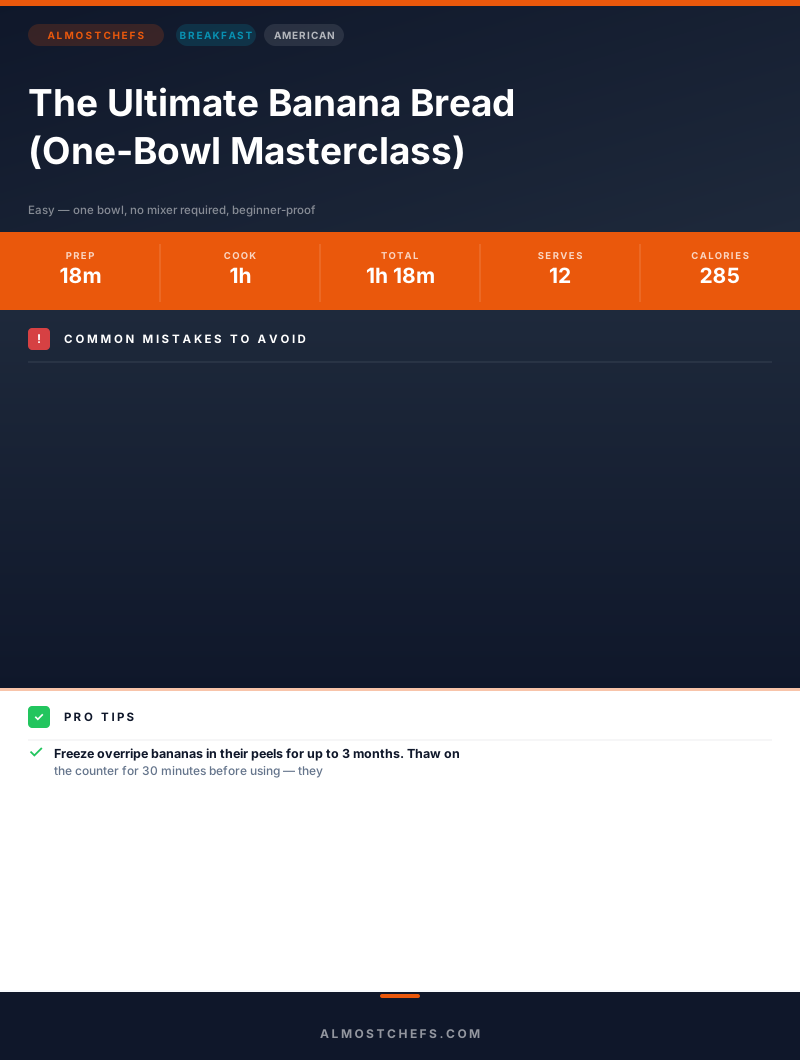
Before we start, read this. These are the 4 reasons your the ultimate banana bread (one-bowl masterclass) will fail:
- 1
Using bananas that aren't ripe enough: Yellow bananas are full of starch, not sugar. The conversion from starch to sugar happens as the peel goes brown and then black. An underripe banana produces a starchy, dense loaf with weak banana flavor. Wait until the peel is at least 70% spotted brown — ideally nearly black. If you're impatient, roast unpeeled bananas at 300°F for 15-20 minutes to accelerate the process.
- 2
Overmixing the batter: Every extra stir after the flour goes in develops gluten strands. Gluten is what you want in bread. It is the last thing you want in quick bread. The moment you can't see dry flour, stop. The batter should look lumpy and uneven. That's correct. That's what tender crumb looks like before it bakes.
- 3
Opening the oven too early: The first 40 minutes of baking set the structure of the loaf. If you open the oven door during this window, the temperature drops suddenly and the rising loaf collapses in on itself. That sunken center is not a recipe failure — it's physics. Set a timer for 40 minutes. Do not touch the oven.
- 4
Measuring flour by scooping the cup directly: Scooping packs flour into the measuring cup, adding 20-30% more than the recipe calls for. Extra flour absorbs the moisture from the bananas and produces a dry, heavy loaf. Use the spoon-and-level method: spoon flour into the cup, level with a knife. Every time.
The Video Reference Library
Want to see it in action? Here are the exact videos we analyzed and combined to build this foolproof recipe translation:
The source video for this recipe. Clear walkthrough of the one-bowl method with excellent footage of what properly mashed bananas and correctly mixed batter actually look like.
🛠️ Core Equipment
- Standard 9x5-inch loaf panThe dimensions matter for even baking. A narrower pan produces a taller loaf that bakes unevenly — the outside sets before the center cooks through. Line with parchment paper with overhang on the sides for clean removal.
- Wire cooling rackCooling the bread in the pan traps steam beneath it, softening the bottom crust and making the loaf harder to slice cleanly. The rack allows air circulation on all sides and lets the structure set properly.
- Instant-read thermometerThe toothpick test works, but an internal temperature of 200°F (93°C) is definitive. If you've had issues with underbaked centers, this removes all guesswork.
- Rubber spatula or wooden spoonFor the fold technique that keeps the crumb tender. Electric mixers are overkill and actively harmful here — they make it too easy to overmix.
The Ultimate Banana Bread (One-Bowl Masterclass)
🛒 Ingredients
- ✦2.25 cups all-purpose flour
- ✦3 medium ripe bananas (peels mostly brown or black), mashed by hand
- ✦0.75 cup granulated sugar
- ✦0.5 cup unsalted butter, softened to room temperature
- ✦2 large eggs, room temperature
- ✦1 teaspoon baking soda
- ✦0.375 teaspoon fine sea salt
- ✦1.5 teaspoons pure vanilla extract
- ✦0.75 teaspoon ground cinnamon
- ✦0.25 teaspoon freshly grated nutmeg
- ✦0.5 cup sour cream, room temperature
- ✦0.75 cup chopped walnuts or pecans, lightly toasted
👨🍳 Instructions
01Step 1
Preheat your oven to 350°F and line a standard loaf pan with parchment paper, allowing excess to hang over the sides for easy removal.
02Step 2
Cream together the softened butter and granulated sugar in a large mixing bowl on medium speed for 2-3 minutes, until the mixture is pale, fluffy, and noticeably lighter in color.
03Step 3
Add the room-temperature eggs one at a time, beating well after each addition to fully incorporate before adding the next.
04Step 4
Stir in the vanilla extract until evenly distributed.
05Step 5
Mash the ripe bananas by hand in a separate bowl until mostly smooth with some small lumps remaining — those lumps create concentrated pockets of banana flavor in the finished loaf.
06Step 6
Whisk together the flour, baking soda, salt, cinnamon, and nutmeg in another bowl until fully combined.
07Step 7
Gently fold the mashed bananas and sour cream into the egg mixture, alternating between the two and starting with the bananas, until just barely combined. Do not overmix.
08Step 8
Fold in the toasted walnuts with a few careful strokes until evenly distributed.
09Step 9
Transfer the batter to your prepared loaf pan and smooth the top with a spatula.
10Step 10
Bake for 55-65 minutes, until a toothpick inserted into the center comes out with only a few moist crumbs — not wet batter.
11Step 11
Remove from the oven and cool in the pan for 15 minutes, then turn out onto a wire cooling rack.
12Step 12
Cool completely for at least 1 hour before slicing. Cutting too early causes crumbling and the structure hasn't fully set.
Nutrition Per Serving
Estimates based on standard preparation. Adjustments alter macros.
🔄 Substitutions
Instead of All-purpose flour...
Use Whole wheat pastry flour (1.75 cups whole wheat + 0.5 cup all-purpose)
Slightly denser, earthier crumb with nuttier flavor. May need a splash of additional liquid. Adds fiber.
Instead of Sour cream...
Use Plain Greek yogurt
Nearly identical result — same acidity, same moisture contribution. Tangier flavor profile. Higher protein.
Instead of Unsalted butter...
Use Unsweetened applesauce (0.25 cup butter + 0.25 cup applesauce)
Lighter crumb with less richness. Subtle apple undertone that pairs well with the cinnamon. Reduces saturated fat.
Instead of Walnuts...
Use Ground flaxseed or chia seeds (0.5 cup mixed into batter)
Nutty, earthy flavor with denser texture. Adds omega-3s and fiber. Works well for nut-free requirements.
🧊 Storage & Reheating
In the Fridge
Wrap tightly in plastic wrap or store in an airtight container for up to 5 days. The loaf actually improves on day two as the moisture redistributes.
In the Freezer
Wrap individual slices in plastic wrap, then foil. Freeze for up to 3 months. Thaw at room temperature for 1-2 hours.
Reheating Rules
Toast slices in a toaster or warm in the oven at 300°F for 5 minutes. Add butter while warm. Avoid the microwave — it makes the crust rubbery.
❓ Frequently Asked Questions
How ripe should the bananas be?
As ripe as possible. The peels should be mostly brown or black with very few yellow spots. At this stage, the starches have converted to sugar, giving you a sweeter, more flavorful bread without needing extra sugar. If your bananas aren't ripe enough, bake them unpeeled at 300°F for 15-20 minutes until the skins turn black.
Why is my banana bread dense and gummy?
Two likely causes: overmixing the batter (develops too much gluten) or measuring flour incorrectly (scooping packs it down). Fold the flour in gently and stop the moment dry spots disappear. For flour, use the spoon-and-level method — spoon flour into the measuring cup and level with a knife.
Why did my banana bread sink in the middle?
The most common cause is opening the oven door too early. The bread needs at least 40 minutes before you check it. A second cause is too much baking soda — measure precisely with a level teaspoon, not a heaped one.
Can I make banana bread without eggs?
Yes. Replace each egg with 0.25 cup unsweetened applesauce or a flax egg (1 tablespoon ground flaxseed mixed with 3 tablespoons water, rested 5 minutes). The texture will be slightly denser but still moist.
How do I know when banana bread is done?
Insert a toothpick into the center. If it comes out clean or with a few moist crumbs — not wet batter — it's done. The internal temperature should read 200°F (93°C). The top will be golden brown with a crack running down the center.
Can I add mix-ins?
Yes. Fold in up to 0.75 cup of additions after the flour is incorporated: chocolate chips, blueberries, pecans, dried cranberries, or a swirl of peanut butter or Nutella. Keep total additions under 1 cup or the batter gets too heavy to rise properly.
The Science of
The Ultimate Banana Bread (One-Bowl Masterclass)
We turned everything on this page into a beautiful, flour-proof PDF cheat sheet. Print it out, stick it to your fridge, and never mess up your the ultimate banana bread (one-bowl masterclass) again.
*We'll email you the high-res PDF instantly. No spam, just perfectly cooked meals.
AlmostChefs Editorial Team
We translate the internet's most popular cooking videos into foolproof, beginner-friendly written recipes. We analyze multiple methods, test them in our kitchen, and engineer a single "Master Recipe" that gives you the best possible result with the least possible stress.