Crispy Honey-Walnut Baklava (The Syrup Timing Is Everything)
A classic Middle Eastern pastry with delicate phyllo layers, toasted walnut-spice filling, and fragrant honey-lemon syrup. We broke down the technique into the two moments that actually determine whether your baklava is transcendent or just sticky cardboard: how you handle the phyllo and when you pour the syrup.
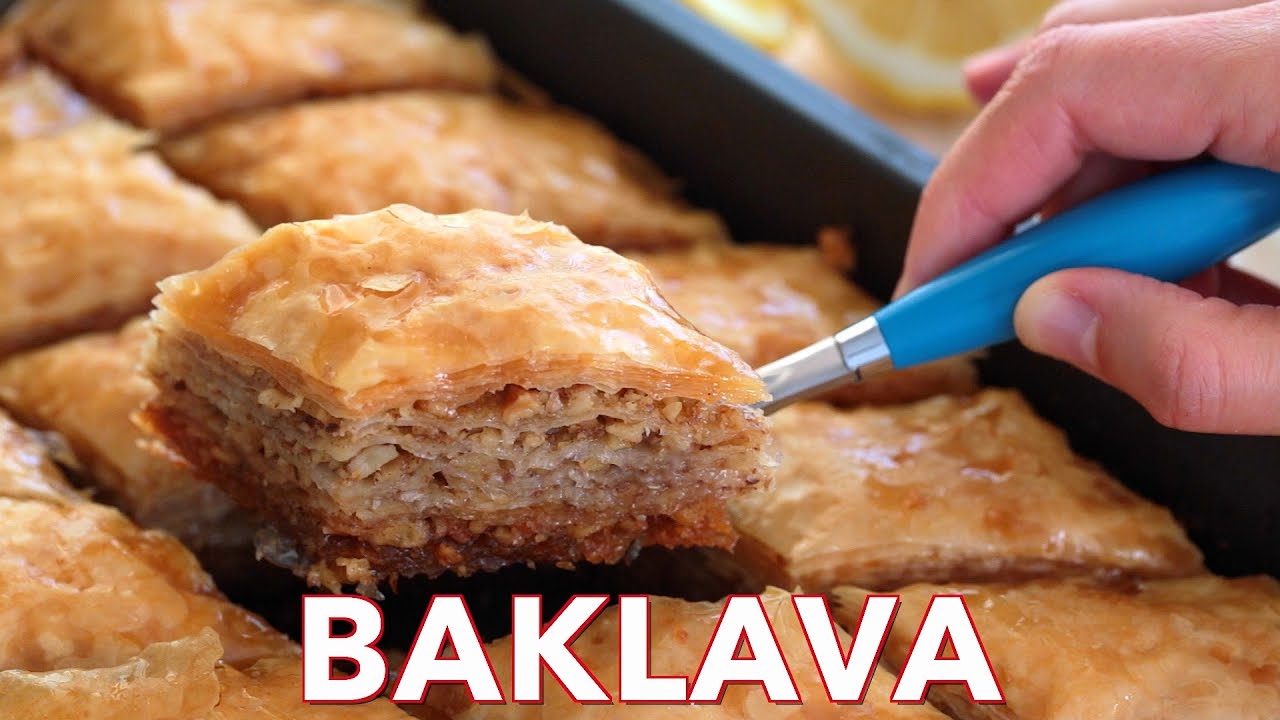
“Baklava has a reputation for being fussy. It isn't. What it is, is unforgiving of two specific mistakes: letting the phyllo dry out while you work, and pouring cold syrup on cold pastry. Get those two moments right and the rest is just stacking and brushing. Get them wrong and you have either a soggy brick or a crumbling mess that tastes like spiced packing material. This recipe eliminates both failure modes.”
Why This Recipe Works
Baklava is not complicated. It is precise. There's a meaningful difference, and confusing the two is why most first attempts produce something edible but not impressive — sticky, dense, either too sweet or somehow not sweet enough, with layers that clump rather than shatter.
The pastry has three components: phyllo, filling, and syrup. Each one is simple. The craft is in how they interact.
Phyllo Is Just Dehydrated Patience
Phyllo dough is paper-thin sheets of unleavened flour and water, almost entirely devoid of fat. That's why it requires external butter — the fat doesn't exist internally to provide tenderness, so you supply it layer by layer. This is not optional and cannot be rushed.
The damp towel protocol exists because phyllo begins desiccating within thirty seconds of air exposure. Once a sheet becomes brittle, it cannot be saved. It will shatter when you try to lay it flat and crumble at the edges when you butter it. The solution is not to work faster — it's to work with discipline. Cover every sheet you're not actively handling. Non-negotiable.
Clarified butter rather than whole butter is equally non-negotiable. Whole butter is approximately 18% water by weight. That water converts to steam at 212°F, which is significantly below your 350°F oven temperature. The steam has nowhere to go inside a sealed phyllo stack except to make the layers wet. Clarified butter — or ghee — is pure butterfat. It crisps. It doesn't steam. The difference in texture between baklava made with whole butter and clarified butter is audible: one crunches, one doesn't.
The Filling Is a Spice Delivery System
Walnuts are the vehicle. Cinnamon and cloves are the payload. Toast the walnuts first — three to four minutes in a dry skillet — because raw walnuts taste green and astringent. Heat drives off the volatile compounds responsible for bitterness and develops the nutty, rounded flavor that holds its own against honey. Once you smell them, pull them off heat.
Chop to a medium-fine consistency using a sharp chef's knife or brief food processor pulses. The target texture is coarse breadcrumbs — small enough to pack between layers without gaps, coarse enough to have bite when you eat through the pastry. Over-process and you have paste. Paste compresses. Paste does not have texture. Chop, don't blend.
The Syrup Is a Chemistry Problem
The syrup's job is to infiltrate every layer of the baked pastry and set into a cohesive, slightly tacky matrix that holds everything together without making it wet. This requires two conditions: the syrup must be warm enough to be fluid, and the pastry must be hot enough to absorb rapidly.
Hot syrup on hot pastry steams and turns layers to mush. Cold syrup on cold pastry runs off the surface and pools in the pan. Warm syrup on hot pastry — pulled straight from the oven and poured immediately — creates a rapid capillary absorption effect. The syrup chases the heat gradient down through every cut you made before baking, distributing evenly through the entire stack.
This is the moment the recipe either works or it doesn't. Everything before is preparation. The syrup pour is the technique.
Why It Gets Better Overnight
Fresh baklava, cooled for the required two to three hours, is good. Twenty-four-hour baklava is significantly better. The explanation is osmotic equalization: immediately after the pour, syrup concentration is highest near the cuts and lowest at the centers of each piece. Given time, the syrup migrates toward equilibrium, saturating every layer uniformly. The spice compounds from the filling also diffuse into the surrounding phyllo. What was sharp and distinct the first day becomes integrated and harmonious the second.
Make this the day before you need it. It is not a compromise — it is the correct approach, and it has been for centuries.
Where Beginners Mess This Up
Before we start, read this. These are the 4 reasons your crispy honey-walnut baklava (the syrup timing is everything) will fail:
- 1
Letting the phyllo dry out: Phyllo dough has almost no moisture of its own. The moment it's exposed to air, it begins desiccating and becomes brittle. Cover every sheet you're not actively working with using a damp kitchen towel — not wet, damp. A wet towel transfers moisture and makes the sheets gummy. A dry towel does nothing. Damp is the target.
- 2
Pouring the syrup at the wrong temperature: The syrup must be warm and the baklava must be hot — straight from the oven. This temperature contrast creates a rapid absorption effect that pulls the syrup deep into every layer. Cold syrup on hot baklava pools on top. Hot syrup on cold baklava steams and turns the bottom layers to mush. Hot pastry, warm syrup. Every time.
- 3
Cutting after baking instead of before: Phyllo that has been baked into a single rigid slab cannot be cut cleanly. You will shatter layers, compress the filling, and produce ragged pieces that fall apart on the plate. Cut all the way through to the bottom before it goes in the oven. The cuts also allow the syrup to penetrate every layer after baking.
- 4
Under-buttering the phyllo layers: Each sheet needs a light but complete coat of clarified butter. Skipping areas creates dry, tough pockets that don't brown evenly. The butter is not just fat — it's the structural glue that holds each layer separate while simultaneously fusing them into a coherent pastry.
The Video Reference Library
Want to see it in action? Here are the exact videos we analyzed and combined to build this foolproof recipe translation:
The source video for this recipe. Clear demonstration of the phyllo layering rhythm and syrup pour timing that makes or breaks the final texture.
🛠️ Core Equipment
- 9x13 inch metal baking panMetal conducts heat faster than glass, producing crisper bottom layers. Glass pans retain heat unevenly and often result in a pale, soft base. Aluminum or stainless steel are both excellent choices.
- Pastry brushSilicone brushes are too stiff and tear delicate phyllo. Use a natural-bristle pastry brush for even, gentle butter application. If you only have silicone, work with extreme care — the sheets will not forgive aggressive brushing.
- Sharp chef's knifePhyllo cuts require a sawing motion, not a pressing one. A dull blade compresses layers before they separate and drags filling out of position. A sharp knife with light pressure produces clean diamond cuts every time.
- Heavy-bottomed saucepanFor the honey syrup. Even heat prevents scorching the bottom while you're watching the baklava in the oven. A thin pan on medium heat will hotspot and caramelize unevenly.
Crispy Honey-Walnut Baklava (The Syrup Timing Is Everything)
🛒 Ingredients
- ✦1 pound phyllo dough, thawed if frozen
- ✦1 cup unsalted butter, melted and clarified
- ✦3 cups raw walnuts, finely chopped
- ✦1.25 cups granulated sugar, divided
- ✦1.5 cups raw honey
- ✦1 cup water
- ✦3 teaspoons ground cinnamon
- ✦0.25 teaspoon ground cloves
- ✦1 teaspoon vanilla extract
- ✦2 tablespoons fresh lemon juice
- ✦0.125 teaspoon sea salt
- ✦1 tablespoon butter for greasing the baking pan
👨🍳 Instructions
01Step 1
Preheat your oven to 350°F (175°C) and position the rack to the middle position.
02Step 2
Lightly butter a 9x13 inch baking pan with the tablespoon of butter, coating the bottom and sides evenly.
03Step 3
Toast the chopped walnuts in a dry skillet over medium heat for 3-4 minutes, stirring frequently, until fragrant and lightly golden.
04Step 4
Combine the toasted walnuts with 0.5 cup of sugar, 3 teaspoons cinnamon, 0.25 teaspoon cloves, and the sea salt. Stir until evenly distributed.
05Step 5
Unroll the phyllo dough and cover it immediately with a damp kitchen towel. Keep it covered at all times when not actively placing a sheet.
06Step 6
Lay one sheet of phyllo in the prepared pan and brush lightly with melted clarified butter. Repeat until you have 8 sheets layered in the pan.
07Step 7
Spread half of the walnut-spice mixture evenly over the eighth phyllo layer.
08Step 8
Add 4 more phyllo sheets, brushing butter between each layer, then spread the remaining walnut-spice mixture on top.
09Step 9
Finish layering by placing the remaining phyllo sheets on top, brushing each with melted butter until all sheets are used. Brush the very top layer generously.
10Step 10
Using a sharp knife with a gentle sawing motion, cut the baklava into diamonds or squares, cutting all the way through to the bottom of the pan.
11Step 11
Bake for 45-50 minutes until the phyllo turns deep golden brown and butter bubbles slightly around the edges.
12Step 12
While the baklava bakes, combine the remaining 0.75 cup sugar, honey, water, and lemon juice in a saucepan over medium heat. Stir occasionally and simmer gently for 8-10 minutes without boiling. Remove from heat and stir in the vanilla extract.
13Step 13
Remove the hot baklava from the oven and immediately pour the warm honey syrup evenly over all the pieces, working quickly to cover every cut and surface.
14Step 14
Allow the baklava to cool completely at room temperature for at least 2-3 hours before serving. Do not refrigerate during this resting period.
Nutrition Per Serving
Estimates based on standard preparation. Adjustments alter macros.
🔄 Substitutions
Instead of Walnuts...
Use Roasted pistachios
The classic Levantine variation. Lighter, more delicate flavor with a vivid green color visible at the cut edge. Use the same quantity — pistachios pack slightly denser but the difference is negligible.
Instead of Whole butter...
Use Ghee or a ghee-olive oil blend (75/25)
Ghee is already clarified, which makes it technically superior for this application. The olive oil adds subtle complexity. Flavor profile shifts slightly toward savory, which actually pairs well with the honey sweetness.
Instead of Honey (partial)...
Use Maple syrup for up to half the honey quantity
Maple adds a woodsy depth that works well with walnuts specifically. Don't replace more than half — honey's floral notes are structural to baklava's identity, not decorative.
Instead of Granulated sugar...
Use Coconut sugar
Introduces a mild molasses undertone and drops the glycemic load slightly. Dissolves equally well in the syrup. The color of the syrup will be slightly darker — this is cosmetic, not functional.
🧊 Storage & Reheating
In the Fridge
Do not refrigerate. Condensation softens the phyllo layers irreversibly. Room temperature storage is both correct and superior.
In the Freezer
Freeze individual pieces in a single layer on a sheet pan, then transfer to an airtight container for up to 3 months. Thaw at room temperature for 2 hours — do not microwave.
Reheating Rules
Baklava does not need reheating and is best at room temperature. If you prefer it slightly warm, place pieces on a baking sheet in a 300°F oven for 5 minutes. Avoid the microwave — it steams the phyllo and destroys the texture.
❓ Frequently Asked Questions
Why is my baklava soggy instead of crispy?
Two possible causes: the syrup was too hot when poured (it steamed the layers instead of absorbing), or you used un-clarified butter (the water content steamed inside the phyllo during baking). Clarify your butter and pour warm — not hot — syrup next time.
Can I use store-bought clarified butter or ghee?
Yes, and it's actually easier. Ghee is shelf-stable, pre-clarified, and consistent. Use it 1:1 in place of the melted butter. It has a slightly nuttier flavor that complements the walnuts well.
How do I keep phyllo from tearing when I'm layering?
Keep it covered until the moment you pick up a sheet, work quickly, and accept that some tearing is normal. A torn sheet placed tear-side down is invisible. No single sheet makes or breaks the pastry — you have 20+ layers of structural redundancy.
Can I make baklava ahead of time?
Yes, and you should. Baklava made 24 hours in advance is noticeably better than freshly cooled baklava. The syrup fully distributes, the layers settle, and the flavors integrate. Make it the day before, store at room temperature, serve the next day.
What's the correct syrup consistency?
The syrup should coat the back of a spoon lightly — thinner than maple syrup, thicker than water. If it's too thin, it runs straight through the pastry without being absorbed. If it's too thick, it sits on the surface and hardens into a candy shell. Eight to ten minutes at a gentle simmer hits the target.
Why do I cut before baking instead of after?
Baked phyllo is rigid and brittle. Cutting through it after baking shatters the layers and produces ragged, crumbling pieces. Pre-cutting allows clean separation and — critically — gives the syrup channels to flow through after baking. Both the presentation and the texture depend on cutting first.
The Science of
Crispy Honey-Walnut Baklava (The Syrup Timing Is Everything)
We turned everything on this page into a beautiful, flour-proof PDF cheat sheet. Print it out, stick it to your fridge, and never mess up your crispy honey-walnut baklava (the syrup timing is everything) again.
*We'll email you the high-res PDF instantly. No spam, just perfectly cooked meals.
AlmostChefs Editorial Team
We translate the internet's most popular cooking videos into foolproof, beginner-friendly written recipes. We analyze multiple methods, test them in our kitchen, and engineer a single "Master Recipe" that gives you the best possible result with the least possible stress.