High-Protein Baked Salmon & Quinoa Bowl (48g Protein, No Effort)
Wild-caught salmon baked on a sheet pan with fluffy quinoa and a creamy Greek yogurt-herb drizzle that replaces butter entirely. We reverse-engineered the most popular high-protein bowl builds to land on a formula that hits 48g of protein per serving without tasting like a gym meal.
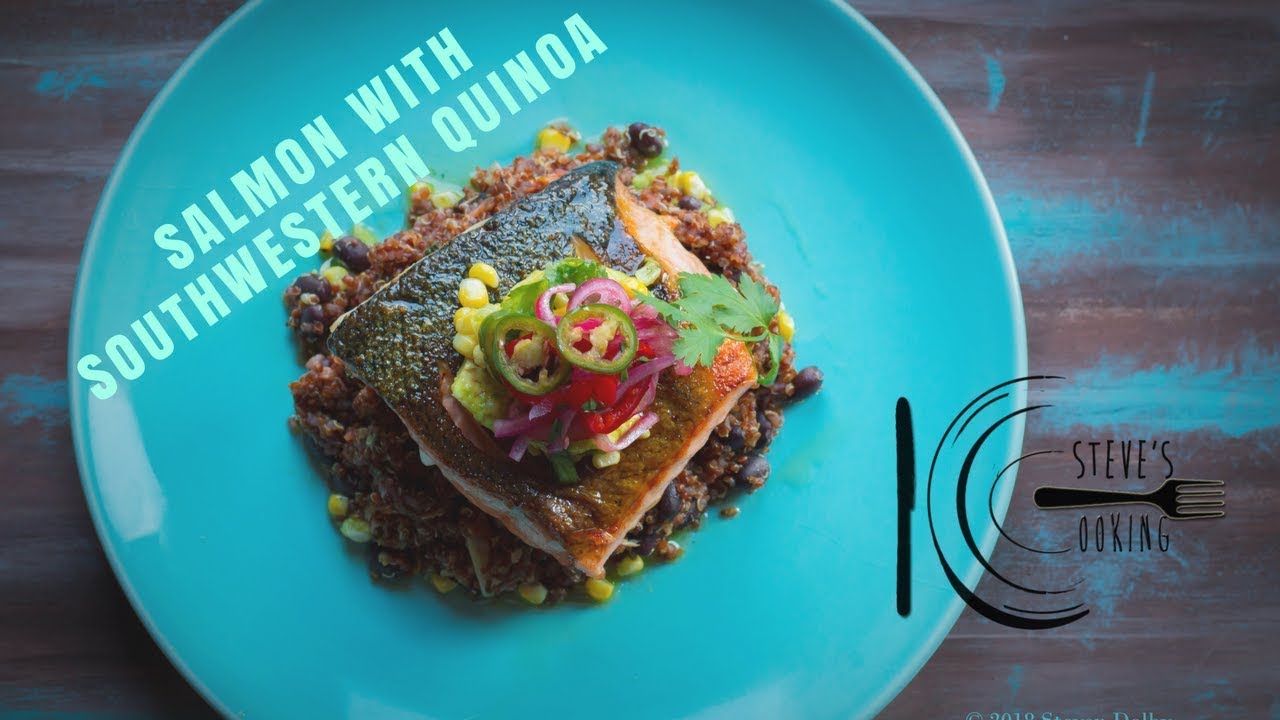
“Most high-protein dinner recipes make you choose between hitting your macros and actually wanting to eat what's on the plate. This bowl solves that by stacking three complete protein sources — wild-caught salmon, quinoa, and a Greek yogurt herb sauce — in a way that tastes like something you'd order at a restaurant, not something you'd track in a spreadsheet. Forty-eight grams of protein. One sheet pan. Done in thirty minutes.”
Why This Recipe Works
High-protein meals have a branding problem. The phrase triggers images of plain chicken breast on a digital food scale, eaten standing over the sink at 9pm because you committed to a macro target and forgot to make it interesting. This bowl is the argument against that entire category of thinking.
The protein in this dish comes from three sources that never overlap in flavor profile. Salmon brings fat-soluble omega-3s and a rich, mineral depth that no other fish replicates. Quinoa is one of a small number of plant proteins that contains all nine essential amino acids — it pulls its weight as a grain and a protein simultaneously. The Greek yogurt sauce is the sleeper: a cup of nonfat Greek yogurt contributes roughly 17g of protein while serving as a sauce, a dressing, and a textural counterpoint to the flaky fish. Stack all three and you're at 48g per bowl without any protein powder, no added supplements, no compromise.
The Sheet Pan Logic
One pan does two jobs at once: roasts the salmon and blisters the vegetables in the same 12-14 minute window. This only works because salmon is a fast-cooking protein. A rimmed baking sheet at 400°F reaches the right surface temperature to create texture contrast on the vegetables while leaving the salmon just barely cooked through at the center. A flat cookie sheet lets the fat and juices run off the edge, creates oven smoke, and disrupts the heat environment. Rims matter.
The parchment liner isn't about convenience — it's about the physics of salmon skin. Skin sticks to bare metal with the tenacity of something that has been specifically engineered to ruin your dinner. Parchment eliminates that problem without adding any cooking variables. The skin crisps slightly against the paper and lifts cleanly every time.
The Quinoa Treatment
Most people treat quinoa as an afterthought grain, cooked in water and used as a base to pile things on. The two changes here — rinsing and cooking in broth — close most of the gap between forgettable quinoa and quinoa that people actually want to eat. The rinse removes saponin, a bitter compound that clings to the outer seed coat. The broth adds a savory baseline that water can't provide. Together they transform quinoa from a neutral platform into something that holds its own against the salmon and the sauce.
The simmer technique also matters. Quinoa cooked at a rolling boil absorbs water too quickly on the outside while the interior stays undercooked, producing grains that are simultaneously mushy and crunchy. Medium-low heat after the initial boil lets absorption happen gradually and uniformly. The steam-off period — two minutes covered off heat — finishes the job without risk of overcooking.
The Sauce as Infrastructure
The Greek yogurt sauce isn't garnish. It's architecture. Without it, this is a competent but uninteresting protein bowl. With it, there's a bright, acidic, herbed element that ties the salmon, quinoa, and roasted vegetables into a single coherent dish. The Dijon mustard acts as an emulsifier, keeping the lemon juice and yogurt from separating, and adds a background sharpness that makes the dill and parsley read as fresh rather than raw.
Whisking matters here. A spoon leaves the garlic and mustard in uneven pockets. A whisk distributes them throughout the yogurt in under a minute and produces the smooth, pourable consistency that makes the sauce drape properly over the bowl rather than sitting in a clump.
Make the sauce before anything else. The ten minutes it sits while the salmon bakes is enough time for the raw garlic edge to mellow and the herbs to infuse. The sauce you taste at assembly will be noticeably more integrated than the sauce you'd taste immediately after making it — a small detail that makes a real difference in the finished bowl.
Where Beginners Mess This Up
Before we start, read this. These are the 4 reasons your high-protein baked salmon & quinoa bowl (48g protein, no effort) will fail:
- 1
Not rinsing the quinoa: Quinoa is coated in saponin, a naturally occurring compound that tastes bitter and soapy. One minute under cold running water removes it entirely. Skip this step and no amount of sauce fixes the flavor — the bitterness bleeds into every bite.
- 2
Skipping the pat-dry on the salmon: Surface moisture on the salmon creates steam in the oven instead of the dry, flaking heat you want. Wet salmon steams unevenly, produces a grey-white albumin foam on the surface, and never develops any texture contrast. Paper towels cost nothing. Use them.
- 3
Overcooking the salmon: At 400°F, 5-ounce fillets need exactly 12-14 minutes. Beyond that, the proteins seize, the fat renders out, and you're left with dry, chalky fish. The test: press the thickest part with a fork. It should flake cleanly but still look slightly translucent in the very center — residual heat finishes the job off the pan.
- 4
Boiling instead of simmering the quinoa: Quinoa simmered in broth at medium-low heat absorbs liquid gradually and produces fluffy, separated grains. Quinoa cooked at a rolling boil becomes waterlogged before the inside cooks through. The moment it reaches a boil, drop the heat immediately.
The Video Reference Library
Want to see it in action? Here are the exact videos we analyzed and combined to build this foolproof recipe translation:
The source video for this build. Clear breakdown of the sheet pan timing and the yogurt sauce technique that makes this dish work as both a weeknight dinner and a meal prep option.
🛠️ Core Equipment
- Rimmed baking sheetThe rim prevents vegetable juices and olive oil from running off the edge into the oven floor. A flat cookie sheet produces smoke and burns. Standard half-sheet pan is the right call.
- Parchment paperSalmon skin sticks aggressively to bare metal. Parchment eliminates that problem entirely and makes cleanup a thirty-second job. Foil works but can cause the skin to steam rather than dry-heat.
- Medium saucepan with lidQuinoa needs a covered environment to trap steam in the final minutes of cooking. A wide skillet loses too much moisture. A medium saucepan keeps the liquid-to-grain ratio stable throughout.
- Whisk and small mixing bowlThe Greek yogurt sauce needs to be fully emulsified — yogurt, lemon, mustard, and garlic must combine into a pourable consistency. Stirring with a spoon leaves it lumpy. A whisk takes ten seconds.
High-Protein Baked Salmon & Quinoa Bowl (48g Protein, No Effort)
🛒 Ingredients
- ✦4 salmon fillets, 5 oz each, skin-on
- ✦1 cup dry quinoa, rinsed
- ✦2 cups low-sodium vegetable broth
- ✦1 cup plain nonfat Greek yogurt
- ✦3 tablespoons fresh lemon juice
- ✦2 tablespoons fresh dill, finely chopped
- ✦2 tablespoons fresh parsley, finely chopped
- ✦3 cloves garlic, minced
- ✦2 tablespoons extra-virgin olive oil, divided
- ✦1 teaspoon sea salt, divided
- ✦1/2 teaspoon black pepper, divided
- ✦1 medium zucchini, cut into thin ribbons
- ✦1 cup cherry tomatoes, halved
- ✦2 tablespoons grated Parmesan cheese
- ✦1 teaspoon Dijon mustard
- ✦1/2 teaspoon red pepper flakes, optional
👨🍳 Instructions
01Step 1
Preheat your oven to 400°F and line a large rimmed baking sheet with parchment paper.
02Step 2
Rinse the quinoa under cold running water for 1 minute to remove the bitter saponin coating, then drain thoroughly.
03Step 3
Bring the vegetable broth to a boil in a medium saucepan over high heat. Add the rinsed quinoa, then immediately reduce heat to medium-low.
04Step 4
Simmer the quinoa uncovered for 12-15 minutes, stirring occasionally, until the liquid is absorbed and the grains are fluffy. Remove from heat, cover, and let steam for 2 minutes.
05Step 5
While the quinoa cooks, combine the Greek yogurt, lemon juice, minced garlic, dill, parsley, Dijon mustard, and 1/4 teaspoon sea salt in a small bowl. Whisk until fully smooth. Set aside.
06Step 6
Pat the salmon fillets completely dry with paper towels. Arrange them skin-side down on the prepared baking sheet.
07Step 7
Brush the top of each fillet with 1/2 tablespoon of olive oil. Season evenly with 1/2 teaspoon sea salt and 1/4 teaspoon black pepper.
08Step 8
Toss the zucchini ribbons and cherry tomatoes with the remaining 1 tablespoon olive oil, 1/4 teaspoon sea salt, and 1/4 teaspoon black pepper. Arrange them around the salmon on the sheet.
09Step 9
Bake for 12-14 minutes, until the salmon flakes easily with a fork and looks opaque throughout, and the vegetables are just tender.
10Step 10
Divide the cooked quinoa evenly among four bowls as the base.
11Step 11
Top each bowl with one salmon fillet and a portion of the roasted zucchini and tomatoes.
12Step 12
Drizzle generously with the Greek yogurt-herb sauce. Finish with grated Parmesan and red pepper flakes if using.
13Step 13
Serve immediately, or cool completely and refrigerate for meal prep. Reheat in a 350°F oven for 8-10 minutes.
Nutrition Per Serving
Estimates based on standard preparation. Adjustments alter macros.
🔄 Substitutions
Instead of Plain nonfat Greek yogurt...
Use Plain 2% Greek yogurt or Icelandic skyr
Richer and more indulgent sauce without a significant calorie penalty. Skyr has even more protein than standard Greek yogurt — worth seeking out.
Instead of Regular quinoa...
Use Quinoa mixed with 1/4 cup hemp seeds stirred in after cooking
Hemp seeds add 10g protein per 3 tablespoons and boost omega-3 content. The texture becomes nuttier and more varied. No cooking change required.
Instead of Zucchini...
Use Broccoli florets or Brussels sprouts halves
Broccoli adds 3.5g protein per cup and more fiber. Brussels sprouts offer a heartier texture with a slight caramelized edge after roasting. Both pair better with salmon than zucchini at high heat.
Instead of Vegetable broth...
Use Unsalted chicken broth or bone broth
Bone broth contributes collagen and a more complex savory depth. Adds approximately 8g protein per cup. Subtle difference in the quinoa but noticeable if you're eating it plain.
🧊 Storage & Reheating
In the Fridge
Store components separately in airtight containers for up to 3 days. Salmon and quinoa keep well; the yogurt sauce keeps up to 4 days.
In the Freezer
Salmon and quinoa freeze reasonably well for up to 1 month. The yogurt sauce does not freeze — make it fresh. Thaw salmon and quinoa overnight in the fridge.
Reheating Rules
Reheat salmon and quinoa in a 350°F oven for 8-10 minutes, covered loosely with foil. Add the sauce cold after reheating. Microwave works but dries the salmon out — use it only if you have no other option.
❓ Frequently Asked Questions
Why is my quinoa bitter even after rinsing?
Either the rinse was too brief or the water pressure was too low to fully remove the saponin coating. Rinse for a full minute under strong cold water, stirring the grains with your hand. If bitterness persists, toast the rinsed quinoa in a dry pan for 2-3 minutes before adding the broth — heat neutralizes residual saponins.
Can I use skinless salmon fillets?
Yes, but skin-on fillets hold together better during baking and the skin acts as a natural insulator that prevents the bottom from overcooking. If using skinless, reduce bake time by 1-2 minutes and watch closely.
How do I know the salmon is done without cutting into it?
Press the thickest part gently with a fork or your finger. Properly cooked salmon yields under light pressure and flakes into clean layers. Raw salmon feels dense and springy. If you see white albumin foam forming heavily on the surface, the heat is too high or it's already overcooked.
Can I make this dairy-free?
Yes. Replace the Greek yogurt sauce with a tahini-lemon sauce: 3 tablespoons tahini, 2 tablespoons lemon juice, 1 clove garlic minced, and 2-3 tablespoons water to thin. You lose roughly 15g of protein per serving but the flavor profile is excellent.
Is this actually good for meal prep?
It's one of the better proteins for meal prep precisely because salmon reheats without the rubbery texture that chicken breast develops. The key is storing the yogurt sauce separately and adding it cold — reheated yogurt sauce separates and loses its texture.
What's the best way to cut zucchini into ribbons?
Use a vegetable peeler and run it lengthwise along the zucchini, rotating slightly after each pass. Stop when you hit the seedy core — the core has too much moisture and turns to mush in the oven. Ribbons cook faster than cubes and give better surface contact with the pan.
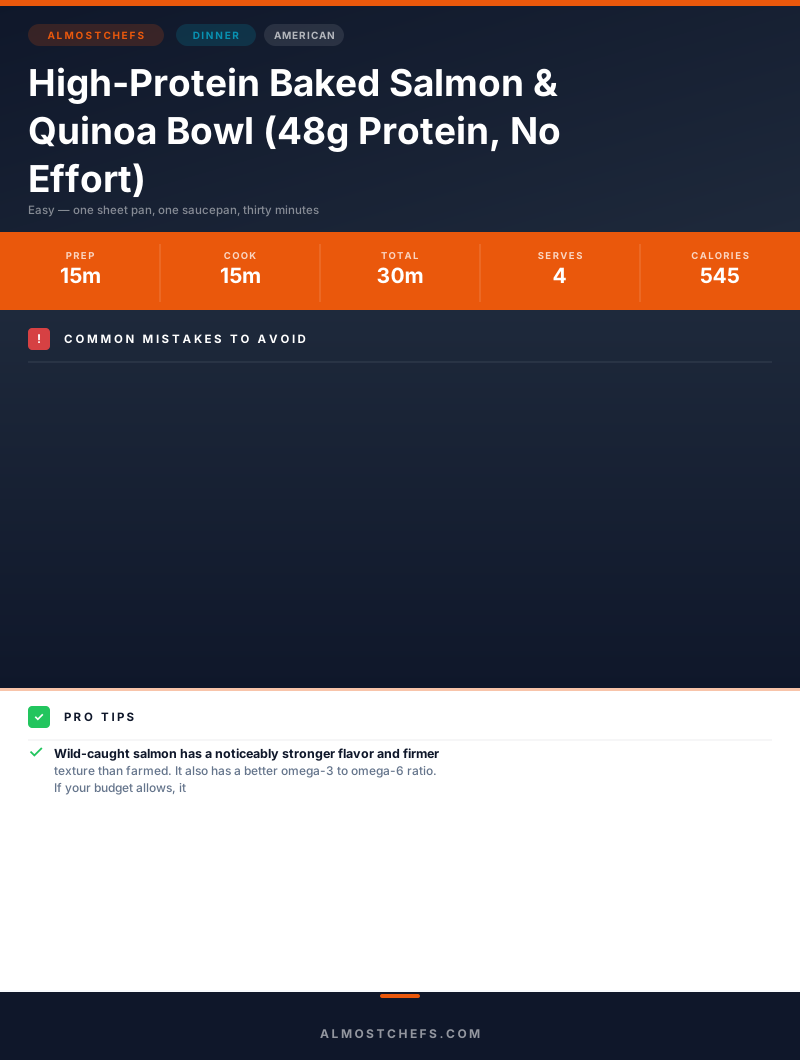
The Science of
High-Protein Baked Salmon & Quinoa Bowl (48g Protein, No Effort)
We turned everything on this page into a beautiful, flour-proof PDF cheat sheet. Print it out, stick it to your fridge, and never mess up your high-protein baked salmon & quinoa bowl (48g protein, no effort) again.
*We'll email you the high-res PDF instantly. No spam, just perfectly cooked meals.
AlmostChefs Editorial Team
We translate the internet's most popular cooking videos into foolproof, beginner-friendly written recipes. We analyze multiple methods, test them in our kitchen, and engineer a single "Master Recipe" that gives you the best possible result with the least possible stress.