Perfect Baked Salmon (27-Minute Weeknight Weapon)
Skin-on salmon fillets sealed in parchment packets with garlic, fresh dill, lemon, and a splash of wine. The steam trapped inside the packet does all the work — producing impossibly moist, flaky fish with zero risk of overcooking. We broke down the technique so it works every single time.
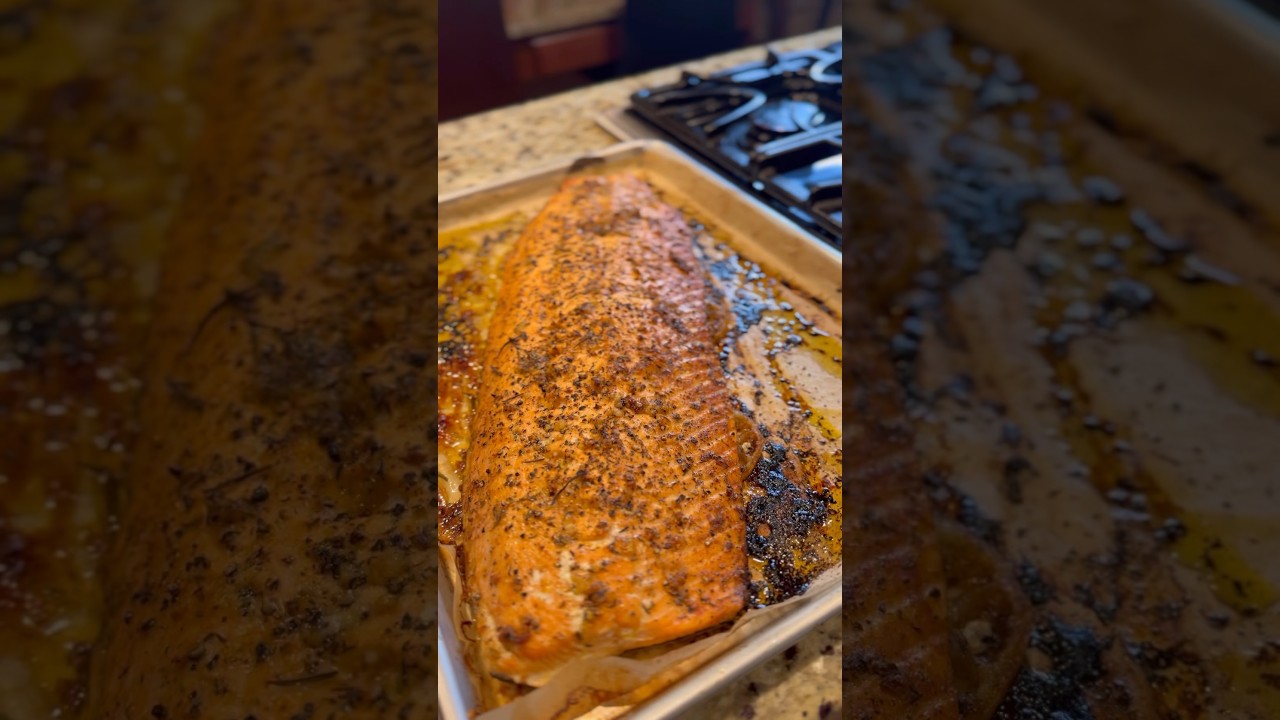
“Most people either overcook salmon into dry, chalky slabs or undercook it into an unsettling translucent mess. The parchment packet method eliminates both failure modes entirely. By sealing the fish with aromatics and a splash of liquid, you create a closed steam environment that regulates its own temperature. The fish finishes in exactly 14-16 minutes regardless of minor oven variation. This is the technique restaurants use when they want a guaranteed result under pressure.”
Why This Recipe Works
Salmon is one of the most forgiving proteins on paper — fatty, flavorful, quick to cook — and somehow one of the most consistently ruined in home kitchens. The problem is almost never the fish. It's the cooking environment. Open-pan roasting at high heat gives you a narrow window between underdone and dry. Pan-searing requires active attention for the entire cook. The parchment packet method was invented to solve both problems simultaneously, and it has been working for centuries in French cuisine under the name en papillote.
The Physics of the Packet
When you seal salmon inside parchment with a small amount of liquid, you create a closed system. As the oven heat penetrates the paper, the liquid inside begins to vaporize. Steam pressure builds inside the packet — you can see it puff — and that pressurized, aromatic steam surrounds the fish on all sides, cooking it more gently and evenly than any direct heat method can achieve.
The critical insight: steam at atmospheric pressure is always 212°F. You cannot accidentally create a 450°F steam environment by cranking your oven hotter. The internal cooking temperature inside the packet is self-regulating, which is why this method is nearly impossible to mess up. The fish finishes at a consistent 125-145°F regardless of whether your oven runs a little hot or you left it in for an extra two minutes.
The parchment itself matters here. Unlike foil, which conducts heat aggressively into whatever it touches, parchment is a poor conductor. It creates insulation rather than amplification. The bottom of the fillet is protected from the direct heat of the baking sheet, the top is protected from the oven's radiant heat, and everything in between is cooked by steam. This is why center-cut fillets at uniform thickness work so well — the steam reaches every part of the fish at the same rate.
The Paste Architecture
The garlic-herb-mustard paste does more work than it looks like. Dijon mustard is an emulsifier — it binds the fat from the olive oil, the water from the garlic and herbs, and the honey into a cohesive coating that adheres to the fish rather than sliding off in the steam. Without it, the aromatics float away into the liquid below and you get fish that tastes of nothing.
Honey isn't just sweetness. At oven temperatures, its natural sugars undergo mild caramelization that tempers the sharpness of raw garlic and the acidity of the mustard. The result reads as complex rather than sharp. Skip it and the paste tastes one-dimensional.
What the Lemon Is Actually Doing
The lemon rounds on top of the fish are not garnish. They release their juice throughout the cook time, and that juice falls down through the herb paste and into the steaming liquid below, acidifying the entire cooking environment. Citric acid gently denatures the outermost proteins of the fish — the same process a ceviche uses — which contributes to that clean, bright flavor in the finished fillet. It also prevents the oxidized, "fishy" smell that develops when salmon cooks in a flat, oxygen-rich environment.
A rimmed baking sheet is essential not just for containment but because the packet needs to sit flat. An angled or uneven surface causes the liquid inside to pool at one end, and one corner of the fillet cooks in liquid while the other corner cooks in air. The result is uneven texture across a single piece of fish.
The Resting Moment
One minute of rest inside the sealed packet after it comes out of the oven is carryover cooking in action. The trapped steam — still at 212°F — continues to transfer heat to the fish even off the burner. Skipping this step and opening the packet immediately releases that heat before it finishes its work. The outside of the fillet will be done; the center will be slightly underdone. The rest costs you sixty seconds and guarantees the center.
This is the difference between a technique and a recipe. The technique is repeatable, predictable, and forgiving. Once you understand why the packet works, you can put almost any aromatics inside it — capers and olives, ginger and scallion, tomatoes and basil — and get a perfectly cooked piece of fish every time.
Where Beginners Mess This Up
Before we start, read this. These are the 4 reasons your perfect baked salmon (27-minute weeknight weapon) will fail:
- 1
Skipping the pat-dry step: Moisture on the surface of the fish steams instead of allowing even cooking, and it dilutes the garlic-herb paste before it can adhere. Paper towels take fifteen seconds. Use them.
- 2
Loose or poorly sealed packets: A leaky parchment packet doesn't hold steam — it just makes a mess on your baking sheet. The fold-and-crease technique needs to be tight enough that the packet puffs visibly during baking. If it stays flat, steam is escaping and you're drying out the fish.
- 3
Opening the packet to check doneness mid-bake: The steam inside is what's cooking the fish. Every time you open it early, you release the accumulated pressure and the internal temperature drops. Set a timer for 14 minutes and trust the process. The parchment will tell you it's ready — it puffs and turns slightly golden.
- 4
Using thin, tail-cut fillets: Thin tail pieces cook faster than center-cut fillets and will be overdone before the timer hits. Ask your fishmonger for center-cut pieces of equal thickness, ideally 1 to 1.5 inches at the thickest point. Consistent thickness means consistent results across all four packets.
The Video Reference Library
Want to see it in action? Here are the exact videos we analyzed and combined to build this foolproof recipe translation:
The source video that inspired this technique. Clear demonstration of the packet-folding method and the visual cues that tell you when the fish is done.
🛠️ Core Equipment
- Rimmed baking sheetThe packets release some liquid as they cook. A rimmed sheet keeps your oven clean. A flat cookie sheet invites disaster.
- Parchment paperNon-negotiable. Foil conducts heat too aggressively and will cook the bottom of the fillet faster than the top, ruining the even texture. Parchment creates a permeable steam chamber while insulating gently.
- Instant-read thermometerIf you want certainty over guesswork, the target internal temperature is 125°F for medium, 145°F for fully cooked. The fork-flake test works, but a thermometer removes all doubt.
- Small whisk or forkFor the garlic-herb-mustard paste. You want this fully emulsified before it hits the fish — clumps of raw mustard sitting on top of a fillet taste sharp and uneven.
Perfect Baked Salmon (27-Minute Weeknight Weapon)
🛒 Ingredients
- ✦4 salmon fillets, 5-6 oz each, skin-on (center-cut preferred)
- ✦3 tablespoons extra virgin olive oil
- ✦1 large lemon, sliced into thin rounds
- ✦4 cloves garlic, minced
- ✦2 tablespoons fresh dill, chopped
- ✦1 tablespoon fresh parsley, finely minced
- ✦2 tablespoons unsalted butter
- ✦1/2 teaspoon sea salt
- ✦1/4 teaspoon freshly ground black pepper
- ✦1/4 cup dry white wine or vegetable broth
- ✦1/2 medium yellow onion, thinly sliced
- ✦1 tablespoon Dijon mustard
- ✦1 teaspoon raw honey
- ✦Parchment paper for baking packets
👨🍳 Instructions
01Step 1
Preheat your oven to 400°F and position the rack to the middle position.
02Step 2
Remove the salmon from the refrigerator and pat each fillet completely dry with paper towels.
03Step 3
Cut four 12-by-15-inch sheets of parchment paper and fold each in half to create a crease, then unfold them flat.
04Step 4
Brush the center of each parchment sheet with 1/2 tablespoon of olive oil, spreading it across an area slightly larger than the salmon fillet.
05Step 5
Whisk together the minced garlic, chopped dill, parsley, Dijon mustard, and honey in a small bowl until fully combined.
06Step 6
Place one salmon fillet skin-side down onto the oiled center of each parchment sheet.
07Step 7
Season the top of each fillet evenly with salt and pepper, using about 1/8 teaspoon salt and a pinch of pepper per piece.
08Step 8
Divide the garlic-herb paste equally among the four fillets, spreading it gently across the top surface of each one.
09Step 9
Layer the lemon slices and onion slices on top of each fillet, distributing them evenly.
10Step 10
Pour 1 tablespoon of white wine or broth around (not over) each fillet, then dot the top with 1/2 tablespoon of butter.
11Step 11
Fold the parchment over the salmon and fold and crease the edges tightly to seal the packet completely. Work around the perimeter with small, overlapping folds.
12Step 12
Place all four packets seam-side up on a large rimmed baking sheet.
13Step 13
Bake for 14-16 minutes, until the parchment puffs up visibly and the fish flakes easily when tested with a fork at the thickest part.
14Step 14
Remove from the oven and let the packets rest, still sealed, for 1 minute before opening.
15Step 15
Carefully open the packets away from you (hot steam will escape immediately), then slide each fillet onto a serving plate with all the accumulated juices.
Nutrition Per Serving
Estimates based on standard preparation. Adjustments alter macros.
🔄 Substitutions
Instead of Unsalted butter...
Use Ghee or avocado oil
Ghee adds a nuttier, more complex fat flavor and handles heat better. Avocado oil is neutral and dairy-free. Both work. Neither replicates the richness of butter completely, but both are legitimate upgrades depending on your dietary priorities.
Instead of Dry white wine...
Use Vegetable broth or fresh lemon juice
Broth adds savory depth in place of the wine's acidity and complexity. Lemon juice is sharper — use half the amount (1.5 teaspoons per packet) or the fish will taste aggressively citric.
Instead of Fresh dill and parsley...
Use Fresh thyme and oregano
Shifts the flavor profile from Scandinavian-bright to Mediterranean-earthy. Works particularly well if you're serving the salmon over orzo or white beans. Don't use dried herbs — they won't rehydrate properly in the short cook time.
Instead of Dijon mustard with honey...
Use Whole grain mustard only
Removes the sweetness and adds textural interest from the visible mustard seeds. Slightly more tangy result. Good choice if you want a more savory profile without any sugar.
🧊 Storage & Reheating
In the Fridge
Store leftover salmon in an airtight container for up to 2 days. Include the cooking juices — they keep the fish moist.
In the Freezer
Freeze cooked salmon for up to 1 month. Wrap individual portions tightly in plastic wrap before placing in a freezer bag. Thaw overnight in the refrigerator.
Reheating Rules
Avoid the microwave. Reheat gently in a 275°F oven, still wrapped in foil with a splash of broth, for 10-12 minutes. Or serve cold — flaked over salad, it's genuinely excellent.
❓ Frequently Asked Questions
How do I know when the salmon is done without opening the packet early?
Watch the parchment. At 14 minutes, it should be visibly puffed and starting to turn light golden at the edges. If it's still flat and pale, give it another 2 minutes. You can also press gently on the outside of the packet — done salmon feels firm, not yielding. When in doubt, use an instant-read thermometer inserted through the parchment: 125°F for medium, 145°F for fully cooked.
Can I make the packets ahead of time?
You can assemble the packets up to 4 hours in advance and refrigerate them unsealed. Seal them right before they go into the oven. Do not pre-seal and refrigerate — the salt in the seasoning will start drawing moisture out of the fish and you'll end up with a watery packet.
What if I don't have parchment paper?
Heavy-duty aluminum foil works as a structural substitute, but the cooking dynamic changes. Foil conducts heat directly to the fish rather than trapping steam, so the bottom will cook faster than the top. If using foil, reduce the temperature to 375°F and add 2-3 minutes to the cook time. The result is edible but not the same.
Can I use frozen salmon?
Yes, but thaw it completely first in the refrigerator — never at room temperature or under running water. Partially frozen fillets cook unevenly: the exterior is done before the center has come up to temperature. Fully thawed and well-dried, frozen salmon performs nearly identically to fresh in this recipe.
Why is my salmon dry even using this method?
Two likely causes: the fillets are too thin, or you cooked them too long. Tail-cut pieces under 3/4 inch thick will overcook in 14 minutes. Center-cut fillets at 1 to 1.5 inches are the target. Also check your oven's actual temperature with an oven thermometer — many home ovens run 15-25°F hotter than displayed, which compounds quickly at short cook times.
Is the skin edible?
Yes, but it won't be crispy cooked this way — the steam environment keeps it soft. If you want crispy salmon skin, this is not the technique for it. Pan-searing achieves that. In this recipe, the skin's purpose is structural: it protects the bottom of the fillet from overcooking and peels off cleanly after baking.
The Science of
Perfect Baked Salmon (27-Minute Weeknight Weapon)
We turned everything on this page into a beautiful, flour-proof PDF cheat sheet. Print it out, stick it to your fridge, and never mess up your perfect baked salmon (27-minute weeknight weapon) again.
*We'll email you the high-res PDF instantly. No spam, just perfectly cooked meals.
AlmostChefs Editorial Team
We translate the internet's most popular cooking videos into foolproof, beginner-friendly written recipes. We analyze multiple methods, test them in our kitchen, and engineer a single "Master Recipe" that gives you the best possible result with the least possible stress.