Juicy Baked Chicken Breast (Never Dry, Never Guessing)
A simple, foolproof method for perfectly baked chicken breast that stays juicy and tender every single time. We broke down the most-watched YouTube techniques to isolate the three variables that matter — temperature, brining, and resting — and built one technique that eliminates dry chicken permanently.
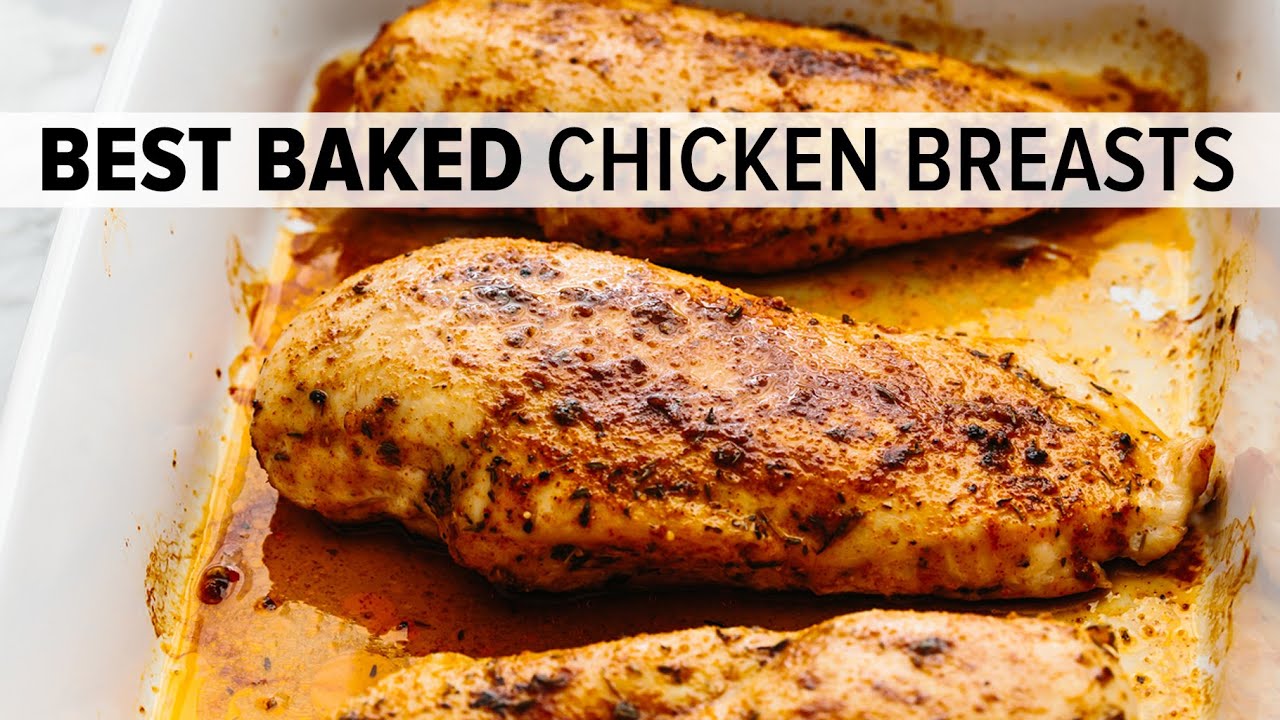
“Baked chicken breast has a reputation it doesn't deserve. Decades of overcooked, rubbery, flavorless results have convinced home cooks that dry chicken is somehow inevitable — a tax you pay for eating healthy. It isn't. The difference between chalky, stringy chicken and something genuinely juicy comes down to three variables: whether you brine it, what temperature you use, and whether you let it rest. Get those right and the oven does the rest.”
Why This Recipe Works
Baked chicken breast is the most cooked and most ruined protein in the American kitchen. It appears on roughly 60% of all meal prep plans, dominates every "healthy lunch" category on every recipe site, and consistently disappoints. The failure is not the ingredient — it is the complete absence of technique. Most people treat chicken breast like a passive object: season it, put it in the oven, wait, eat dry chicken, blame themselves. The problem is structural, and it has a structural solution.
Why Chicken Breast Fails
The anatomy of a chicken breast is the source of the problem. Unlike chicken thighs — which contain connective tissue and intramuscular fat that melt and self-baste during cooking — the breast is pure lean muscle with almost no internal fat. When heat hits muscle fiber, it contracts. When muscle contracts, it squeezes out moisture. Without fat to compensate, there is nothing to keep the meat from becoming a protein sponge that has surrendered all its water to the oven floor.
The brine is the corrective intervention. Dissolving kosher salt in cold water and submerging the chicken for 30 minutes triggers a process called osmosis followed by diffusion. The salt first draws a small amount of moisture out of the meat, then — as equilibrium is sought — the salt solution moves back in, carrying dissolved sodium with it. That sodium restructures the proteins in the muscle fiber, increasing their capacity to hold onto water during cooking. The result is a breast that can survive the oven without catastrophic moisture loss. This is not a flavor trick. It is basic food chemistry applied to a real problem.
The Temperature Argument
The conventional wisdom of baking chicken at 375°F persists because it feels safe — low and slow seems gentle, and gentle seems like it should mean juicy. The opposite is true. Every minute chicken spends in the oven is a minute moisture is leaving. Lower temperatures extend cooking time. Extended cooking time means extended moisture loss. The math is not complicated.
At 425°F, a properly pounded 7-ounce breast hits 160°F in 20 to 22 minutes. At 375°F, that same breast takes 30 to 35 minutes — up to 75% longer. By the time the center is safe at the lower temperature, the exterior has been overcooked for 15 minutes. The paradox is that the temperature that feels risky is actually the temperature that protects the meat. A rimmed baking sheet with a wire rack ensures that the high heat circulates underneath the breast as well, eliminating the steamed, pale bottom that is the signature of chicken cooked flat on a pan.
The Thermometer Is Not Optional
The single most important piece of equipment in this recipe is an instant-read meat thermometer. Not because the recipe is complicated — it isn't — but because visual cues for chicken breast doneness are completely unreliable. The exterior can look perfectly golden while the center is still at 145°F, dangerously underdone. The juices can run clear at 155°F, which is also underdone. The firmness test requires calibrated fingers and years of repetition to mean anything.
A thermometer removes all of that uncertainty. You insert it into the thickest part of the breast, away from any pan or bone, and you read a number. That number tells you exactly where you are. You pull at 160°F — not 165°F, which is the FDA's guidance for safe serving temperature, because the 5-minute rest will coast the breast to exactly 165°F through carryover cooking. Pulling at 165°F means the rest brings you to 170°F, which is overcooked. This is the single most important technical precision in the entire recipe.
Pounding: The Overlooked Step
A raw chicken breast is not a uniform shape. It has a thick end and a thin end, and if you put that uneven shape in the oven, the thin end reaches 165°F eight to ten minutes before the thick end does. By the time the thick end is done, the thin end has been cooked well past done. Pounding the breast to even thickness — roughly three-quarters of an inch throughout — ensures every part of the meat hits the target temperature at the same time. This step takes 45 seconds with a meat mallet or the bottom of a heavy skillet and it solves one of the most common sources of uneven results without any additional ingredients or equipment.
The compounding effect of brining, high heat, a wire rack, an accurate thermometer, and a proper rest is not incremental — each element addresses a specific failure mode, and together they make dry baked chicken breast essentially impossible to produce if you follow the steps. That is what good technique looks like: not magic, not talent, just physics applied correctly.
Where Beginners Mess This Up
Before we start, read this. These are the 4 reasons your juicy baked chicken breast (never dry, never guessing) will fail:
- 1
Skipping the brine: Chicken breast is the leanest cut on the bird — there is almost no fat to protect it from heat. Without a 30-minute saltwater brine, the muscle fibers contract aggressively in the oven and squeeze out every drop of moisture. The brine seasons the meat from the inside and raises its water retention capacity so there's something left to eat when it comes out.
- 2
Baking at the wrong temperature: Most recipes say 375°F. Most baked chicken breasts are dry. That is not a coincidence. Lower temperatures extend cooking time, which means more time for moisture to escape before the center hits 165°F. The correct temperature is 425°F — hot enough to create a lightly golden exterior quickly while the center catches up before the outside has time to toughen.
- 3
Cutting into it immediately: Muscle fibers contract during cooking and squeeze moisture toward the center. When you slice immediately off the pan, that pooled juice runs directly onto your cutting board and you eat dry chicken. A five-minute rest gives those fibers time to relax and reabsorb the moisture. Those five minutes are the difference between juicy and disappointing.
- 4
Using refrigerator-cold chicken: Cold chicken placed directly in a hot oven cooks unevenly — the exterior overcooks while the thick center is still catching up. Pull the breasts from the fridge 15-20 minutes before they go in. Room-temperature chicken cooks faster and more evenly, which means less time for moisture loss overall.
The Video Reference Library
Want to see it in action? Here are the exact videos we analyzed and combined to build this foolproof recipe translation:
The foundational video for this technique. Covers the brine, the high-heat method, and the resting step in a no-nonsense walkthrough that actually explains the why behind each step.
Clear visual guide to checking doneness with a thermometer and understanding what properly rested chicken looks like when you slice it. Useful reference for first-timers.
Demonstrates scaling this technique for batch cooking. Shows how to season multiple breasts differently for variety and how to store and reheat without losing the texture you worked for.
🛠️ Core Equipment
- Rimmed baking sheetFlat surface with a low lip allows heat to circulate around all sides of the chicken. A deep baking dish traps steam and softens the exterior instead of giving you the lightly golden surface that signals correct browning.
- Instant-read meat thermometerVisual cues are useless for chicken breast. The only reliable test is internal temperature: 160°F pulled from the oven (it coasts to 165°F during the rest). Without a thermometer you are guessing, and dry chicken is what guessing gets you.
- Wire cooling rackElevating the chicken off the pan surface allows hot air to circulate underneath, cooking the bottom evenly instead of steaming it. The result is uniform browning and texture from top to bottom.
- Zip-lock bag or shallow bowlFor the brine and seasoning. A bag ensures the chicken is fully submerged in the saltwater and in direct contact with the marinade. No part of the breast should be exposed to air during brining.
Juicy Baked Chicken Breast (Never Dry, Never Guessing)
🛒 Ingredients
- ✦4 boneless, skinless chicken breasts (about 6–8 oz each)
- ✦4 cups cold water
- ✦2 tablespoons kosher salt (for brine)
- ✦1 tablespoon olive oil
- ✦1 teaspoon garlic powder
- ✦1 teaspoon smoked paprika
- ✦1/2 teaspoon onion powder
- ✦1/2 teaspoon dried oregano
- ✦1/2 teaspoon freshly ground black pepper
- ✦1/2 teaspoon kosher salt (for seasoning)
- ✦1 tablespoon fresh lemon juice
- ✦Fresh parsley, chopped, for garnish
👨🍳 Instructions
01Step 1
Dissolve 2 tablespoons kosher salt in 4 cups cold water in a large bowl or zip-lock bag. Submerge the chicken breasts completely and brine for 30 minutes at room temperature.
02Step 2
Remove chicken from brine, pat completely dry with paper towels, and let rest at room temperature for 15 minutes. Preheat oven to 425°F with the rack in the center position.
03Step 3
Pound any thick ends of the chicken breast to even thickness — about 3/4 inch throughout. This is the single best mechanical adjustment you can make for even cooking.
04Step 4
In a small bowl, combine olive oil, garlic powder, smoked paprika, onion powder, dried oregano, black pepper, and the remaining kosher salt. Rub this mixture evenly over all surfaces of each chicken breast.
05Step 5
Place a wire rack inside a rimmed baking sheet. Arrange the seasoned chicken breasts on the rack with at least an inch of space between them.
06Step 6
Bake at 425°F for 20–25 minutes, until an instant-read thermometer inserted into the thickest part reads 160°F.
07Step 7
Remove from the oven. Do not cut into the chicken. Let it rest uncovered on the rack for exactly 5 minutes.
08Step 8
Squeeze fresh lemon juice over each breast, slice against the grain, and garnish with chopped parsley. Serve immediately.
Nutrition Per Serving
Estimates based on standard preparation. Adjustments alter macros.
🔄 Substitutions
Instead of Smoked paprika...
Use Regular sweet paprika or chipotle powder
Sweet paprika gives color without the smokiness. Chipotle adds heat and smoke simultaneously. Either works — smoked paprika is just the most versatile option for a neutral weekday lunch.
Instead of Kosher salt (brine)...
Use Fine sea salt at half the quantity
Fine salt is denser than kosher. Using the same volume of fine salt results in an over-brined, unpleasantly salty chicken. Halve the measurement or weigh it out: 1 tablespoon of fine salt equals roughly 2 tablespoons of Diamond Crystal kosher.
Instead of Olive oil...
Use Avocado oil
Avocado oil has a higher smoke point (520°F vs 375°F for olive oil), which is technically superior at 425°F. In practice the difference is minimal for a 25-minute bake, but avocado oil is the cleaner choice for high-heat cooking.
Instead of Fresh lemon juice...
Use White wine vinegar
Provides the same brightness and acidity at finish. Use half the amount — vinegar is more aggressive than lemon and can overpower the seasoning if you use a full tablespoon.
🧊 Storage & Reheating
In the Fridge
Store whole or sliced in an airtight container for up to 4 days. Keep the chicken and any resting juices together — the juice reabsorbs during storage and keeps the texture from drying out.
In the Freezer
Freeze whole breasts individually wrapped in plastic wrap, then in a freezer bag, for up to 3 months. Slice after thawing, not before — pre-sliced chicken loses moisture faster in the freezer.
Reheating Rules
Add 1 tablespoon of water or chicken broth to the container, cover loosely, and microwave at 50% power in 60-second intervals. High-power microwaving is the fastest route to rubbery chicken. Alternatively, reheat in a 300°F oven for 10-12 minutes covered with foil.
❓ Frequently Asked Questions
Why is my baked chicken breast always dry?
Almost certainly one of three things: you skipped the brine, you cooked at too low a temperature and extended the time moisture could escape, or you cut into it before the 5-minute rest. The brine, the high heat, and the rest are non-negotiable. Remove any one of them and you get dry chicken.
What internal temperature should I pull chicken breast from the oven?
160°F, not 165°F. Carryover cooking during the rest period raises the temperature to 165°F naturally. If you wait until the thermometer hits 165°F in the oven, the chicken rests up to 170°F and you have overcooked it. Trust the thermometer and trust the process.
Can I skip the brining step if I'm short on time?
You can, but the results will be noticeably less juicy. If you have 15 minutes instead of 30, a shorter brine is better than no brine. If you have no time at all, double the olive oil in the rub and pull the chicken at 158°F instead of 160°F to compensate for the missing moisture insurance.
Do I need a wire rack or can I just bake directly on the pan?
The rack makes a real difference. Without it, the bottom of the chicken sits in its own pooled juices and steams instead of roasting. The bottom comes out soft and pale while the top browns. A rack takes 30 seconds to place and produces uniformly textured chicken.
How do I know when baked chicken breast is done without a thermometer?
You press the thickest part firmly with your finger. Raw chicken feels soft and yielding like the fleshy part of your palm when relaxed. Cooked chicken feels firm and springy like the muscle at the base of your thumb when you make a fist. It is a rough guide — an instant-read thermometer costs eight dollars and removes all the guesswork permanently.
Why 425°F and not the 375°F most recipes use?
At 375°F, a thick chicken breast takes 30-35 minutes to reach 165°F. That's 30-35 minutes of moisture evaporating from the meat. At 425°F, the same breast is done in 20-25 minutes — less time in the oven means less moisture loss. Higher heat also generates surface browning via the Maillard reaction, which lower temperatures cannot achieve, and that browning means flavor.

The Science of
Juicy Baked Chicken Breast (Never Dry, Never Guessing)
We turned everything on this page into a beautiful, flour-proof PDF cheat sheet. Print it out, stick it to your fridge, and never mess up your juicy baked chicken breast (never dry, never guessing) again.
*We'll email you the high-res PDF instantly. No spam, just perfectly cooked meals.
AlmostChefs Editorial Team
We translate the internet's most popular cooking videos into foolproof, beginner-friendly written recipes. We analyze multiple methods, test them in our kitchen, and engineer a single "Master Recipe" that gives you the best possible result with the least possible stress.