Baked Chicken and Rice (The One-Pan Method That Actually Works)
Bone-in chicken thighs roasted directly over seasoned rice in a single pan, where the rendered fat and juices absorb into every grain as they cook. We broke down the most-watched YouTube methods to find the exact liquid ratio, temperature, and timing that guarantees fluffy rice and crispy-skinned chicken simultaneously.
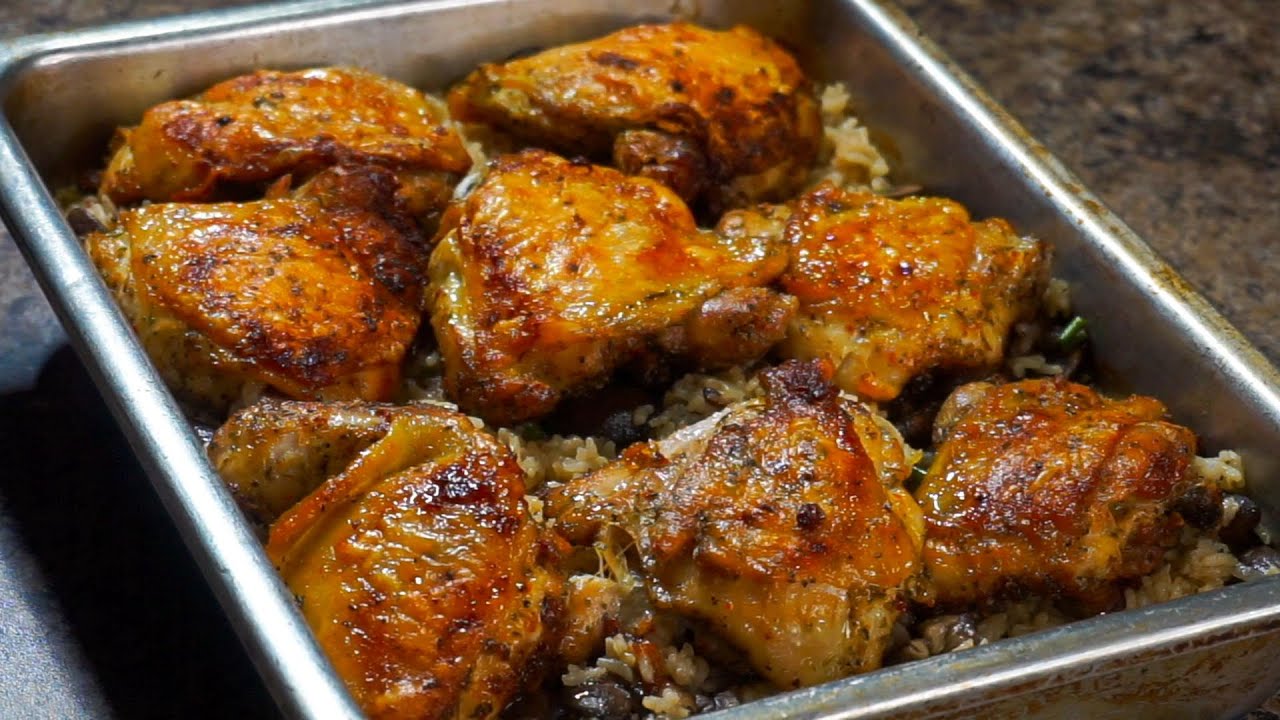
“Baked chicken and rice is the dish everyone thinks they know how to make until they pull a pan of gummy rice and steamed, pale chicken skin out of the oven. The problem is not the recipe — it's the physics. Rice baking under chicken is not the same as rice cooked on a stovetop, and every liquid ratio you've ever memorized stops working the moment you add chicken drippings to the equation. We tested the ratios, mapped the temperature curve, and found the combination that delivers crispy skin and separate, fluffy grains in the same pan at the same time.”
Why This Recipe Works
Baked chicken and rice is the kind of dish that sounds like it cannot possibly fail. You put raw things in a pan, apply heat for an hour, and dinner is done. And yet it fails constantly — mushy rice sitting in a pool of unabsorbed liquid under chicken skin that looks like it was microwaved inside a damp sock. Understanding why it fails is the same as understanding why it works, and the answer is almost entirely about water management.
The Liquid Ratio Is Not What You Think
Every rice cooking ratio you have ever memorized — 1:2, 1:1.75 — was developed for a stovetop, where evaporation is rapid and predictable. In a covered oven pan, evaporation slows dramatically. And unlike stovetop rice, the oven method has a second liquid source: the chicken itself. A bone-in, skin-on chicken thigh weighing roughly 10 ounces contains substantial subcutaneous fat and muscle moisture. As the oven heat climbs, that fat renders and that moisture releases — both of which drain into the rice below. Add the standard 1:2 ratio of broth and you are starting with too much liquid before the chicken contributes a drop. The 1:1.5 ratio in this recipe accounts for the chicken's contribution. It is not an error; it is the correct math.
The Two-Phase Oven Strategy
A covered pan and an uncovered pan produce completely different cooking environments, and this dish requires both. The first phase — 30 minutes with foil sealed tightly over the top — creates a pressurized steam environment where the rice absorbs liquid evenly and the chicken cooks through without drying out. This is the same principle behind dum cooking in biryani: trapped steam creates uniform, gentle heat that reaches every grain. Without the foil, the top surface of the rice dries out before the interior is cooked, and the temperature climbs too fast for the rice to absorb properly.
The second phase — foil removed, temperature staying at 400°F — is entirely about the skin. Rendered chicken fat needs direct oven heat to complete the Maillard reaction: the chain of chemical transformations that converts pale, pliable skin into deep gold, shattering crispness. This takes 18-22 minutes at high heat with zero moisture trapping. The foil removes at exactly the right moment because by then the rice is set — it has absorbed its liquid and stabilized — so the continued heat simply finishes the skin without destroying the texture below. A large oven-safe skillet handles both phases without issue because its thermal mass distributes heat evenly across the base, preventing the scorched bottom patches that plague thin pans.
Why the Sear Is Non-Negotiable
Skipping the sear feels like a reasonable time-saving move. It is not. The sear accomplishes two distinct things, and neither one happens in the oven. First, it initiates fat rendering. A significant portion of the subcutaneous fat in the chicken skin renders in the first 4-5 minutes of contact with a hot pan — fat that flows directly into the cooking surface and becomes the base that coats the aromatics and ultimately the rice. This fat carries flavor compounds that no amount of added oil can replicate. Second, it starts the Maillard reaction on the skin surface. An oven, even at 400°F, cannot replicate the immediate surface temperature of a hot skillet. Starting the browning on the stovetop gives the skin a head start it can never recover without — you cannot crisp skin that was never seared in a 400°F oven that is simultaneously trying to bake rice.
The Toasted Rice Step
One minute of stirring the rinsed rice in the rendered fat and aromatics before adding the broth is not filler. It is a structural technique borrowed from pilaf and risotto methodology. When dry rice grains contact hot fat, the outer starch layer gelatinizes slightly, creating a thin barrier around each grain that limits starch leaching during the subsequent liquid absorption. The result is individual, separate grains instead of a cohesive starchy mass. Rinsing removes excess surface starch; toasting reinforces each grain's structural integrity from the outside in. Together, they are why the rice in this recipe comes out fluffy while the same rice cooked by the dump-and-stir method comes out pasty.
The Resting Phase
Five minutes of resting after the pan comes out of the oven is not patience theater. The rice is still absorbing the last of the steam when the pan leaves the oven. Cutting into it immediately releases that steam and pressure, interrupting the final absorption cycle and leaving the rice wetter and less cohesive than it would otherwise be. The chicken juices also redistribute during rest — carving immediately means the first cut releases a flood of liquid that was about to absorb back into the meat. An instant-read thermometer tells you when to pull; the timer tells you when to serve. Both matter.
Where Beginners Mess This Up
Before we start, read this. These are the 4 reasons your baked chicken and rice (the one-pan method that actually works) will fail:
- 1
Using the wrong liquid ratio: Stovetop rice uses a 1:2 ratio of rice to water. In the oven, evaporation is slower and the chicken releases additional liquid as it cooks. Use too much broth and the rice absorbs past fluffy into sticky. The correct ratio for oven-baked rice under chicken is 1:1.5 — any more and you've already committed to gummy.
- 2
Covering the pan the entire time: A foil cover traps steam and prevents the chicken skin from crisping. The correct method is to bake covered for the first 30 minutes to lock in moisture and bring the rice to temperature, then remove the foil entirely for the final 20 minutes so the skin renders and crisps. Leaving the foil on produces the pale, rubbery skin that ruins the whole dish.
- 3
Using boneless, skinless chicken: The entire flavor engine of this dish is the fat and gelatin that render out of bone-in, skin-on chicken thighs as they roast. That fat absorbs into the rice below, creating depth no amount of added butter can replicate. Boneless, skinless chicken produces watery, flavorless rice and dry meat. It is not a convenience upgrade — it is a category error.
- 4
Skipping the aromatics sauté: Raw garlic and onion added directly to the pan produce harsh, uneven flavor. Two minutes of sautéing in the same oven-safe pan before everything goes in builds a flavor base that the rice absorbs as it cooks. This step takes three minutes and changes the entire character of the dish.
The Video Reference Library
Want to see it in action? Here are the exact videos we analyzed and combined to build this foolproof recipe translation:
The clearest demonstration of the two-phase baking method — covered for moisture, uncovered for crisp. Excellent close-ups showing the correct rice texture before and after the foil comes off.
Walks through the liquid ratio science and why stovetop ratios fail in the oven. Good breakdown of how chicken fat displacement affects total moisture in the pan.
Focuses on the skin-crisping phase and why the foil removal timing matters. Shows the visual cues — bubbling edges, golden color — that tell you the rice is set before the skin browns.
🛠️ Core Equipment
- Large oven-safe skillet or braiser (12-inch minimum)The pan needs to go from stovetop to oven without handles melting. It also needs enough surface area to keep the rice in a shallow, even layer — deep rice bakes unevenly. A 12-inch cast iron or stainless braiser is ideal.
- Aluminum foilUsed to cover the pan for the first phase of baking. Creates a sealed steam environment that cooks the rice evenly before the foil is removed for the skin-crisping phase. Without it, the top layer of rice dries out before the bottom cooks.
- Instant-read thermometerChicken is done at 165°F internal, but thighs taste best at 175-180°F when the collagen fully renders. Guessing by time alone is how you end up with either undercooked chicken or overcooked rice. A thermometer removes all ambiguity.
- Wooden spoon or silicone spatulaFor stirring the aromatics without scratching the pan surface. You will use the same pan for sautéing, so whatever you use needs to work on the stovetop.
Baked Chicken and Rice (The One-Pan Method That Actually Works)
🛒 Ingredients
- ✦4 bone-in, skin-on chicken thighs (about 2.5 pounds total)
- ✦1.5 cups long-grain white rice, rinsed
- ✦2.25 cups low-sodium chicken broth
- ✦1 medium yellow onion, finely diced
- ✦5 garlic cloves, minced
- ✦2 tablespoons olive oil
- ✦1 tablespoon unsalted butter
- ✦1 teaspoon smoked paprika
- ✦1 teaspoon garlic powder
- ✦1 teaspoon onion powder
- ✦1 teaspoon dried thyme
- ✦1/2 teaspoon dried oregano
- ✦1/2 teaspoon black pepper
- ✦1.5 teaspoons kosher salt, divided
- ✦1/4 teaspoon cayenne pepper (optional)
- ✦Fresh flat-leaf parsley, chopped, for garnish
- ✦Lemon wedges, for serving
👨🍳 Instructions
01Step 1
Preheat the oven to 400°F. Pat the chicken thighs completely dry with paper towels — surface moisture is the enemy of crispy skin.
02Step 2
Mix the smoked paprika, garlic powder, onion powder, thyme, oregano, black pepper, cayenne (if using), and 1 teaspoon salt in a small bowl. Rub the spice mixture evenly over and under the skin of each chicken thigh.
03Step 3
Heat olive oil and butter in a large oven-safe skillet over medium-high heat. Sear the chicken thighs skin-side down for 4-5 minutes without moving them until the skin is deep golden brown and releases from the pan easily.
04Step 4
Flip the chicken and sear the other side for 2 minutes. Transfer to a plate — the chicken is not cooked through yet. Reduce heat to medium.
05Step 5
In the same pan with the rendered chicken fat, sauté the diced onion for 2-3 minutes until softened. Add the minced garlic and cook for 1 minute until fragrant.
06Step 6
Add the rinsed rice to the pan and stir to coat it in the fat and aromatics for 1 minute. This toasts the rice slightly and helps it stay separate during baking.
07Step 7
Pour in the chicken broth and add the remaining 0.5 teaspoon of salt. Stir once to distribute evenly, then smooth the rice into a flat, even layer.
08Step 8
Nestle the seared chicken thighs skin-side up on top of the rice. Do not press them down — they should sit on the surface, not sink into the rice.
09Step 9
Cover the pan tightly with aluminum foil and bake for 30 minutes.
10Step 10
Remove the foil and continue baking for 18-22 minutes until the chicken skin is deeply golden and crisp and an instant-read thermometer reads 175-180°F in the thickest part of the thigh.
11Step 11
Remove from the oven and let the pan rest uncovered for 5 minutes. This allows the rice to finish steaming and the chicken juices to redistribute.
12Step 12
Fluff the rice gently with a fork around the chicken pieces. Garnish with chopped parsley and serve with lemon wedges.
Nutrition Per Serving
Estimates based on standard preparation. Adjustments alter macros.
🔄 Substitutions
Instead of Long-grain white rice...
Use Parboiled (converted) rice
More forgiving with the liquid ratio and harder to overcook into mush. Slightly firmer texture. Reduce broth by 2 tablespoons. Do not use brown rice — it requires nearly double the cook time and the chicken will overcook before the rice finishes.
Instead of Chicken broth...
Use Water plus 1 teaspoon chicken bouillon
Functionally identical. Or use half water, half dry white wine for a slightly brighter flavor profile.
Instead of Olive oil...
Use Avocado oil or ghee
Avocado oil has a higher smoke point, which is useful if you're searing over high heat. Ghee adds a nutty richness and slightly higher smoke point than butter alone.
Instead of Smoked paprika...
Use Sweet paprika plus a drop of liquid smoke
If you have neither, regular paprika still adds color and mild pepper flavor. The smoked version is not essential but contributes the mild, wood-fired depth that lifts the dish.
🧊 Storage & Reheating
In the Fridge
Store leftover chicken and rice together in an airtight container for up to 4 days. The rice continues to absorb the chicken juices overnight and often tastes better on day two.
In the Freezer
Freeze in individual portions for up to 2 months. The rice texture softens slightly after freezing but remains acceptable. Thaw overnight in the refrigerator before reheating.
Reheating Rules
Add 1-2 tablespoons of chicken broth or water to the container before reheating to re-introduce moisture. Cover loosely and microwave at 70% power, or reheat in a covered skillet over low heat. Do not reheat uncovered — the rice desiccates in under 90 seconds.
❓ Frequently Asked Questions
Why is my rice still crunchy after baking?
Almost always a liquid issue. Either you used too little broth, the foil seal was not tight enough and steam escaped, or your oven runs cool. Add 3 tablespoons of broth to the pan, reseal tightly with foil, and return to the oven for 10 more minutes.
Can I use chicken breasts instead of thighs?
Yes, but with significant caveats. Bone-in chicken breasts work but must be pulled at exactly 165°F — they have no fat insulation and overcook within minutes of hitting temperature. Boneless, skinless breasts are not recommended. They release almost no fat into the rice and the dish loses most of its flavor depth.
Do I have to sear the chicken first?
Technically no, but practically yes. The sear does two things: it renders out a portion of the subcutaneous fat into the pan (which then flavors the rice) and it starts the Maillard reaction on the skin. Skipping the sear and going straight to the oven produces pale skin that never fully crisps, even with the foil removed. The sear takes 7 minutes and is not negotiable.
Why does my rice come out gummy?
Three possible causes: too much liquid, rice that wasn't rinsed, or the foil wasn't removed for the second phase of baking. The foil creates a sealed steam environment — necessary for even cooking but ruinous for rice texture if it stays on too long. Always remove the foil for the final 18-22 minutes.
Can I add vegetables to the pan?
Yes, with timing awareness. Dense vegetables like diced carrot, frozen peas, or sliced bell pepper can go into the rice layer before baking. Delicate greens like spinach or kale should be stirred in only after the pan comes out of the oven — residual heat wilts them in 2 minutes without turning them to slop.
Can I make this ahead of time?
You can sear the chicken and sauté the aromatics up to 24 hours in advance. Refrigerate the chicken and the prepared pan separately, then assemble and bake fresh. Do not pre-bake and try to reheat the whole pan — reheated rice under chicken turns to mush. The individual components store and travel better than the finished dish.

The Science of
Baked Chicken and Rice (The One-Pan Method That Actually Works)
We turned everything on this page into a beautiful, flour-proof PDF cheat sheet. Print it out, stick it to your fridge, and never mess up your baked chicken and rice (the one-pan method that actually works) again.
*We'll email you the high-res PDF instantly. No spam, just perfectly cooked meals.
AlmostChefs Editorial Team
We translate the internet's most popular cooking videos into foolproof, beginner-friendly written recipes. We analyze multiple methods, test them in our kitchen, and engineer a single "Master Recipe" that gives you the best possible result with the least possible stress.