The Best Homemade Baked Beans (Stop Opening That Can)
Classic American baked beans made from scratch with navy beans, crispy bacon, maple syrup, and smoked paprika. We stripped out the processed shortcuts and built a stovetop version that delivers deep, caramelized flavor in under an hour — no oven required.
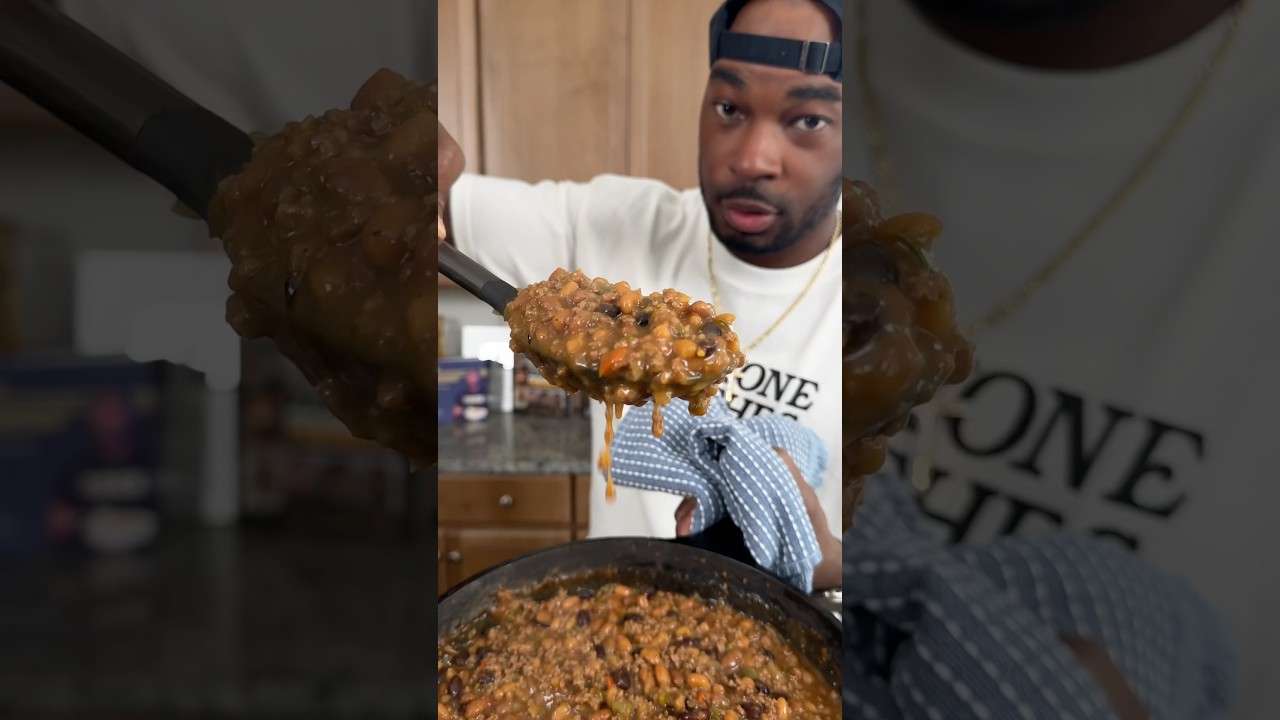
“Every backyard cookout has a can of baked beans sitting somewhere on the table, usually opened with an apology. The canned version is fine. This version is not fine — it's the kind of thing people ask you for the recipe after. The difference is fifteen minutes of prep, one good Dutch oven, and a sauce you actually build instead of pour. Caramelized onions, real bacon fat, tomato paste cooked down until it turns brick-red. The beans absorb all of it.”
Why This Recipe Works
Baked beans are not complicated food. They are beans, fat, sweetness, acid, and smoke — five things that happen to be perfect together. The problem with most homemade versions is not the ingredients, it's the order of operations. People add everything to a pot and hope the flavors will sort themselves out during cooking. They won't.
The Sauce First
The defining move in this recipe is building the sauce before the beans ever touch the pot. Tomato paste, maple syrup, apple cider vinegar, and whole grain mustard get whisked together and then cooked in hot rendered bacon fat — not simmered, cooked. Two minutes of direct heat transforms the tomato paste from metallic and bright to dark, roasted, and savory. This is the same principle behind cooking a roux or browning butter: applied heat changes the flavor compounds in a way that no amount of simmering later will replicate.
The apple cider vinegar goes in here too, not at the end. Cooked acid rounds out and integrates into the sauce. Raw acid added at the finish tastes sharp and one-dimensional. The difference is noticeable.
The Bacon Geometry
Three slices of bacon seems modest for a dish that's supposed to taste smoky and rich. The key is using the rendered fat as your cooking fat for everything that follows. The bacon itself gets added back at the end — crispy — so it contributes texture as well as flavor. Bacon added at the start turns soft and disappears into the sauce. Bacon added at the finish stays distinct and gives each bite a textural contrast.
If you're going vegetarian, the gap left by the bacon fat is real. A good Dutch oven with olive oil will give you plenty of browning capacity, but add extra smoked paprika and don't skip the liquid smoke if you have it. Smokiness is structural in this dish, not decorative.
Low Heat is the Recipe
The beans are already cooked when they come out of the can. Your job is not to cook them further — it's to get them to absorb the sauce. This happens slowly, at low heat, over 25-30 minutes of uncovered simmering. High heat does three bad things: it evaporates the liquid too fast before absorption happens, it can toughen bean skins through aggressive agitation, and it risks scorching the sauce on the bottom.
Low heat also lets the sauce reduce naturally to a thick, glossy consistency that coats each bean. This is what separates homemade baked beans from the canned version — not the ingredients, but the concentration of flavor that comes from gentle, patient cooking.
Why Smoked Paprika Matters
Regular paprika adds color. Smoked paprika adds the faint suggestion of a wood fire, which is the entire premise of baked beans as a barbecue side dish. It's not a subtle addition — it's load-bearing. The combination of smoked paprika, cumin, and cayenne creates a spice architecture that reads as complex without being identifiable as any single note.
The bay leaf is similarly structural. You will not taste bay leaf in the finished dish. You will taste the absence of it if you skip it — a slight flatness where depth should be.
The Next-Day Effect
Every bean dish improves overnight. The sauce thickens as it cools and the beans continue absorbing liquid from the surrounding sauce through osmosis. What tastes slightly thin on day one will taste exactly right on day two. If you're making these for a gathering, make them the day before, refrigerate, and reheat gently with a splash of broth. You'll wonder why you ever served same-day beans to anyone.
Where Beginners Mess This Up
Before we start, read this. These are the 4 reasons your the best homemade baked beans (stop opening that can) will fail:
- 1
Skipping the tomato paste caramelization step: Most recipes say 'add the tomato paste and stir.' What they mean is cook it in the hot fat until it darkens from bright red to deep burgundy — about 2 minutes. Raw tomato paste tastes metallic and acidic. Caramelized tomato paste tastes like the backbone of something great. This step is where the sauce gets its depth.
- 2
Adding the broth too early: Build the aromatics and sauce in the pot first. If you add liquid before the onions, garlic, and tomato paste have properly cooked down, you're essentially boiling everything instead of developing flavor. The fond on the bottom of the pot is flavor — the broth deglazes it, not drowns it.
- 3
Cooking on too high a heat: Baked beans need low, slow heat to thicken properly. Too high and the liquid evaporates before the beans absorb the sauce, leaving you with dry, chalky beans sitting in a reduced glaze. Low and slow lets the beans swell, the sauce tighten, and the whole thing meld into something cohesive.
- 4
Under-seasoning at the end: The final salt and pepper adjustment after 30 minutes of cooking is not optional. Beans absorb seasoning aggressively — what tasted right before simmering will taste flat after. Taste, adjust, taste again.
The Video Reference Library
Want to see it in action? Here are the exact videos we analyzed and combined to build this foolproof recipe translation:
The source video for this technique. Clear breakdown of the stovetop method and why the sauce-building order matters.
🛠️ Core Equipment
- Dutch oven or heavy-bottomed potEven heat distribution is critical for low-and-slow stovetop cooking. A thin pan creates hot spots that scorch the sauce before the beans are done. A [Dutch oven](/kitchen-gear/review/dutch-oven) is the right tool for this job.
- Small whisk or forkFor combining the tomato paste, maple syrup, apple cider vinegar, and mustard into a uniform sauce before adding to the pot. Mixing wet ingredients separately prevents clumping against the hot pan.
- Paper towelsDrain the cooked bacon on these. Letting crispy bacon sit in rendered fat turns it rubbery. You want it crispy when you fold it back in at the end.
The Best Homemade Baked Beans (Stop Opening That Can)
🛒 Ingredients
- ✦2 cans (15 ounces each) navy beans, drained and rinsed
- ✦3 slices bacon, chopped
- ✦1 large yellow onion, finely diced
- ✦3 cloves garlic, minced
- ✦1/4 cup pure maple syrup
- ✦3 tablespoons tomato paste
- ✦2 tablespoons apple cider vinegar
- ✦1 tablespoon whole grain mustard
- ✦1 teaspoon smoked paprika
- ✦1/2 teaspoon ground cumin
- ✦1/4 teaspoon cayenne pepper
- ✦1 cup low-sodium vegetable broth
- ✦2 tablespoons fresh parsley, chopped
- ✦1 bay leaf
- ✦Sea salt to taste
- ✦Black pepper to taste
- ✦1 tablespoon extra virgin olive oil
👨🍳 Instructions
01Step 1
Cook the chopped bacon in a large Dutch oven or heavy-bottomed pot over medium heat until the edges are crispy, about 5 minutes. Transfer to a paper towel-lined plate and set aside.
02Step 2
Add the diced onion to the bacon fat in the pot and sauté over medium-high heat, stirring occasionally, until translucent and softened — about 4 minutes.
03Step 3
Stir in the minced garlic and cook for 60 seconds until fragrant. Don't let it brown.
04Step 4
Whisk together the tomato paste, maple syrup, apple cider vinegar, and whole grain mustard in a small bowl until fully combined.
05Step 5
Pour the sauce into the pot with the aromatics and stir to coat the bottom. Cook for 2 minutes, stirring constantly, until the tomato paste darkens slightly and smells sweet and roasted.
06Step 6
Add the drained beans, vegetable broth, smoked paprika, cumin, cayenne, and bay leaf. Stir to combine.
07Step 7
Bring to a gentle simmer over medium heat. Reduce to low and cook uncovered for 25-30 minutes, stirring occasionally to prevent sticking.
08Step 8
Taste and adjust seasoning with sea salt and black pepper. Beans absorb salt aggressively — be more generous than you think you need.
09Step 9
Fold in the reserved crispy bacon and fresh parsley. Cook for 1 more minute to meld.
10Step 10
Remove the bay leaf. Serve warm.
Nutrition Per Serving
Estimates based on standard preparation. Adjustments alter macros.
🔄 Substitutions
Instead of Bacon...
Use Smoked tempeh or coconut bacon
Maintains smoky flavor while making the dish fully vegetarian. Reduces saturated fat by roughly 60%. Add with the onions rather than rendering first.
Instead of Maple syrup...
Use Unsulfured blackstrap molasses plus 1 tablespoon honey
Richer, more complex sweetness with better mineral content. The molasses flavor is more traditional and pairs well with the smoked paprika.
Instead of Vegetable broth...
Use Bone broth or mushroom broth
Bone broth adds collagen and deeper umami. Mushroom broth keeps the recipe vegan while adding earthy complexity. Either improves the sauce base.
Instead of Navy beans...
Use Pinto beans or black beans
Pinto beans are earthier and slightly firmer. Black beans are more robust with a deeper color. Both work equally well — the cooking time is identical.
🧊 Storage & Reheating
In the Fridge
Store in an airtight container for up to 4 days. The sauce thickens considerably when cold — this is normal and a sign it's well made.
In the Freezer
Freeze in portioned containers for up to 3 months. Thaw overnight in the fridge.
Reheating Rules
Add 2-3 tablespoons of water or broth, cover, and reheat over low heat for 8-10 minutes. Stir occasionally. Avoid high heat — it tightens the sauce too fast and the beans can burst.
❓ Frequently Asked Questions
Do I have to use navy beans?
No. Navy beans are traditional because they're small and absorb sauce quickly, but pinto beans and black beans work equally well. Larger beans like cannellini can work too — they just need an extra 5-10 minutes of simmer time.
Can I make this vegetarian?
Yes. Skip the bacon and start the onions in olive oil. Add 1/2 teaspoon of smoked paprika extra and a few drops of liquid smoke to compensate for the missing smokiness. The beans won't suffer.
Why are my beans still firm after 30 minutes?
Canned beans are already fully cooked, so firmness usually means there's too much acid in the pot. Vinegar and tomato paste can inhibit bean softening. Make sure you're cooking on low heat — a rolling boil can toughen bean skins even in already-cooked beans.
Can I make this in a slow cooker?
Yes, but still build the sauce on the stovetop first. Transfer everything to a slow cooker after step 6 and cook on low for 4-6 hours or high for 2-3 hours. Stovetop shortcuts produce flat-tasting slow cooker beans.
How do I get a thicker sauce?
Three options: cook uncovered longer to reduce, mash a portion of the beans against the pot wall, or mix 1 teaspoon of cornstarch with 1 tablespoon of cold water and stir it in during the last 5 minutes.
What should I serve these with?
These are a natural alongside smoked or grilled meats — ribs, pulled pork, brisket. They also work as a vegetarian main over cornbread or thick toast. At a cookout, they hold well at room temperature for up to 2 hours.
The Science of
The Best Homemade Baked Beans (Stop Opening That Can)
We turned everything on this page into a beautiful, flour-proof PDF cheat sheet. Print it out, stick it to your fridge, and never mess up your the best homemade baked beans (stop opening that can) again.
*We'll email you the high-res PDF instantly. No spam, just perfectly cooked meals.
AlmostChefs Editorial Team
We translate the internet's most popular cooking videos into foolproof, beginner-friendly written recipes. We analyze multiple methods, test them in our kitchen, and engineer a single "Master Recipe" that gives you the best possible result with the least possible stress.