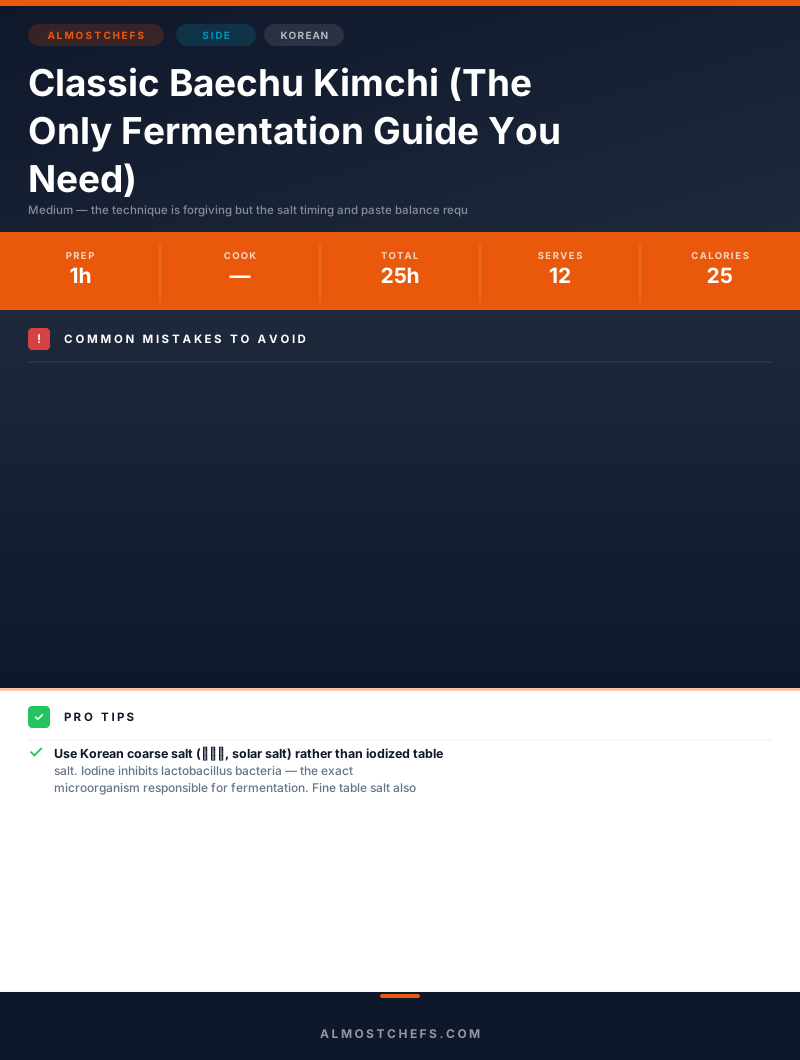
Classic Baechu Kimchi (The Only Fermentation Guide You Need)
Traditional Korean napa cabbage kimchi fermented with a gochugaru paste built from garlic, ginger, fish sauce, and salted shrimp. We broke down the brining science and paste ratios behind every major Korean home-cook method to give you one repeatable technique that produces deep, funky, gut-healthy kimchi every single time.

“Most homemade kimchi fails in one of three places: under-salted cabbage that ferments unevenly, a paste so dominated by fish sauce or garlic it tastes like a single ingredient, or a jar left at room temperature until it turns sour mush. Kimchi is a living food — and like anything alive, it needs a specific environment to thrive. We mapped the brining chemistry and paste construction behind the best Korean home methods to give you one technique that produces the real thing.”
Why This Recipe Works
Kimchi is not a recipe. It is a controlled ecological process. When you make kimchi, you are not cooking — you are building an environment in which one family of bacteria (lactobacillus) outcompetes everything else and transforms raw cabbage into one of the most nutritionally dense fermented foods on the planet. Understanding that distinction is the difference between consistent kimchi and the kind of hit-or-miss results that send people back to store-bought.
The Salt Science
Coarse sea salt does two things that nothing else can replicate. First, it draws water out of the cabbage cells through osmosis, collapsing the structure just enough that the paste can penetrate between every leaf rather than sitting on the surface. Second, it creates a selective environment where lactobacillus bacteria — which are salt-tolerant — survive and thrive while harmful bacteria do not.
Iodized table salt is not a substitute. Iodine was added to commercial salt specifically because it is antimicrobial. It kills bacteria indiscriminately, including the lactobacillus cultures you are trying to cultivate. Your kimchi will not ferment, or will ferment poorly, and you will spend three days wondering what went wrong.
The brining time is equally non-negotiable. Two hours is the floor. Four hours is better. The thick white stem sections of napa cabbage take longer to salt through than the leafy green parts — underbrine them and you get uneven fermentation, with some sections running ahead while others lag. Test with a bend: a properly brined stem should flex without snapping, like a wet piece of cardboard.
The Paste Architecture
The rice flour paste is the structural foundation that most Western kimchi recipes skip entirely, and its absence is why Western kimchi often tastes thin and one-dimensional. The cooked paste — just rice flour, water, and a little sugar — creates a thick, sticky medium that distributes gochugaru, garlic, and fish sauce evenly across every surface of the cabbage. Without it, the paste ingredients separate, heavy components sink to the bottom of the jar, and the fermentation becomes uneven.
Gochugaru is not interchangeable with any other chili flake. Korean red pepper has a specific flavor profile — moderate heat, significant sweetness, and a deep brick-red color — that is distinct from cayenne, crushed red pepper, or paprika. The right quantity is personal, but the ingredient is not optional.
Fish sauce and salted shrimp (saeujeot) serve the same role — glutamate-rich umami — but from different flavor directions. Fish sauce is sharp and oceanic; saeujeot is funky and briny with a distinct fermented quality. Together they create the layered depth that separates proper kimchi from something that just tastes like spicy cabbage.
The Fermentation Window
The twenty-four-hour mark is when you make your most important decision. Taste the kimchi. It should have a mild tang — present but not sharp — and the aromatics should be starting to mellow and integrate. This is fresh kimchi (geotjeori), and many people prefer it at this stage: bright, crunchy, vibrant.
Leave it another twenty-four hours and the lactic acid production intensifies. The tang deepens, the texture softens slightly, and the flavor rounds out into something more complex. This is the classic refrigerator-ready kimchi that Koreans eat daily as banchan.
Refrigerate at this point. A wide-mouth glass jar packed tightly — no air pockets — is the correct vessel. Cold doesn't stop fermentation; it slows it to a near-halt, allowing the kimchi to continue developing over weeks rather than hours. The kimchi you eat at two weeks will be noticeably different — better, in most people's estimation — than the kimchi you eat at two days.
Why This Is a Gut Health Food
The lactobacillus cultures produced during kimchi fermentation are the same family of bacteria found in commercial probiotic supplements, produced in concentrations that most supplements cannot match. The fermentation process also partially breaks down the cabbage cell walls, increasing bioavailability of vitamins C and K. The gochugaru contains capsaicin, which has documented anti-inflammatory properties at the quantities consumed in regular kimchi portions.
This is not health-food marketing. These are the measurable outputs of a fermentation process that Korean households have been running for over a thousand years — originally as a winter preservation method, now understood to be one of the most efficient ways to convert cheap vegetables into food that actively supports digestive and immune health.
Make it once and you will understand why Koreans keep a jar going at all times.
Where Beginners Mess This Up
Before we start, read this. These are the 4 reasons your classic baechu kimchi (the only fermentation guide you need) will fail:
- 1
Under-brining the cabbage: The salting step does two things: it draws out excess moisture so the paste clings properly, and it begins the preservation process that keeps harmful bacteria from outcompeting lactobacillus during fermentation. Cabbage that isn't brined long enough holds too much water — the paste dilutes, the fermentation goes sideways, and you get a bland, watery result. Two hours minimum. Four hours is better.
- 2
Building a one-note paste: Kimchi paste is a balancing act between heat (gochugaru), umami (fish sauce and salted shrimp), sweetness (rice flour paste), and aromatics (garlic, ginger). Leaning too hard on any single element — usually garlic or fish sauce — collapses the flavor into something aggressive and flat. The rice flour paste is the binder that brings all of these together; skipping it produces a paste that slides off the cabbage rather than penetrating it.
- 3
Fermenting too warm for too long: Room temperature fermentation at 68–72°F produces active, funky kimchi within 24–48 hours — but it doesn't stop there. Left unrefrigerated beyond two days, most kimchi overcooks into sharp, almost vinegary sourness with softened texture. Taste after 24 hours, refrigerate at peak funk, and let cold fermentation finish the job slowly over weeks.
- 4
Rinsing too thoroughly after brining: You rinse the cabbage to remove excess salt, not all salt. Three quick rinses with a taste-test between the second and third is the target. The cabbage should taste pleasantly salty — like well-seasoned food, not seawater. Over-rinsed cabbage produces bland kimchi that struggles to ferment properly and requires more fish sauce to compensate, throwing the paste balance off.
🛠️ Core Equipment
- Large mixing bowl (8-quart or bigger)You need room to toss the cabbage quarters in coarse salt without flinging brine across your kitchen, and later to massage the paste into every leaf. A cramped bowl means uneven coating and uneven fermentation.
- Wide-mouth glass jar or fermentation crockThe container needs to let you pack the cabbage tightly — air pockets cause mold. Wide-mouth jars make packing and retrieval easy. Avoid thin plastic; the gochugaru will stain it permanently and some plastics absorb off-flavors over long ferments.
- Rubber glovesNon-negotiable. Gochugaru paste will stain your hands orange-red for two days and the capsaicin content will burn any small cuts or thin skin around your nails. Cheap disposable nitrile gloves work perfectly.
- Fine-mesh sieve or colanderFor draining the brined cabbage quickly and evenly. The cabbage needs to release most of its brine before you apply the paste — a colander with small holes prevents small leaf pieces from falling through.
Classic Baechu Kimchi (The Only Fermentation Guide You Need)
🛒 Ingredients
- ✦1 large napa cabbage (about 5–6 pounds)
- ✦1/2 cup coarse sea salt or Korean coarse salt (not iodized table salt)
- ✦3 tablespoons sweet rice flour (glutinous rice flour)
- ✦1 cup water
- ✦1 tablespoon sugar
- ✦1/2 cup gochugaru (Korean red pepper flakes), adjust to heat preference
- ✦1 tablespoon gochugaru (fine grind, for deeper color)
- ✦8 cloves garlic, minced or grated
- ✦1 teaspoon fresh ginger, finely grated
- ✦3 tablespoons fish sauce
- ✦2 tablespoons salted shrimp (saeujeot), finely chopped
- ✦4 green onions, cut into 2-inch pieces
- ✦1 medium daikon radish, julienned (about 2 cups)
- ✦1 teaspoon sesame seeds (optional, for finish)
👨🍳 Instructions
01Step 1
Quarter the cabbage lengthwise through the core. Cut each quarter crosswise into 2-inch pieces, keeping the core intact to hold leaves together.
02Step 2
In a very large bowl, toss the cabbage pieces with coarse salt. Work the salt into every layer, paying extra attention to the thick white stem sections. Let sit for 2–4 hours, turning every 30 minutes.
03Step 3
Rinse the cabbage under cold running water 2–3 times. After the second rinse, taste a stem piece. It should taste lightly salted. Drain in a colander for 15–20 minutes, then gently squeeze out excess water.
04Step 4
While the cabbage drains, cook the rice flour paste: combine rice flour, water, and sugar in a small saucepan over medium heat. Stir constantly until the mixture thickens to a smooth, translucent paste, about 3–4 minutes. Remove from heat and let cool completely.
05Step 5
Combine the cooled rice flour paste with gochugaru (both grinds), minced garlic, grated ginger, fish sauce, and chopped salted shrimp. Mix thoroughly into a uniform, deep red paste.
06Step 6
Add the drained cabbage, julienned daikon, and green onion pieces to the paste bowl. Wearing rubber gloves, massage the paste into every surface of the cabbage — lift, fold, and press until every piece is evenly coated and the daikon is tinted red.
07Step 7
Pack the kimchi tightly into wide-mouth glass jars, pressing down firmly as you fill to eliminate air pockets. Leave 1–2 inches of headspace — the kimchi will expand as it ferments.
08Step 8
Seal the jars and leave at room temperature (65–72°F) for 24–48 hours. After 24 hours, open the jar and press the kimchi down with a clean spoon — fermentation gases push it upward. Taste for tanginess.
09Step 9
Refrigerate and eat within 3 months for peak flavor. The kimchi continues to ferment slowly in the fridge, deepening in complexity over 2–4 weeks.
Nutrition Per Serving
Estimates based on standard preparation. Adjustments alter macros.
🔄 Substitutions
Instead of Fish sauce...
Use Soy sauce or tamari
Produces a vegan kimchi that still ferments properly. Soy sauce lacks the oceanic depth of fish sauce, so the final flavor profile is lighter and less funky — some people prefer it.
Instead of Salted shrimp (saeujeot)...
Use Additional fish sauce (1 tablespoon)
Saeujeot adds a distinct briny funk that's hard to replicate exactly. Extra fish sauce compensates for umami but shifts the flavor toward a sharper, more liquid fermentation rather than a complex, layered one.
Instead of Gochugaru...
Use No direct substitute — reduce quantity for mild kimchi
Gochugaru's specific combination of heat, sweetness, and deep red color is unique. Cayenne or paprika blends will not produce the same result. For mild kimchi, simply reduce gochugaru to 2–3 tablespoons.
Instead of Napa cabbage...
Use Savoy cabbage or green cabbage
Savoy is the closest in texture and water content. Green cabbage is firmer and requires longer brining (4–5 hours). Neither ferments quite as cleanly as napa, but both produce good kimchi.
🧊 Storage & Reheating
In the Fridge
Store in sealed glass jars for up to 3–6 months. Flavor peaks between 2–4 weeks as secondary fermentation deepens the complexity. After 3 months, the kimchi becomes very sour and is best used for cooking rather than eating raw.
In the Freezer
Freezing stops fermentation permanently and softens the texture significantly. Not recommended for eating raw, but frozen kimchi works well in soups and stews where texture matters less.
Reheating Rules
Kimchi is typically served cold or at room temperature as banchan. For cooked applications, sauté directly from cold in a hot pan — the residual brine caramelizes quickly and adds depth to fried rice, stews, and pancakes.
❓ Frequently Asked Questions
Why is my kimchi not fermenting?
Three likely causes: iodized salt (inhibits lactobacillus), too-cold environment (below 60°F slows fermentation dramatically), or over-rinsing that removed too much residual salt. Move the jar to a warmer spot and give it another 24 hours before concluding something is wrong.
My kimchi smells strongly — is this normal?
Yes. Fermented kimchi produces a pungent, funky, slightly sulfurous smell from the garlic and cabbage compounds interacting with lactobacillus activity. If it smells strongly fermented but not rotten, that's correct. Off-putting sweet or alcohol-like smells can indicate yeast overgrowth — still safe, but adjust temperature downward.
Can I use less gochugaru to make it milder?
Yes — reduce gochugaru to 2–3 tablespoons for a mild, pink kimchi. The fermentation process and technique remain identical. The flavor profile will be lighter and more vegetal, which many people prefer for eating raw with rice.
Does homemade kimchi have the same probiotic benefits as store-bought?
Homemade kimchi typically has significantly more live lactobacillus cultures than most commercial kimchi, which is often pasteurized to extend shelf life. Pasteurization kills the beneficial bacteria. If gut health is the goal, homemade or unpasteurized commercial kimchi (labeled 'raw' or 'refrigerated only') is the correct choice.
Why does my kimchi taste too salty right after making it?
Fresh kimchi often tastes saltier than aged kimchi because the salt hasn't fully redistributed through the vegetable cells. Give it 48 hours in the fridge and the salt will equalize throughout the brine. If it's still too salty after that, you rinsed too little — use it as a cooking ingredient instead.
What is the difference between baechu kimchi and other types of kimchi?
Baechu kimchi (배추김치) is made from whole napa cabbage and is the most common variety — what most people mean when they say 'kimchi.' Other types include kkakdugi (cubed radish), oi sobagi (stuffed cucumber), and baek kimchi (white kimchi without gochugaru). Each uses a variation of the same fermentation principle but with different vegetables and paste compositions.
The Science of
Classic Baechu Kimchi (The Only Fermentation Guide You Need)
We turned everything on this page into a beautiful, flour-proof PDF cheat sheet. Print it out, stick it to your fridge, and never mess up your classic baechu kimchi (the only fermentation guide you need) again.
*We'll email you the high-res PDF instantly. No spam, just perfectly cooked meals.
AlmostChefs Editorial Team
We translate the internet's most popular cooking videos into foolproof, beginner-friendly written recipes. We analyze multiple methods, test them in our kitchen, and engineer a single "Master Recipe" that gives you the best possible result with the least possible stress.