The Viral Whipped Feta Avocado Toast (Actually Worth the Hype)
Creamy whipped feta blended with lemon and garlic, layered under ripe avocado, crisp radishes, pomegranate seeds, and fresh herbs on charred whole-grain toast. We broke down every viral version to find the technique that actually delivers — and the answer starts with room-temperature cheese.

“Every food trend eventually collapses under the weight of bad home attempts. Avocado toast survived because the core idea is structurally sound — you just have to execute the parts most people skip. The whipped feta has to be smooth, not crumbly. The avocado has to be ripe, not firm. The toast has to be hot when you plate it. Get those three things right and this is genuinely one of the best things you can make in under twenty minutes.”
Why This Recipe Works
Avocado toast became a punchline precisely because it became too easy to do badly. A slice of commodity bread, half an avocado pressed down with a fork, a few red pepper flakes from the shaker — that's not a recipe, that's a rough sketch of one. The version that actually went viral did so because it added a structural idea: whipped feta as the base layer. That one decision changes everything, and understanding why it works explains every other choice in this dish.
The Whipped Feta Foundation
Feta is about 45% fat by dry weight, which makes it behave like butter — pliable and spreadable when warm, solid and crumbly when cold. When you blend room-temperature feta with olive oil, lemon juice, and a spoonful of Greek yogurt in a food processor, the fat emulsifies into a smooth, thick cream that clings to toast and holds toppings in place. Cold feta fights this process at every step. The fat stays solid, the proteins resist emulsification, and you end up with a grainy paste regardless of how long you run the machine.
The Greek yogurt is not filler — it's an emulsification aid. The proteins in yogurt act as a bridge between the fat in the feta and the water in the lemon juice, helping them stay combined rather than separating back into a greasy puddle. One tablespoon is enough. More than that and the flavor shifts toward tangy yogurt instead of sharp, salty feta.
The garlic goes in raw, which is important. Cooked garlic mellows into sweetness. Raw garlic here adds a sharp, pungent edge that cuts through the richness of the avocado and feta combination — exactly the kind of contrast that makes each bite interesting instead of one-dimensional.
The Toast Is Infrastructure
Most avocado toast fails at the bread. People use whatever's in the bag — soft sandwich slices, day-old brioche — and then wonder why the whole thing collapses into a soggy pile by the second bite. The bread in this recipe is load-bearing. It needs to stay rigid under the combined weight of whipped feta, sliced avocado, and wet toppings for the duration of a full plate.
Dense whole-grain or sourdough sliced at least three-quarters of an inch thick. Toasted hard — not golden, hard — with visible browning at the edges and an audible crunch when you press the center. In a cast iron skillet, medium-high heat with no oil gives you full contact across the surface and lets you pull it at exactly the moment the bottom goes from golden to deep brown. A toaster works, but you're at the mercy of its timing. The skillet gives you eyes on the bread.
Spread the feta immediately while the toast is hot. The residual heat keeps the base from going waxy and helps the feta melt very slightly into the surface, which strengthens the bond between bread and topping.
The Avocado Selection Problem
No technique rescues a bad avocado. This is the part of the recipe that requires the most judgment and has the least margin for error. An underripe avocado tastes like compressed vegetable water — no creaminess, no nuttiness, just raw green nothing. Seasoning cannot save it. The flesh needs to be soft enough that it yields under its own weight when sliced, which requires a fruit that's been given adequate time to ripen on the counter.
Press at the narrow stem end, not the wide base. The stem end tells you what's happening at the center of the fruit. Slight give with immediate spring-back means it's ready. No give at all means another day on the counter. Stays compressed without springing back means it's already overripe.
The Topping Architecture
Every topping in this recipe serves a specific sensory function. Pomegranate seeds deliver small bursts of tartness and juice that pierce through the fat. Radish slices add crunch and a mild peppery bite without the aggressive heat of raw onion. Fresh dill and basil provide aromatic lift — herbaceous brightness that registers before you even take a bite. Toasted pumpkin seeds add a low, nutty hum in the background.
The fleur de sel finish is the detail that ties it together. Large, irregular salt crystals don't dissolve into the surface — they sit on top and deliver concentrated salinity in each bite, preventing the richness of feta and avocado from flattening into a single monotonous note.
This is a five-minute assembly on top of a five-minute prep. The quality ceiling is determined almost entirely by ingredient selection and the two temperature decisions — room-temperature feta, hot toast — that most people ignore.
Where Beginners Mess This Up
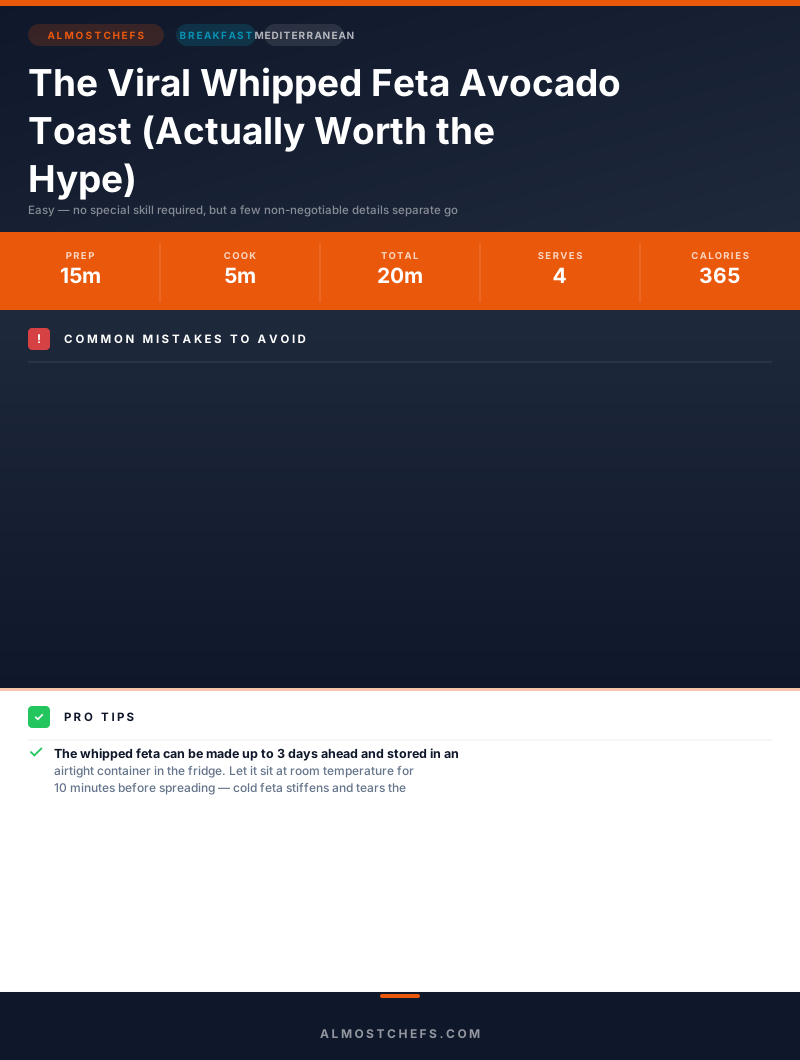
Before we start, read this. These are the 4 reasons your the viral whipped feta avocado toast (actually worth the hype) will fail:
- 1
Starting with cold feta straight from the fridge: Cold feta doesn't blend — it crumbles and clumps no matter how long you run the food processor. The fat in feta is solid below 65°F. Pull it out at least 20 minutes before you start. Room-temperature feta blends to a silky, spreadable cream in under two minutes. Cold feta stays grainy and gritty for as long as you keep trying.
- 2
Using an underripe avocado: An underripe avocado tastes like nothing and has the texture of damp cardboard. It will not improve with seasoning. The test: gently press the narrow end near the stem. It should yield slightly — like pressing on the center of your palm. If it's firm like a golf ball, leave it on the counter for another day. If it dents and doesn't spring back, it's overripe and will be brown inside.
- 3
Assembling on cold or soggy toast: The toast has one job: structural integrity and textural contrast. The moment it cools, it softens. The moment it softens under the weight of avocado and feta, the entire dish becomes a wet pile of ingredients. Toast until genuinely golden with visible browning on the edges, and spread the feta immediately while the bread is still hot. The residual heat keeps the base crisp longer.
- 4
Drowning the toppings in olive oil: This dish is already rich from the feta and avocado. A thin drizzle of olive oil at the end adds gloss and flavor. A heavy pour makes everything greasy and masks the brightness of the lemon, dill, and pomegranate. One tablespoon total across four slices is the number. Measure it.
The Video Reference Library
Want to see it in action? Here are the exact videos we analyzed and combined to build this foolproof recipe translation:

The source video that sparked this recipe's popularity. Worth watching to understand the original presentation and topping ratios before you adapt the method.
2. Whipped Feta Toast — Full Technique Breakdown
Detailed breakdown of the whipped feta blending technique and how to achieve the right consistency. Covers the room-temperature tip and timing in depth.
3. 10 Ways to Level Up Avocado ToastCovers the full range of topping variations and how to balance richness, acid, crunch, and freshness across different build combinations.
🛠️ Core Equipment
- Food processor ↗The only way to achieve genuinely smooth whipped feta. A blender works in a pinch but requires more scraping. A fork or hand mixer produces a lumpy, uneven texture that never fully comes together.
- Toaster or cast iron skillet ↗A [cast iron skillet](/kitchen-gear/review/cast-iron-skillet) over medium-high heat gives you more control over color and crispness than a toaster. You can press the bread slightly for even contact and pull it at exactly the right moment. Both work — the skillet gives you precision.
- Mandoline or sharp chef's knife ↗Radishes need to be paper-thin to add crunch without becoming a raw vegetable burden on top of the toast. A [mandoline](/kitchen-gear/review/mandoline) makes this effortless and consistent. If you're using a knife, aim for slices you can almost see through.
- Microplane or fine grater ↗Optional but worth it — a few passes of lemon zest over the finished toast adds aromatic brightness that lemon juice alone doesn't provide. The zest oils are entirely different from the acidic juice.
The Viral Whipped Feta Avocado Toast (Actually Worth the Hype)
🛒 Ingredients
- ✦8 ounces crumbled feta cheese, room temperature
- ✦3 tablespoons extra virgin olive oil, divided
- ✦2 tablespoons fresh lemon juice
- ✦1 tablespoon Greek yogurt
- ✦2 cloves garlic, minced
- ✦4 slices whole-grain bread or sourdough
- ✦2 ripe avocados, halved and pitted
- ✦1 teaspoon sea salt, plus more for finishing
- ✦1/2 teaspoon freshly cracked black pepper
- ✦1/4 teaspoon red pepper flakes
- ✦1/4 cup fresh dill, finely chopped
- ✦2 tablespoons fresh basil leaves, torn
- ✦2 radishes, thinly sliced
- ✦1/4 red onion, very thinly sliced
- ✦2 tablespoons pomegranate seeds
- ✦1 tablespoon toasted pumpkin seeds
- ✦Fleur de sel for garnish
- ✦Extra virgin olive oil for drizzling
👨🍳 Instructions
01Step 1
Remove the feta from the refrigerator at least 20 minutes before starting. Room-temperature feta is non-negotiable for a smooth result.
02Step 2
Add the feta, 2 tablespoons olive oil, lemon juice, Greek yogurt, and minced garlic to a food processor. Blend for 2 minutes, scraping down the sides every 30 seconds.
03Step 3
Season with sea salt and black pepper. Taste and adjust — feta varies widely in saltiness by brand, so season accordingly rather than following a fixed amount blindly.
04Step 4
Toast the bread slices until deeply golden brown with slightly charred edges. In a toaster, use the highest setting and check at 3 minutes. In a skillet, use medium-high heat with no oil and press the bread flat.
05Step 5
Working quickly while the toast is still hot, spread a generous layer of whipped feta across each slice — thick enough that you can't see the bread underneath.
06Step 6
Scoop the avocado from each half and slice thinly. Arrange the slices across each toast, slightly overlapping.
07Step 7
Scatter the sliced radishes and red onion across each toast, distributing evenly.
08Step 8
Add the fresh dill and torn basil leaves, spreading them across the full surface rather than piling them in the center.
09Step 9
Drizzle the remaining 1 tablespoon of olive oil across all four slices combined — thin and even, not pooled in one spot.
10Step 10
Finish with pomegranate seeds, toasted pumpkin seeds, a pinch of fleur de sel, and red pepper flakes.
11Step 11
Serve immediately. This dish does not hold.
Nutrition Per Serving
Estimates based on standard preparation. Adjustments alter macros.
🔄 Substitutions
Instead of Crumbled feta cheese...
Use Ricotta cheese or goat cheese
Milder flavor, equally creamy texture, and roughly 15% less sodium. Ricotta produces a lighter, fluffier whip. Goat cheese is tangier than ricotta but less salty than feta — the closest swap in flavor profile.
Instead of Whole-grain bread...
Use Sprouted grain bread or sourdough
Sourdough provides better structural rigidity and a more complex flavor. Sprouted grain has lower glycemic impact and better digestibility. Both toast well and hold toppings without collapsing.
Instead of Greek yogurt...
Use Cashew cream or coconut cream
Dairy-free alternative that blends smoothly with feta. Cashew cream is neutral and won't compete with the lemon. Use the same quantity — 1 tablespoon per batch.
Instead of Pomegranate seeds...
Use Fresh blueberries or halved raspberries
Similar tartness and antioxidant profile with slightly less sugar. Berries bruise more easily on top of the toast, so add them as the very last step and don't press down.
🧊 Storage & Reheating
In the Fridge
Whipped feta stores in an airtight container for up to 3 days. Assembled toast must be eaten immediately — it does not hold.
In the Freezer
Not recommended. Avocado turns gray and watery when frozen and thawed. The whipped feta can technically be frozen but loses its smooth texture on defrosting.
Reheating Rules
There is nothing to reheat. Make the feta ahead, slice the avocado fresh, and toast the bread when you're ready to eat. The whole assembly takes under 5 minutes once the feta is made.
❓ Frequently Asked Questions
Why is my whipped feta still grainy after blending?
The feta was too cold. Fat-based dairy needs to be at or near room temperature before it will emulsify smoothly. Cold feta resists blending no matter how long you run the processor. Pull it from the fridge 20 minutes before starting, or cut it into small cubes to accelerate the warm-up. Once it's at room temperature, two minutes of blending will give you a completely smooth result.
Can I make this vegan?
Yes with two swaps: replace the feta with a firm cashew-based vegan cheese (blended with the same olive oil and lemon), and replace the Greek yogurt with cashew cream. The texture won't be identical — vegan feta substitutes vary wildly in fat content — but the flavor architecture works. Taste before salting, as vegan cheeses are often under-salted compared to actual feta.
What bread works best for this?
Sourdough or a dense whole-grain loaf with tight crumb structure. You need a bread that can hold the weight of whipped feta and avocado without going limp. Airy sandwich bread and brioche fail quickly. The thicker the slice and the tighter the crumb, the longer the structural integrity holds.
How do I pick a ripe avocado reliably?
Ignore color — it varies too much by variety. Press gently at the narrow stem end. A ripe avocado yields slightly to firm pressure, like pressing on the center of your palm. If it's rock hard, it needs 1-2 days on the counter. If it indents and stays dented, it's overripe and likely brown inside. For same-day use, you want that slight give with immediate spring-back.
Can I prep the toppings in advance?
The whipped feta keeps refrigerated for 3 days. Slice the radishes and red onion up to 24 hours ahead and store in cold water to maintain crispness and remove sharpness. Everything else — avocado, herbs, pomegranate — should be prepped fresh at assembly time. Pre-sliced avocado browns within 30 minutes even with lemon juice.
Is the fleur de sel finishing salt actually necessary?
It's not necessary, but it's the detail that makes this feel restaurant-quality rather than home-cooked. Fleur de sel has large, irregular crystals that deliver concentrated bursts of salinity against the rich feta and avocado. Fine sea salt dissolves into the toppings and disappears. If you don't have fleur de sel, Maldon flakes are a direct substitute. Regular table salt is not.
The Science of
The Viral Whipped Feta Avocado Toast (Actually Worth the Hype)
We turned everything on this page into a beautiful, flour-proof PDF cheat sheet. Print it out, stick it to your fridge, and never mess up your the viral whipped feta avocado toast (actually worth the hype) again.
*We'll email you the high-res PDF instantly. No spam, just perfectly cooked meals.
AlmostChefs Editorial Team
We translate the internet's most popular cooking videos into foolproof, beginner-friendly written recipes. We analyze multiple methods, test them in our kitchen, and engineer a single "Master Recipe" that gives you the best possible result with the least possible stress.