Silky Greek Avgolemono (The Egg Tempering Method That Never Breaks)
A classic Greek lemon-egg soup with a velvety, cloud-like broth that most home cooks accidentally scramble. We analyzed the technique behind the silkiest versions to give you one foolproof method that delivers a glossy, tangy, thickened broth every single time.

“Avgolemono is one of the simplest soups in existence — broth, rice, eggs, lemon. Four ingredients. One technique. And yet it is one of the most commonly ruined soups on the internet because people treat the egg step like it's optional or casual. It is neither. Get the tempering right and you have a silky, slightly thickened broth with a brightness that wakes up every taste bud. Get it wrong and you have lemony scrambled eggs floating in chicken water. This recipe teaches you the one technique that matters.”
Why This Recipe Works
Avgolemono is the rare soup where technique is the ingredient. Strip away the broth, the rice, the lemon — what you're really making is a hot egg emulsion, and everything else in the pot exists to support that structure. This is not a casserole you can improvise. It is a controlled chemistry experiment that rewards precision and punishes distraction.
The Emulsion Problem
Most home cooks have scrambled eggs in soup at least once. They know the feeling: you add the eggs, turn away for thirty seconds, come back to a pot of pale clouds floating in thin yellow broth. This is not a recipe problem. It is a temperature problem, and it has one solution: the tempering technique.
Eggs begin to coagulate around 145°F and fully set by 160°F. A simmering pot of soup sits around 180-200°F. Put cold eggs directly into that heat differential and the outer surface cooks in seconds while the inside is still raw — you get irregular curds, not silk. Tempering solves this by raising the temperature of the egg mixture gradually before it enters the hot broth, so the proteins transition slowly from raw to set rather than shocking from one extreme to the other.
The practical method: ladle one cup of hot broth into the egg mixture in a thin, steady stream while whisking constantly. The stream must be thin enough that the egg mixture temperature rises no faster than your whisk can distribute the heat. This takes about 60 seconds. After that, the mixture is warm, stable, and ready to rejoin the pot without breaking.
Why the Egg Whites Matter
Most avgolemono recipes tell you to beat whole eggs with lemon juice. This works. This recipe goes one step further: separate the eggs, whip the whites to soft peaks, then fold them into the yolk-lemon mixture before tempering.
The foam structure created by whipped whites distributes egg proteins more evenly through the mixture and significantly increases the emulsion's heat stability. When you add a whole-egg mixture to hot broth, the proteins are densely clustered — easy to overcook in spots. When the whites have been aerated, those proteins are stretched across a wider, more even structure that heats gradually rather than in concentrated pockets. The result is a smoother, silkier broth with meaningfully less curdling risk. Two extra minutes of whisking. Worth it.
The Broth Foundation
Avgolemono is a transparency test for your broth. There is nowhere to hide bad stock in a soup this simple. The rice adds body, the egg adds silk, the lemon adds brightness — but if the underlying liquid is thin, salty, or flat, the finished soup will be thin, salty, and flat. Use a broth that actually tastes like something. Bone broth, if you have it, will give the soup natural body from collagen that works in concert with the egg thickening. The difference between a 285-calorie soup that tastes substantial and one that tastes watery is almost entirely in the quality of the stock.
The Turmeric Question
This recipe includes a small amount of turmeric — not for flavor, but for color and inflammation support. Turmeric contains curcumin, a compound with documented anti-inflammatory properties. At one-quarter teaspoon in six cups of broth, the flavor is imperceptible. The color contribution is subtle — a warmer, slightly golden tone that makes the finished soup look more vibrant. Leave it out if you prefer; include it if you're interested in the anti-inflammatory angle that makes this soup a regular in households managing digestive or joint health.
The Final Two Minutes
After the egg mixture goes in, the soup needs exactly two more minutes on the lowest possible heat. Not one minute, not five. During these two minutes, the egg proteins finish setting into the suspension that thickens the broth from a light stock into something that coats the back of a spoon. Below this temperature and time threshold, the broth stays thin. Above it — meaning any visible boiling — and the emulsion breaks. The window is narrow. A Dutch oven with even heat distribution gives you control over that window. A thin-walled pot does not.
Serve immediately. Avgolemono is a dish that exists in the present tense.
Where Beginners Mess This Up
Before we start, read this. These are the 4 reasons your silky greek avgolemono (the egg tempering method that never breaks) will fail:
- 1
Boiling the soup after adding the egg mixture: Eggs set at 160°F. The moment your soup crosses that threshold with the egg mixture in it, you get curds — not silk. After tempering and adding the eggs, the heat must stay on low with zero bubbling. One hard boil and the emulsion breaks permanently.
- 2
Skipping the whipped egg whites: Whisking the whites to soft peaks before folding them into the yolk-lemon mixture creates a foam structure that distributes the egg proteins evenly through the broth. If you skip this and just whisk whole eggs with lemon juice, you get a denser, less stable emulsion that's far more likely to curdle under heat.
- 3
Adding the hot broth too fast during tempering: Tempering means slowly raising the temperature of the egg mixture before it enters the hot soup. If you ladle a full cup of 200°F broth into room-temperature eggs all at once, the outside of the egg mixture heats faster than the inside — and you get chunks. Add the hot broth in a thin, slow stream while whisking constantly.
- 4
Using cold lemons: Cold lemon juice introduces a sharp temperature drop into the egg mixture, slowing the tempering process and creating uneven protein distribution. Juice your lemons at room temperature — or let the juice sit for a few minutes before combining it with the eggs.
The Video Reference Library
Want to see it in action? Here are the exact videos we analyzed and combined to build this foolproof recipe translation:
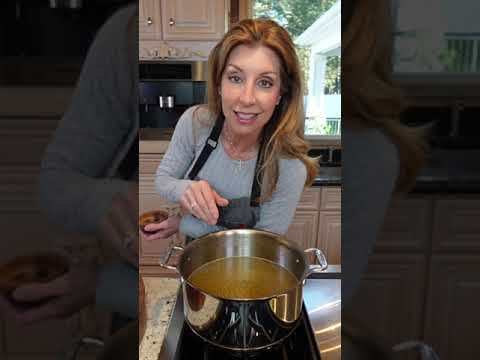
The source video for this recipe. Strong focus on the egg technique and why the tempering step is non-negotiable for achieving the signature silky texture.
2. Classic Greek Soup Method Explained
A breakdown of the egg white whipping technique and how the foam structure protects against curdling during the final low-heat simmer.
3. Mediterranean Comfort SoupsCovers the broader context of Greek egg-lemon cooking traditions and how avgolemono's technique applies to sauces and stews beyond just soup.
🛠️ Core Equipment
- Dutch oven or heavy-bottomed pot ↗Even heat distribution is critical for keeping the post-egg addition temperature stable. A thin pot creates hot spots that spike above the egg-setting threshold and immediately curdle your broth. A [Dutch oven](/kitchen-gear/review/dutch-oven) is the right tool here.
- Large balloon whisk ↗You need speed and surface area to whisk the egg whites to soft peaks and to keep the tempering stream moving fast enough. A small whisk creates too little turbulence and lets the eggs settle unevenly.
- Fine-mesh ladle or measuring cup with a spout ↗Controlled, thin-stream pouring during tempering is the entire technique. A wide ladle dumps broth too fast. A measuring cup with a spout lets you pour at exactly the speed you need.
- Instant-read thermometer ↗Optional but valuable for your first attempt. After adding the egg mixture, keep the soup between 140°F and 155°F — hot enough to thicken, cool enough to not curdle. Once you've done it twice, you won't need it.
Silky Greek Avgolemono (The Egg Tempering Method That Never Breaks)
🛒 Ingredients
- ✦6 cups chicken or vegetable broth
- ✦2 medium yellow onions, finely diced
- ✦3 large carrots, cut into thin rounds
- ✦1 cup long-grain white rice or arborio rice
- ✦4 large eggs, separated
- ✦3 fresh lemons, juiced (about 3/4 cup lemon juice), at room temperature
- ✦2 tablespoons extra-virgin olive oil
- ✦1 teaspoon sea salt, plus more to taste
- ✦1/2 teaspoon ground white pepper
- ✦1/4 teaspoon ground turmeric
- ✦3 cloves garlic, minced
- ✦1 bay leaf
- ✦2 tablespoons fresh dill, chopped
- ✦2 tablespoons fresh mint leaves, torn
- ✦Pinch of nutmeg
👨🍳 Instructions
01Step 1
Warm the olive oil in a large Dutch oven or heavy-bottomed pot over medium heat.
02Step 2
Add the diced onions and carrots to the pot. Sauté until the onions are translucent and fragrant, about 4 minutes.
03Step 3
Stir in the minced garlic and cook for 30 seconds until the raw smell disappears.
04Step 4
Pour in the broth, then add the rice, bay leaf, turmeric, and sea salt. Bring to a gentle simmer and cook uncovered for 18-20 minutes, stirring occasionally, until the rice is fully tender.
05Step 5
While the soup simmers, separate the eggs into two clean bowls — whites in one, yolks in the other.
06Step 6
Whisk the egg whites to soft peaks. They should be foamy and hold a loose shape when you lift the whisk — not stiff, not liquid.
07Step 7
Whisk the yolks with the room-temperature lemon juice until pale and well combined. Then gently fold the whipped whites into the yolk-lemon mixture until no white streaks remain.
08Step 8
Reduce the soup to low heat. Using a measuring cup or spouted ladle, slowly pour about 1 cup of hot broth into the egg mixture in a thin, steady stream while whisking the egg mixture constantly.
09Step 9
Continue whisking as you slowly pour the tempered egg mixture back into the main pot of soup, stirring gently to incorporate.
10Step 10
Add the white pepper and nutmeg. Taste and adjust salt and lemon juice.
11Step 11
Keep the heat on low and simmer for exactly 2 more minutes, stirring gently. Do not allow the soup to boil at any point after the eggs have been added.
12Step 12
Remove the bay leaf. Ladle into bowls and garnish with fresh dill, torn mint, and a thin slice of lemon. Serve immediately.
Nutrition Per Serving
Estimates based on standard preparation. Adjustments alter macros.
🔄 Substitutions
Instead of White rice...
Use Orzo pasta or wild rice
Orzo is the traditional alternative — cooks faster and gives the soup a more pasta-forward character. Wild rice adds nuttiness but needs 10-15 extra minutes. Both work with the egg technique.
Instead of Chicken broth...
Use Homemade bone broth
Richer, deeper flavor with more body from collagen. The gelatin in bone broth actually assists the silky texture you're chasing. Worth using if you have it.
Instead of 4 large eggs...
Use 3 large eggs plus 1/4 cup plain Greek yogurt
Stir the yogurt in at the very end off the heat. It adds tanginess and maintains creaminess with slightly less richness. Add the yogurt after tempering, not before.
Instead of Olive oil...
Use 1 tablespoon olive oil plus 1 tablespoon ghee
Ghee's higher smoke point gives you better browning on the aromatics at the start. The flavor combination is richer and slightly more complex.
🧊 Storage & Reheating
In the Fridge
Store in an airtight container for up to 3 days. The soup will thicken significantly in the fridge — this is normal. Stir well when reheating.
In the Freezer
Not recommended. The egg emulsion breaks when frozen and thawed, producing a grainy, curdled texture that cannot be recovered.
Reheating Rules
Reheat on the stovetop over the lowest possible heat, stirring constantly. Never boil. Add a splash of broth if the soup has thickened too much. Microwave reheating will curdle the eggs.
❓ Frequently Asked Questions
Why did my avgolemono turn into scrambled eggs?
The soup got too hot after you added the egg mixture. Eggs curdle above 160°F. After adding the tempered egg mixture to the pot, the heat must stay on low with no boiling whatsoever. If you see bubbles, pull the pot off the heat immediately and keep stirring.
Do I really need to separate the eggs and whip the whites?
Yes. Whipping the whites to soft peaks creates a foam structure that distributes the egg proteins evenly and makes the emulsion more heat-stable. Whole unwhipped eggs are more likely to curdle and produce a less silky result. The extra step takes two minutes and is worth it.
Can I make avgolemono ahead of time?
You can make the soup base (broth, vegetables, rice) up to two days ahead and refrigerate it. Add the egg-lemon mixture only when you're ready to serve — it does not hold well once combined and reheated.
My soup isn't thickening. What went wrong?
Either the egg mixture wasn't whisked enough, the tempering was too fast, or the heat after adding the eggs was too low to fully cook the proteins into a thickened suspension. Keep the heat at a gentle low simmer for the full 2 minutes after adding the eggs — just short of any visible bubbling.
Can I use vegetable broth instead of chicken broth?
Yes. Avgolemono was originally made with chicken broth, but a high-quality vegetable broth works well and keeps the soup vegetarian. Use a broth with real vegetable depth — anything pale and watery will produce a thin, flat result.
How do I know when the tempered egg mixture is ready to add to the soup?
After slowly adding 1 cup of hot broth to the egg-lemon mixture while whisking, the mixture should feel warm to the touch — not hot, not cold. The color will have lightened slightly and the texture will be looser and more liquid. That's when it's ready to go back into the pot.
The Science of
Silky Greek Avgolemono (The Egg Tempering Method That Never Breaks)
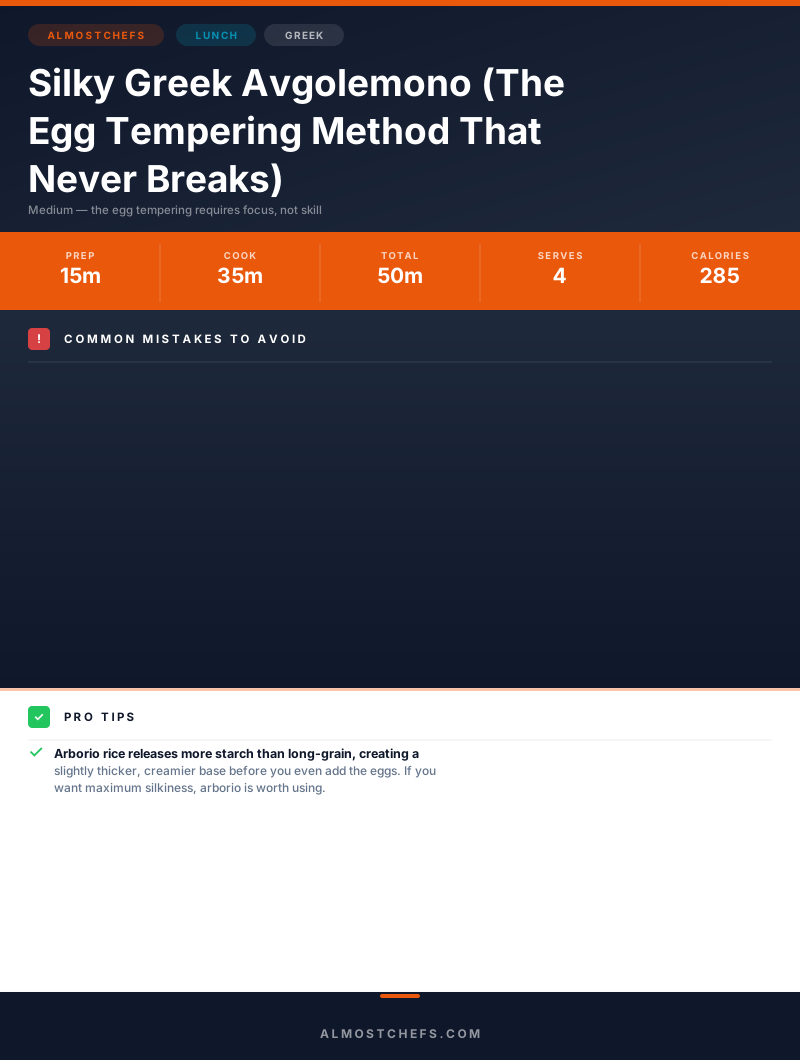
We turned everything on this page into a beautiful, flour-proof PDF cheat sheet. Print it out, stick it to your fridge, and never mess up your silky greek avgolemono (the egg tempering method that never breaks) again.
*We'll email you the high-res PDF instantly. No spam, just perfectly cooked meals.
AlmostChefs Editorial Team
We translate the internet's most popular cooking videos into foolproof, beginner-friendly written recipes. We analyze multiple methods, test them in our kitchen, and engineer a single "Master Recipe" that gives you the best possible result with the least possible stress.