Authentic Korean Gimbap
Gimbap is a delightful Korean seaweed rice roll filled with colorful ingredients, perfect for picnics and school lunches. This dish combines savory, sweet, and crunchy elements, making it a beloved staple in Korean cuisine.
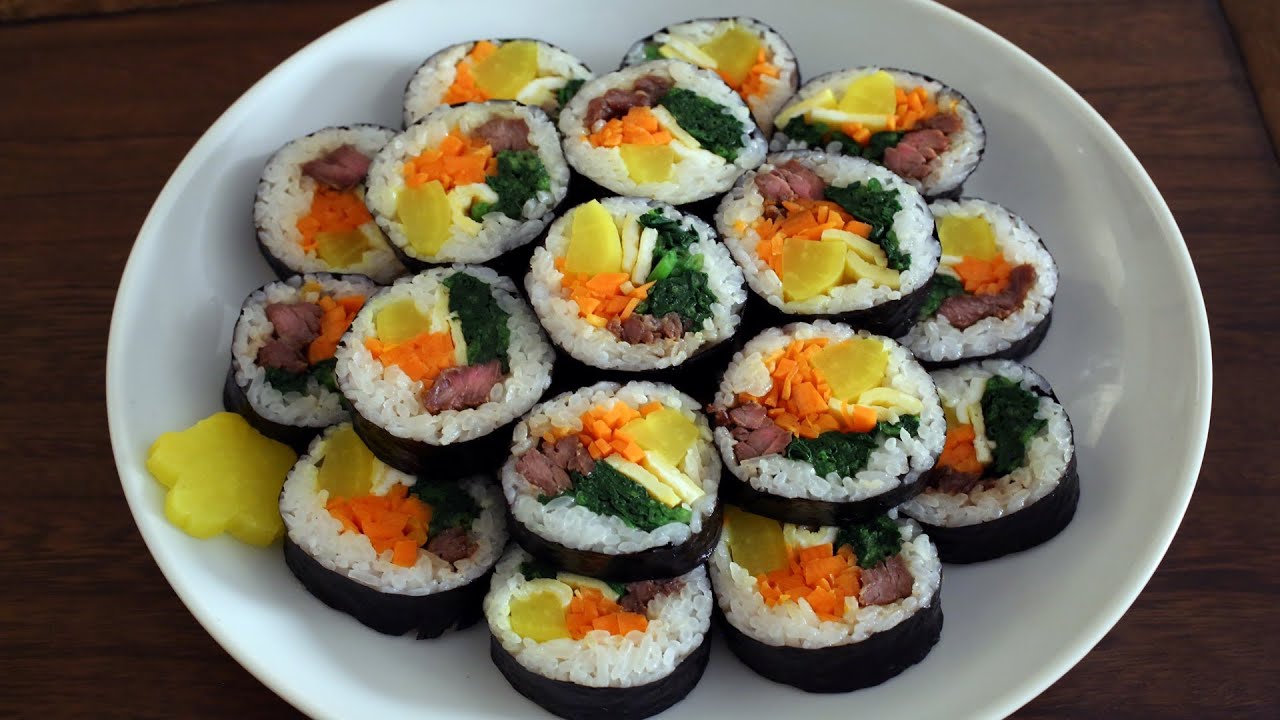
Why This Recipe Works
Gimbap is not sushi. Let's establish that immediately, because the comparison is lazy, wrong, and frankly insulting to a dish that predates the cultural shorthand by centuries of Korean culinary engineering. Gimbap is a logistics problem — a compression of flavor, texture, and nutrition into a cylinder that can survive a ninety-minute bus ride without falling apart. Every element in it exists for a reason. Nothing is decorative. This is food built to function.
Start with the rice, because everything else depends on it. Short-grain rice is not a preference here — it is a structural requirement. The high amylopectin content of short-grain varieties creates the stickiness that binds the roll and holds the cross-section together when you cut it. Long-grain rice will betray you. It will slide. The roll will open like a bad argument. Season the cooked rice while it is still hot — the salt and sesame oil absorb into the grains as the steam dissipates, rather than sitting on the surface as an afterthought. Let it cool to the point where it no longer burns your hands. Too hot and the moisture will steam the gim from the inside, turning it rubbery. The gim needs to stay crisp long enough to seal.
The gim itself — often labeled nori in Western grocery stores, though the varieties differ subtly in salinity and thickness — is pressed, toasted, and fragile. Place it shiny side down on your bamboo rolling mat. The shiny side faces out on the finished roll; the rough side grips the rice and creates mechanical friction that keeps the filling in place during rolling. This is not aesthetic preference. It is geometry. Spread the rice in a thin, even layer, leaving a two-inch margin at the far edge — that strip of bare gim is your sealing tab, and the warmth of the roll will adhere it shut as you complete the compression.
The fillings are chosen for three things: color contrast, textural counterpoint, and moisture control. Spinach brings deep green and an iron-forward earthiness, but it must be blanched, squeezed aggressively, and seasoned before it touches the rice. Wet spinach is the enemy of structural integrity. The carrot, julienned fine and stir-fried briefly, contributes crunch and sweetness and a visual brightness that makes every cross-section look deliberate. The skirt steak — marinated in soy sauce, sugar, black pepper, and minced garlic — delivers the savory anchor. Sugar in the marinade is not a concession to sweetness; it accelerates the Maillard reaction at the surface of the meat, building caramelized depth in a short cooking window. The egg, beaten and cooked flat into a thin omelet then sliced into strips, adds richness and binds adjacent ingredients. The danmuji — the yellow pickled radish — is the crunch and the acid cut. Its fermented tang resets the palate between bites so the flavors do not compound into monotony.
Rolling technique determines whether this becomes food or a structural disaster. Place your fillings in a tight horizontal band across the lower third of the rice. Begin rolling with both thumbs underneath the bamboo rolling mat, pressing forward and inward simultaneously — not just forward. The inward pressure is what compresses the filling into a dense core rather than a loose pile. Stop halfway through the roll, press firmly, then complete the rotation. The sealing margin of bare gim should press against the body of the roll with light finger pressure. Hold for five seconds. Release.
Brush the exterior lightly with sesame oil. This does two things: it adds a final layer of nutty aroma that the nose reads before the mouth engages, and it slightly softens the gim surface so the knife passes through cleanly without cracking.
The cutting step is where most home cooks lose the work they have built. Use a sharp chef's knife — dull blades crush the roll rather than slice it, destroying the cross-section you have spent thirty minutes constructing. Wipe the blade with a damp cloth between every single cut. Rice starch builds up on the blade and drags. A clean blade glides. Eight cuts per roll yields pieces of uniform thickness, each one a perfect circle of layered color: white rice, dark green gim, emerald spinach, orange carrot, brown beef, yellow egg, yellow radish. That cross-section is not an accident. It is the point.
The total time investment is sixty minutes. The return is four servings of portable, nutritionally complete, visually precise food that holds together under pressure — literally and otherwise. This is why gimbap has survived as a staple of Korean daily life for generations. It works because every decision in it was made deliberately, and the margins for error are narrower than they look.
Do not substitute long-grain rice. Do not skip squeezing the spinach. Wipe the knife. These are not suggestions.
Authentic Korean Gimbap
🛒 Ingredients
- ✦2 cups short-grain rice, rinsed
- ✦1/2 teaspoon salt
- ✦2 teaspoons sesame oil
- ✦1 cup spinach, blanched
- ✦1 carrot, julienned
- ✦100g skirt steak, thinly sliced
- ✦2 eggs
- ✦5 sheets of gim (seaweed paper)
- ✦1 danmuji (yellow pickled radish), sliced
- ✦1 tablespoon soy sauce
- ✦1 tablespoon sugar
- ✦1 teaspoon ground black pepper
- ✦2 garlic cloves, minced
👨🍳 Instructions
01Step 1
Cook the rice and season with salt and sesame oil. Let it cool slightly.
02Step 2
Blanch the spinach for 30 seconds, squeeze out excess water, and season with minced garlic, salt, and sesame oil.
03Step 3
Julienne the carrot and stir-fry for 40 seconds with a little oil. Set aside.
04Step 4
Season the skirt steak with soy sauce, sugar, black pepper, and minced garlic. Stir-fry until cooked.
05Step 5
Beat the eggs with a pinch of salt, cook into a thin omelet, and slice into strips.
06Step 6
Lay a sheet of gim shiny side down on a bamboo mat. Spread a thin layer of rice over the gim, leaving a 2-inch border at the top.
07Step 7
Layer spinach, carrot, beef, egg strips, and danmuji over the rice. Roll tightly using the mat.
08Step 8
Brush the finished roll with sesame oil and slice into bite-sized pieces, cleaning the knife between cuts.
Nutrition Per Serving
Estimates based on standard preparation. Adjustments alter macros.

The Science of
Authentic Korean Gimbap
We turned everything on this page into a beautiful, flour-proof PDF cheat sheet. Print it out, stick it to your fridge, and never mess up your authentic korean gimbap again.
*We'll email you the high-res PDF instantly. No spam, just perfectly cooked meals.
AlmostChefs Editorial Team
We translate the internet's most popular cooking videos into foolproof, beginner-friendly written recipes. We analyze multiple methods, test them in our kitchen, and engineer a single "Master Recipe" that gives you the best possible result with the least possible stress.