Crispy Au Gratin Potatoes (The Cheese Sauce You've Been Getting Wrong)
Thinly sliced russet potatoes layered with a nutmeg-spiked cheddar-gruyere sauce and baked under a crunchy panko crust. We broke down the roux technique, the slicing thickness, and the resting time that home cooks consistently skip — resulting in a side dish that holds its shape and tastes like it came from a French bistro.
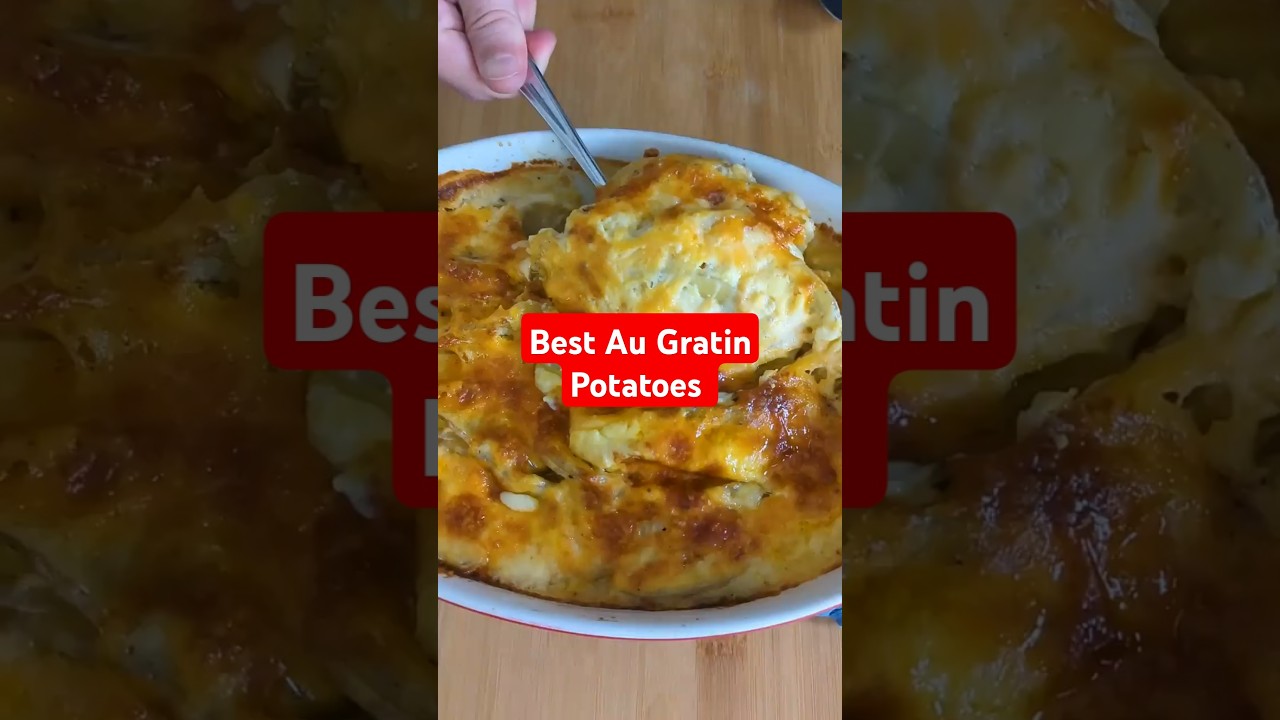
“Au gratin potatoes have a reputation as dinner party food that's secretly simple. They are simple — but there are two steps where home cooks reliably blow it: the roux and the rest. Rushing the roux gives you lumpy sauce that breaks in the oven. Skipping the rest at the end gives you a molten soup that slides off the plate. Fix those two things and everything else follows.”
Why This Recipe Works
Au gratin potatoes are one of the most frequently ordered restaurant sides in the country. They're also one of the most frequently ruined at home. Not because the technique is difficult — it isn't — but because two steps are consistently underestimated: building the roux and letting the finished dish rest. Get those two right and the rest of this recipe is essentially foolproof.
The Roux Is the Foundation
A roux is equal parts fat and flour cooked together until the raw flour taste is gone. For au gratin potatoes, it's the base of your béchamel — the white sauce that becomes your cheese sauce. The problem: most home cooks either undercook it or add the milk wrong.
Undercooking means the sauce will taste like wet flour under the cheese. Two minutes over medium heat, stirring constantly, is the minimum. You're looking for a light golden color and a smell that shifts from paste to toasted wheat. If you're not sure, go another 30 seconds. Overcooked roux turns the sauce brown — not what you want here — but you have more margin than you think before that happens.
Once the roux is ready, the milk goes in warmed. This is non-negotiable. Cold milk shocks the hot roux into seizing and creates lumps that no amount of whisking recovers from. Sixty seconds in the microwave is all it takes. Add the warm milk in a slow, steady stream while whisking continuously — not in one pour, not in three big splashes. Steady stream. The sauce should smooth out completely within 3-4 minutes.
The Potato Thickness Problem
Russet potatoes at 1/8-inch thickness cook through in 40-45 minutes in a 375°F oven surrounded by sauce. At 1/4-inch, they don't. This is why every recipe specifies 1/8-inch and why a mandoline slicer earns its drawer space. With a knife, 1/8-inch is technically achievable but consistency across 3 pounds of potatoes is nearly impossible. Inconsistent thickness means the thin slices turn to mush while the thick ones stay firm. A mandoline set to 3mm eliminates this variable entirely.
The cold water soak after slicing is not optional decoration. Raw potato cut surfaces oxidize quickly and release excess starch. The water bath prevents browning and rinses the surface starch that would otherwise make your sauce gluey and heavy. Two rinses, thorough drain, gentle press to remove water — then proceed.
Why the Cheese Choice Matters
Sharp cheddar provides tang and body. Gruyere provides melt and nuttiness. Together they produce a sauce that's complex without being overwhelming. Either one alone misses something — cheddar alone is too one-dimensional, gruyere alone is too mild for an oven dish.
Shred your own. Pre-shredded cheese is coated in anti-caking powder (cellulose or cornstarch) that prevents the clean, smooth melt you need for a sauce. Block cheese shredded by hand takes three minutes and produces a noticeably silkier result.
The Dijon mustard isn't there to taste like mustard. A small amount of mustard sharpens the perception of cheese flavor through its volatile compounds without announcing its own presence. The nutmeg serves the same function — it rounds out the dairy and prevents the sauce from tasting flat. Both are support characters. Neither should be detectable as themselves.
The Crust and the Rest
The panko-Parmesan topping in a 9x13 baking dish gives maximum surface area for browning. Panko's open, coarse structure traps air pockets that crisp at high heat, unlike standard breadcrumbs which compact and turn gummy. The Parmesan adds Maillard-reaction browning agents (its high protein and low moisture content make it ideal for crusting) that panko alone can't achieve.
After 40-45 minutes at 375°F, you'll see the edges bubbling actively and the top turning deep amber. This is correct. Pull the dish and leave it alone for 5 minutes. The sauce temperature is still rising at this point — residual heat continues thickening it off the oven. Serve immediately and you get a beautiful dish that pours like soup. Wait 5 minutes and you get a cohesive gratin that holds its layers when portioned.
That 5 minutes is the entire difference between a dish that looks like a mess and one that looks like you knew what you were doing the whole time.
Where Beginners Mess This Up
Before we start, read this. These are the 4 reasons your crispy au gratin potatoes (the cheese sauce you've been getting wrong) will fail:
- 1
Adding cold milk to the roux: Cold milk shocks the hot roux and creates lumps that no amount of whisking will fully undo. Warm your milk in the microwave or a separate pan before you make the roux. The sauce should be smooth within 90 seconds of combining — if it's still grainy at 4 minutes, the milk was too cold.
- 2
Slicing the potatoes too thick: At 1/4-inch thick, potatoes won't cook through in 45 minutes — you get a crispy top and a crunchy, underdone interior. One-eighth of an inch is the target. If you don't have a mandoline, use the sharpest knife you own and take your time. Uneven slices cook unevenly, full stop.
- 3
Skipping the rest after baking: The cheese sauce needs 5 minutes to set after the oven. Pull it out bubbling and serve immediately and you'll get a runny puddle. The rest isn't optional — it's the step that turns molten sauce into a cohesive, sliceable gratin.
- 4
Under-seasoning the sauce: Cheese sauce absorbs seasoning heavily. Taste the sauce before it goes into the dish — it should taste slightly over-salted at this stage because the potatoes will dilute it. The nutmeg is not optional; it's what separates a gratin from macaroni and cheese.
The Video Reference Library
Want to see it in action? Here are the exact videos we analyzed and combined to build this foolproof recipe translation:
The primary reference technique for this recipe. Covers roux consistency, layering order, and how to read the bubbling edges to know when the gratin is done.
🛠️ Core Equipment
- Mandoline slicerConsistent 1/8-inch slices are nearly impossible with a knife alone. Uneven slices mean some are mushy, some are underdone. A mandoline produces uniform layers that cook simultaneously.
- 9x13-inch baking dishSurface area matters. A smaller, deeper dish traps steam and prevents the top from crisping properly. The 9x13 gives you maximum golden surface and enough depth for two even layers.
- Heavy-bottomed saucepanThin pans create hot spots that scorch the roux before it can cook evenly. A heavy saucepan maintains consistent temperature so the butter-flour paste cooks uniformly without burning.
- WhiskA spatula cannot incorporate the milk into the roux without lumps. The whisk's wire loops shear through the paste continuously, producing a smooth, lump-free béchamel base.
Crispy Au Gratin Potatoes (The Cheese Sauce You've Been Getting Wrong)
🛒 Ingredients
- ✦3 pounds russet potatoes, peeled and sliced into 1/8-inch thick rounds
- ✦3 tablespoons unsalted butter
- ✦3 tablespoons all-purpose flour
- ✦2 cups whole milk, warmed
- ✦1 cup sharp cheddar cheese, shredded
- ✦1/2 cup gruyere cheese, shredded
- ✦2 cloves fresh garlic, minced
- ✦1 teaspoon whole grain Dijon mustard
- ✦1/2 teaspoon fine sea salt
- ✦1/4 teaspoon freshly ground black pepper
- ✦1/4 teaspoon ground nutmeg
- ✦2 tablespoons fresh thyme leaves, chopped
- ✦1 tablespoon fresh rosemary leaves, finely chopped
- ✦1/2 cup panko breadcrumbs
- ✦2 tablespoons grated Parmesan cheese
- ✦1 tablespoon melted butter for topping
- ✦Cooking spray or butter for greasing the baking dish
👨🍳 Instructions
01Step 1
Preheat your oven to 375°F and position the rack to the middle position.
02Step 2
Lightly grease a 9x13-inch baking dish with cooking spray or butter, coating the bottom and sides thoroughly.
03Step 3
Peel and slice the russet potatoes into thin, even rounds about 1/8-inch thick, then transfer to a large bowl of cold water to prevent browning.
04Step 4
Melt the unsalted butter in a heavy-bottomed saucepan over medium heat until it foams slightly, about 1 minute.
05Step 5
Whisk the all-purpose flour into the melted butter, stirring constantly to create a smooth paste. Cook for 2 minutes until the roux turns light golden and smells faintly nutty.
06Step 6
Slowly pour the warmed milk into the roux while whisking continuously. Stir until the sauce becomes smooth and thick, about 3-4 minutes.
07Step 7
Remove from heat and stir in the minced garlic, Dijon mustard, cheddar, and gruyere until completely melted and combined.
08Step 8
Season with sea salt, black pepper, and nutmeg. Fold in the fresh thyme and rosemary. Taste — the sauce should be slightly over-seasoned at this stage.
09Step 9
Drain the sliced potatoes through a colander and press gently to remove excess water.
10Step 10
Layer half the potato slices in an even, overlapping pattern across the bottom of the prepared baking dish.
11Step 11
Pour half the cheese sauce evenly over the first potato layer, spreading with a spatula to ensure complete coverage.
12Step 12
Arrange the remaining potato slices on top, then pour the remaining cheese sauce over everything and smooth it flat.
13Step 13
Combine the panko breadcrumbs, Parmesan, and melted butter in a small bowl until the mixture resembles coarse sand. Scatter evenly across the top, pressing gently to adhere.
14Step 14
Bake for 40-45 minutes until the top is deep golden brown and the sauce bubbles visibly around the edges.
15Step 15
Remove from the oven and rest for 5 minutes before serving. The sauce sets during this time — do not skip it.
Nutrition Per Serving
Estimates based on standard preparation. Adjustments alter macros.
🔄 Substitutions
Instead of Whole milk...
Use Half milk, half low-sodium vegetable broth
Slightly lighter texture with the same creaminess. Reduces saturated fat without making the sauce taste thin.
Instead of All-purpose flour...
Use Cornstarch (use half the quantity)
Produces a silkier, glossier sauce and makes the dish gluten-free. Combine cornstarch with cold milk before adding to the pan — do not cook it dry like a roux.
Instead of Sharp cheddar and gruyere...
Use Aged manchego and smoked gouda
More assertive flavor means you can use 25-30% less cheese and still hit the same intensity. Smoked gouda adds a subtle complexity that pairs well with the fresh herbs.
Instead of Panko breadcrumbs...
Use Crushed almonds mixed with grated Parmesan
Crunchier and more nutritionally dense. The almonds hold their texture longer after baking and reheat better than breadcrumbs, which tend to go soft.
🧊 Storage & Reheating
In the Fridge
Store covered in the baking dish or transfer to an airtight container for up to 4 days. Flavor improves after 24 hours as the herbs permeate the sauce.
In the Freezer
Freeze in individual portions for up to 2 months. Thaw overnight in the refrigerator before reheating.
Reheating Rules
Cover with foil and reheat at 350°F for 15 minutes, then uncover for 5 minutes to re-crisp the top. Microwave reheating softens the crust permanently — avoid if you care about texture.
❓ Frequently Asked Questions
Why is my cheese sauce lumpy?
Either the milk was cold when it hit the roux, or you added it too fast. Warm the milk first and pour it in slowly while whisking constantly. If lumps form, strain the sauce through a fine-mesh sieve before adding the cheese.
Can I use a different potato?
Russets are the standard for good reason — their high starch content thickens the sauce as it cooks and their low moisture prevents the dish from becoming watery. Yukon Golds work as a second choice, producing a slightly creamier, more buttery result. Waxy potatoes like red bliss don't absorb the sauce well and stay firm regardless of how long you bake them.
How do I know when it's done?
Look for two signs simultaneously: the top should be deep golden brown across most of the surface, and the sauce should be actively bubbling around all four edges — not just one side. A knife inserted in the center should slide through the potato layers with no resistance.
Can I make this ahead of time?
Yes, and it's better for it. Assemble the dish completely, cover tightly with plastic wrap, and refrigerate for up to 24 hours before baking. Add 10-15 minutes to the bake time since you're starting from cold. The potatoes partially absorb the sauce overnight, producing a more cohesive, intensely flavored result.
Why does my gratin come out watery?
Two likely causes: potatoes weren't drained thoroughly enough (surface water dilutes the sauce), or the dish was underbaked and the sauce didn't reduce. Press the drained potatoes firmly, and trust the 40-45 minute cook time. If your oven runs cool, add 5 minutes.
What's the difference between au gratin and scalloped potatoes?
Cheese. Au gratin contains a cheese sauce and typically a breadcrumb topping. Scalloped potatoes use a plain cream or milk sauce with no cheese. The terms are used interchangeably in most American recipes, but classically they are distinct dishes.
The Science of
Crispy Au Gratin Potatoes (The Cheese Sauce You've Been Getting Wrong)
We turned everything on this page into a beautiful, flour-proof PDF cheat sheet. Print it out, stick it to your fridge, and never mess up your crispy au gratin potatoes (the cheese sauce you've been getting wrong) again.
*We'll email you the high-res PDF instantly. No spam, just perfectly cooked meals.
AlmostChefs Editorial Team
We translate the internet's most popular cooking videos into foolproof, beginner-friendly written recipes. We analyze multiple methods, test them in our kitchen, and engineer a single "Master Recipe" that gives you the best possible result with the least possible stress.