Classic Arnold Palmer (The Half-and-Half That Actually Tastes Like Something)
A perfectly balanced blend of freshly brewed black tea and real lemon juice, sweetened with raw honey instead of simple syrup. We broke down what separates a memorable Arnold Palmer from the watery, cloying versions — and built the cleanest technique possible.
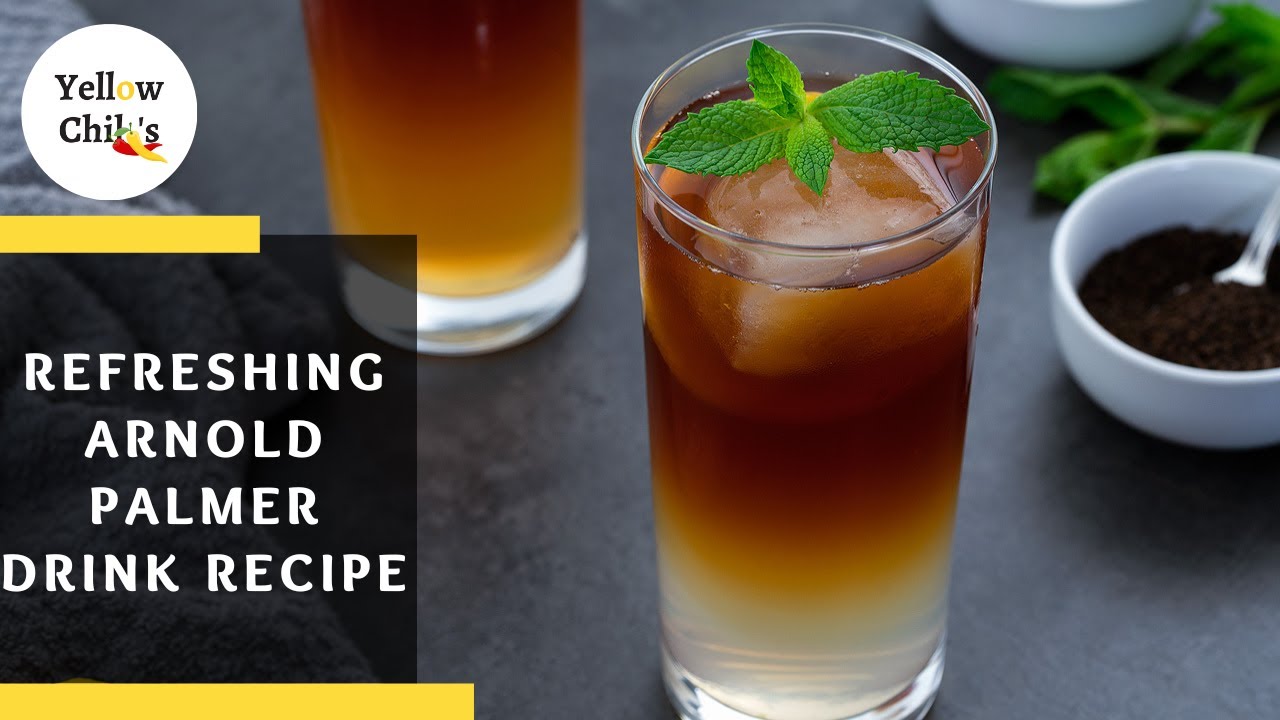
“Most Arnold Palmers are disappointing because they're made with bottled lemon juice and over-steeped tea that tastes like tannic regret. The real drink — the one the golfer himself supposedly drank by the gallon — is a study in ratio and restraint. Fresh lemon juice only. Tea steeped to amber, not black. A sweetener that doesn't bulldoze everything else. Get these three things right and you'll never buy a canned version again.”
Why This Recipe Works
The Arnold Palmer is not a cocktail. It's not a mocktail. It's not even really a recipe in the traditional sense — it's a ratio, a philosophy, and a demonstration that two unremarkable things can produce something that outperforms both of them individually.
The problem is that most people make it wrong in ways they don't notice until they taste a version made correctly.
Tea Is Not the Background
The first mistake is treating the tea as a neutral carrier for lemonade. It isn't. Properly brewed black tea has body, tannin structure, and aromatic depth that functions as the backbone of the entire drink. Weaken it and you get lemon water with ambitions. Over-steep it and you get something that coats your mouth in a way that no amount of citrus cuts through.
The window is narrow: 4-5 minutes in just-boiled water, stopped the moment the liquid hits rich amber. Not mahogany. Not black. Amber — the color of aged whiskey, which is not a coincidence because both are built on the same principle of controlled extraction.
The other half of the tea equation is cooling. This is not optional. Hot tea added to cold lemon juice undergoes an immediate flavor reaction that dulls both components. The citrus aromatics — the volatile compounds responsible for the bright, snappy top note of fresh lemon — dissipate at high temperatures. Let the tea cool to room temperature before combination, and you preserve the full flavor of both.
Lemon Juice Is Doing Everything
Two cups of fresh lemon juice from 8-10 medium lemons is a significant amount of citrus. The drink is 50% lemonade. This is not background flavor — it's structural. Which is exactly why bottled lemon juice produces a drink that tastes thin and vaguely chemical: bottled juice lacks the volatile aromatic compounds, natural enzymes, and fresh acidity that make real lemon juice taste alive.
A citrus juicer makes this feasible. Without one, juicing 10 lemons by hand is tedious enough that you start compromising — fewer lemons, less juice, weaker lemonade. With one, it takes four minutes and produces measurably more yield per fruit.
Roll the lemons first. This is not folk wisdom — rolling on a hard surface ruptures the internal juice sacs before cutting, increasing yield by 15-20%. On 10 lemons, that's effectively getting an 11th lemon for free.
The Salt Is Not Optional
A pinch of sea salt in a cold drink sounds like a mistake. It's the opposite. Salt suppresses bitterness perception at the neurological level — it doesn't add a salty flavor, it simply makes bitter flavors register less strongly. In an Arnold Palmer, the bitter edge comes from tea tannins. Add salt and those tannins recede, the lemon flavor sharpens, and the honey reads as cleaner and less cloying.
This is the same principle behind salted caramel, salted chocolate, and the salt rim on a margarita. You're not tasting salt. You're tasting everything else more clearly.
Sweetener Matters More Than You Think
Refined simple syrup is competent but characterless. It adds sweetness and nothing else. Raw honey contributes floral compounds and trace minerals that interact with both the tea and the lemon in ways that make the drink taste more complex without tasting distinctly like honey. Pure maple syrup does something similar with faint earthiness. Neither overpowers. Both improve.
The key is dissolving the sweetener completely before chilling. Cold honey is viscous and will sit in a layer at the bottom of the pitcher. Warm it slightly before adding, or make a quick honey syrup by dissolving it in equal parts warm water first. Either approach ensures even sweetness throughout the drink instead of a sugary surprise at the bottom of the glass.
This is a four-ingredient drink made the right way. There's nowhere to hide.
Where Beginners Mess This Up
Before we start, read this. These are the 4 reasons your classic arnold palmer (the half-and-half that actually tastes like something) will fail:
- 1
Over-steeping the tea: Tea steeped beyond 5 minutes turns aggressively tannic and bitter. Once that bitterness is in, no amount of sweetener rescues it. Pull the bags at 4-5 minutes when the liquid is rich amber. Darker is not stronger — it's just worse.
- 2
Using bottled lemon juice: Bottled lemon juice contains preservatives and lacks the volatile aromatic compounds that make fresh juice taste bright. The flavor difference is not subtle. This drink has four ingredients — fresh lemon juice is non-negotiable when it's doing 50% of the work.
- 3
Mixing while the tea is still hot: Adding cold lemon juice to hot tea changes the flavor chemistry and produces a dull, flat result. Let the tea cool to room temperature before combining. If you're in a hurry, cool it quickly in a bowl over ice.
- 4
Skipping the salt: A pinch of sea salt sounds wrong in a drink. It isn't. Salt suppresses bitterness perception, which means the tea's tannic edge disappears and the lemon flavor reads as cleaner and brighter. It's the oldest trick in flavor science.
The Video Reference Library
Want to see it in action? Here are the exact videos we analyzed and combined to build this foolproof recipe translation:
Covers the core technique of steeping to the right color and balancing the tea-to-lemon ratio by taste. Good demonstration of what amber tea actually looks like versus over-steeped.
🛠️ Core Equipment
- Heatproof glass pitcherFor steeping directly and chilling in the fridge. Plastic absorbs tea odors over time and can leach compounds at hot temperatures.
- Citrus juicerHand-squeezing 8-10 lemons is tedious and inefficient. A basic handheld citrus juicer extracts 20-30% more juice per lemon and keeps the seeds contained.
- Fine-mesh sieveCatches lemon pulp and stray seeds before they cloud the drink. Optional if you strain as you pour, but makes batch prep much cleaner.
Classic Arnold Palmer (The Half-and-Half That Actually Tastes Like Something)
🛒 Ingredients
- ✦4 cups water, divided
- ✦4 black tea bags (or 2 tablespoons loose black tea)
- ✦2 cups fresh lemon juice (approximately 8-10 medium lemons)
- ✦3 tablespoons raw honey or pure maple syrup
- ✦1 tablespoon fresh lemon zest
- ✦6-8 fresh mint leaves, optional
- ✦Ice cubes
- ✦Pinch of sea salt
👨🍳 Instructions
01Step 1
Boil 2 cups of water in a kettle until steam rises vigorously, approximately 3-4 minutes.
02Step 2
Pour the hot water into a heatproof pitcher and add the tea bags. Steep undisturbed for 4-5 minutes until the liquid is a rich amber color.
03Step 3
Remove and discard the tea bags. Let the brewed tea cool to room temperature, approximately 20-30 minutes.
04Step 4
Juice the lemons to yield 2 cups of fresh juice, straining out pulp and seeds as you go.
05Step 5
Add the fresh lemon juice to the cooled tea along with the remaining 2 cups of cold water.
06Step 6
Stir in the honey or maple syrup until completely dissolved. Taste and adjust sweetness.
07Step 7
Mix in the lemon zest and pinch of sea salt. Stir gently.
08Step 8
Chill in the refrigerator for at least 1 hour, or pour immediately over ice if serving right away.
09Step 9
Pour into tall glasses filled with fresh ice, filling each glass three-quarters full.
10Step 10
Garnish with a lemon wheel or fresh mint sprig. Serve immediately.
Nutrition Per Serving
Estimates based on standard preparation. Adjustments alter macros.
🔄 Substitutions
Instead of White granulated sugar or simple syrup...
Use Raw honey or pure maple syrup
Raw honey adds subtle floral notes; maple syrup adds faint earthiness. Both dissolve better when warmed slightly. Neither overpowers the lemon or tea.
Instead of Black tea...
Use Green tea or white tea
Lighter flavor with higher antioxidant content. Steep at lower temperature (175°F) for a shorter time (2-3 minutes) to avoid bitterness. The resulting drink is more delicate.
Instead of Bottled lemon juice...
Use Fresh squeezed lemon juice
This is actually the default — fresh juice is always the correct choice here. Bottled juice is the substitution you're trying to avoid.
Instead of Plain water...
Use Coconut water (for half the liquid)
Adds natural electrolytes and subtle tropical sweetness without additional sugar. Changes the flavor profile noticeably — good if you want something more interesting, unnecessary if you want classic.
🧊 Storage & Reheating
In the Fridge
Store in a sealed pitcher for up to 5 days. Flavor remains bright for the first 3 days, then the lemon starts to mellow slightly. Still good — just more tea-forward.
In the Freezer
Freeze in ice cube trays and transfer to a bag. Drop the cubes into sparkling water for a quick Arnold Palmer on demand. Keeps up to 2 months.
Reheating Rules
Does not apply — serve cold. If the drink has been refrigerated and feels too concentrated, top with a splash of cold water before serving.
❓ Frequently Asked Questions
What is an Arnold Palmer exactly?
It's a non-alcoholic beverage that blends iced tea and lemonade in roughly equal parts, named after professional golfer Arnold Palmer who reportedly drank the combination constantly. Palmer himself said he'd been making it at home since the 1960s. A 'John Daly' is the same drink with vodka added.
What's the best tea to use?
Classic black tea — orange pekoe, English breakfast, or plain Lipton. The tea should taste clean and full-bodied without floral or Earl Grey bergamot notes, which compete with the lemon. If you want a lighter drink, green tea works well.
Can I make this ahead for a party?
Yes, and you should. Make the tea and lemonade bases separately, store both in the fridge, and combine to order. This lets you adjust the ratio for different guests and prevents the lemon from gradually dulling the tea flavor over several hours.
Why does my Arnold Palmer taste flat?
Three likely causes: the tea was over-steeped and is too tannic, the lemon juice is bottled and lacks brightness, or the drink hasn't been salted. A pinch of sea salt makes a significant difference — try it before adding more sweetener.
How do I make a sweetener that dissolves easily?
Make a quick honey simple syrup: combine equal parts honey and warm water, stir until dissolved, cool, and refrigerate. It incorporates instantly without the thick honey clumping at the bottom of cold liquid.
Is this actually healthy?
Healthier than most canned drinks, especially with honey instead of refined sugar. At 95 calories and 22g of natural sugar per serving, it's not a diet drink — but it's made from real ingredients without artificial flavors, colorings, or preservatives. Fresh lemon juice provides meaningful vitamin C. Tea contributes polyphenols. It's a real drink, not a chemistry project.
The Science of
Classic Arnold Palmer (The Half-and-Half That Actually Tastes Like Something)
We turned everything on this page into a beautiful, flour-proof PDF cheat sheet. Print it out, stick it to your fridge, and never mess up your classic arnold palmer (the half-and-half that actually tastes like something) again.
*We'll email you the high-res PDF instantly. No spam, just perfectly cooked meals.
AlmostChefs Editorial Team
We translate the internet's most popular cooking videos into foolproof, beginner-friendly written recipes. We analyze multiple methods, test them in our kitchen, and engineer a single "Master Recipe" that gives you the best possible result with the least possible stress.