Crispy Homemade Arepas (The Pan-Fried Method That Actually Works)
Golden, crispy Venezuelan and Colombian corn cakes with a pillowy interior, ready in 35 minutes using masa harina and a skillet you already own. We broke down exactly why the dough rests, how thick to press them, and the hollow-tap test that tells you they're done.
“Arepas have two failure modes: dense hockey pucks that never develop a crust, and dough that falls apart before it ever hits the pan. Both are caused by the same mistake — either the dough is too dry, or it didn't rest long enough to hydrate. The fix is stupidly simple, and once you feel what properly rested masa harina dough feels like, you'll never overcomplicate this again.”
Why This Recipe Works
Arepas exist at the intersection of two truths about corn: it's forgiving enough for a beginner and demanding enough to punish impatience. The ingredient list has five items. The technique has four real decision points. And yet most first attempts produce either a cracker or a dumpling, because both of corn's failure modes feel identical until you understand what you're actually looking for.
The Dough Is a Hydration Problem
Pre-cooked arepa flour — masa harina — is fine-milled, dried, pre-gelatinized corn. That last part matters. Because the starch has already been cooked once during processing, it rehydrates faster than raw flour but also reaches saturation faster. The result: dough that feels done on the surface while the interior particles are still dry.
The 8-minute rest is not optional. It's the period during which the dry core of each flour particle finishes absorbing the water the surface already took in. Skip it and you get dough with inconsistent hydration — sections that crack under pressure and sections that stick to the pan. Rest it and the dough transforms into something that behaves more like plastic than food: it holds a shape, smooths at the edges, and releases cleanly from your hands.
Water temperature matters too. Warm water (around 100°F) activates the hydration faster than cold and doesn't shock the dough the way boiling water does. If you've ever made masa harina dough that felt lumpy and uneven, hot water is usually the culprit — it par-cooks the surface of the flour before it can hydrate evenly.
The Pan Is Doing Half the Work
A properly heated cast-iron skillet at 350°F does something that a thin stainless pan cannot: it holds its temperature when cold dough hits the surface. The Maillard reaction — the browning reaction responsible for the crispy crust — only activates above 280°F. Every arepa you place in the pan drops the surface temperature. With a heavy pan, the drop is minimal and the crust forms quickly. With a thin pan, the temperature drops below threshold and the dough steams instead of fries.
The result of steaming: pale, soft exterior with no structural crust. The arepa doesn't develop the rigidity to hold its shape when you fill it. It's bread that doesn't know it's bread.
Oil quantity matters here too. This isn't deep frying — 3 tablespoons across a full skillet is enough to coat the bottom and create the fry contact, but not so much that you're submerging the arepa. The goal is a shallow fry that builds crust on both flat faces while the interior finishes from retained heat.
The Hollow Tap Is Real Science
When you tap a finished arepa and it sounds hollow, that's not culinary mysticism. It's acoustic physics. A raw, doughy interior is dense and damp — it absorbs sound. A properly cooked interior has dried slightly and contracted, leaving a small air gap between the crust and the crumb. That air gap resonates when you tap the surface, producing the characteristic hollow knock.
It's the same principle that tells bread bakers their loaf is done, and the same reason you tap a watermelon before you buy it. Dense and flat means more work needed. Hollow means pull it off the heat.
What You Put Inside
The arepa is a vessel, not the meal. The crust is the point — everything else is filling — so resist the urge to use it as a dipper or a side. Split it along the equator with a serrated knife while still warm, open it like a book, and press the filling against the hot interior so it gets some of that residual heat.
Classic fillings: shredded chicken with avocado and white cheese (the Venezuelan reina pepiada), black beans with fried egg, or simply butter and salt. The arepa doesn't compete — it completes. Build accordingly.
Where Beginners Mess This Up
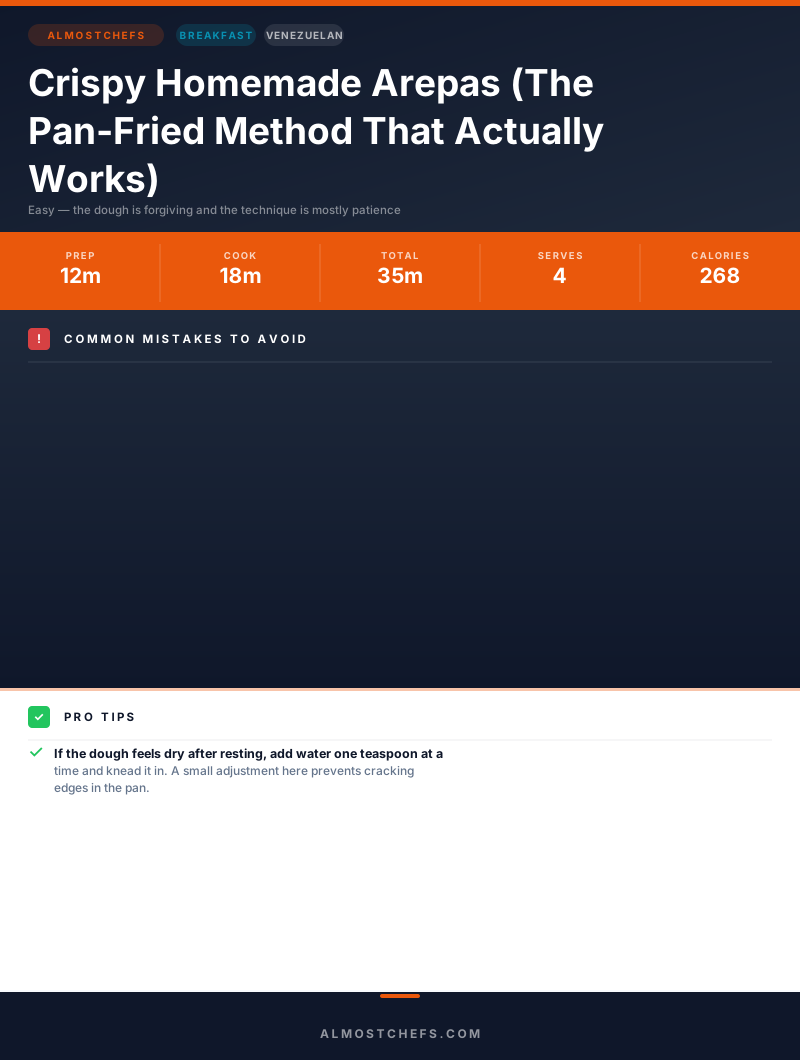
Before we start, read this. These are the 4 reasons your crispy homemade arepas (the pan-fried method that actually works) will fail:
- 1
Dough that's too dry or too wet: Masa harina absorbs water slowly. If you add all the water at once and shape immediately, you'll either have crumbly dough that cracks at the edges or wet dough that sticks to your hands and spreads flat in the pan. Add the water gradually while stirring, then let it rest. The dough should feel like soft modeling clay — it holds a shape without cracking and doesn't stick to dry hands.
- 2
Shaping them too thin: Three-quarters of an inch thick is the target. Thinner than that and the interior cooks through before the crust has time to develop properly. You end up with a flat, cracker-like result instead of the contrast between crispy shell and soft center that makes arepas worth making.
- 3
Flipping too early: The first side needs 3-4 full minutes of uninterrupted contact with the hot pan. If you flip before the crust sets, the arepa tears and the raw interior sticks to the skillet. The arepa will release itself when it's ready — if it resists, give it another minute.
- 4
Overcrowding the pan: Too many arepas lower the pan temperature and trap steam, turning a fry into a steam. You want active sizzle throughout the cook. Work in batches of 3-4, depending on pan size, and keep the finished ones warm in a low oven while the rest cook.
The Video Reference Library
Want to see it in action? Here are the exact videos we analyzed and combined to build this foolproof recipe translation:

The source video for this recipe. Covers dough consistency, shaping technique, and how to read the crust color before flipping.
2. Traditional Venezuelan Arepa Method
A deeper look at the regional differences between Venezuelan and Colombian arepas and how filling choices change the ideal thickness.
3. Arepa Filling Ideas and Serving GuideCovers the full range of classic and modern fillings, from reina pepiada to black beans and avocado, with assembly tips for each.
🛠️ Core Equipment
- Cast-iron skillet or heavy-bottomed pan ↗Even heat distribution is non-negotiable for a consistent crust. Thin pans create hot spots that burn one section while leaving another pale. A [cast-iron skillet](/kitchen-gear/review/cast-iron-skillet) retains heat through the batches and produces the most even golden crust.
- Instant-read thermometer ↗The oil should be around 350°F before the first arepa goes in. Below that, the dough absorbs oil instead of forming a crust. Above 375°F, the exterior browns before the interior firms up. A [thermometer](/kitchen-gear/review/instant-read-thermometer) removes all guesswork.
- Large mixing bowl ↗Gives you enough room to stir and knead the dough without flour flying. The dough comes together quickly once the water is incorporated.
- Flat spatula ↗Wide enough to flip the entire arepa in one motion. A narrow spatula causes the arepa to fold in the middle, breaking the crust.
Crispy Homemade Arepas (The Pan-Fried Method That Actually Works)
🛒 Ingredients
- ✦2 cups pre-cooked arepa flour (masa harina)
- ✦2.25 cups warm water
- ✦1.25 teaspoons salt
- ✦3 tablespoons vegetable oil
- ✦0.5 teaspoon sugar
- ✦0.5 cup fresh or frozen corn kernels, optional
- ✦1 cup shredded mozzarella cheese, optional
- ✦0.25 cup whole milk, optional
👨🍳 Instructions
01Step 1
Combine the arepa flour, salt, and sugar in a large mixing bowl. Stir with a fork to distribute the seasonings evenly through the dry flour.
02Step 2
Pour the warm water slowly into the dry mixture while stirring constantly with a wooden spoon until a soft, cohesive dough forms.
03Step 3
Knead the dough briefly in the bowl for about 1 minute until it reaches a smooth, pliable consistency similar to modeling clay.
04Step 4
Cover the bowl with a clean kitchen towel and let the dough rest for 8 minutes to allow the flour to fully absorb the moisture.
05Step 5
Heat the vegetable oil in a large cast-iron skillet or heavy-bottomed pan over medium-high heat until it shimmers and reaches approximately 350°F.
06Step 6
Lightly dampen your hands with water to prevent sticking. Pinch off a golf ball-sized portion of dough and shape it into a thick disc about three-quarters of an inch thick and 3 inches in diameter.
07Step 7
Carefully place each shaped arepa into the hot oil, working in batches to avoid overcrowding the pan.
08Step 8
Fry for 3 to 4 minutes on the first side without moving or pressing them. Let the crust develop completely before attempting to flip.
09Step 9
Flip each arepa gently with a flat spatula and cook the second side for another 3 to 4 minutes until deep golden and hollow-sounding when tapped with the spatula.
10Step 10
Transfer the finished arepas to a paper towel-lined plate to drain while remaining warm.
11Step 11
Serve immediately with your choice of fillings: shredded chicken, black beans, avocado, fresh cheese, or seasoned ground beef.
Nutrition Per Serving
Estimates based on standard preparation. Adjustments alter macros.
🔄 Substitutions
Instead of Vegetable oil...
Use Extra virgin olive oil or coconut oil
Coconut oil adds subtle sweetness that complements the corn. Olive oil produces a slightly more savory crust. Both work well for pan-frying at this temperature.
Instead of Whole milk (in dough)...
Use Unsweetened almond milk or oat milk
Minimal flavor change. Slightly lighter texture. Use the same quantity as the dairy milk called for.
Instead of Shredded mozzarella...
Use Crumbled queso fresco or feta cheese
More authentic flavor profile. Queso fresco melts gently without becoming rubbery. Feta adds a tangy, salty bite.
Instead of Pre-cooked arepa flour...
Use Masa harina made from sprouted corn
Improves nutrient bioavailability. The dough may require slightly less water — add it gradually and stop when you hit that modeling clay consistency.
🧊 Storage & Reheating
In the Fridge
Store cooled arepas in an airtight container for up to 3 days.
In the Freezer
Freeze in a single layer on a baking sheet, then transfer to a zip-lock bag for up to 2 months. Thaw at room temperature for 20 minutes before reheating.
Reheating Rules
Split in half and toast cut-side down in a dry skillet over medium heat for 2 minutes. This restores the crust. Microwaving makes them soft and rubbery.
❓ Frequently Asked Questions
Why is my arepa dough cracking when I shape it?
The dough is too dry. This usually means either not enough water was added, or the dough didn't rest long enough to hydrate fully. Add warm water one teaspoon at a time, knead it in, and give the dough another 2-3 minutes of rest before shaping.
Can I bake arepas instead of pan-frying them?
Yes, but the result is different. Baked arepas (375°F for 20-25 minutes) develop a drier, thicker crust without the golden color of pan-frying. If you want the crispy exterior that defines a great arepa, use the skillet. Baking works as a lower-fat alternative but it's a compromise.
What's the difference between Venezuelan and Colombian arepas?
Venezuelan arepas are typically thicker, softer, and almost always split and stuffed with fillings. Colombian arepas tend to be thinner, denser, and often eaten as a side rather than a vessel. Both start with the same masa harina base — the difference is in thickness and how they're served.
My arepa is golden on the outside but raw in the middle. What happened?
The oil was too hot. Above 375°F, the exterior cooks faster than heat can penetrate to the interior. Lower the heat to medium and give each side a full 4 minutes. If the problem persists, your arepas may be shaped too thick — aim for exactly three-quarters of an inch.
Do I need the corn kernels and cheese?
No. The base recipe — flour, water, salt, sugar, oil — is complete on its own. The corn kernels add texture and sweetness. The cheese and milk create a richer, creamier interior. Both are optional additions that change the character of the final arepa.
Can I make the dough ahead of time?
Yes, up to 24 hours. Wrap it tightly in plastic wrap and refrigerate. Let it come to room temperature for 15 minutes before shaping. Cold dough is stiffer and tends to crack at the edges — the warm-up period is important.
The Science of
Crispy Homemade Arepas (The Pan-Fried Method That Actually Works)
We turned everything on this page into a beautiful, flour-proof PDF cheat sheet. Print it out, stick it to your fridge, and never mess up your crispy homemade arepas (the pan-fried method that actually works) again.
*We'll email you the high-res PDF instantly. No spam, just perfectly cooked meals.
AlmostChefs Editorial Team
We translate the internet's most popular cooking videos into foolproof, beginner-friendly written recipes. We analyze multiple methods, test them in our kitchen, and engineer a single "Master Recipe" that gives you the best possible result with the least possible stress.