The Ultimate Homemade Apple Pie With Whole Wheat Crust (With 3 Core Failure Points)
A buttery, flaky pie built from a blend of whole wheat and all-purpose flour, filled with a mix of tart Granny Smith and sweet Honeycrisp apples spiced with cinnamon and nutmeg. We tested every major technique to find the one that delivers a crisp crust, jammy filling, and clean slices — every time.
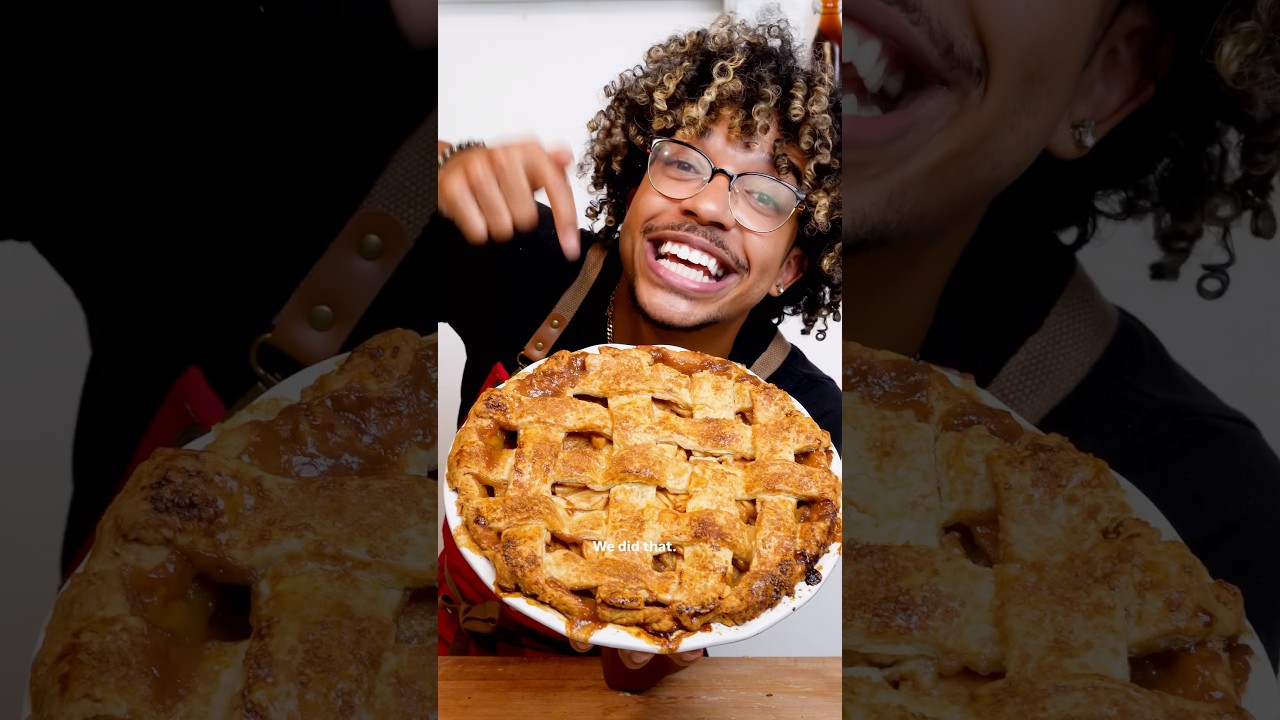
“Most apple pie failures come from the same three mistakes: warm butter, wrong apples, and cutting the pie too soon. Get those three things right and everything else is just assembly. We analyzed the most-watched apple pie videos and tested the techniques that separate a clean, glossy slice from a soupy mess with a pale crust.”
Why This Recipe Works
Apple pie is not a simple recipe. It is a structural engineering problem dressed up as comfort food. The crust must be flaky without crumbling. The filling must be jammy without being wet. The two must coexist in the same dish for an hour of high heat without the crust going soggy or the apples going to mush. The reason most homemade apple pie disappoints is not lack of effort — it's not understanding what each step is actually doing.
The Crust Is About Temperature, Not Technique
Every flaky pastry in the world operates on the same principle: cold fat, hot oven. When cold butter hits 375°F+ heat, the trapped water in the butter converts to steam explosively, pushing the dough layers apart and creating the hundreds of thin, distinct flakes that define good pie crust. If the butter melts into the flour during mixing, there are no discrete pockets of fat left — and no steam means no flake.
This is why you work fast, use ice water, and refrigerate the dough twice: once after mixing, once after assembly. The whole wheat flour in this recipe adds a subtle earthiness and marginally more fiber, but it doesn't fundamentally change the technique. The same rules apply. Cold butter. Cold water. Cold hands.
The blend of all-purpose and whole wheat flour matters in proportion. Too much whole wheat and the crust gets dense and dry — the gluten structure is different, and it absorbs fat differently. At 80/20 (all-purpose to whole wheat), you get the nutritional benefit without sacrificing the texture that makes pie crust worth making from scratch.
The Apple Problem
Not all apples behave the same way in a hot oven. Some varieties (Red Delicious, Fuji) turn to applesauce at 375°F. Others (Granny Smith) hold their structure almost too well, sometimes remaining firmer than ideal at the center of thick slices. Honeycrisp sits between these extremes — it softens to a tender bite without losing all its structure.
The 50/50 mix of Granny Smith and Honeycrisp is not a preference, it's a hedge. Granny Smith contributes the acidity that keeps the filling from tasting flat and sweet; Honeycrisp contributes the natural sweetness that keeps the filling from tasting sour. Slice them at 1/4 inch — thinner and they collapse into mush, thicker and the center never softens through.
The 10-minute sugar rest is the most overlooked step in apple pie. Sugar draws moisture out of the fruit through osmosis. Let the sliced apples sit with sugar and lemon juice for 10 minutes and a significant amount of liquid pools in the bowl. That liquid would otherwise steam inside your crust during baking, converting the bottom into a wet, pale disappointment. Discard it. Your bottom crust will thank you.
The Thickener Question
Cornstarch is the workhorse of pie fillings — it's neutral in flavor, activates cleanly at high temperature, and produces a slightly opaque, lightly set consistency. The key word is "activates." Cornstarch needs to reach a sustained temperature above 200°F to fully gelatinize. This is why the pie must bubble visibly at the vents — not just at the edges, but through the center. If the filling never reaches that temperature, the cornstarch remains partially activated and the slice runs when cut.
Tapioca starch is the upgrade. It produces a clearer, glossier filling and is more forgiving across a range of temperatures. It's the reason restaurant slices look like they were set in amber. Either works. Tapioca is worth seeking out if you're making pie more than once a year.
The Rest Is Non-Negotiable
The 4-hour cooling period is where the pie actually finishes. The filling continues to thicken as it drops from 200°F to room temperature — the same way custard sets as it cools. Slicing at 30 minutes produces a filling that flows. Slicing at 4 hours produces a filling that holds its shape, has a defined layer between crust and apple, and photographs like it belongs in a cookbook.
Place the pie on a wire cooling rack rather than a flat surface. Air circulation under the dish prevents the residual steam from the filling from re-softening the bottom crust during the rest. One small detail that changes the entire texture of the slice.
The pastry cutter and 9-inch pie dish are not optional upgrades — they're the tools the technique was designed around. Everything else is patience.
Where Beginners Mess This Up
Before we start, read this. These are the 4 reasons your the ultimate homemade apple pie with whole wheat crust (with 3 core failure points) will fail:
- 1
Warm butter in the crust: Pie crust flakiness depends entirely on cold butter staying solid long enough to create steam pockets during baking. If the butter melts into the flour during mixing, you get a shortbread cookie, not a flaky crust. Work fast, use ice-cold butter, and refrigerate the dough for at least 30 minutes before rolling.
- 2
Using only one type of apple: Single-variety fillings go either too sweet or too tart, and they all cook at different rates. Granny Smith holds its shape and delivers acidity. Honeycrisp softens slightly and contributes sweetness. Together, they create the contrast that makes a filling interesting rather than monotonous.
- 3
Skipping the filling rest: Letting the apple mixture sit for 10 minutes after combining draws out excess juice. If that juice goes into the crust, it soaks through and you get a soggy bottom. Discard the accumulated liquid before filling — it's the single easiest fix for a wet pie.
- 4
Cutting the pie while it's hot: The filling thickens as it cools. A pie cut at 30 minutes will pour out like compote. A pie rested for 4 hours will slice cleanly with the filling intact. This is not a suggestion. Set a timer and find something else to do.
The Video Reference Library
Want to see it in action? Here are the exact videos we analyzed and combined to build this foolproof recipe translation:
The most thorough walkthrough available — covers the butter temperature, apple variety rationale, and how to tell when the filling is actually done bubbling. The close-up of the lattice crimping alone is worth watching twice.
🛠️ Core Equipment
- 9-inch pie dishCeramic or glass dishes heat more evenly than thin aluminum and produce a better bottom crust. Dark metal pans absorb more heat and can over-brown edges before the interior cooks through.
- Pastry cutterCuts butter into flour without transferring hand heat the way fingertips do. The goal is pea-sized butter pieces dispersed throughout — not a uniform paste. A pastry cutter gives you control over that texture.
- Rolling pinA heavy French rolling pin gives you consistent pressure across the dough. Roll from the center outward in short strokes, rotating the dough a quarter turn between passes to keep it round and even.
- Wire cooling rackElevates the pie off the counter so air circulates under the dish, preventing steam from re-softening the bottom crust during the 4-hour rest. A flat surface traps moisture.
The Ultimate Homemade Apple Pie With Whole Wheat Crust (With 3 Core Failure Points)
🛒 Ingredients
- ✦2.5 cups all-purpose flour
- ✦0.5 cup whole wheat flour
- ✦1 cup cold unsalted butter, cubed
- ✦1 teaspoon fine sea salt
- ✦6 to 8 tablespoons ice water
- ✦6 to 8 medium apples (3 Granny Smith, 3 Honeycrisp), peeled, cored, and sliced 1/4 inch thick
- ✦0.75 cup granulated sugar
- ✦0.25 cup packed brown sugar
- ✦2 tablespoons fresh lemon juice
- ✦1.5 teaspoons ground cinnamon
- ✦0.25 teaspoon freshly grated nutmeg
- ✦1.5 tablespoons cornstarch
- ✦1 teaspoon vanilla extract
- ✦1 large egg, beaten with 1 tablespoon water (egg wash)
- ✦1 tablespoon coarse sugar (optional, for topping)
👨🍳 Instructions
01Step 1
Whisk together the all-purpose flour, whole wheat flour, and sea salt in a large mixing bowl.
02Step 2
Cut the cold butter cubes into the flour mixture using a pastry cutter or your fingertips until the mixture resembles coarse breadcrumbs with some pea-sized pieces of butter still visible.
03Step 3
Drizzle ice water over the mixture one tablespoon at a time, mixing gently with a fork until the dough just comes together without being wet or sticky.
04Step 4
Divide the dough in half, shape each portion into a flat disk, wrap tightly in plastic wrap, and refrigerate for at least 30 minutes or up to overnight.
05Step 5
Toss the sliced apples with lemon juice immediately after cutting, then combine with both sugars, cinnamon, nutmeg, cornstarch, and vanilla extract. Stir gently to coat and let the mixture sit for 10 minutes.
06Step 6
Remove one dough disk from the refrigerator and let it sit at room temperature for 5 minutes, then roll it out on a lightly floured surface into a 12-inch circle about 1/8 inch thick.
07Step 7
Transfer the rolled dough to a 9-inch pie dish by rolling it loosely onto your rolling pin and unrolling it over the dish. Press gently to fit without stretching and let the excess hang over the edges.
08Step 8
Spread the apple filling into the prepared crust, mounding it slightly in the center.
09Step 9
Roll out the second dough disk to a 10-inch circle and either lay it whole over the filling or cut it into 1/2-inch strips and weave a lattice pattern over the top.
10Step 10
Trim overhanging edges to 1 inch, fold them under, and crimp decoratively with your fingertips or a fork to seal the crusts together.
11Step 11
Brush the entire surface with egg wash and sprinkle with coarse sugar if using. Cut three small vents in the top crust if not using a lattice.
12Step 12
Refrigerate the assembled pie for 15 to 30 minutes while you preheat the oven to 400°F.
13Step 13
Place the pie on the lower oven rack and bake for 45 to 60 minutes, until the crust is deep golden brown and the filling is bubbling at the vents. Tent with foil during the last 15 minutes if edges are browning too fast.
14Step 14
Transfer to a wire cooling rack and rest at room temperature for at least 4 hours before slicing.
Nutrition Per Serving
Estimates based on standard preparation. Adjustments alter macros.
🔄 Substitutions
Instead of All-purpose flour (in crust)...
Use 2 cups all-purpose + 0.5 cup whole wheat
Slightly earthier, marginally denser crust with improved fiber content. The texture difference is minimal — most people won't notice unless told.
Instead of Granulated sugar (1 cup total)...
Use 0.5 cup granulated + 0.25 cup coconut sugar
Coconut sugar has a lower glycemic index and contributes a warm caramel undertone. The filling will be slightly less sweet, which many people prefer.
Instead of Unsalted butter (in crust)...
Use 0.5 cup butter + 0.5 cup cold coconut oil
Reduces saturated fat. Coconut oil must be cold and solid — if it's liquid at room temperature in your kitchen, chill it first. Adds a faint coconut flavor that works well with apple.
Instead of Cornstarch...
Use 1.5 tablespoons tapioca starch
Produces a glossier, more translucent filling. Tapioca is more forgiving of temperature variation and doesn't turn chalky if the pie cools too quickly.
🧊 Storage & Reheating
In the Fridge
Store loosely covered at room temperature for up to 2 days, or refrigerate for up to 4 days. Cover with foil rather than plastic wrap to avoid condensation softening the crust.
In the Freezer
Freeze baked pie for up to 3 months. Wrap tightly in two layers of plastic wrap and one layer of foil. Thaw overnight in the refrigerator.
Reheating Rules
Reheat slices in a 350°F oven for 10-15 minutes to crisp the crust. Microwaving softens the crust irreversibly — avoid unless you don't mind a soggy texture.
❓ Frequently Asked Questions
Why is my apple pie filling watery?
Two causes: you didn't discard the liquid that accumulated during the 10-minute filling rest, or the pie didn't bake long enough for the filling to reach a full bubble. The cornstarch only activates at high temperature — if the center never gets hot enough, the filling stays loose.
Why did my bottom crust turn out soggy?
Either the filling liquid made it in (skip the resting liquid), the butter was too warm when you made the crust, or the pie baked on a rack that was too high. Always bake on the lower rack — direct bottom heat sets the crust before the filling can saturate it.
Can I make the dough ahead of time?
Yes. Wrapped disks keep in the fridge for 3 days or the freezer for 3 months. Thaw frozen dough overnight in the refrigerator, then let it sit at room temperature for 5 minutes before rolling.
Do I need to pre-cook the apple filling?
No. The apples cook down during the 45-60 minute bake. Pre-cooking risks over-softening them. The 10-minute sugar rest and the long bake time are sufficient.
Why did my lattice crust shrink?
The dough was over-worked or under-rested. Gluten contracts as it cools. Refrigerating the assembled pie for 15-30 minutes before baking lets the gluten relax, which prevents shrinkage in the oven.
Can I use store-bought crust?
Yes, but the result will be noticeably different. Store-bought crusts use hydrogenated fats and preservatives that produce a softer, less flavorful shell. The homemade version takes 15 minutes of active work — it's worth it.
The Science of
The Ultimate Homemade Apple Pie With Whole Wheat Crust (With 3 Core Failure Points)
We turned everything on this page into a beautiful, flour-proof PDF cheat sheet. Print it out, stick it to your fridge, and never mess up your the ultimate homemade apple pie with whole wheat crust (with 3 core failure points) again.
*We'll email you the high-res PDF instantly. No spam, just perfectly cooked meals.
AlmostChefs Editorial Team
We translate the internet's most popular cooking videos into foolproof, beginner-friendly written recipes. We analyze multiple methods, test them in our kitchen, and engineer a single "Master Recipe" that gives you the best possible result with the least possible stress.