Classic Apple Crisp (The Topping Is the Whole Point)
Tender spiced apples baked beneath a golden, buttery oat crumble that actually stays crispy. We broke down what makes apple crisp fail — soggy topping, watery filling, underseasoned fruit — and fixed all of it in one foolproof recipe.
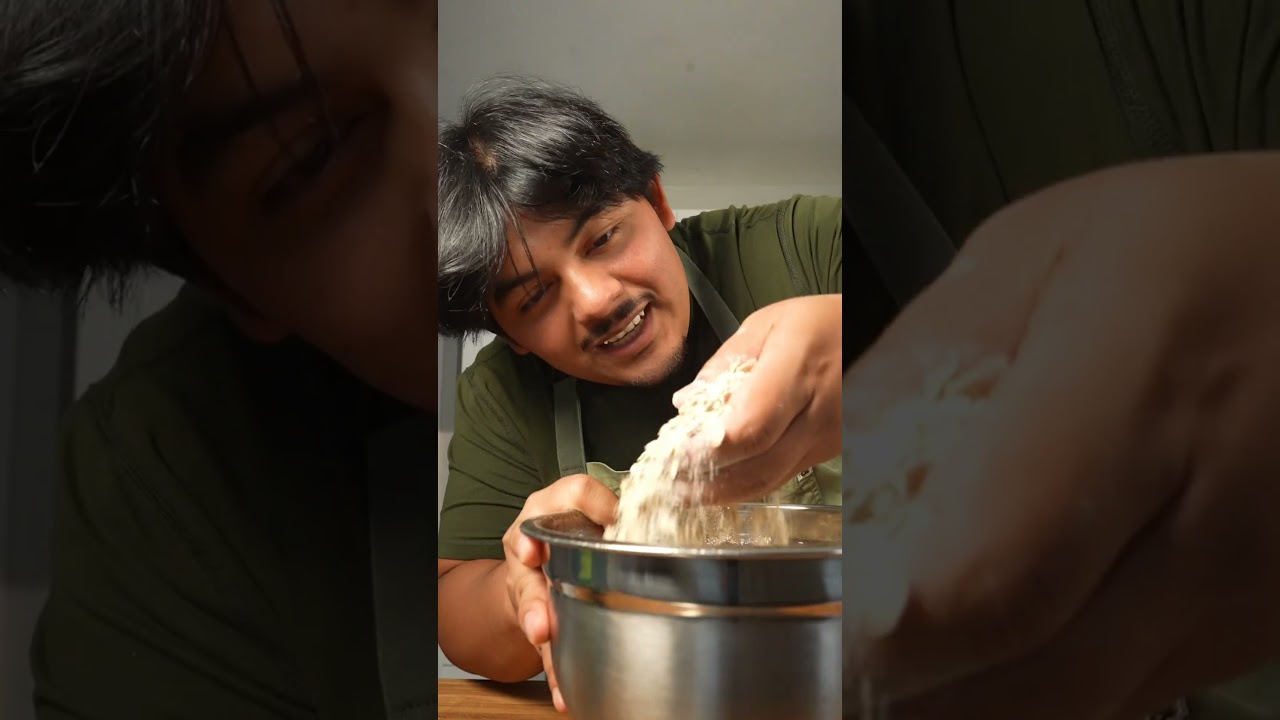
“Apple crisp is supposed to be the easy dessert. No lattice. No blind baking. No laminated dough. And yet most versions come out of the oven with a soggy topping, watery filling, and apples that taste like they were seasoned with regret. The fix is not complicated. It's just three things no one tells you: macerate the apples first, keep the butter cold, and don't compact the topping when you spread it.”
Why This Recipe Works
Apple crisp exists because pie is a project. The promise is fruit dessert in under an hour with no special equipment, no pastry skills, and nothing that can go catastrophically wrong. That promise is real — but only if you understand the three mechanics the recipe depends on. Get them right and you have one of the most satisfying desserts in the American canon. Get them wrong and you have warm, sweet soup under a greasy mat.
The Maceration Problem
The apples go in the bowl with sugar, lemon juice, and spices, and then you wait. This step gets skipped more than any other because it feels unnecessary — you're about to bake everything for 45 minutes anyway, so what does 15 minutes of sitting accomplish?
It draws out moisture. Apples are roughly 85% water by weight, and sugar is hygroscopic — it pulls that water out through osmosis. During those 15-20 minutes, a pool of spiced, sweet liquid collects at the bottom of the bowl. That liquid is not waste. It goes into the baking dish with the fruit. In the oven, it concentrates into a glossy, thick syrup that coats the apple slices and keeps the filling from tasting dry or flat.
If you skip this step, the moisture releases in the oven instead — directly upward into the topping. The result is a steamed crust, not a crisped one. No amount of extended bake time recovers it.
The Cold Butter Principle
The topping is not complicated. Oats, flour, brown sugar, salt, and butter — worked together until crumbly. The instruction that determines everything is "cold butter." Not room temperature. Not softened. Cold from the refrigerator, cubed, worked in fast.
When cold butter meets oven heat, it melts gradually. The water inside each cube turns to steam, creating small air pockets throughout the topping as it bakes. Those pockets are what make the topping light and crispy rather than dense and greasy. Warm butter incorporates too completely — it coats every oat and flour particle in fat, produces no steam, and bakes into a solid, slightly greasy slab.
A pastry cutter is the right tool here. It lets you work the butter in quickly, cutting through cleanly without the warmth of your hands softening things prematurely. Two forks work if that's what you have. Fingertips work too — but work fast, and if the mixture starts feeling slick instead of sandy, refrigerate it for ten minutes before continuing.
The Apple Architecture
Granny Smith and Honeycrisp is not arbitrary. Granny Smith has high acidity, low sugar, and dense cell structure — it holds its shape during baking and provides the tart edge that keeps the dessert from being cloying. Honeycrisp has higher natural sugar content and a slightly softer texture when baked, contributing sweetness and a contrast in bite. Neither apple alone achieves what both together do.
The lemon juice is not just flavor. Acid prevents enzymatic browning as you peel and slice, which is why macerated apple mixture looks bright rather than oxidized. More importantly, it amplifies the tartness of the Granny Smith and makes the overall filling taste more apple-forward — less like sweetened applesauce, more like actual fruit.
The spice ratio is deliberate: cinnamon heavy, nutmeg restrained. Nutmeg is aggressive at heat and can overwhelm everything if over-applied. A quarter teaspoon is where it contributes warmth without announcing itself.
The Baking Dish Question
Use a 9x13-inch baking dish. The surface area creates the right apple depth — roughly 1.5 inches — which gives you enough filling to stay moist through the bake without creating so much depth that the center apples steam themselves into mush while the edges crisp. A smaller dish crowds the fruit, traps too much moisture, and produces a watery result regardless of how well you macerate.
Glass or ceramic both work. Avoid dark metal — it absorbs more heat from the oven floor and overcooks the bottom layer of apples before the topping finishes browning.
The Finish
The vanilla goes on after baking, drizzled over the warm topping. This is counterintuitive — most bakers assume vanilla gets added before heat. But vanilla's volatile aroma compounds largely evaporate at baking temperatures. Added at the end, they stay intact and hit you immediately when you lift the spoon. It's a small detail that makes the finished dish smell significantly more complex than it did coming out of the oven.
Serve it warm. This is not a dessert that improves with full cooling — the topping loses its contrast against the soft fruit and the whole thing reads as one undifferentiated texture. Warm crisp, cold ice cream, fifteen minutes out of the oven. That's the window.
Where Beginners Mess This Up
Before we start, read this. These are the 4 reasons your classic apple crisp (the topping is the whole point) will fail:
- 1
Skipping the macerating step: Mixing the apples with sugar and letting them sit for 15-20 minutes draws out excess moisture before baking. Skip this and that moisture releases in the oven, turning your golden topping into a sad, steam-logged crust that never crisps. The liquid that collects during maceration becomes a concentrated, spiced syrup — it goes into the pan too.
- 2
Using warm or softened butter in the topping: Cold butter is not a suggestion. When cold butter hits the oven, it melts slowly while the water in it creates steam pockets — that's what produces the flaky, crumbly texture. Soft butter just coats the oats in grease and produces a dense, greasy slab. Keep the butter refrigerated until the moment you use it.
- 3
Packing the topping down too hard: The topping needs air pockets to crisp properly. Pressing it firmly into a solid layer traps moisture from the fruit below and prevents the top surface from browning evenly. Distribute it loosely with your hands, applying just enough pressure for it to hold together.
- 4
Using only one variety of apple: Single-variety apple crisp is either too sweet or too tart and texturally boring. Granny Smith holds its shape and provides acidity. Honeycrisp adds natural sweetness and a softer bite. Together they create a filling with range — different textures, layered flavor, and a balance that neither apple achieves alone.
The Video Reference Library
Want to see it in action? Here are the exact videos we analyzed and combined to build this foolproof recipe translation:
The source video for this recipe. Clear walkthrough of the maceration technique and topping assembly. Good visual reference for the right crumble texture before it goes in the oven.
🛠️ Core Equipment
- 9x13-inch baking dishSurface area matters. A smaller dish crowds the apples and traps steam. The 9x13 gives you the right apple depth (about 1.5 inches) and topping-to-fruit ratio. Glass or ceramic both work — avoid dark metal, which overcooks the bottom.
- Pastry cutterThe fastest way to work cold butter into dry ingredients without warming it with your hands. Two forks work in a pinch, but a pastry cutter cuts through the butter more cleanly, producing the coarse, pebbly texture you want.
- Large mixing bowlYou need room to toss the apples without them flying over the edge. Cramped bowls mean uneven coating — some slices get all the cinnamon, others get none.
Classic Apple Crisp (The Topping Is the Whole Point)
🛒 Ingredients
- ✦6 medium apples (mix of Granny Smith and Honeycrisp), peeled, cored, and sliced
- ✦1/3 cup granulated sugar
- ✦2 tablespoons fresh lemon juice
- ✦2 teaspoons ground cinnamon, divided
- ✦1/4 teaspoon ground nutmeg
- ✦1 cup rolled oats (old-fashioned)
- ✦3/4 cup all-purpose flour
- ✦2/3 cup packed brown sugar
- ✦1/2 cup cold unsalted butter, cubed
- ✦1/4 teaspoon sea salt
- ✦1 teaspoon vanilla extract
👨🍳 Instructions
01Step 1
Peel, core, and slice the apples into 1/4-inch pieces. A mix of Granny Smith and Honeycrisp gives you tartness, sweetness, and two different textures in each bite.
02Step 2
Combine the sliced apples in a large bowl with the granulated sugar, lemon juice, 1 teaspoon cinnamon, and nutmeg. Toss to coat evenly.
03Step 3
Set the apple mixture aside for 15-20 minutes. This is the maceration step — the sugar pulls moisture out of the fruit and the whole mixture becomes fragrant and syrupy.
04Step 4
While the apples macerate, whisk together the rolled oats, flour, brown sugar, remaining 1 teaspoon cinnamon, and sea salt in a separate bowl.
05Step 5
Add the cold cubed butter to the dry topping mixture. Use a pastry cutter, two forks, or your fingertips to work the butter in until the mixture resembles coarse, damp sand with some pea-sized clumps.
06Step 6
Preheat the oven to 365°F and lightly butter a 9x13-inch baking dish.
07Step 7
Pour the macerated apples and all accumulated juices into the prepared dish. Spread into an even layer.
08Step 8
Distribute the oat topping over the apples in an even layer. Apply light pressure so it holds together — do not pack it down hard.
09Step 9
Bake for 40-45 minutes until the topping is deep golden brown and the apple filling is visibly bubbling at the edges.
10Step 10
Remove from the oven and drizzle the vanilla extract over the warm topping, stirring gently to incorporate into the surface.
11Step 11
Cool for 12-15 minutes before serving. The filling needs time to thicken slightly — cut into it immediately and you get soup.
Nutrition Per Serving
Estimates based on standard preparation. Adjustments alter macros.
🔄 Substitutions
Instead of All-purpose flour...
Use Rolled oats (increase to 1.5 cups total)
Creates a chewier, more rustic topping with better nuttiness. Slightly less crisp overall but more textured. Good for gluten-sensitive bakers when paired with certified GF oats.
Instead of Granulated + brown sugar...
Use Coconut sugar (2/3 cup) or pure maple syrup (1/2 cup)
Coconut sugar maintains the texture with a subtle molasses flavor. Maple syrup creates a slightly softer topping with deeper caramel notes — reduce other liquids slightly if using.
Instead of Unsalted butter...
Use Ghee or coconut oil (1/3 cup)
Ghee maintains the rich butter flavor with better browning. Coconut oil creates a slightly airier texture with a subtle tropical undertone. Both must be cold — refrigerate coconut oil if it's liquid at room temperature.
Instead of Honeycrisp apples...
Use Braeburn or Pink Lady
Both hold their structure during baking and offer natural sweetness without going mushy. Avoid Red Delicious — they break down completely and taste flat when cooked.
🧊 Storage & Reheating
In the Fridge
Cover tightly and refrigerate for up to 4 days. The topping softens slightly overnight but the flavor deepens.
In the Freezer
Freeze unbaked — assembled but not cooked — for up to 3 months. Bake directly from frozen at 365°F for 55-65 minutes.
Reheating Rules
Reheat individual portions in a 350°F oven for 10-12 minutes to revive the topping crispness. Microwave works but turns the topping soft — use only if you don't care about texture.
❓ Frequently Asked Questions
Why is my apple crisp topping soggy?
Two likely causes: you didn't macerate the apples first (so excess moisture released during baking and steamed the topping from below), or your butter was too warm when you made the topping. Cold butter is essential — it melts slowly in the oven and creates the steam pockets that produce crunch.
Can I make apple crisp ahead of time?
Yes. Assemble it completely, cover, and refrigerate for up to 24 hours before baking. The maceration continues in the fridge, which actually improves the filling. Add 5 minutes to the bake time if going straight from cold.
What apples work best for apple crisp?
Granny Smith for structure and acidity, Honeycrisp for sweetness and slight softness. Braeburn and Pink Lady are solid alternatives. Avoid Red Delicious — they turn to mush and taste flat when baked. The rule: if the apple is good raw for snacking, it's probably too soft for baking.
Do I need to peel the apples?
Technically no, but the peel creates an unpleasant chewy texture in the finished dish that most people find jarring. Peeled apples also absorb the spices more evenly. Unless you're going for a very rustic presentation, peel them.
Why did my filling turn watery?
You skipped or shortened the maceration step. When apples macerate with sugar for 15-20 minutes, the bulk of their moisture releases into the bowl before baking. During baking, this pre-released liquid concentrates into a thick, glossy syrup. Without maceration, the moisture releases in the oven instead, soaking the topping from below.
Can I use steel-cut oats instead of rolled oats?
No. Steel-cut oats don't soften sufficiently in the 40-45 minute bake time and produce a hard, unpleasant topping. Old-fashioned rolled oats are the only correct choice. Quick oats are too fine and go gummy. This is one of the few places in baking where the specific oat variety is non-negotiable.

The Science of
Classic Apple Crisp (The Topping Is the Whole Point)
We turned everything on this page into a beautiful, flour-proof PDF cheat sheet. Print it out, stick it to your fridge, and never mess up your classic apple crisp (the topping is the whole point) again.
*We'll email you the high-res PDF instantly. No spam, just perfectly cooked meals.
AlmostChefs Editorial Team
We translate the internet's most popular cooking videos into foolproof, beginner-friendly written recipes. We analyze multiple methods, test them in our kitchen, and engineer a single "Master Recipe" that gives you the best possible result with the least possible stress.