The No-Cook Antipasto Platter (Your Party Appetizer, Solved)
A vibrant Italian-inspired appetizer board built from cured meats, fresh and aged cheeses, marinated vegetables, and olives, dressed with a garlic-herb vinaigrette. Zero cooking required, maximum visual impact, and endlessly customizable based on what you have on hand.

“Most antipasto platters look impressive and taste like nothing. Dry prosciutto curled under heat lamps. Olives from a can with no seasoning. Mozzarella that's been sitting in water so long it's gone rubbery. The difference between a platter that disappears in ten minutes and one that gets politely picked at comes down to marination time, vinaigrette quality, and letting everything come to room temperature before it hits the table. We've mapped out exactly how to get there.”
Why This Recipe Works
Antipasto is the most forgiving format in Italian cooking and the most commonly botched. Not because it's technically demanding — there is no heat involved, no timing to manage, no emulsification to worry about — but because people treat it like a grocery run rather than a composition problem. They buy the components, unwrap them cold, and drop them on a board with the spatial logic of someone unloading a dishwasher. The result looks like a convenience store deli case.
The word antipasto means "before the meal." It is the Italian equivalent of an overture — it sets the register for everything that follows. Done right, it delivers salt, acid, fat, and fresh brightness in a single pass, priming the palate rather than loading it. Done wrong, it's a pile of cold meats and cheese that sits untouched until someone takes pity on it.
Temperature Is the Hidden Variable
Pull anything from a standard refrigerator and it's at 38 degrees Fahrenheit. At that temperature, olive oil goes waxy and nearly odorless. Fresh mozzarella becomes dense and squeaky. Prosciutto loses its silkiness and the fat congeals. The aromatic compounds in basil, oregano, and garlic that make this platter smell like a Roman trattoria are temperature-sensitive — most of them don't volatilize significantly below 65 degrees.
Fifteen minutes at room temperature transforms the board. This is the single most impactful non-step in this recipe, and it costs nothing. Pull everything from the fridge before you start prepping, not after.
The Vinaigrette Is Not Optional
Most antipasto recipes treat the dressing as decoration — a tablespoon of olive oil drizzled at the end for shine. This is a mistake. The garlic-balsamic vinaigrette in this recipe serves a structural function: it's the connective tissue that makes disparate components read as a single dish rather than a collection of individual items. Without it, you're eating a cheese plate, some olives, and some vegetables that happen to share a surface.
The technique matters too. You're emulsifying — whisking the balsamic into the olive oil until they hold together rather than sitting in separate puddles. Emulsified dressing coats every surface it touches; un-emulsified dressing pools at the bottom of the bowl and drowns whatever it lands on first. Two extra minutes of whisking is the difference.
Composition Is a Skill Worth Applying
Group components by flavor intensity, not by category. Mild items — fresh mozzarella, cucumber, cherry tomatoes — anchor one end of the large wooden board. Assertive components — marinated artichoke hearts, Kalamata olives, red onion — live on the other end, with prosciutto and provolone bridging the two zones. Guests naturally gravitate toward their preference without disrupting the whole layout to get there.
Use the spinach base not just as visual filler but as a physical separator. A fold of prosciutto placed directly next to a cluster of brine-heavy olives will absorb that brine within minutes and turn fishy. The spinach creates a flavor buffer between assertive and delicate components without adding any taste of its own.
Marination Time Is Proportional to Flavor
The artichoke hearts and mushrooms get a head start in the vinaigrette — at least five minutes, ideally thirty. This is because jarred and canned vegetables are rinsed and packed in neutral liquid that strips most of the exterior flavor. The vinaigrette recolonizes the surface, pushing garlic, oregano, and acid back into the outer layers. You're not marinating for tenderness here; you're marinating for flavor penetration. The longer the soak, the deeper the flavor.
This same logic applies to the olives. Brine-packed olives are already seasoned, but that seasoning is singular — salty and sour. A quick toss with olive oil, lemon zest, and fresh thyme in a small mixing bowl before plating adds a second aromatic layer that makes them taste intentional rather than extracted from a jar.
Scale Is Your Creative Variable
The listed recipe serves six as an appetizer. Double every ingredient for twelve. The ratios are the guide, not the recipe — antipasto is one of the few dishes where improvisation is not just permitted but expected. What's in season, what's on sale at the Italian market, what you already have in the back of the fridge: all of it has a place on this board. The structure holds regardless of what fills it.
That's the entire point of antipasto. It was invented as a vehicle for whatever was excellent that day, arranged to look abundant and taste varied. The format hasn't changed in a thousand years because it works.
Where Beginners Mess This Up
Before we start, read this. These are the 4 reasons your the no-cook antipasto platter (your party appetizer, solved) will fail:
- 1
Serving everything cold from the fridge: Cold fat is waxy, cold cheese is rubbery, and cold olive oil has almost no aroma. Every component on this platter — from the mozzarella to the prosciutto to the marinated vegetables — needs at least 10-15 minutes at room temperature before serving. This single step transforms the flavor across the entire board.
- 2
Using low-quality olives and not seasoning them: Canned black olives are flavorless filler. Use mixed brined olives — Castelvetrano, Kalamata, Cerignola — and toss them in a bit of olive oil, lemon zest, and fresh herbs an hour before serving. The difference is immediate and dramatic.
- 3
Skipping the vinaigrette entirely: A dry antipasto platter is a collection of cold cuts and cheese. The garlic-herb vinaigrette ties every component together and prevents the board from tasting like a deli counter. Drizzle it over the marinated vegetables and artichokes, and add a final pass over everything just before serving.
- 4
Overcrowding the board with no visual logic: Antipasto needs intentional arrangement — not because aesthetics matter for taste, but because a well-organized board makes every component accessible. Group like items together, leave deliberate negative space, and use the spinach base to anchor and separate sections.
The Video Reference Library
Want to see it in action? Here are the exact videos we analyzed and combined to build this foolproof recipe translation:
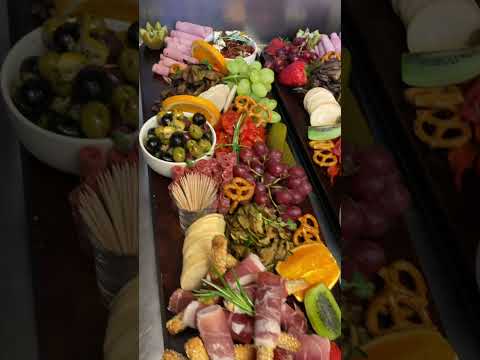
The foundational technique for composing an antipasto board — covers ingredient selection, arrangement logic, and how to build visual contrast across the platter.
2. Italian Appetizer Board Essentials
Covers the core Italian pantry ingredients that separate an authentic antipasto from a generic party platter. Good breakdown of which cured meats hold up at room temperature versus which to add last-minute.
3. Make-Ahead Antipasto for PartiesPractical guide to prepping every component the night before and assembling in under 10 minutes before guests arrive. Focuses on which items can be marinated overnight and which degrade if prepped too early.
🛠️ Core Equipment
- Large wooden board or marble slab ↗Surface area determines how well you can separate and group components. Crowded platters force guests to dig — a board at least 18x24 inches lets everything breathe and remain accessible.
- Small mixing bowl for vinaigrette ↗The garlic-herb vinaigrette needs to be emulsified, not just poured. Whisking in a bowl ensures the balsamic and olive oil combine instead of sitting in separate puddles on the platter.
- Tongs or small serving forks ↗One set of tongs per section prevents flavor cross-contamination and makes the platter self-serve without guests using their hands to fish out olives from between the mozzarella.
- Airtight containers for marinating ↗If you're making the artichoke hearts and mushrooms ahead of time — which you should — sealed containers let the vinaigrette penetrate evenly without the components oxidizing or drying out.
The No-Cook Antipasto Platter (Your Party Appetizer, Solved)
🛒 Ingredients
- ✦8 ounces fresh mozzarella balls, drained
- ✦6 ounces prosciutto or Italian ham, sliced thin
- ✦1 cup mixed olives, pitted
- ✦1 cup roasted red bell peppers, cut into strips
- ✦8 ounces marinated artichoke hearts, drained and halved
- ✦1 cup cherry tomatoes, halved
- ✦6 ounces aged provolone cheese, cut into cubes
- ✦1/2 cup marinated mushrooms, drained
- ✦1/4 cup fresh basil leaves, roughly torn
- ✦3 tablespoons extra-virgin olive oil
- ✦2 tablespoons balsamic vinegar
- ✦1 teaspoon dried oregano
- ✦1/2 teaspoon red pepper flakes
- ✦2 cloves garlic, minced
- ✦Sea salt and cracked black pepper to taste
- ✦1 medium red onion, thinly sliced
- ✦1 cucumber, sliced into rounds
- ✦4 ounces fresh spinach leaves for base
👨🍳 Instructions
01Step 1
Whisk together the extra-virgin olive oil, balsamic vinegar, minced garlic, dried oregano, red pepper flakes, sea salt, and cracked black pepper in a small bowl until fully emulsified.
02Step 2
Combine the drained artichoke hearts and marinated mushrooms in a medium bowl. Pour half the vinaigrette over them and toss to coat. Let sit for at least 5 minutes.
03Step 3
Arrange the fresh spinach leaves across a large board or platter as an even base layer.
04Step 4
Scatter the mozzarella balls in one section of the board. Group the cubed provolone in a separate area so guests can identify them easily.
05Step 5
Fold the sliced prosciutto into loose bundles and arrange them across the board, alternating positions with fresh basil leaves for color contrast.
06Step 6
Distribute the marinated artichoke hearts and mushrooms across the board, placing them in natural clusters rather than forcing them into a single zone.
07Step 7
Add the mixed olives in small groupings throughout the board for easy access. Avoid piling them in one corner.
08Step 8
Arrange the halved cherry tomatoes and cucumber slices in alternating sections, using them to fill visual gaps and add color.
09Step 9
Scatter the thinly sliced red onion evenly over the assembled platter for bursts of sharp, peppery flavor.
10Step 10
Drizzle the remaining vinaigrette over the entire platter just before serving.
11Step 11
Finish with additional torn basil leaves and a light pinch of flaky sea salt across the top.
12Step 12
Let the finished platter rest at room temperature for 10-15 minutes before serving.
Nutrition Per Serving
Estimates based on standard preparation. Adjustments alter macros.
🔄 Substitutions
Instead of Prosciutto and aged provolone...
Use Roasted chickpeas and cashews seasoned with Italian herbs
Converts the platter to fully vegetarian. The chickpeas add crunch and protein, though you lose the saltiness and fat of the cured meat. Season aggressively to compensate.
Instead of Mixed olives packed in brine...
Use Castelvetrano olives or home-brined green olives with fresh herbs
Cleaner, brighter flavor with less sodium. Fresh-brined olives with thyme, lemon zest, and crushed garlic are substantially better than anything from a standard olive bar.
Instead of Roasted red bell peppers from jar...
Use Freshly roasted and marinated red peppers with garlic and thyme
Takes 20 extra minutes but eliminates the preservatives and added sugars common in jarred peppers. The fresh-roasted version has a smokier, more complex character.
Instead of Fresh mozzarella balls in liquid...
Use Marinated bocconcini with herbs and lemon juice
Buy plain bocconcini and marinate overnight in olive oil, lemon juice, fresh thyme, and a pinch of chili flakes. The flavor difference compared to plain mozzarella is substantial.
🧊 Storage & Reheating
In the Fridge
Store assembled leftover platter components separately in airtight containers for up to 2 days. The spinach base wilts quickly — remove it before storing. Reassemble with fresh greens when serving again.
In the Freezer
Not recommended. Fresh mozzarella, tomatoes, cucumbers, and spinach do not freeze well. The marinated artichoke hearts and mushrooms can be frozen separately for up to 1 month.
Reheating Rules
This dish is served at room temperature — no reheating required. Bring refrigerated components out 15 minutes before serving.
❓ Frequently Asked Questions
How far in advance can I assemble the antipasto platter?
You can prep every component up to 24 hours ahead, but assemble the board no more than 30-60 minutes before serving. The spinach wilts, the tomatoes release moisture, and the vinaigrette can make the board soggy if it sits too long. Keep components in separate containers and build right before guests arrive.
What's the difference between antipasto and charcuterie?
Charcuterie is specifically about cured meats — the term is French and refers to the craft of preparing and preserving meat. Antipasto is Italian for 'before the meal' and encompasses a much broader category: meats, cheeses, marinated vegetables, olives, and pickled items. Think of charcuterie as a subset of what antipasto can include.
Can I make this vegetarian?
Yes, and it works extremely well. Replace the prosciutto with roasted chickpeas, marinated white beans, or additional cheese varieties. The olives, artichoke hearts, roasted peppers, and marinated mushrooms are already the flavor backbone — the meat is enhancement, not foundation.
What cheeses work best besides mozzarella and provolone?
Aged Asiago, Pecorino Romano, Taleggio, and Fontina all work well. The principle is contrast — combine a mild, fresh cheese with a firm, aged one. Avoid cheeses that are too soft to handle at room temperature for more than 20 minutes, like brie or camembert, which can become messy quickly.
How much food should I plan per person?
For an appetizer before a full meal, plan on roughly 3-4 ounces of total components per person. For a standalone grazing situation, increase to 6-8 ounces. This recipe as written serves 6 as an appetizer comfortably, or 3-4 people as a light meal with bread.
Do I need to use spinach as the base?
No. Arugula adds a peppery bite that actually complements the salty components well. Radicchio leaves work for a bitter contrast. A plain wooden board with no greens is entirely valid — the spinach just fills visual gaps and adds color. It's a design choice, not a structural one.
The Science of
The No-Cook Antipasto Platter (Your Party Appetizer, Solved)
We turned everything on this page into a beautiful, flour-proof PDF cheat sheet. Print it out, stick it to your fridge, and never mess up your the no-cook antipasto platter (your party appetizer, solved) again.
*We'll email you the high-res PDF instantly. No spam, just perfectly cooked meals.
AlmostChefs Editorial Team
We translate the internet's most popular cooking videos into foolproof, beginner-friendly written recipes. We analyze multiple methods, test them in our kitchen, and engineer a single "Master Recipe" that gives you the best possible result with the least possible stress.