Crispy Aloo Samosa (The Mini Iftar Snack You'll Make All Year)
Golden, shatteringly crispy pastry parcels filled with warmly spiced potato filling — made mini for iftar parties but impossible to stop eating any time of year. We broke down the dough hydration, filling seasoning, and frying temperature so every batch comes out identical.

“Samosas fail in predictable ways: soggy shells, underseasoned filling, or blown-out seams that dump potato into the oil. Every one of those failures has a direct cause and a simple fix. The dough is too wet. The filling went in warm. The oil wasn't hot enough. Fix those three things and you'll produce a batch that's indistinguishable from the ones at the best South Asian restaurant you've ever been to.”
Why This Recipe Works
A samosa is one of the oldest convenience foods in human history, and for good reason: spiced potato wrapped in crispy pastry is a near-perfect food technology. Every culture that encountered it adopted it. The fact that home versions routinely disappoint isn't because samosas are difficult — it's because three technical decisions get made wrong and nobody explains why they matter.
The Dough Is Not Bread Dough
The single most important thing to understand about samosa pastry is that it wants to be stiff. This goes against every bread-baking instinct you have. A soft, extensible dough feels right in your hands. A samosa dough should feel almost too tight — like it's resisting you.
The reason: when you lower a samosa into 360°F oil, the water in a soft dough immediately converts to steam and puffs the shell outward, creating a thick, bready exterior that behaves like a sponge in oil. A stiff dough, with lower moisture content, can't puff — so instead of expanding, the shell dehydrates layer by layer, producing the flaky, shatteringly crisp exterior that defines a proper samosa.
The fat-rubbing step (moyan) reinforces this. Working the oil thoroughly into the flour before any water is added coats each flour particle in fat, which physically interrupts gluten development. Less gluten equals a more tender, flaky shell rather than a chewy one. It's the same principle behind pie crust technique — and it's equally non-negotiable here.
Filling Temperature Is a Physics Problem
Hot filling emits steam. Sealed dough is a pressure vessel. These two facts combine to produce blown seams, soggy shells, and filling floating loose in your frying oil. This isn't a sealing technique problem — it's a thermodynamics problem. Even a properly sealed cone cannot contain the steam pressure generated when a tablespoon of 180°F potato filling hits 375°F oil.
The fix is absolute: the filling must be cool. Not warm. Not room temperature. Cool. Spreading it on a plate and refrigerating it for 20 minutes is not excessive — it's correct procedure. Make it the day before and the problem disappears entirely.
Frying Temperature Controls Texture, Not Just Color
Most home cooks fry samosas too hot. The outside looks right at 90 seconds, they pull them, and the interior dough is pale and raw. Then they overcorrect and fry too cool, producing dark brown samosas that spent so long in the oil they've absorbed a quarter cup of it.
The deep pan or wok matters here. You need enough oil depth for full submersion and enough volume to maintain temperature when you add the samosas. A small pan with half a cup of oil drops 40 degrees the moment you add a batch. That temperature crash is what produces oil-logged samosas — the shell absorbs oil during the low-temperature recovery period before the exterior crusts.
The target window is 350-375°F maintained throughout the fry. An instant-read thermometer is the professional approach. Small batches — no more than 3 or 4 at a time — protect that temperature. Between batches, wait for the oil to recover before the next round. The patience is the technique.
The Spice Architecture
Aloo filling has a deliberate spice layering: whole cumin seeds bloomed in fat first, then aromatics, then ground spices in the dry pan for 30 seconds before the potatoes arrive. The sequence matters. Whole cumin at high heat in oil releases fat-soluble compounds that don't extract in water. Ground spices bloomed briefly in the residual oil after the onions deepen their flavor before the moisture of the potatoes dilutes them.
Amchur — dried mango powder — is the ingredient most home cooks skip or substitute without understanding what it does. It provides tartness that cuts through the starchy weight of the potato filling. Without it, aloo samosa tastes flat and heavy, no matter how much cumin you add. Lemon juice is an acceptable substitute but it goes in at the end, not during cooking, to preserve its brightness.
The filling should taste aggressively seasoned when eaten alone. Once it's sealed inside a plain dough shell that dilutes every flavor, "perfectly seasoned" filling becomes bland. Salt heavy, spice confidently.
Where Beginners Mess This Up
Before we start, read this. These are the 4 reasons your crispy aloo samosa (the mini iftar snack you'll make all year) will fail:
- 1
Dough that's too soft: Samosa dough should be notably stiffer than roti or bread dough. A soft, pliable dough produces a puffy, bread-like shell that absorbs oil and turns soggy within minutes. You want a firm, slightly tight dough — one that takes real effort to knead. If it feels like Play-Doh, add a tablespoon of flour and keep going.
- 2
Filling that's still warm: Hot filling generates steam inside the sealed samosa the moment it hits the oil. That steam pressure blows the seams open and floods the shell with moisture, which turns the dough soft from the inside out. The filling must be completely cool — not warm, not room temperature, cool — before shaping begins.
- 3
Oil temperature that's too high: Frying at too-high heat browns the outside in 90 seconds while the dough inside stays raw and doughy. Samosas need to fry slowly at 350-375°F. The long contact time at medium heat dries out the shell layer by layer, producing that signature shattery crunch all the way through.
- 4
Weak seam seals: Water-sealing the cone edges and then not pressing firmly enough means the seams open under oil pressure. Run a wet finger along the edge, press hard with your thumb and forefinger, and then press again. The seal should feel almost fused. Any visible gap will fail in the oil.
The Video Reference Library
Want to see it in action? Here are the exact videos we analyzed and combined to build this foolproof recipe translation:

The source video for this recipe. Exceptional close-up work on the cone-shaping and seam-sealing technique — worth watching at 0.5x speed to understand the folding geometry before you touch the dough.
2. Samosa Dough and Frying Masterclass
Deep dive into why samosa dough needs to be stiff, how to test oil temperature without a thermometer, and the visual cues that tell you a samosa is done before you pull it from the oil.
3. Potato Filling Seasoning GuideCovers the full spice architecture of classic aloo filling — including when to bloom whole versus ground spices, how amchur balances richness, and why the filling should be seasoned more aggressively than you think.
🛠️ Core Equipment
- Deep-bottomed pan or wok ↗You need enough oil depth for the samosas to submerge without touching the bottom. A wide, shallow pan forces you to fry flat which produces uneven browning. A wok or [deep skillet](/kitchen-gear/review/wok) allows even oil contact on all sides.
- Instant-read thermometer ↗The difference between 325°F and 375°F determines everything about the final texture. Guessing by feel almost always lands you outside the window. A [probe thermometer](/kitchen-gear/review/instant-read-thermometer) removes that variable entirely.
- Slotted spoon or spider strainer ↗Lets you lower and retrieve samosas without splash-burning yourself and drains excess oil cleanly. Tongs crack the sealed edges.
- Rolling pin ↗A consistent, even roll to 5 inches is hard to achieve freehand. A [wooden rolling pin](/kitchen-gear/review/rolling-pin) applies uniform pressure and prevents the uneven thick-and-thin shells that cook at different rates.
Crispy Aloo Samosa (The Mini Iftar Snack You'll Make All Year)
🛒 Ingredients
- ✦2 cups all-purpose flour
- ✦1/4 cup vegetable oil or ghee, plus additional oil for frying
- ✦1/2 teaspoon salt, divided
- ✦1/2 to 3/4 cup warm water
- ✦4 medium russet potatoes, boiled and mashed
- ✦1 medium yellow onion, finely diced
- ✦2 to 3 fresh green chilies, minced
- ✦1 teaspoon cumin seeds
- ✦1 teaspoon ground coriander
- ✦1/2 teaspoon garam masala powder
- ✦1/2 teaspoon dried mango powder (amchur)
- ✦1/4 teaspoon freshly ground black pepper
- ✦1/2 teaspoon ginger-garlic paste
- ✦3 tablespoons fresh cilantro, chopped
- ✦Oil for deep frying, approximately 1 to 2 cups
👨🍳 Instructions
01Step 1
Combine the flour with 1/4 teaspoon salt in a large mixing bowl. Create a well in the center and pour in 1/4 cup oil. Work the oil into the flour with your fingers until the mixture resembles coarse breadcrumbs with no dry streaks.
02Step 2
Add warm water gradually, 2 tablespoons at a time, kneading as you go. Stop when the dough just comes together into a stiff, firm mass — using about 1/2 to 3/4 cup total. The dough should feel noticeably tighter than bread dough.
03Step 3
Knead for 5 to 7 minutes until smooth and elastic. Cover with a damp cloth and rest for 15 to 20 minutes.
04Step 4
Heat 2 tablespoons oil in a skillet over medium-high. Add the cumin seeds and let them crackle for 30 seconds until fragrant. Add the diced onion and sauté for 2 to 3 minutes until soft and translucent.
05Step 5
Add the minced chilies and ginger-garlic paste. Cook for 1 minute until aromatic.
06Step 6
Add ground coriander, garam masala, amchur, black pepper, and remaining 1/4 teaspoon salt. Stir continuously for 30 seconds to bloom the spices in the oil.
07Step 7
Add the mashed potatoes and fold gently until all the seasoning is evenly distributed. Remove from heat and cool completely. Fold in the fresh cilantro once cool.
08Step 8
Divide the rested dough into 12 to 16 equal balls. Working one at a time on a lightly oiled surface, roll each ball into a thin circle about 5 inches across. Cut each circle in half to create two semicircles.
09Step 9
Wet the straight edge of one semicircle with water. Bring the two corners of the straight edge together to form a cone, pressing the seam firmly to seal. The cone should be tight with no gaps.
10Step 10
Fill the cone with 1 to 1.5 tablespoons of the cooled potato filling. Don't overfill — leave at least half an inch of dough above the filling for the top seal.
11Step 11
Fold the open top edges down and press firmly to seal into a compact triangle. Wet the edges first, press hard, and run your thumb along the seam one more time.
12Step 12
Heat 1 to 2 cups of oil in a deep pan to 350 to 375°F. Carefully lower 3 to 4 samosas into the oil. Fry for 4 to 5 minutes, turning halfway, until deep golden brown and crispy on all sides.
13Step 13
Remove with a slotted spoon and drain on a paper towel-lined plate. Repeat with remaining samosas.
Nutrition Per Serving
Estimates based on standard preparation. Adjustments alter macros.
🔄 Substitutions
Instead of All-purpose flour...
Use 1.5 cups all-purpose + 0.5 cups whole wheat flour
Slightly denser texture with a nuttier flavor. The whole wheat doesn't affect the crispness when fried properly. Adds fiber without meaningfully changing the process.
Instead of Deep frying in oil...
Use Air frying at 380°F for 10 to 12 minutes, brushed lightly with oil
Produces the same golden color and acceptable crunch with significantly less oil. Texture is slightly less shatteringly crisp — more like a baked pastry than a fried one. A real compromise, but a decent one.
Instead of Dried mango powder (amchur)...
Use 1 tablespoon fresh lemon juice or pomegranate powder (anardana)
Lemon juice adds the same tartness but goes in after cooking, not during. Pomegranate powder is the more authentic substitution — slightly less bright, more complex.
Instead of Russet potatoes...
Use Yukon Gold potatoes
Waxier texture that holds together slightly better inside the cone. Less fluffy than russet but easier to work with. Flavor is more buttery, which pairs well with the spices.
🧊 Storage & Reheating
In the Fridge
Store fried samosas in an airtight container for up to 2 days. They lose crispness after a few hours — reheat in an air fryer or oven to restore texture.
In the Freezer
Freeze unfried shaped samosas on a baking sheet until solid, then transfer to a freezer bag for up to 2 months. Fry directly from frozen at 350°F — add 2 to 3 minutes to the cook time.
Reheating Rules
Air fryer at 375°F for 4 to 5 minutes or oven at 400°F for 10 to 12 minutes. Do not microwave — it steams the shell and destroys the crunch.
❓ Frequently Asked Questions
Why are my samosas soggy after frying?
Three possible causes: the oil wasn't hot enough (below 350°F browns them too slowly and they absorb oil), the dough was too soft (wet dough lacks the structure to stay crisp), or the filling was warm when you shaped them (trapped steam softens the shell from inside). Check all three.
Can I make samosas ahead of time?
Yes — the best approach is to shape and fill them, then freeze unfried on a sheet pan. Once solid, bag them and store for up to 2 months. Fry directly from frozen. This is better than frying ahead and reheating.
How do I know when the oil is the right temperature without a thermometer?
Drop a small piece of dough into the oil. At the correct temperature (350-375°F), it should sink slightly, immediately begin bubbling vigorously, and rise to the surface within 3 seconds. If it sits on the bottom, the oil is too cold. If it browns within 30 seconds, the oil is too hot.
My samosas keep opening in the oil. What am I doing wrong?
The seals aren't strong enough. Wet the dough edges with water, press firmly twice along the entire seam, and make sure the filling is completely cool. Also check that you're not overfilling — too much filling puts pressure on the seams from the inside.
Can I bake these instead of frying?
You can brush them with oil and bake at 400°F for 20-25 minutes, flipping halfway. The result is more like a baked pastry than a fried samosa — less crispy, slightly doughy in texture. Air frying is a much better middle ground if you want to reduce oil.
What dipping sauces work with aloo samosa?
Mint-cilantro chutney is the classic pairing — the acidity cuts through the richness of the shell. Tamarind chutney adds sweet-sour complexity. Plain yogurt with a pinch of chaat masala works as a cooling counterpoint to the chili heat in the filling.
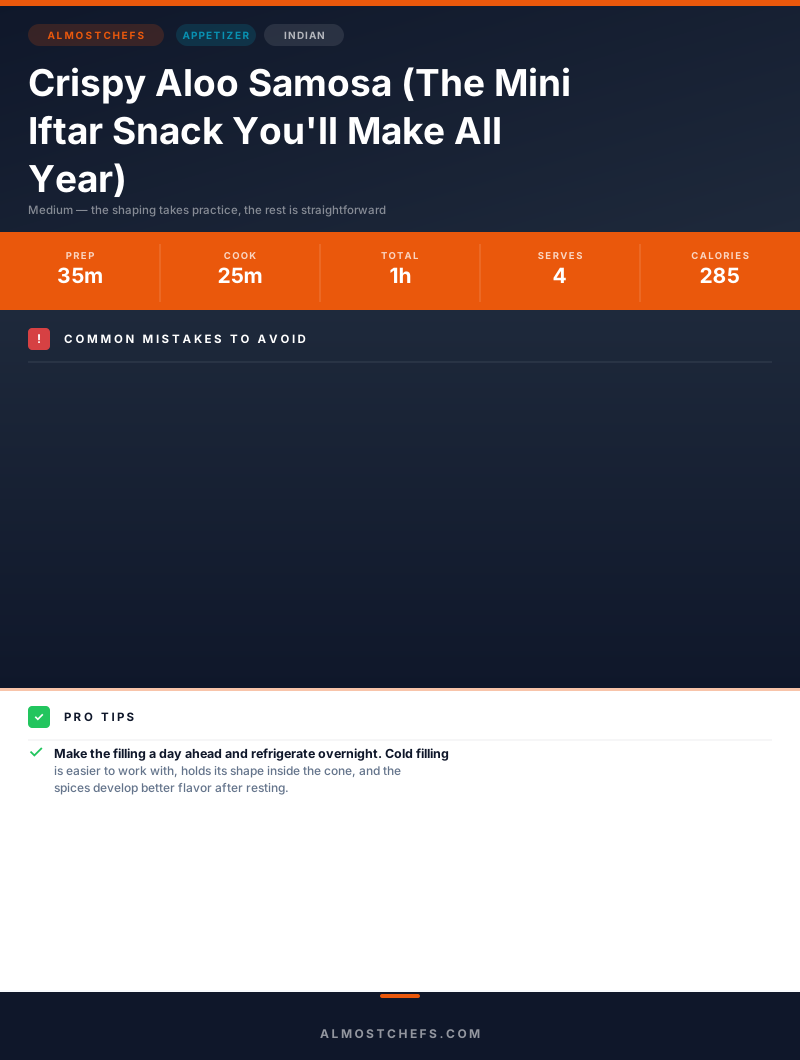
The Science of
Crispy Aloo Samosa (The Mini Iftar Snack You'll Make All Year)
We turned everything on this page into a beautiful, flour-proof PDF cheat sheet. Print it out, stick it to your fridge, and never mess up your crispy aloo samosa (the mini iftar snack you'll make all year) again.
*We'll email you the high-res PDF instantly. No spam, just perfectly cooked meals.
AlmostChefs Editorial Team
We translate the internet's most popular cooking videos into foolproof, beginner-friendly written recipes. We analyze multiple methods, test them in our kitchen, and engineer a single "Master Recipe" that gives you the best possible result with the least possible stress.