Fragrant Aloo Matar Pulao (The One-Pot Rice Dish You'll Make Every Week)
A fragrant one-pot Indian rice dish loaded with golden potatoes, sweet green peas, and whole spices bloomed in ghee. We broke down the most-watched YouTube methods to build one technique that nails fluffy, separated rice and deeply spiced vegetables every single time.
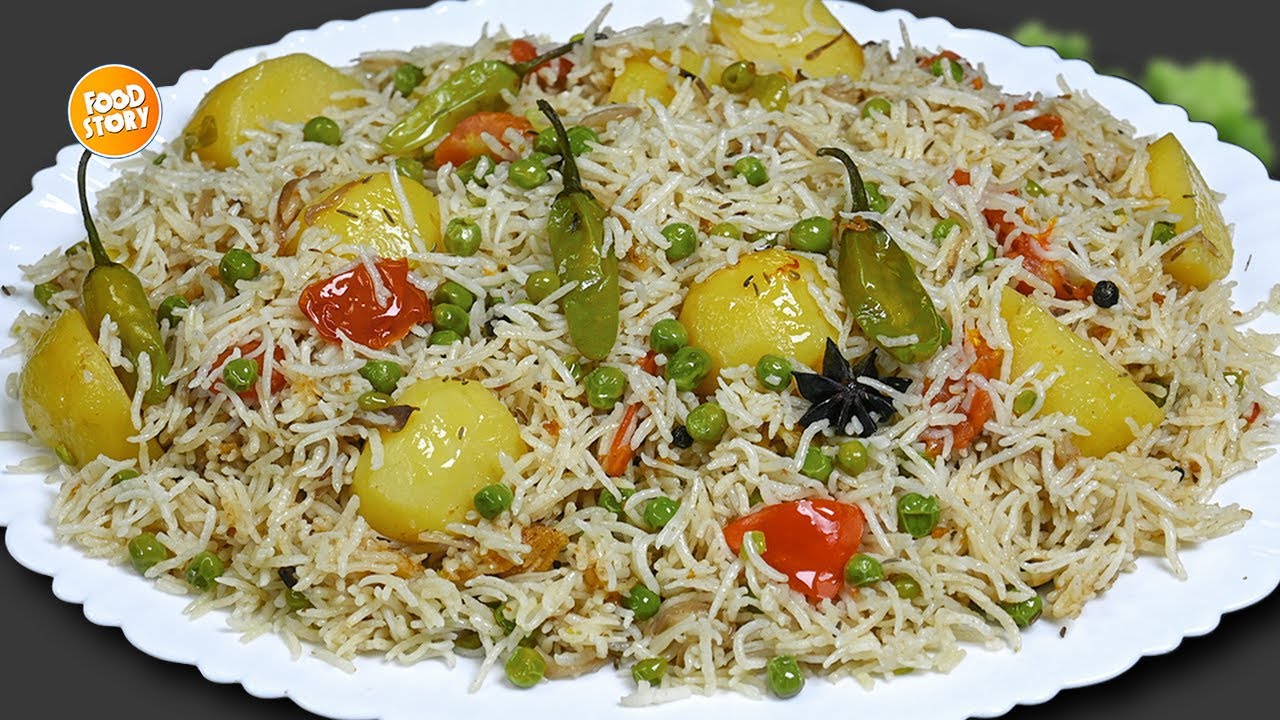
“Pulao is the most underestimated dish in Indian cooking. It looks simple — rice, potatoes, peas — and that simplicity is exactly why most people get it wrong. They rush the spice bloom, skip the rice soak, or crowd the pot and turn everything to mush. Aloo Matar Pulao done right produces fluffy, long-grained basmati where every grain is separate, potatoes that are golden and intact, and peas that are sweet rather than grey. The whole thing comes together in one pot in under 45 minutes. Here is the technique that actually works.”
Why This Recipe Works
Pulao occupies a strange middle ground in Indian cooking — dismissed as "the simple one" compared to biryani, yet requiring just as much precision to execute correctly. The dish looks unassuming: rice, potatoes, peas, spices. But the window between fluffy, fragrant, perfectly separated grains and a sticky pot of broken rice is narrower than most recipes acknowledge. Understanding why the technique works is what separates people who cook this reliably from people who get it right once and can't replicate it.
The Spice Bloom Is the Foundation
Everything in aloo matar pulao depends on what happens in the first two minutes of cooking. Whole spices — cumin seeds, green and black cardamom, cloves, cinnamon, bay leaves — must be dropped into genuinely hot ghee and allowed to sizzle aggressively for 60 to 90 seconds. The sounds you're listening for: popping, crackling, and an immediate wave of fragrance that fills the kitchen. What you're achieving is the extraction of fat-soluble volatile aromatic compounds from the spices into the cooking fat itself. Once those compounds are in the fat, every ingredient that follows — the onions, the potatoes, the rice — gets coated in that aromatic base. Skip this step or rush it with lukewarm ghee, and no amount of ground spice added later will compensate. The dish will taste like rice with toppings rather than rice infused from the inside out.
The reason this recipe uses both ghee and neutral oil matters here. Pure ghee burns at around 375°F under sustained high heat, and the onion stage that follows the spice bloom requires aggressive heat to caramelize properly. Adding a tablespoon of neutral oil raises the effective smoke point of the fat blend, protecting the ghee's flavor while giving you the thermal headroom to brown the onions deeply without scorching the whole base.
The Onion and Tomato Base
Pulao does not require the exhaustive onion caramelization that biryani demands, but it does require commitment. Eight to ten minutes over medium-high heat, stirring regularly, until the onions are a deep, uniform golden brown. Not translucent. Not soft and pale. Golden and beginning to stick slightly to the pot — that's the Maillard reaction doing exactly what it's supposed to do. The tomato goes in next and needs to cook down completely until it dissolves into the fat base and the oil separates around the edges of the mixture. That oil separation is a visual signal, not an accident: it tells you the water content of the tomato has cooked off and what remains is concentrated flavor. Rushing past this stage produces a thin, acidic base instead of the rich, cohesive one that carries the rice.
Rice Geometry and the Pilaf Method
The step most home cooks skip entirely: adding the drained rice to the spiced fat and toasting it for two full minutes before any water enters the pot. This is the pilaf method, and it does two things simultaneously. First, it coats every individual rice grain in a thin film of seasoned fat, which acts as a physical barrier that keeps grains from sticking together during the steam phase. Second, it very slightly toasts the outer starch layer, giving the cooked rice a subtle nuttiness that plain water-steamed basmati never achieves.
The water ratio for pulao is not the same as for plain steamed basmati. The potatoes and peas release moisture as they cook, contributing liquid to the total steam environment. Use the standard 2:1 ratio and you will consistently produce sticky, waterlogged rice. The correct ratio for pulao is 1.75 cups water to 1 cup of soaked, drained rice — and the soaking is non-negotiable. Unsoaked basmati absorbs water at an uneven rate, producing some grains that are fully cooked while adjacent grains are still chalky at the center.
The Low-and-Slow Steam Finish
Once the lid goes on and the heat drops to its lowest setting, the heavy-bottomed pot earns its place. Cast iron or thick stainless steel holds heat evenly across the entire base, ensuring that the rice on the outer edges cooks at the same rate as the rice at the center. Thin aluminum pots create concentrated hot spots that scorch the bottom layer while the middle stays underdone — a hardware problem masquerading as a technique problem.
The 18-20 minutes on low heat followed by 5 minutes of resting with the heat off is not a conservative safety margin. It is the actual cooking time. The residual steam in the pot during that rest period finishes the final 10% of the rice's cook and allows moisture to redistribute evenly from top to bottom. Cut the rest period short and the top layer will be slightly dry while the bottom sits in puddles. The pulao is done when you are, not when the timer goes off.
Where Beginners Mess This Up
Before we start, read this. These are the 4 reasons your fragrant aloo matar pulao (the one-pot rice dish you'll make every week) will fail:
- 1
Skipping the rice soak: Basmati rice must soak for at least 20-30 minutes before cooking. Dry grains absorb water unevenly in the pot — some overcook while others stay chalky. The soak pre-hydrates each grain so they all cook at the same rate and elongate properly instead of splitting or clumping.
- 2
Underblooming the whole spices: Whole cumin, cardamom, cloves, and cinnamon must sizzle and pop in hot ghee for a full 60-90 seconds before anything else enters the pot. This step extracts their fat-soluble volatile oils into the cooking fat. If you rush it or use cold ghee, the spices never fully open and the rice tastes flat and one-dimensional.
- 3
Wrong water ratio: Pulao rice-to-water ratio is not the same as plain steamed rice. The vegetables release moisture as they cook, which counts toward the total liquid. Standard ratio for pulao: 1 cup soaked rice to 1.75 cups water. Use more and you get porridge. Use less and the grains are crunchy in the center.
- 4
Overcrowding the pot or stirring during cooking: Once the lid goes on and the heat drops to low, do not stir. Stirring breaks the steam channels that form through the rice, collapses the grain structure, and produces sticky clumps. Resist the urge. The rice steams itself — your job is to leave it alone.
The Video Reference Library
Want to see it in action? Here are the exact videos we analyzed and combined to build this foolproof recipe translation:
The source video for this recipe. Demonstrates the spice blooming technique and proper water ratio clearly. Pay attention to the color of the onions before the rice goes in.
Covers the fundamentals of whole-spice blooming in ghee and explains why basmati soaking time affects grain elongation. Useful companion for understanding the technique.
Focused entirely on rice-to-water ratios and the steam-finishing method. Essential watch if your pulao rice has been coming out sticky or undercooked.
🛠️ Core Equipment
- Heavy-bottomed pot or Dutch oven with tight-fitting lidEven heat distribution is everything in pulao. A thin pot creates scorched bottom rice and raw top rice simultaneously. A [Dutch oven](/kitchen-gear/review/dutch-oven) or heavy stainless saucepan gives you the thermal mass to hold steady low heat across the entire base.
- Fine-mesh sieveFor rinsing and draining the soaked rice. Basmati needs to be rinsed until the water runs clear to remove excess surface starch — that starch is the primary cause of sticky, clumped pulao.
- Measuring cupThe water ratio in pulao is precise. Eyeballing it produces inconsistent results. A standard measuring cup takes ten seconds and eliminates one of the most common failure points.
- Sharp knife and cutting boardUniform potato cubes are not aesthetic preference — they are functional. Unevenly cut potatoes mean some pieces are mushy before others are cooked through. Aim for 3/4-inch cubes consistently.
Fragrant Aloo Matar Pulao (The One-Pot Rice Dish You'll Make Every Week)
🛒 Ingredients
- ✦1.5 cups aged basmati rice, rinsed and soaked 25 minutes
- ✦2 medium Yukon Gold potatoes, peeled and cut into 3/4-inch cubes
- ✦1 cup green peas, fresh or frozen
- ✦1 large yellow onion, thinly sliced
- ✦1 medium Roma tomato, finely chopped
- ✦2 tablespoons ghee
- ✦1 tablespoon neutral oil
- ✦1.5 tablespoons ginger-garlic paste
- ✦1 teaspoon cumin seeds
- ✦2 bay leaves
- ✦4 green cardamom pods, lightly crushed
- ✦4 whole cloves
- ✦1 cinnamon stick (1.5-inch piece)
- ✦1 black cardamom pod
- ✦1/2 teaspoon turmeric powder
- ✦1 teaspoon coriander powder
- ✦1/2 teaspoon red chili powder
- ✦1/2 teaspoon garam masala
- ✦2.75 cups water or light vegetable broth
- ✦1.5 teaspoons sea salt, plus more to taste
- ✦2 tablespoons fresh lemon juice
- ✦3 tablespoons fresh cilantro leaves, roughly chopped
- ✦2 tablespoons fresh mint leaves, torn
👨🍳 Instructions
01Step 1
Rinse the soaked basmati rice under cold water until the water runs completely clear — usually 4-5 passes. Drain thoroughly in a fine-mesh sieve.
02Step 2
Heat ghee and oil together in a heavy-bottomed pot over medium-high heat. Once the ghee shimmers, add cumin seeds, bay leaves, cardamom pods, cloves, cinnamon stick, and black cardamom. Sizzle for 60-90 seconds until the cumin seeds turn deep brown and the whole spices are fragrant.
03Step 3
Add the sliced onions and cook over medium-high heat for 8-10 minutes, stirring every 2 minutes, until deep golden brown.
04Step 4
Add ginger-garlic paste and cook for 2 minutes, stirring constantly, until the raw smell disappears and the paste turns slightly golden.
05Step 5
Add the chopped tomato and cook for 3-4 minutes until it breaks down completely and the oil begins to separate around the edges of the mixture.
06Step 6
Add the potato cubes, turmeric, coriander powder, and red chili powder. Stir to coat the potatoes evenly. Cook for 3-4 minutes to partially cook the potato surface and seal in the starch.
07Step 7
Add the drained rice and stir gently to coat every grain in the spiced fat. Cook for 2 minutes, stirring once or twice. The rice should turn very slightly translucent at the edges.
08Step 8
Pour in the water or broth, add salt, and bring to a vigorous boil uncovered. Taste the liquid — it should be seasoned slightly saltier than you want the finished dish.
09Step 9
Add the green peas and garam masala. Stir once, reduce heat to the lowest possible setting, and cover with a tight-fitting lid.
10Step 10
Cook undisturbed on the lowest heat for 18-20 minutes. Do not lift the lid, stir, or adjust the heat.
11Step 11
Turn off the heat and let the pot rest, still covered, for 5 full minutes. The residual steam finishes cooking any remaining moisture.
12Step 12
Remove the lid, add lemon juice, cilantro, and mint. Use a fork to gently fluff the rice from the bottom up — do not stir aggressively or the grains will break.
Nutrition Per Serving
Estimates based on standard preparation. Adjustments alter macros.
🔄 Substitutions
Instead of Ghee...
Use Coconut oil or vegan butter
Loses the nutty dairy flavor but maintains the fat base for spice blooming. Coconut oil adds a subtle sweetness. Vegan butter browns the onions cleanly.
Instead of Yukon Gold potatoes...
Use Sweet potatoes or cauliflower florets
Sweet potatoes add natural sweetness and cook in the same timeframe. Cauliflower cooks faster — add it 5 minutes after the potatoes if mixing.
Instead of Fresh green peas...
Use Chickpeas or edamame
Canned chickpeas (drained) add protein and a nuttier flavor profile. Edamame holds its texture better than peas and adds a slightly grassy note.
Instead of Aged basmati...
Use Sella (parboiled) basmati
More forgiving and harder to overcook. Chewier texture and slightly longer grain. Common in restaurants for exactly this reason.
🧊 Storage & Reheating
In the Fridge
Store in an airtight container for up to 3 days. The spice flavors deepen overnight — day-two pulao is genuinely better than day-one.
In the Freezer
Freeze in individual portions for up to 2 months. Spread on a baking sheet to cool completely before portioning to prevent clumping.
Reheating Rules
Sprinkle 2-3 tablespoons of water over the rice, cover tightly, and steam on low heat for 8-10 minutes. Microwave works in a pinch — cover with a damp paper towel to retain moisture.
❓ Frequently Asked Questions
Why is my pulao rice sticky and clumped?
Two likely causes: you didn't rinse the rice thoroughly enough before cooking, or you used too much water. Rinse until the water runs completely clear to remove surface starch, and use exactly 1.75 cups of water per cup of soaked rice when making pulao.
Can I make this without ghee?
Yes. Any neutral oil works — avocado oil or refined coconut oil are the best substitutes. Ghee contributes a nutty, slightly sweet flavor that neutral oils don't replicate, but the technique and texture remain the same.
My potatoes are still firm when the rice is done. What went wrong?
The potato cubes were too large. Cut them to 3/4 inch maximum. Larger cubes need more time than the rice allows. You can also partially microwave the cubed potatoes for 2 minutes before adding them to the pot.
Can I add other vegetables?
Yes, but only add vegetables that cook in 18-20 minutes. Good additions: diced carrots, green beans, corn. Avoid zucchini and spinach — they release too much water and make the rice mushy.
What is the difference between pulao and biryani?
Pulao cooks the rice and vegetables together in the same pot from the beginning. Biryani separately parboils the rice and cooks the protein, then layers and steams them together. Pulao is simpler, faster, and more forgiving. Biryani is more complex with a more dramatic flavor gradient.
Why do I need both ghee and oil?
Ghee has a lower smoke point than neutral oil and can burn during the initial high-heat onion stage. The neutral oil raises the smoke point of the combined fat, protecting the ghee's flavor while still getting the benefit of its dairy-based richness.

The Science of
Fragrant Aloo Matar Pulao (The One-Pot Rice Dish You'll Make Every Week)
We turned everything on this page into a beautiful, flour-proof PDF cheat sheet. Print it out, stick it to your fridge, and never mess up your fragrant aloo matar pulao (the one-pot rice dish you'll make every week) again.
*We'll email you the high-res PDF instantly. No spam, just perfectly cooked meals.
AlmostChefs Editorial Team
We translate the internet's most popular cooking videos into foolproof, beginner-friendly written recipes. We analyze multiple methods, test them in our kitchen, and engineer a single "Master Recipe" that gives you the best possible result with the least possible stress.