Crispy Aloo Chilla (The Breakfast You'll Make Every Week)
A savory Indian gram flour crepe loaded with spiced grated potato, fresh herbs, and caramelized onion — cooked on a hot griddle until lace-edged and golden. We broke down the technique to fix the three things that make most home versions stick, tear, or taste flat.
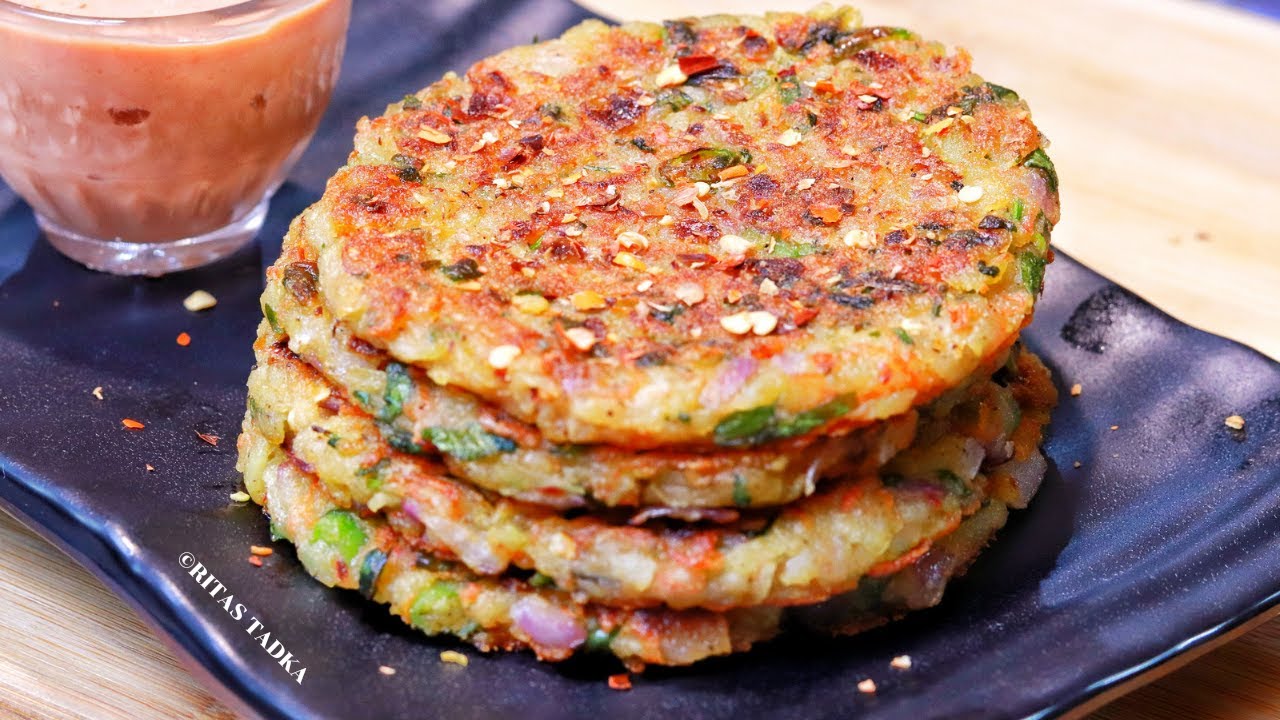
“Aloo Chilla is one of those dishes that sounds simple on paper but produces wildly inconsistent results in practice. Too much water and the crepe tears when you flip. Not enough potato and it tastes like cardboard. Wrong heat and you get a rubbery disc instead of something with crispy, lace-edged corners. The fix is not complicated — it's just precise. Get the batter consistency right, preheat your griddle properly, and use a thin film of oil on every pour. Everything else is detail.”
Why This Recipe Works
Aloo Chilla sits in that dangerous category of recipes that look effortless on video and produce frustrating results on the first three attempts. You mix batter, you pour batter, you flip a crepe — what could go wrong? Quite a lot, it turns out, and almost all of it is physics rather than skill. Once you understand what gram flour is actually doing in the pan, the technique clicks immediately and stays with you permanently.
The Gram Flour Baseline
Besan is not wheat flour with a different name. It behaves completely differently under heat: it sets faster, absorbs water more aggressively over time, and browns at lower temperatures. These properties make it both more forgiving and less predictable than all-purpose flour. More forgiving because there's no gluten development to overwork — you can stir this batter for five minutes and it won't toughen. Less predictable because it continues absorbing water for up to 20 minutes after mixing, meaning a batter that's perfect at the pour is too thick for the sixth one if you're not watching it.
The quality of the gram flour matters significantly. Freshly milled besan has a clean, slightly nutty aroma and a pale golden color. Stale besan smells faintly bitter and produces a flat, one-dimensional chilla regardless of what spices you add. Buy in small quantities. Store in an airtight container away from light. When in doubt, smell it before using.
The Potato Problem
Raw potato is approximately 80% water by weight. This is the number that ruins most aloo chilla. When you grate potato and add it directly to batter, you're introducing an uncontrolled volume of starch water that makes the batter unpredictable — sometimes too thin, sometimes gummy, always inconsistent. The fix is mechanical: grate, then squeeze. A clean kitchen towel works better than a cheesecloth because you can apply more force. You should be surprised by how much liquid comes out. That liquid is the enemy of a crispy edge.
The choice of potato variety matters less than how you prepare it. Yukon Gold has a buttery flavor and medium starch content that behaves predictably in batter. Russet potatoes have more starch and need more aggressive squeezing but produce a crispier result. Waxy potatoes like red bliss have too much moisture and not enough starch to hold together — avoid them entirely.
Heat as the Primary Variable
Most home cooks underestimate how hot the pan needs to be for a successful chilla. You want the surface temperature somewhere around 375-400°F before the first pour — hot enough that the batter sets on contact and begins crisping at the edges within 30 seconds. A cast iron tawa preheated for at least 3 full minutes reaches this temperature evenly across the entire surface. Thin stainless steel pans never do.
The spreading window is critical and brief. Gram flour batter begins gelling on contact with heat, which means you have roughly 8-10 seconds from the moment the batter hits the pan to shape the chilla into an even circle. Use the back of a ladle and work from the center outward in an expanding spiral motion. If the batter is resisting the spread, the pan is too hot. If it's spreading lazily and pooling at the edges, the pan isn't hot enough.
Why the Flip Is Terrifying (And Shouldn't Be)
The single most common moment of chilla failure is the flip, and it almost always happens because the cook flipped too early. A properly set chilla sends you three clear signals before it's ready: the top surface looks completely matte with no wet sheen, the edges have turned a deeper gold and curled very slightly away from the pan, and the entire crepe moves as a single rigid unit when you shake the pan. If any of those three signals are absent, wait 30 more seconds.
When all three conditions are met, the fish spatula slides cleanly under the entire surface without resistance. The flip should be decisive — a slow, hesitant flip is more likely to tear than a fast, committed one. The second side needs only 90 seconds to 2 minutes: it won't color as dramatically as the first side, but it will develop a matte, slightly freckled finish that signals it's cooked through.
The Architecture of Flavor
Carom seeds (ajwain) are non-negotiable here. They have a sharp, thyme-forward intensity that cuts through the dense starchiness of the potato and gram flour combination — without them, the chilla tastes heavy and one-dimensional. Cumin adds earthiness from the bass notes up. Grated ginger adds brightness. Fresh cilantro added to the batter (rather than sprinkled on top) becomes concentrated and fragrant as it cooks into the crepe surface, contributing flavor at every bite rather than just on the surface. This layering of aromatics is what separates aloo chilla from a glorified potato pancake.
Where Beginners Mess This Up
Before we start, read this. These are the 4 reasons your crispy aloo chilla (the breakfast you'll make every week) will fail:
- 1
Batter that's too thin or too thick: Aloo Chilla batter needs to be exactly the consistency of heavy cream — thick enough to coat a spoon but thin enough to spread on its own when poured. Too thick and the crepe doesn't spread, leaving you with a dense, doughy cake. Too thin and it tears at the edges the moment you try to flip. Add water one tablespoon at a time until you hit the right consistency.
- 2
Cooking on the wrong heat: Medium-high heat is the only setting that works here. Too low and the chilla steams instead of sears — you get a pale, soft pancake with no crunch. Too high and the outside chars before the inside sets. Preheat your tawa or griddle for at least 3 minutes before the first pour. If water droplets skitter and evaporate on contact, you're at the right temperature.
- 3
Skipping the resting time on the batter: Gram flour (besan) needs at least 5-10 minutes after mixing to fully hydrate. Pouring immediately after mixing produces a gritty texture and uneven cooking. Let the batter rest. The flour absorbs the water, the gluten relaxes, and the chilla will spread more evenly and hold together better when you flip.
- 4
Using too much oil per pour: Chilla needs just a thin film of oil — not a shallow fry. Too much oil causes the edges to fry into crumbled shards rather than a unified lacy crust. Use a brush or folded paper towel to wipe an even, thin layer of oil across the pan before each pour. This is a crepe, not a fritter.
The Video Reference Library
Want to see it in action? Here are the exact videos we analyzed and combined to build this foolproof recipe translation:
The source video that inspired this recipe. Excellent demonstration of batter consistency and the heat control technique that creates crispy edges without burning the center.
Detailed walkthrough of the spreading technique and oil application method. Useful reference for first-timers who want to see the batter pour in real time.
Covers common chilla variations and the adjustments needed for different add-ins. Good context for understanding how potato changes the batter behavior versus a plain besan chilla.
🛠️ Core Equipment
- Cast iron tawa or flat griddleDistributes heat evenly across the full surface. A warped or thin pan creates hot spots that cook the center before the edges have set, making flipping impossible without tearing. If you only own one Indian cooking pan, make it a cast iron tawa.
- Ladle or large spoonFor portioning consistent amounts of batter. Each chilla should use the same volume so they cook at the same rate. A 4-ounce ladle is ideal — one pour, one chilla.
- Flat-edged spatulaA thin, wide spatula is essential for a clean flip. Thick spatulas dig into the chilla rather than sliding beneath it, causing tears. A [fish spatula](/kitchen-gear/review/fish-spatula) or crepe spatula is the best tool for this job.
- Box graterFor grating the potato directly into the batter. Fine grating distributes the potato evenly so no single bite is a dense clump of starch. Coarse grating leaves chunks that create weak spots in the crepe structure.
Crispy Aloo Chilla (The Breakfast You'll Make Every Week)
🛒 Ingredients
- ✦1 cup gram flour (besan)
- ✦2 medium Yukon Gold potatoes, peeled and finely grated
- ✦1 small yellow onion, finely diced
- ✦2 green Thai chilies, finely minced
- ✦1-inch piece fresh ginger, grated
- ✦1/4 cup fresh cilantro leaves and stems, finely chopped
- ✦1/2 teaspoon carom seeds (ajwain)
- ✦1/2 teaspoon ground cumin
- ✦1/4 teaspoon turmeric powder
- ✦1/2 teaspoon red chili powder
- ✦3/4 teaspoon fine sea salt, plus more to taste
- ✦3/4 cup water, plus more as needed
- ✦3 tablespoons neutral oil, for cooking
👨🍳 Instructions
01Step 1
Grate the potatoes on the fine side of a box grater. Immediately squeeze out as much moisture as possible using a clean kitchen towel or your hands. Excess starch water is the primary reason chilla batters turn gummy.
02Step 2
In a large mixing bowl, combine the gram flour, squeezed grated potato, diced onion, minced green chilies, grated ginger, cilantro, carom seeds, cumin, turmeric, red chili powder, and salt. Mix dry to distribute evenly.
03Step 3
Add 3/4 cup water gradually, whisking constantly until a smooth, lump-free batter forms with the consistency of heavy cream. Let rest for 8-10 minutes.
04Step 4
Heat a cast iron tawa or flat griddle over medium-high heat for 3-4 minutes. Test readiness by flicking a few drops of water onto the surface — they should skitter and evaporate within 2 seconds.
05Step 5
Using a folded paper towel held with tongs, wipe a thin, even layer of oil across the entire surface of the pan.
06Step 6
Pour one ladle of batter (approximately 4 ounces) into the center of the pan. Using the back of the ladle, immediately spread the batter outward in a spiral motion to form a thin, even circle approximately 7-8 inches in diameter.
07Step 7
Cook uncovered for 2-3 minutes until the edges turn golden and begin to pull away from the pan surface, and the top looks matte and set (no wet batter visible).
08Step 8
Drizzle a few drops of oil around the edges of the chilla. Slide a thin spatula completely under the crepe and flip in one confident motion. Cook the second side for 1-2 minutes until golden and crisp.
09Step 9
Transfer to a plate and serve immediately. Repeat with remaining batter, wiping the pan with oil before each pour.
Nutrition Per Serving
Estimates based on standard preparation. Adjustments alter macros.
🔄 Substitutions
Instead of Gram flour (besan)...
Use Chickpea flour or rice flour
Standard chickpea flour is nearly identical to besan and works 1:1. Rice flour produces a thinner, crispier chilla with less protein binding — use 80% rice flour and 20% cornstarch for best results.
Instead of Yukon Gold potatoes...
Use Sweet potato or zucchini
Sweet potato adds natural sweetness and slightly changes the color. Zucchini must be squeezed extremely thoroughly — it releases more water than regular potato and can turn the batter unworkable if not properly drained.
Instead of Green Thai chilies...
Use Serrano peppers or jalapeño
Serranos are a direct heat-level match. Jalapeños are milder and slightly fruitier. Either works — just mince finely so they distribute evenly through the batter.
Instead of Carom seeds (ajwain)...
Use Cumin seeds or dried thyme
Ajwain has a thyme-adjacent flavor profile with more intensity. Dried thyme is the closest non-Indian substitute. Cumin seeds work but produce a different flavor note — earthier, less sharp.
🧊 Storage & Reheating
In the Fridge
Store cooled chilla in an airtight container for up to 2 days. Texture degrades significantly — reheat on a dry hot pan, not microwave.
In the Freezer
Stack between parchment sheets and freeze for up to 1 month. Reheat directly from frozen on a medium-hot tawa for 2 minutes per side.
Reheating Rules
A dry cast iron pan over medium heat for 1-2 minutes per side restores most of the original crispness. Microwave reheating produces a rubbery, limp result — avoid it entirely.
❓ Frequently Asked Questions
Why does my chilla tear when I flip it?
Two causes. First, flipping too early — the top should look completely matte and set before you flip. Second, batter that's too thin. If it tore despite looking set, add a tablespoon of gram flour to the remaining batter to improve structural integrity.
Can I make the batter ahead of time?
Yes, up to 8 hours in advance. Store covered in the fridge. Gram flour continues to absorb water over time, so the batter will thicken. Stir in water one tablespoon at a time before cooking to return it to pouring consistency.
Why is my chilla sticking to the pan?
Either the pan wasn't hot enough before the pour, or you didn't use enough oil. Chilla needs both heat and a fat barrier. Preheat fully, wipe with oil before every pour, and don't try to move or flip before the edges release naturally.
My chilla tastes bitter — what went wrong?
Old or low-quality gram flour. Besan goes rancid faster than wheat flour, especially in warm climates. Smell your besan before using — it should smell nutty and mild, not musty or sharp. Buy in smaller quantities and use within 3 months of opening.
Can I make this gluten-free?
It already is. Gram flour is 100% chickpea-based with no wheat. Just verify that your specific besan bag is certified gluten-free if cross-contamination is a concern, as some facilities process wheat alongside legume flours.
What do I serve with aloo chilla?
Green chutney (cilantro-mint) is the traditional pairing — the acidity cuts through the starchy richness perfectly. Plain yogurt works equally well. Ketchup is common in home kitchens and not something you should feel embarrassed about.

The Science of
Crispy Aloo Chilla (The Breakfast You'll Make Every Week)
We turned everything on this page into a beautiful, flour-proof PDF cheat sheet. Print it out, stick it to your fridge, and never mess up your crispy aloo chilla (the breakfast you'll make every week) again.
*We'll email you the high-res PDF instantly. No spam, just perfectly cooked meals.
AlmostChefs Editorial Team
We translate the internet's most popular cooking videos into foolproof, beginner-friendly written recipes. We analyze multiple methods, test them in our kitchen, and engineer a single "Master Recipe" that gives you the best possible result with the least possible stress.