Agwi Jjim Done Right (Korea's Most Underrated Spicy Braise)
A ferociously spiced Korean braised monkfish buried under a tangle of bean sprouts, green onions, and a gochugaru-forward sauce with real depth. We broke down the technique behind Masan's most famous dish to deliver the real thing — not the watered-down version.

“Agwi jjim is the dish that Koreans from Masan will tell you no one else makes properly. They're mostly right. The version you find outside of that coastal city tends to be thin, sweet, and over-sauced — missing the fermented depth and searing heat that makes the original worth eating. The fish is monkfish, one of the ugliest creatures in any ocean, and one of the most rewarding to cook. Here is how to do it correctly.”
Why This Recipe Works
Agwi jjim is a dish built on an ugly fish, a violent amount of chili, and a sauce architecture that takes longer to explain than it does to execute. Most Western recipes for it are sanitized beyond recognition — less gochugaru, more sugar, the doenjang quietly dropped because the author didn't think their audience would have it. The result is a sweet, red-tinted stew that has nothing to do with the bowl you'd eat standing at a sidewalk restaurant in Changwon.
This version does not make those concessions.
The Monkfish Question
Monkfish (아귀, agwi) is one of the most efficiently designed eating animals in the ocean. It has an enormous head, a gaping mouth lined with inward-curving teeth, and a body that is 70% tail. That tail is what you're cooking — a dense, gelatinous fillet with almost no bones, a mildly sweet flavor, and a texture that genuinely resembles lobster under direct heat. It is not a delicate fish. It does not flake. It holds structure through an aggressive braise without turning to paste, which is exactly why it works here.
The problem monkfish presents is surface slime and interior water content. Both dilute your sauce. The blanching step — 90 seconds in salted boiling water — solves both simultaneously. The heat firms the outer layer and expels the excess moisture before the braise begins. This is not an optional step you can skip to save time. It is the step that determines whether your sauce has body or looks like chili water.
The Sauce Architecture
The sauce for agwi jjim is built in layers of fermentation. Gochugaru provides the dominant heat and fruity pepper character. Gochujang adds body and a slow-building deeper heat. Soy sauce contributes salinity and a light sweetness. Fish sauce is the first hit of pure umami. And then doenjang — the component most recipes omit — drops in the basement-level fermented funk that anchors everything above it.
These five ingredients are doing different jobs at different frequencies. Removing any one of them shifts the balance irreparably. The wide braising pan you build this in matters too: the surface area drives evaporation, which concentrates the sauce at exactly the rate the vegetables are releasing moisture into it. A narrow pot traps liquid and the sauce never tightens.
The Vegetable Layering Logic
Bean sprouts, napa cabbage, and green onions are not interchangeable background vegetables. They go in a specific order because they have different cooking times and different structural roles. Cabbage first — it's the densest and slowest, and it creates a bed that prevents the fish from scorching on the pan bottom. Sprouts next — they wilt quickly and will become mush if they go in too early. Green onions last, three minutes before the end, so they retain color and a faint crunch that contrasts against the tender fish.
The monkfish itself goes in well after everything else has started cooking. This is the counterintuitive part. You're braising fish, so instinct says it goes in first or at least early. But properly blanched monkfish needs only 10-12 minutes in the sauce to finish. Add it at the beginning and you get rubber. Add it with 10 minutes left and you get the dish as it's meant to taste.
Why the Heat Level Matters
Agwi jjim from Masan is not casually spicy. It is the kind of spicy that turns the tip of your nose red and makes you reach for water before you realize the water is making it worse. This is by design. The heat forces you to eat slower, to take smaller bites, to alternate between fish and rice and pickled radish. It controls the pace of the meal. Reducing the gochugaru to make the dish approachable changes the eating experience entirely — the sauce becomes something you can rush, and you lose the ritual.
If you want agwi jjim as it exists in the city that invented it, you use the full amount of coarse gochugaru and you serve cold beer alongside it. Everything else is negotiable.
Where Beginners Mess This Up
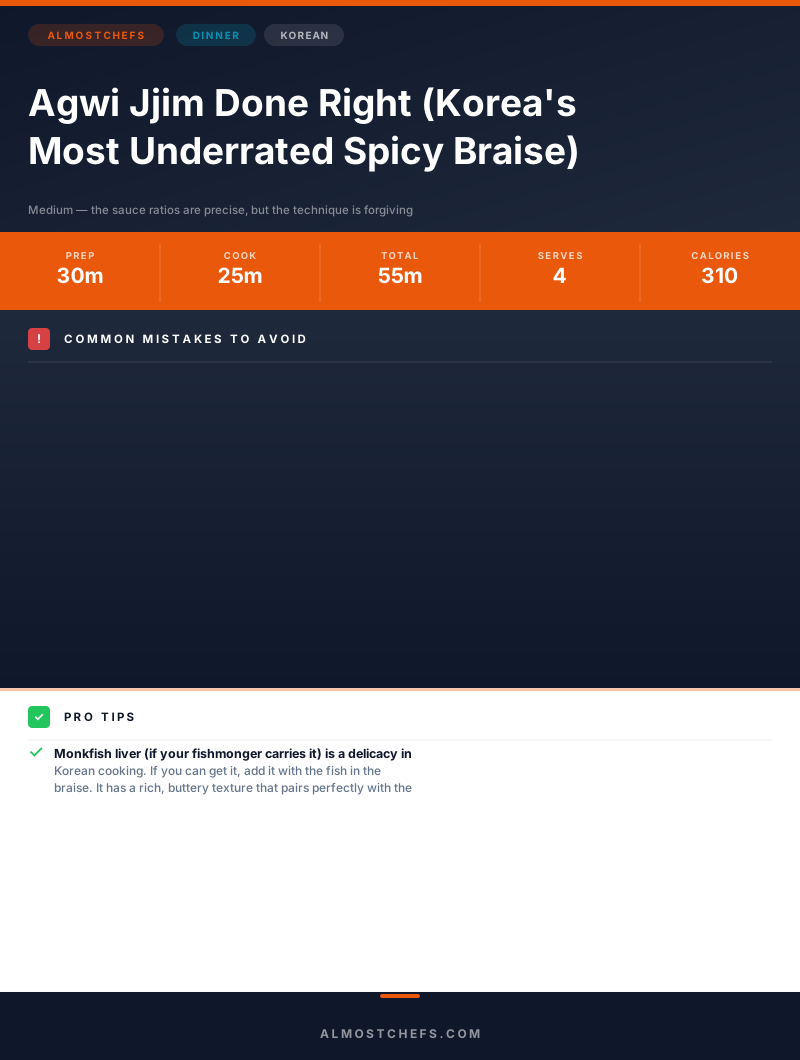
Before we start, read this. These are the 4 reasons your agwi jjim done right (korea's most underrated spicy braise) will fail:
- 1
Skipping the blanching step: Raw monkfish releases an enormous amount of liquid and has a pronounced oceanic slime that will dilute your sauce and compete with the gochugaru. A 90-second blanch in salted boiling water before braising removes the excess moisture, tightens the flesh, and lets the sauce reduce properly instead of turning watery.
- 2
Under-seasoning the sauce: Agwi jjim is not a subtle dish. The sauce must be intensely seasoned before the fish and vegetables go in — once the monkfish releases its moisture during the braise, it will dilute everything by 20-30%. Season aggressively at the paste stage. If the raw sauce tastes correct, the finished dish will taste flat.
- 3
Overcooking the monkfish: Monkfish has a firm, lobster-like texture when cooked correctly. Past 12-15 minutes of active braising it becomes rubbery and dry, even in sauce. Add the fish in the final 10-12 minutes of the cook — not at the beginning. The vegetables go first.
- 4
Using fine gochugaru instead of coarse: Coarse gochugaru (굵은 고춧가루) gives agwi jjim its characteristic texture and slow heat. Fine gochugaru turns the sauce muddy and makes the heat feel sharp instead of warm. If your spice drawer only has one type, look at the label. Coarse is correct here.
🛠️ Core Equipment
- Wide, deep braising pan or large wokYou need surface area to fit the monkfish pieces and bean sprouts without stacking. A narrow pot creates uneven cooking and steams instead of braises. At least 12 inches across.
- Large colander or spider strainerFor blanching the monkfish quickly and draining immediately. The blanch is fast — 90 seconds — and you need to pull the fish out the moment the timer goes.
- Kitchen shearsMonkfish is gelatinous and boneless in its fillets, making it difficult to cut cleanly with a knife. Shears let you portion pieces quickly without the flesh tearing or sliding.
- Large mixing bowlFor pre-mixing the sauce paste before it hits the pan. Homogenizing all the paste ingredients before cooking ensures even distribution across the fish and vegetables.
Agwi Jjim Done Right (Korea's Most Underrated Spicy Braise)
🛒 Ingredients
- ✦2 pounds monkfish fillet, cut into 2-inch pieces
- ✦3 cups mung bean sprouts
- ✦1 bunch green onions, cut into 2-inch segments
- ✦1/2 medium napa cabbage, cut into rough 2-inch pieces
- ✦4 tablespoons coarse gochugaru (Korean red pepper flakes)
- ✦2 tablespoons gochujang (Korean red pepper paste)
- ✦2 tablespoons soy sauce
- ✦1 tablespoon fish sauce
- ✦1 tablespoon doenjang (Korean fermented soybean paste)
- ✦1 tablespoon sesame oil
- ✦1 tablespoon rice wine (cheongju or mirin)
- ✦6 cloves garlic, minced
- ✦1 teaspoon fresh ginger, grated
- ✦1 teaspoon sugar
- ✦1/2 cup water or anchovy stock
- ✦1 tablespoon sesame seeds, toasted
- ✦Kosher salt for blanching water
👨🍳 Instructions
01Step 1
Bring a large pot of salted water to a boil. Add the monkfish pieces and blanch for 90 seconds. Drain immediately in a colander and set aside.
02Step 2
In a large mixing bowl, combine gochugaru, gochujang, soy sauce, fish sauce, doenjang, rice wine, garlic, ginger, and sugar. Mix thoroughly into a unified paste.
03Step 3
Heat the braising pan over medium-high heat. Add the sauce paste and stir constantly for 60-90 seconds until it becomes fragrant and darkens slightly.
04Step 4
Add the napa cabbage and 1/2 cup water or anchovy stock. Toss to coat. Cover and cook for 3 minutes until the cabbage begins to wilt.
05Step 5
Add the bean sprouts and toss everything together. Cook uncovered for 2 minutes.
06Step 6
Nestle the blanched monkfish pieces into the vegetables. Spoon the sauce over the top. Cover and braise over medium heat for 10-12 minutes.
07Step 7
Add the green onions in the final 3 minutes of cooking. They should just wilt.
08Step 8
Remove from heat. Drizzle sesame oil over the entire dish and toss gently.
09Step 9
Transfer to a serving platter or serve directly from the pan. Finish with toasted sesame seeds.
Nutrition Per Serving
Estimates based on standard preparation. Adjustments alter macros.
🔄 Substitutions
Instead of Monkfish...
Use Catfish or cod
Catfish is the more traditional substitute used in inland Korean kitchens. Cod is milder and will fall apart more easily — handle it gently and reduce braise time to 7-8 minutes.
Instead of Doenjang...
Use White miso
Loses the distinctly Korean fermented character but provides the same savory backbone. Use the same quantity. The result is slightly sweeter and less pungent.
Instead of Mung bean sprouts...
Use Soybean sprouts
Soybean sprouts (콩나물) are thicker and hold up better to longer cooking. They're the correct substitution if you prefer more textural contrast in the finished dish.
Instead of Gochugaru...
Use A mix of smoked paprika and cayenne (3:1 ratio)
Not a true substitute — gochugaru has a fruity sweetness that paprika approximates, and cayenne provides heat. The result lacks the depth of aged Korean pepper but is functional.
🧊 Storage & Reheating
In the Fridge
Store in an airtight container for up to 2 days. The sauce continues to absorb into the fish — day-two agwi jjim is notably more flavorful.
In the Freezer
Not recommended. Monkfish texture degrades significantly after freezing in sauce. The bean sprouts turn completely limp.
Reheating Rules
Add 2 tablespoons of water to the container, cover, and reheat over low heat for 8-10 minutes. Do not microwave — uneven heat makes the fish rubbery.
❓ Frequently Asked Questions
What does monkfish taste like?
Firm, mildly sweet, and often described as lobster-like. It holds its shape under high heat and absorbs sauce deeply because of its dense, meaty texture. It has almost no bones in the fillet, which makes it practical for braising.
Where does agwi jjim come from?
Masan (now part of Changwon city) on Korea's south coast. The dish became famous there because the port historically had abundant monkfish catches. The original Masan-style preparation is notably spicier and less sweet than versions found elsewhere in Korea.
Can I make agwi jjim less spicy?
Yes — reduce the gochugaru to 2 tablespoons and omit the gochujang, substituting 1 tablespoon of soy sauce instead. You'll lose the characteristic fire of the dish but retain the fermented savory character. It becomes a gentler braise rather than the real thing.
Do I have to use doenjang?
It's not optional if you want authentic depth. Doenjang provides the fermented umami foundation that separates Korean braises from every other spicy fish dish. Without it, the sauce tastes one-dimensional — hot and salty but not layered. White miso is the only workable substitute.
Why is my sauce watery?
You either skipped the blanching step or added the fish too early. Raw monkfish releases a significant amount of water during cooking. The blanch pre-expels most of that moisture. If you're already at a watery sauce, remove the lid, increase heat to medium-high, and cook uncovered for 3-5 minutes to reduce.
What do I serve with agwi jjim?
Steamed short-grain rice is mandatory — you need something to temper the heat and carry the sauce. Pickled radish (danmuji) cuts through the richness. A cold beer or makgeolli is the traditional pairing in Masan. Nothing else is required.
The Science of
Agwi Jjim Done Right (Korea's Most Underrated Spicy Braise)
We turned everything on this page into a beautiful, flour-proof PDF cheat sheet. Print it out, stick it to your fridge, and never mess up your agwi jjim done right (korea's most underrated spicy braise) again.
*We'll email you the high-res PDF instantly. No spam, just perfectly cooked meals.
AlmostChefs Editorial Team
We translate the internet's most popular cooking videos into foolproof, beginner-friendly written recipes. We analyze multiple methods, test them in our kitchen, and engineer a single "Master Recipe" that gives you the best possible result with the least possible stress.