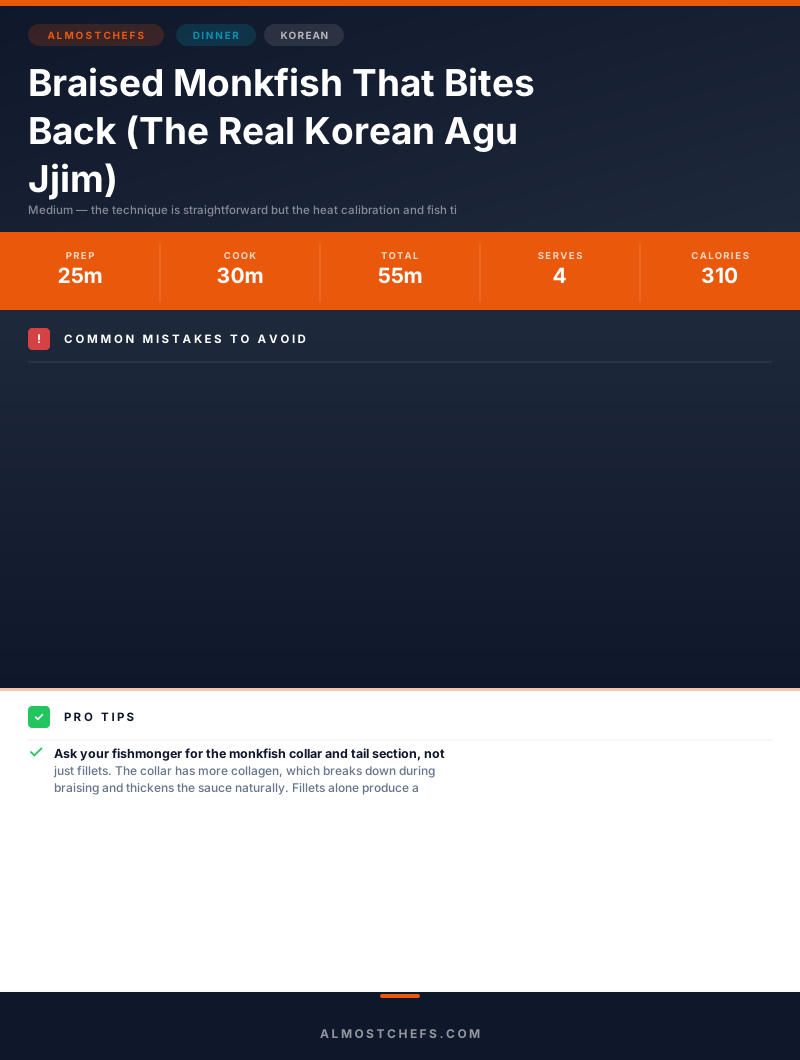
Braised Monkfish That Bites Back (The Real Korean Agu Jjim)
A ferociously spicy Korean braised monkfish dish — tender chunks of agu simmered in a gochugaru-heavy sauce with bean sprouts, glass noodles, and perilla leaves until the broth turns deep crimson and the fish melts at the fork. We broke down the technique to fix the three reasons most versions disappoint.

“Agu jjim is one of the most aggressively flavored dishes in the Korean canon — a braise so red it looks like the pot is on fire, built on a sauce that is equal parts gochugaru, garlic, and conviction. Most versions outside of Masan and Busan fail in the same three ways: the fish turns rubbery, the broth stays thin, and the heat is either timid or blunt. Getting it right means understanding what monkfish actually is, how its collagen behaves under heat, and why the bean sprouts are not a garnish.”
Why This Recipe Works
Monkfish has a problem with its reputation. In the West it gets sold as "poor man's lobster" — a backhanded compliment that tells you nothing useful. In Korea, agu (아구) is treated with the same seriousness as galbi or samgyeopsal, a protein with its own canonical preparation, its own regional identity, and its own physics of cooking that reward precision and punish impatience.
Agu jjim originated in Masan, a coastal city in South Gyeongsang Province, where monkfish were so abundant and so ugly that fishermen gave them away. The dish that emerged from that abundance is the opposite of humble — an aggressively spiced, deeply lacquered braise that has been refined over generations into something structurally specific. Every element is doing a job.
The Monkfish Advantage
Monkfish is almost entirely muscle with very little connective tissue in the fillet itself, but the collar and tail sections contain significant collagen. During braising, that collagen breaks down into gelatin and disperses into the sauce, thickening it from within without any starch or roux. This is why the broth in a well-made agu jjim coats the fish like a glaze — it has thickened itself through the fish's own proteins. Fillets alone, without the collagen-rich sections, produce thin broth that needs artificial thickening. Ask your fishmonger specifically for collar and tail pieces.
The density of monkfish flesh also creates an unusual timing window. For the first 8-9 minutes of braising in hot liquid, the fish holds its shape completely and absorbs the sauce. Then, somewhere around the 10-minute mark, the proteins cross-link and the texture shifts from tender to rubbery almost instantly. There is no graceful degradation with monkfish the way there is with salmon or halibut. You have a narrow window and then the fish is done, whether you're ready or not.
The Gochugaru Architecture
Korean red pepper flakes are not a seasoning in this dish — they are a structural ingredient. Five tablespoons of gochugaru produces a sauce that is deeply red, viscous, and complex. The key is blooming the paste in sesame oil before adding any liquid. At medium heat, the oil extracts the fat-soluble flavor compounds from the pepper flakes that water cannot reach. Those compounds — capsaicinoids, carotenoids, aromatic esters — dissolve into the oil and disperse evenly through the sauce when the stock is added. Skip this step and you get a sauce that tastes like pepper flakes floating in liquid. Bloom them first and you get something unified, where every spoonful carries the same concentrated depth.
The Vegetable Logic
Bean sprouts and perilla leaves are not garnishes. Bean sprouts provide textural contrast — they should have snap against the yielding fish. Timing them correctly means adding them in the final four minutes, long enough to soften but short enough to preserve their structural integrity. Perilla leaves go in at the very end, stirred in off the heat, where they wilt just enough to release their anise-adjacent aroma without losing the brightness that makes the dish feel alive.
Glass noodles serve a different function. They absorb the braising liquid as they cook, acting as a distributed thickening agent while providing a slippery, satisfying textural counterpoint to the dense fish. They also extend the dish significantly — four people become six when the noodles are in play.
This is a dish built on specificity. The heat, the fish timing, the vegetable sequencing — every decision has a consequence. Get the sequence right and you produce something that tastes like it came from a dedicated agu jjim restaurant in Masan. Get it wrong and you have spicy, watery fish soup. The margin between those two outcomes is narrower than you think, and entirely within your control.
Where Beginners Mess This Up
Before we start, read this. These are the 4 reasons your braised monkfish that bites back (the real korean agu jjim) will fail:
- 1
Overcooking the monkfish: Monkfish is dense and forgiving for the first eight minutes of braising, then turns rubbery almost immediately. Unlike salmon or cod, it holds its shape under heat — which tricks cooks into leaving it longer than necessary. The fish is done when it flakes cleanly at the thickest point. Pull it at that moment. The residual heat in the broth will carry it the rest of the way.
- 2
Under-blooming the gochugaru: Gochugaru added directly to liquid tastes raw and one-dimensional — all burn, no depth. You need to toast the pepper flakes briefly in sesame oil over medium heat until they darken one shade and become fragrant, about 90 seconds, before building the sauce around them. This single step triples the flavor complexity.
- 3
Watery broth that won't coat the fish: Agu jjim is a braise, not a soup. The broth should be thick enough to cling to the fish and noodles. If yours is thin, you either added too much liquid or skipped reducing it at the end. After the fish is cooked and removed, increase heat and reduce the broth by a third before pouring it back over everything.
- 4
Ignoring the bean sprout timing: Bean sprouts added at the start of braising turn to mush. Added at the very end, they stay raw and taste grassy. They go in during the final 4-5 minutes — long enough to soften but short enough to keep their snap and structural contrast against the tender fish.
🛠️ Core Equipment
- Wide, shallow braising pan or large sauté panMonkfish pieces need single-layer contact with the sauce. A deep pot stacks the fish and steams the bottom pieces while the top sits in air. A wide pan ensures every piece braises evenly in the liquid.
- Fine-mesh sieveFor straining the broth before the final reduction if you want a cleaner sauce. Optional, but it removes any bone fragments from the monkfish collar pieces.
- Tongs with silicone tipsMonkfish is slippery and dense. Metal tongs mark the flesh and break the pieces apart. Silicone tips grip without damaging the surface.
- Heavy-bottomed pot for the noodle soakGlass noodles need to soak in just-boiled water for 8-10 minutes before they go into the braise. A [heavy pot](/kitchen-gear/review/dutch-oven) retains heat during the soak and means you don't need to run the stove for a second pot simultaneously.
Braised Monkfish That Bites Back (The Real Korean Agu Jjim)
🛒 Ingredients
- ✦2 pounds monkfish, cut into 2-inch chunks (collar and tail sections preferred)
- ✦3 cups bean sprouts
- ✦3 ounces dried glass noodles (당면), soaked in hot water for 10 minutes and drained
- ✦6 green onions, cut into 2-inch pieces
- ✦10 perilla leaves (깻잎), torn
- ✦5 tablespoons gochugaru (Korean red pepper flakes)
- ✦2 tablespoons gochujang (Korean red pepper paste)
- ✦3 tablespoons soy sauce
- ✦1 tablespoon fish sauce
- ✦2 tablespoons sesame oil, divided
- ✦1 tablespoon toasted sesame seeds
- ✦2 tablespoons minced garlic (about 6 cloves)
- ✦1 teaspoon fresh ginger, grated
- ✦1 cup anchovy or kelp stock (or water as a last resort)
- ✦1 tablespoon sugar
- ✦Sea salt to taste
👨🍳 Instructions
01Step 1
Soak the dried glass noodles in a bowl of just-boiled water for 10 minutes. Drain and set aside.
02Step 2
In a small bowl, mix together gochugaru, gochujang, soy sauce, fish sauce, garlic, ginger, and sugar to form a paste. Set aside.
03Step 3
Heat 1 tablespoon sesame oil in a wide braising pan over medium heat. Add the gochugaru paste and stir continuously for 90 seconds until the paste darkens one shade and becomes intensely fragrant.
04Step 4
Pour in the anchovy stock and stir to combine with the paste. Bring to a simmer over medium-high heat.
05Step 5
Add the monkfish pieces in a single layer. Spoon the sauce over the fish and reduce heat to medium. Cover and braise for 8 minutes.
06Step 6
Add the glass noodles and green onions. Stir gently to submerge them in the sauce. Cook uncovered for 3 minutes.
07Step 7
Add the bean sprouts. Toss gently and cook for 4-5 minutes until just tender but still with a bite.
08Step 8
Check the fish at its thickest point — it should flake cleanly with a fork. If the broth looks thin, remove the fish and vegetables with a slotted spoon and increase heat to reduce the broth for 3-4 minutes, then return everything to the pan.
09Step 9
Drizzle remaining tablespoon of sesame oil over the top. Scatter torn perilla leaves and sesame seeds. Taste and adjust salt.
10Step 10
Serve immediately directly from the pan, family-style, with steamed white rice alongside.
Nutrition Per Serving
Estimates based on standard preparation. Adjustments alter macros.
🔄 Substitutions
Instead of Monkfish...
Use Anglerfish tail or skate wing
Skate wing has a similar dense, flaky texture and handles the braise well. Reduce cook time by 2 minutes — skate is thinner and cooks faster. Avoid cod or tilapia; they fall apart in high-acid, high-heat environments.
Instead of Gochugaru...
Use Aleppo pepper flakes (half the quantity) plus smoked paprika
Not authentic, but produces a similar mild-heat depth with good color. The smoke from the paprika adds an interesting dimension that some cooks prefer. Do not substitute cayenne — it is all heat and no flavor.
Instead of Fish sauce...
Use Soy sauce plus a small piece of kombu
For a pescatarian version that avoids anchovy-based fish sauce. The kombu provides umami without the fermented anchovy character. Use the same quantity.
Instead of Glass noodles...
Use Rice vermicelli or omit entirely
Rice vermicelli softens faster — add it with the bean sprouts rather than before. The dish works without noodles and is lower carb, though the noodles serve a textural function that thickens the sauce slightly as they absorb broth.
🧊 Storage & Reheating
In the Fridge
Store in an airtight container for up to 1 day only. The fish and bean sprouts degrade quickly. Not recommended beyond 24 hours.
In the Freezer
Not recommended. The monkfish texture collapses on freezing and thawing, and the bean sprouts become completely unusable.
Reheating Rules
If you must reheat, add 2-3 tablespoons of water to the container and warm very gently over low heat, stirring carefully to avoid breaking the fish further. Do not microwave — it continues cooking the fish.
❓ Frequently Asked Questions
Where can I find monkfish?
Most well-stocked seafood counters carry monkfish tail, especially in cities with large Asian grocery stores. H-Mart and 99 Ranch almost always carry it. If unavailable fresh, ask for frozen monkfish tail — it braises identically and the texture difference after cooking is negligible.
Why does my sauce taste flat even though I used all the gochugaru?
You probably added the gochugaru paste directly to the liquid without blooming it first in oil. Toasting the paste in sesame oil for 90 seconds before adding the stock is the step that converts raw pepper flavor into complex, layered heat. It's not optional.
Is agu jjim the same as agu tang?
No. Agu tang (아구탕) is a soup — the broth is thinner, clearer, and served with the fish in a large bowl as the primary vessel. Agu jjim is a braise with a thick, reduced sauce. The ingredients overlap significantly, but the technique and final dish are completely different.
My fish fell apart during braising. What happened?
Two possibilities: the fish was cut too thin (pieces should be at least 2 inches thick), or you stirred the pot during braising. Monkfish holds its structure when left alone in hot liquid. Agitation breaks the fibers apart before the collagen has time to set.
Can I make this less spicy without ruining it?
Reduce the gochugaru by one tablespoon and increase the stock by the same volume to maintain broth consistency. Add half a tablespoon of mirin to compensate for the sweetness lost. You will sacrifice some of the sauce's body and color, but the dish remains recognizable. Do not reduce the gochujang — it provides fermented depth beyond just heat.
What rice goes with agu jjim?
Plain short-grain white rice (백미). Not seasoned, not fried, not mixed. The rice is a vehicle for the sauce, and any additional flavor on the rice competes with the braise. The ratio of rice to sauce in each bite is what you're managing.
The Science of
Braised Monkfish That Bites Back (The Real Korean Agu Jjim)
We turned everything on this page into a beautiful, flour-proof PDF cheat sheet. Print it out, stick it to your fridge, and never mess up your braised monkfish that bites back (the real korean agu jjim) again.
*We'll email you the high-res PDF instantly. No spam, just perfectly cooked meals.
AlmostChefs Editorial Team
We translate the internet's most popular cooking videos into foolproof, beginner-friendly written recipes. We analyze multiple methods, test them in our kitchen, and engineer a single "Master Recipe" that gives you the best possible result with the least possible stress.