Afghani Chicken Gravy (The Creamy White Curry That Changes Everything)
A rich, ivory-toned chicken curry built on a base of yogurt, heavy cream, and soaked cashews — no tomatoes, no red chili, no orange oil slick. We broke down the technique behind the velvety gravy and the marinade that makes restaurant-quality Afghani chicken achievable at home.
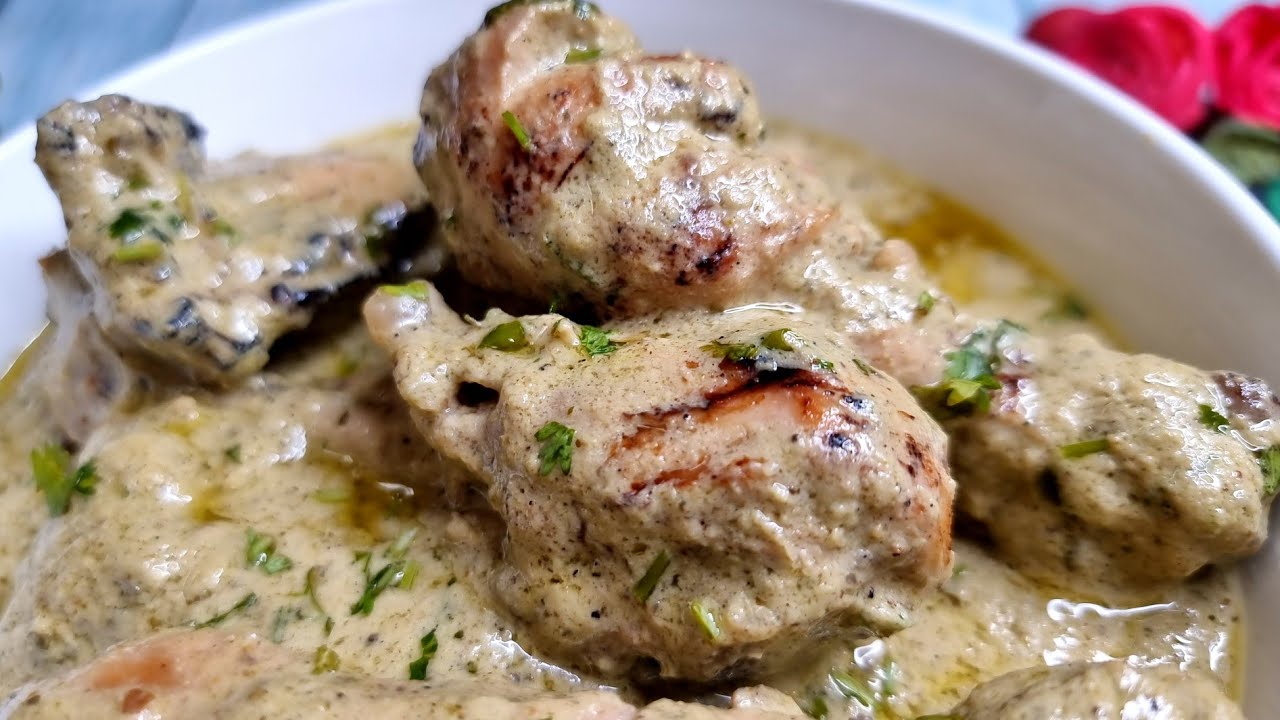
“Most people have never had Afghani chicken because they've been eating its louder, redder cousins their entire lives. No tomatoes. No Kashmiri chili powder. No orange grease pooling on top. What you get instead is a pale, ivory-toned gravy so rich it coats the back of a spoon, built on a base of whipped yogurt, heavy cream, soaked cashews, and whole spices that whisper instead of shout. The problem is that most home cooks don't understand why the gravy stays white — and end up accidentally turning it beige, watery, or worse, curdled.”
Why This Recipe Works
Afghani chicken gravy is the curry that exists in the negative space of everything South Asian cooking is famous for. No tomatoes. No turmeric-stained grease. No chili-red sauce. What it offers instead is restraint — a slow-cooked ivory gravy built from dairy, soaked nuts, and whole aromatics that produces a depth of flavor so quiet and complete it registers as something close to luxury. The problem is that most home cooks approach it with the wrong mental model entirely.
The White Gravy Is a Precision Instrument
The color of Afghani gravy is not accidental — it is the result of deliberate ingredient choices designed to create richness without acidity or red pigment. The three-component dairy system (yogurt, heavy cream, cream cheese) functions as a single integrated base, not three separate additions. Yogurt contributes tang and protein structure. Heavy cream adds fat and silk. Cream cheese provides body and a mild richness that prevents the sauce from tasting flat. Together, they create an emulsion stable enough to hold up to 40 minutes of simmering — something no single dairy component could achieve alone.
The cashew paste is the silent co-architect. Soaked cashews, when blended into a smooth paste, release their starch and fat in a form that acts as a natural thickener and emulsifier simultaneously. This starch binds the water in the yogurt to the fat in the cream, preventing the sauce from breaking under sustained heat. Skip the cashews and you have a gravy that is simultaneously thinner and more prone to curdling — the worst possible combination. A high-speed blender is worth the investment here specifically because half-blended cashew paste introduces gritty texture that destroys the gravy's entire appeal.
The Marinade Is Doing Three Jobs at Once
The overnight marinade looks like a simple coating step. It is not. The yogurt's lactic acid denatures the surface proteins of the chicken slowly and uniformly, creating a micro-textured exterior that absorbs sauce during the simmer. The cream cheese in the marinade clings to that textured surface and seals in moisture during the initial sear. The white pepper and cardamom begin infusing the meat from the outside in — a process that requires time, not heat. The result of a properly marinated piece of Afghani chicken is one that tastes seasoned all the way through, not just on its surface layer. Forty-five minutes is the floor. Four hours is the ceiling. Between those two points, every additional hour of contact time improves the final dish.
Heat Management Is the Entire Game
Cream-based gravies are destroyed by high heat and saved by patience. The sequence matters: whole spices bloom in fat, onions soften slowly to translucency without color, ginger-garlic paste cooks out its raw bite, the marinated chicken reduces its liquid — and only then does the cashew paste enter, followed by the cream. Each component prepares the environment for the next. Adding cream to a pan still showing hot steam from a high-heat reduction will break the sauce immediately, producing grainy white solids floating in clear liquid that cannot be rescued.
A Dutch oven or heavy stainless skillet is not a suggestion — it is load-bearing equipment. Thin pans create hot zones directly above burner rings that cook the gravy unevenly, scorching the bottom and undercooking the center. Even heat distribution across the entire base of the pan keeps the dairy emulsion stable through the final simmer and produces the slightly thickened, glossy finish that distinguishes a properly executed Afghani gravy from a broken one.
The Spice Logic
Afghani cooking is aromatics-forward, not chili-forward. Cardamom, white pepper, cumin, bay leaf, and cinnamon are selected not to deliver heat but to build fragrance — a layered background note that makes the dairy base taste complex rather than plain. White pepper deserves special mention: it delivers heat that integrates into the cream rather than sitting on top of it, and it leaves no dark flecks in the ivory sauce. Substituting black pepper changes the visual and textural result in ways that matter more than they should.
The garam masala is added at the very end, off heat. This is intentional. Garam masala's volatile top notes — the floral cardamom, the sharp clove — evaporate quickly under sustained heat. Adding it early means those notes cook off entirely, leaving only the bitter base. Adding it at the end preserves exactly the aromatic finish that makes Afghani chicken smell the way it does when it arrives at a restaurant table.
Where Beginners Mess This Up
Before we start, read this. These are the 4 reasons your afghani chicken gravy (the creamy white curry that changes everything) will fail:
- 1
Adding cream to a screaming-hot pan: Dairy proteins denature and seize when introduced to excessive heat. If your pan is above medium when you add the yogurt or cream, you will get grainy white lumps floating in a thin liquid — not a smooth gravy. Always reduce heat before adding any dairy, and temper yogurt by whisking in a spoonful of hot sauce before adding it to the pan.
- 2
Skimping on the cashew paste: Soaked cashews blended with a splash of water are what give Afghani gravy its signature body and silk. Without them, the sauce relies entirely on cream, which breaks under extended heat. The cashew starch acts as a natural emulsifier, binding the fat and liquid together into a stable, velvety base. Do not skip or rush this step.
- 3
Rushing the marinade: The chicken needs at minimum 45 minutes in the yogurt-cream-spice mixture — and ideally 4 hours. The lactic acid in the yogurt slowly breaks down surface proteins, creating a tender, absorbent exterior that clings to sauce. A rushed marinade means the outside of the chicken tastes seasoned while the interior tastes like nothing.
- 4
Browning the onions too dark: Unlike a red curry, Afghani gravy depends on onions that are soft and translucent — barely golden. Dark, caramelized onions introduce bitterness and color that turns your white gravy brown. Cook onions low and slow until they are completely soft and just starting to catch color at the edges. That is your signal to stop.
The Video Reference Library
Want to see it in action? Here are the exact videos we analyzed and combined to build this foolproof recipe translation:
The reference video that breaks down the white gravy technique step by step. Pay close attention to the dairy-addition sequence and the heat management during the cashew paste phase.
A deep dive into why cream-based curries behave differently from tomato-based ones, covering emulsification, spice order, and how to build depth without adding color.
Covers the full marinade science, cashew paste ratios, and the finishing technique that keeps the gravy glossy and separated from the oil in a controlled, intentional way.
🛠️ Core Equipment
- Heavy-bottomed pan or Dutch ovenEven heat distribution is critical for cream-based sauces. Thin pans create hot spots that scorch the dairy. A [Dutch oven](/kitchen-gear/review/dutch-oven) or heavy stainless skillet gives you the control you need to keep the gravy smooth.
- High-speed blenderFor the cashew paste and onion purée. A standard blender leaves fine grit in both, which shows up as texture in the finished sauce. A [high-speed blender](/kitchen-gear/review/blender) processes soaked cashews into a completely smooth, silky paste in under a minute.
- Instant-read thermometerThe single most reliable way to avoid overcooked, rubbery chicken breast. Pull bone-in pieces at 165°F internal. Boneless thighs at 170°F. Guessing by color in a white gravy is notoriously unreliable — a thermometer removes the variable.
- Fine-mesh sieveFor straining the cashew-onion paste if your blender is not high-powered. A smooth, strained paste is the difference between a restaurant-quality gravy and a lumpy home version.
Afghani Chicken Gravy (The Creamy White Curry That Changes Everything)
🛒 Ingredients
- ✦2 pounds bone-in chicken thighs and drumsticks
- ✦3/4 cup plain full-fat yogurt
- ✦1/2 cup heavy cream, divided
- ✦3 tablespoons cream cheese, softened
- ✦1/2 cup raw cashews, soaked in warm water for 30 minutes
- ✦2 medium yellow onions, finely diced
- ✦2 tablespoons ghee or unsalted butter
- ✦1 tablespoon neutral oil
- ✦2 tablespoons ginger-garlic paste
- ✦3 green Thai chilies, split lengthwise (adjust to heat preference)
- ✦1/2 cup fresh cilantro leaves and stems, chopped
- ✦2 tablespoons fresh mint leaves, torn
- ✦1 teaspoon white pepper, freshly ground
- ✦1/2 teaspoon black pepper, freshly ground
- ✦5 green cardamom pods, lightly crushed
- ✦2 bay leaves
- ✦1 inch cinnamon stick
- ✦1 teaspoon cumin seeds
- ✦1/2 teaspoon garam masala
- ✦2 tablespoons fresh lemon juice
- ✦Sea salt to taste
- ✦1/4 cup water, reserved for adjusting consistency
👨🍳 Instructions
01Step 1
Drain the soaked cashews and blend with 3 tablespoons of water until completely smooth. Set aside.
02Step 2
In a large bowl, combine yogurt, cream cheese, half the heavy cream, ginger-garlic paste, white pepper, black pepper, 1 tablespoon lemon juice, and salt. Whisk until smooth. Add the chicken pieces and coat thoroughly. Cover and refrigerate for at least 45 minutes.
03Step 3
Heat ghee and oil together in a heavy-bottomed pan over medium heat. Add cumin seeds, cardamom pods, cinnamon stick, and bay leaves. Toast for 90 seconds until the cumin sizzles and the cardamom blooms.
04Step 4
Add the diced onions and cook over medium-low heat for 10-12 minutes, stirring regularly, until completely soft and barely golden — translucent with just faint color at the edges.
05Step 5
Add ginger-garlic paste and split green chilies. Cook for 3-4 minutes, stirring frequently, until the raw garlic smell disappears and the paste is fully incorporated into the onions.
06Step 6
Reduce heat to low. Add the marinated chicken pieces directly from the bowl, including all the marinade. Stir to coat and cook uncovered for 8-10 minutes, turning the chicken occasionally, until it is seared on the surface and the marinade has reduced slightly.
07Step 7
Add the cashew paste and stir it through the pan evenly. Cook for 3 minutes until the raw cashew taste mellows and the sauce begins to thicken.
08Step 8
Pour in the remaining heavy cream and 1/4 cup water. Stir to combine. Bring to a gentle simmer, then reduce heat to the lowest setting, cover, and cook for 18-20 minutes until the chicken is cooked through and the gravy is thick enough to coat a spoon.
09Step 9
Remove the lid. Stir in garam masala, remaining lemon juice, chopped cilantro, and torn mint leaves. Taste and adjust salt.
10Step 10
Serve immediately, garnished with extra fresh cilantro and a drizzle of cream. Pair with naan, roti, or steamed basmati rice.
Nutrition Per Serving
Estimates based on standard preparation. Adjustments alter macros.
🔄 Substitutions
Instead of Heavy cream...
Use Full-fat coconut cream
Produces a dairy-free version with a subtle coconut undertone. The gravy will be slightly thinner and will take 3-4 extra minutes to reduce to the right consistency.
Instead of Cashews...
Use Blanched almonds
Soak almonds for at least 1 hour and peel before blending. The paste is slightly less silky than cashew but provides comparable body and a faintly nuttier flavor.
Instead of Chicken...
Use Paneer or firm tofu
For a vegetarian version, use 400g cubed paneer or extra-firm tofu. Skip the long marinade — 20 minutes is sufficient. Reduce the covered simmer time to 10 minutes.
Instead of Cream cheese...
Use Thick labneh or strained full-fat yogurt
Labneh provides the same tangy richness. Strain regular yogurt through a cheesecloth-lined sieve for 30 minutes to approximate the texture.
🧊 Storage & Reheating
In the Fridge
Store in an airtight container for up to 3 days. The gravy thickens considerably when cold — this is normal.
In the Freezer
Freeze in portions for up to 6 weeks. Note that cream-based sauces can separate slightly when thawed. Reheat gently and whisk to re-emulsify.
Reheating Rules
Reheat on low heat in a covered pan with 2-3 tablespoons of water or cream to loosen. Stir frequently. Avoid microwaving — the uneven heat causes the cream to break.
❓ Frequently Asked Questions
Why is Afghani chicken white or pale instead of red like other curries?
Because it contains no tomatoes and no red chili powder — the two ingredients responsible for the orange-red color in most South Asian curries. The base is built entirely from yogurt, cream, and cashews, which produce a naturally ivory-toned sauce. The spicing is aromatics-forward (cardamom, white pepper, cumin) rather than chili-forward.
Can I skip the cashew paste?
You can, but the sauce will be noticeably thinner and more prone to breaking under heat. The cashew starch acts as the primary emulsifier that keeps the cream stable. If you skip it, reduce the cream quantity by a third and add a tablespoon of cornstarch dissolved in cold water as a substitute thickener.
Why is my gravy watery instead of thick and creamy?
Either the heat was too low during the reduction phase, or you added too much water too early. Afghani gravy needs an uncovered reduction period after the cream goes in — medium-low heat with the lid off for the last 8-10 minutes. If the chicken is cooked but the gravy is still thin, remove the chicken temporarily, crank the heat to medium, and reduce the sauce alone for 5 minutes.
What is the difference between Afghani chicken and butter chicken?
Butter chicken (murgh makhani) uses a tomato-and-cream base with Kashmiri red chili, giving it its signature orange color and mild sweetness. Afghani chicken uses no tomatoes at all — the base is entirely dairy and cashew, producing a paler, richer gravy with a cleaner, more aromatic spice profile. Afghani chicken is generally considered milder and creamier.
Can I make this spicier?
Yes, but stay within the white-curry logic of the dish. Add more green chilies rather than red chili powder — the green keeps the color intact while increasing heat. Finely minced serrano peppers in the marinade are an effective upgrade. Adding Kashmiri chili would shift the dish toward a different flavor profile entirely.
My yogurt curdled when I added it to the pan. What happened?
The pan was too hot when the marinade hit it. Yogurt curdles when it contacts heat above roughly 160°F directly. To prevent this, reduce the heat to low before adding the chicken-marinade mixture, and stir continuously for the first two minutes. You can also temper the yogurt by stirring a spoonful of the hot pan oil into the yogurt before adding everything to the pan.

The Science of
Afghani Chicken Gravy (The Creamy White Curry That Changes Everything)
We turned everything on this page into a beautiful, flour-proof PDF cheat sheet. Print it out, stick it to your fridge, and never mess up your afghani chicken gravy (the creamy white curry that changes everything) again.
*We'll email you the high-res PDF instantly. No spam, just perfectly cooked meals.
AlmostChefs Editorial Team
We translate the internet's most popular cooking videos into foolproof, beginner-friendly written recipes. We analyze multiple methods, test them in our kitchen, and engineer a single "Master Recipe" that gives you the best possible result with the least possible stress.