The Five-Minute Acai Bowl (No Café Required)
A thick, spoonable acai base made from frozen puree and Greek yogurt, topped with fresh fruit, seeds, and granola. We stripped out the café markup and unnecessary sugar to build a version that's ready in five minutes, costs a fraction of the price, and actually keeps you full until lunch.
“Café acai bowls cost twelve to sixteen dollars, contain hidden syrups, and are usually made with the cheapest frozen packets available. The version you make at home in five minutes with Greek yogurt and a frozen banana is thicker, cheaper, more filling, and doesn't spike your blood sugar before 9am. The trick is knowing what kills the texture before it ever makes it to the bowl.”
Why This Recipe Works
The acai bowl is the most Instagram-optimized food in modern breakfast culture — and also one of the most routinely butchered. Not by home cooks. By the cafés selling them for fifteen dollars in a paper bowl with a wooden spoon and a logo sticker. The average café acai bowl is built on sweetened acai packets, topped with honey-laden granola and dried fruit, and drizzled with agave. It looks pristine. It contains as much sugar as a can of soda.
Making it at home takes five minutes and costs a fraction of the price. The only reason people don't is that they don't understand the one thing that makes or breaks the entire bowl: blend ratio.
The Texture Problem
An acai bowl is not a smoothie. It is a soft-serve-adjacent, spoonable base that holds its structure under the weight of toppings for the duration of the meal. The difference between a proper bowl and purple soup in a dish comes down to one variable: how much liquid you add during blending.
The acai packet contributes moisture as it melts. The Greek yogurt contributes moisture from its whey content. The frozen banana contributes structure and natural pectin that helps the mixture hold together as it warms. Add too much almond milk on top of all that, and you've built a smoothie. The correct amount of liquid is the minimum required to move the blender blades — start with two tablespoons, add more only if the motor stalls.
The yogurt choice matters here as well. Full-fat Greek yogurt has been strained to remove a significant portion of its liquid whey, which is exactly why it's thick and why it's the correct choice. Non-fat Greek yogurt retains more water and weakens the base. The fat content is not the point — the structural contribution is.
The Banana Architecture
The frozen banana is doing structural work, not flavor work. Its frozen mass contributes density that keeps the base firm. Its natural pectin (a soluble fiber) acts as a loose binding agent as it thaws. Its sweetness means you need less added honey, which directly reduces the glycemic load of the entire bowl.
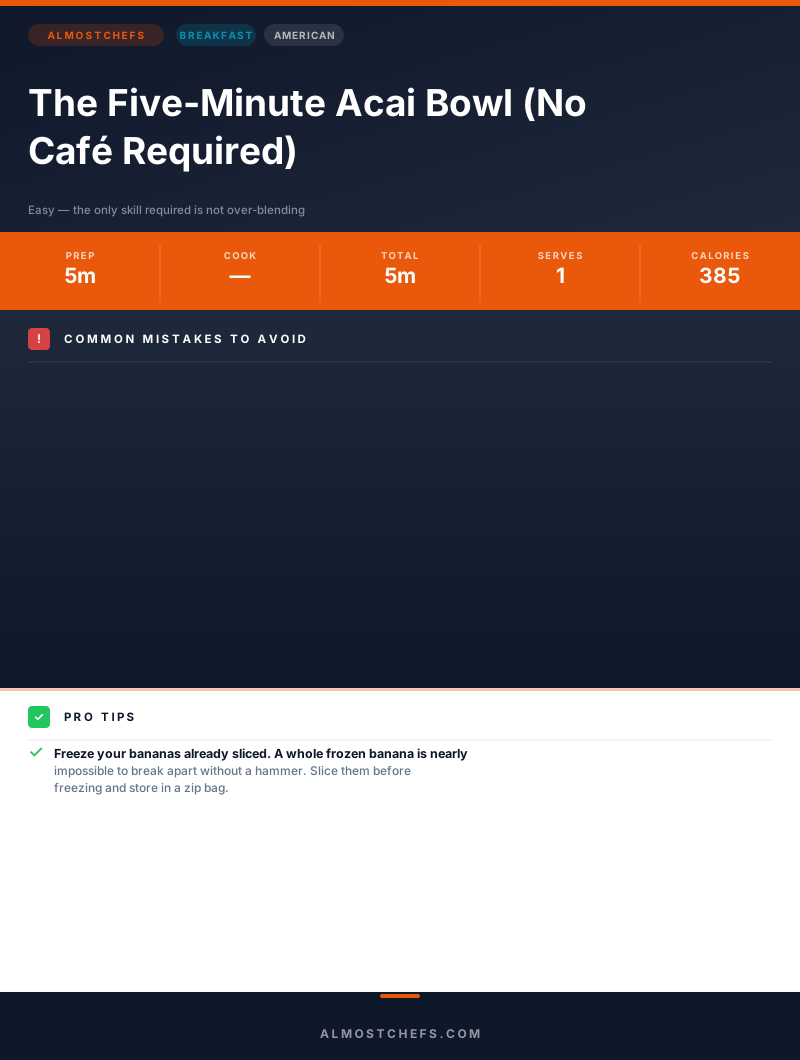
Freeze your bananas sliced. A whole frozen banana is nearly impossible to portion and will win any fight with a standard blender. Slice them before freezing, store in a zip bag, and you have instant structural material for every bowl going forward.
The Topping Strategy
Toppings are not decoration. They are the textural counterargument to the cold, smooth base. Every topping in this recipe serves a specific function: granola and almonds provide crunch and fat; chia and flaxseed provide soluble fiber that slows glucose absorption; fresh berries provide acidity that cuts through the richness of the yogurt base; shredded coconut provides chew; almond butter provides satiety and binding richness.
The order of application is not arbitrary. Dense toppings — granola, almonds — go down first, pressed gently into the surface so they adhere. Delicate toppings — coconut, seeds — go last, scattered over the top where they won't get crushed. The almond butter drizzle is the final layer because it sets slightly against the cold base and helps anchor everything.
A high-powered blender makes the difference between five minutes of confident preparation and five minutes of stalling motor, emergency liquid additions, and a bowl that didn't need to happen. A wide breakfast bowl gives you the surface area to distribute toppings properly instead of piling them into a deep dish where they compress and lose their individual character.
The Real Reason Café Bowls Taste Better
Sweetened acai packets. Most commercial versions use acai puree pre-blended with cane sugar or guarana syrup. It's sweeter, and sweetness reads as flavor. When you switch to unsweetened packets and frozen banana as your primary sweetener, the bowl tastes more complex and less immediately gratifying. That's the trade-off for 18g protein, 14g fiber, and blood sugar you can stand behind three hours later.
This bowl is not trying to taste like a dessert. It's trying to function like a breakfast. Those are different design goals.
Where Beginners Mess This Up
Before we start, read this. These are the 4 reasons your the five-minute acai bowl (no café required) will fail:
- 1
Adding too much liquid: Acai bowls are meant to be eaten with a spoon, not drunk through a straw. Most people add too much almond milk chasing a 'smooth blend,' and wind up with a purple smoothie they pour into a bowl and feel vaguely disappointed by. Use the absolute minimum liquid needed to get the blades moving — a quarter cup is the ceiling, not the floor.
- 2
Not thawing the packet enough — or thawing it too much: A fully frozen acai packet seizes the blender and forces you to add liquid to compensate. A fully thawed packet blends into watery soup. Two minutes on the counter produces the right texture: semi-soft on the outside, still frozen in the core. That's your window.
- 3
Skipping the frozen banana: The frozen banana is structural. It adds bulk, natural sweetness, and the dense body that keeps the base from collapsing under the weight of the toppings. Fresh banana turns the whole thing into a loose smoothie. Freeze your bananas the night before — slice them first so they don't weld into a solid brick overnight.
- 4
Putting toppings on a warm base: If the blended base sits in the bowl for more than two minutes before topping, it warms and liquefies from below. The granola gets soggy, the seeds sink, and the whole visual architecture falls apart. Blend, pour, top, eat — in that order, with no gaps.
The Video Reference Library
Want to see it in action? Here are the exact videos we analyzed and combined to build this foolproof recipe translation:
The definitive home acai bowl walkthrough — covers the blending technique, liquid ratios, and topping arrangement that separates a restaurant-quality bowl from a home smoothie dumped in a dish.
🛠️ Core Equipment
- High-powered blenderA standard blender struggles with frozen acai and banana, forcing you to add more liquid than you need. A high-powered blender moves frozen solids in under a minute without extra milk. The difference between a spoonable bowl and a drinkable smoothie often comes down to the motor.
- Wide, shallow breakfast bowlSurface area matters for topping distribution. A deep bowl compresses everything into a pile. A wide bowl gives you room to arrange toppings in distinct sections, which isn't just aesthetic — it lets you get varied bites without digging.
- Rubber spatulaThe thick acai base clings to the blender jar. A spatula gets every last gram into the bowl and helps smooth the surface for even topping adhesion. Also necessary for tamping down the base before topping so nothing slides off.
The Five-Minute Acai Bowl (No Café Required)
🛒 Ingredients
- ✦1 packet frozen acai puree, unsweetened
- ✦1/2 cup plain Greek yogurt, full-fat
- ✦1/4 cup unsweetened almond milk
- ✦1 frozen banana, sliced
- ✦1/2 cup fresh blueberries
- ✦1/4 cup raw almonds, sliced
- ✦1/4 cup raw granola, low-sugar variety
- ✦2 tablespoons raw chia seeds
- ✦2 tablespoons raw sunflower seeds
- ✦1/4 cup fresh strawberries, sliced
- ✦2 tablespoons unsweetened shredded coconut
- ✦1 tablespoon raw honey or pure maple syrup
- ✦1/2 cup fresh raspberries
- ✦2 tablespoons ground flaxseed
- ✦1 tablespoon natural almond butter
👨🍳 Instructions
01Step 1
Set the frozen acai packet on the counter for two minutes to soften slightly, then break it into chunks and scoop into a high-powered blender.
02Step 2
Add the Greek yogurt, almond milk, and frozen banana slices to the blender.
03Step 3
Blend on high for 45 seconds until the mixture is thick, smooth, and resembles soft-serve ice cream. Stop immediately — do not over-blend.
04Step 4
Use a rubber spatula to transfer the entire base into a wide, shallow breakfast bowl. Smooth the surface so it's level and dense.
05Step 5
Arrange the frozen banana slices in a curved line along one edge of the bowl.
06Step 6
Distribute the blueberries, strawberry slices, and raspberries across the bowl in distinct clusters rather than mixing them together.
07Step 7
Sprinkle the sliced almonds and granola across the surface, pressing lightly so they adhere to the thick base.
08Step 8
Scatter the chia seeds, sunflower seeds, and ground flaxseed evenly over the bowl.
09Step 9
Add the shredded coconut in a thin layer over the top.
10Step 10
Drizzle the almond butter in thin parallel lines across the entire bowl.
11Step 11
Finish with a light drizzle of honey or maple syrup if additional sweetness is needed. Serve immediately.
Nutrition Per Serving
Estimates based on standard preparation. Adjustments alter macros.
🔄 Substitutions
Instead of Frozen acai puree packet...
Use 1 tablespoon unsweetened acai powder mixed with 1/4 cup additional almond milk
Shelf-stable and cheaper. Slightly less creamy texture but identical flavor and antioxidant profile. Reduce the almond milk in the main recipe accordingly since the powder already incorporates liquid.
Instead of Plain Greek yogurt...
Use Full-fat coconut yogurt or cashew yogurt
Dairy-free alternative that maintains similar creaminess. Slightly thinner consistency — use a touch less almond milk. Provides probiotics from plant-based fermentation cultures.
Instead of Raw granola...
Use Homemade granola with rolled oats, nuts, and cinnamon — or crushed raw almonds only
Eliminates refined sugars and processed oils. Homemade granola baked at 325°F for 20 minutes holds its crunch longer against the cold base than most commercial varieties.
Instead of Natural almond butter...
Use Tahini, sunflower seed butter, or peanut butter
Tahini adds calcium and minerals with a slightly bitter, nutty depth. Sunflower seed butter is hypoallergenic. Peanut butter is the most accessible option and adds the richest, earthiest flavor of the three.
🧊 Storage & Reheating
In the Fridge
The blended base does not store well — it separates and loses texture within an hour. Toppings can be pre-portioned and stored in airtight containers for up to 3 days.
In the Freezer
Do not freeze the assembled bowl. You can freeze pre-portioned acai base (without yogurt) in ice cube trays for up to 1 month. Re-blend from frozen with fresh yogurt when ready.
Reheating Rules
This dish is served cold and does not require reheating. If toppings have been refrigerated, bring them to room temperature for 5 minutes before using.
❓ Frequently Asked Questions
Why is my acai bowl too thin and liquidy?
You used too much liquid. Start with two tablespoons of almond milk and add more only if the blender stalls. The Greek yogurt and frozen banana provide all the liquid the base needs to blend smoothly at proper consistency.
Can I make this vegan?
Yes. Substitute the Greek yogurt with full-fat coconut yogurt or cashew yogurt, and replace the honey with pure maple syrup or monk fruit sweetener. Every other ingredient is already vegan.
Do I need an expensive blender?
A high-powered blender makes this significantly easier and prevents you from over-adding liquid to compensate for a weak motor. If using a standard blender, let the acai packet thaw an extra minute and add ingredients in smaller batches, pulsing between additions.
Why does my granola get soggy immediately?
Two causes: the base is too warm (over-blended or sat too long before topping), or the granola is low-quality and absorbs moisture instantly. Press the granola into the base rather than scattering it loosely — this creates a brief barrier layer. Eat within five minutes of assembling.
Is an acai bowl actually healthy or is it just sugar?
This version — made with unsweetened acai, full-fat Greek yogurt, and minimal added sweetener — delivers 18g of protein, 14g of fiber, and 385 calories. The fiber load from chia, flax, and berries slows glucose absorption, making it meaningfully different from the high-sugar café versions that can run 600+ calories and 50g+ of added sugar. Read the label on your acai packet. 'Unsweetened' is not optional.
Can I add protein powder?
Yes. Add one scoop of unflavored or vanilla protein powder to the blender with the other base ingredients. This may thicken the base further — if so, add one additional tablespoon of almond milk. Vanilla whey blends cleanly. Plant-based protein powders can add a gritty texture if over-blended.
The Science of
The Five-Minute Acai Bowl (No Café Required)
We turned everything on this page into a beautiful, flour-proof PDF cheat sheet. Print it out, stick it to your fridge, and never mess up your the five-minute acai bowl (no café required) again.
*We'll email you the high-res PDF instantly. No spam, just perfectly cooked meals.
AlmostChefs Editorial Team
We translate the internet's most popular cooking videos into foolproof, beginner-friendly written recipes. We analyze multiple methods, test them in our kitchen, and engineer a single "Master Recipe" that gives you the best possible result with the least possible stress.