7 Healthy Weeknight Dinners (Meal Prep Once, Eat Well All Week)
Seven lean, nutrient-dense dinner recipes built for the busy weeknight reality: one prep session on Sunday, thirty minutes to the table every night after. We analyzed the most-viewed healthy meal prep channels to build a rotation that actually holds up in the fridge and doesn't make you hate eating healthy by Thursday.

“Most healthy eating plans collapse by Wednesday. Not because the recipes are bad — because nobody accounted for the 6:30pm reality of being tired, hungry, and staring at raw chicken. The fix isn't motivation. It's front-loading the work. One Sunday prep session turns seven dinners from a daily decision into a daily assembly. Here's how to build the week.”
Why This Recipe Works
The premise here is not a recipe. It's a system. Seven dinners built from three proteins, three grains, and five vegetables, combined in rotating configurations so that nothing feels repetitive, everything takes thirty minutes or less to assemble, and the hard work is concentrated into one 90-minute Sunday window when you have the time and patience to do it right.
Most meal prep content fails for the same reason: it treats prep as meal assembly rather than component manufacturing. The goal isn't to make seven distinct meals on Sunday. The goal is to produce interchangeable parts — cooked grains that work with any protein, roasted vegetables that pair with anything, seasoned proteins that hold up for four days — and then let weeknight assembly be fast enough that you actually do it.
The Grain Foundation
Three grains cook simultaneously on Sunday and form the base of everything that follows. Quinoa finishes in 15 minutes and provides the highest protein content of the three. Brown rice takes 45 minutes and carries the most starch, making it the most satisfying base for the heavier turkey stir-fry. Farro takes 30 minutes and has a firm, chewy bite that holds its texture better than the others when refrigerated — it doesn't get gummy or clump, which makes it the best grain for grain bowls eaten at room temperature.
Cook them in well-salted water or broth. Unsalted grains taste like cardboard regardless of what you put on top of them, and no amount of finishing olive oil rescues the flavor deficit. Season at the source.
The Sheet Pan Principle
The Mediterranean chicken and the garlic lemon salmon both live on a sheet pan, and this is intentional. Sheet pan cooking requires no active attention — you season, you slide it in, you set a timer, you walk away. The oven does the work while you prep the next component or set the table or sit down for the first time since noon.
The critical sheet pan variable is space. Every professional cook knows this and every home cook ignores it: food that touches food steams, food that doesn't touch food roasts. Steam produces soft, pale, slightly wet results. Roasting produces caramelized edges, concentrated flavor, and the brown bits that make vegetables worth eating. If your sheet pan is crowded, use two pans. The extra cleanup is worth it.
The Stir-Fry as the Week's Wildcard
The ground turkey stir-fry exists to break up the sheet pan monotony and introduce a fast-cooking technique that produces different textures than roasting. Where oven proteins are hands-off, the stir-fry is fully engaged — constant stirring, high heat, vegetables added in sequence by density. Zucchini before bell peppers because zucchini needs more time. Balsamic vinegar in the last minute because it burns if it goes in earlier.
A heavy skillet is non-negotiable here. Cast iron holds heat evenly so the ground turkey browns rather than steams. Non-stick pans run cooler and produce stewed meat instead of seared meat. The difference in texture and flavor is significant enough to justify the extra cleanup.
What Makes the System Sustainable
Meal prep has a reputation for producing sad, identical lunches eaten at a desk. This system avoids that outcome through deliberate component variation. When the proteins, grains, and vegetables are stored separately and combined at serving time, the number of unique combinations from three proteins, three grains, and five vegetables exceeds the number of dinners in any given week. Monday's bowl looks and tastes different from Thursday's even though both came from the same Sunday prep session.
The finishing move — olive oil, lemon juice, fresh herbs if you have them — is what separates assembled meal prep from actually cooked food. Acid brightens every component simultaneously. Fat carries the aromatic compounds from herbs and garlic. Two tablespoons applied at serving time does more for the final dish than any technique applied during prep. Don't skip it, and don't measure it.
Where Beginners Mess This Up
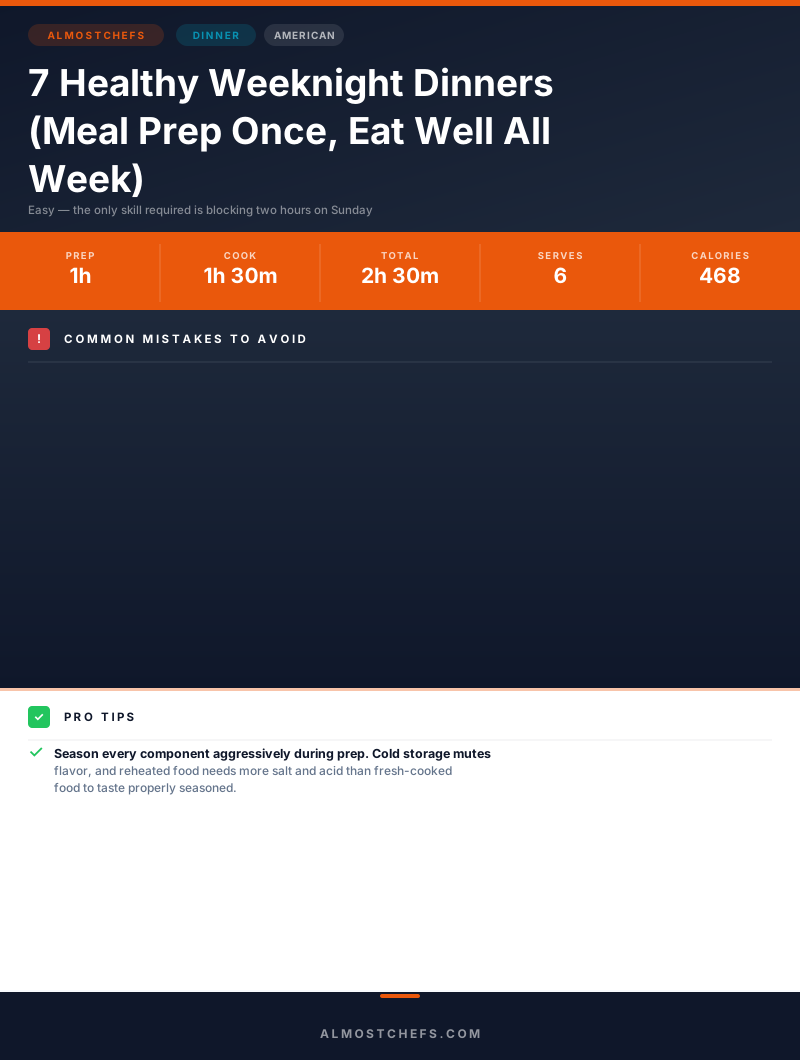
Before we start, read this. These are the 4 reasons your 7 healthy weeknight dinners (meal prep once, eat well all week) will fail:
- 1
Cooking grains to order every night: Quinoa, brown rice, and farro each take 25-45 minutes. If you're cooking them fresh on a Tuesday night, you're not eating until 8pm and you've already ordered pizza. Cook all three grains in one batch on Sunday. They refrigerate perfectly for five days and reheat in two minutes.
- 2
Storing vegetables in the wrong containers: Wet vegetables in sealed containers develop slime within 48 hours. After washing, dry everything thoroughly before storing — a salad spinner is the most useful tool in this entire system. Line containers with a paper towel to absorb residual moisture. This is the difference between vegetables that last five days and vegetables that become a science experiment.
- 3
Overcooking the salmon: Salmon baked beyond 130°F internal temperature turns chalky and dry, and no amount of lemon juice rescues it. Pull it at 125-130°F and let carryover cooking finish the job. If it flakes with light pressure from a fork, it's done — even if it looks slightly translucent in the center.
- 4
Under-seasoning batch-cooked proteins: Proteins cooked without enough salt taste flat when reheated. Season more aggressively than feels comfortable during prep — cold dulls flavor perception, and refrigerated leftovers need the extra seasoning to taste properly balanced at dinner temperature.
The Video Reference Library
Want to see it in action? Here are the exact videos we analyzed and combined to build this foolproof recipe translation:
The source video walking through the full seven-dinner rotation with clear prep sequencing and cooking techniques for each protein.
🛠️ Core Equipment
- Large rimmed sheet panThe sheet pan dinner is the backbone of this rotation. A rimmed pan prevents vegetable juices from running into the oven and gives enough surface area so food roasts instead of steams. Crowded pans create moisture-trapped vegetables — you need space.
- Large skillet or sauté panThe turkey stir-fry and all sautéed proteins require consistent high heat across a wide surface. A 12-inch [heavy skillet](/kitchen-gear/review/cast-iron-skillet) handles one pound of ground meat without crowding, which is the difference between browning and braising.
- Airtight glass containersPlastic absorbs odors and stains from proteins and vinegar-based dressings. Glass containers stack uniformly, go from fridge to microwave without transferring, and let you see exactly what you have without opening every lid at 6:30pm.
- Salad spinnerWet vegetables rot faster. The salad spinner removes surface moisture from washed produce in under a minute, extending refrigerator life by two to three days. It's the least glamorous tool in this kitchen and the most important one for this system to work.
7 Healthy Weeknight Dinners (Meal Prep Once, Eat Well All Week)
🛒 Ingredients
- ✦2 lbs boneless, skinless chicken breasts, cut into 1-inch cubes
- ✦1.5 lbs wild-caught salmon fillets, portioned into 6-oz pieces
- ✦1 lb grass-fed ground turkey
- ✦1.5 cups uncooked quinoa
- ✦2 cups uncooked brown rice
- ✦1 cup uncooked farro
- ✦3 cups broccoli florets
- ✦4 medium zucchini, sliced into half-moons
- ✦2 red bell peppers, diced into bite-sized chunks
- ✦1 lb asparagus spears, trimmed and halved
- ✦3 cups cherry tomatoes, halved
- ✦4 medium yellow onions, finely diced
- ✦8 cloves fresh garlic, minced
- ✦6 tablespoons extra virgin olive oil
- ✦3 tablespoons fresh lemon juice
- ✦2 tablespoons balsamic vinegar
- ✦2 teaspoons dried oregano
- ✦1 teaspoon fresh thyme leaves
- ✦1 tablespoon fresh rosemary, chopped
- ✦Sea salt and cracked black pepper to taste
👨🍳 Instructions
01Step 1
Cook the quinoa, brown rice, and farro according to package directions in separate pots. Fluff with a fork, cool completely, and divide into airtight containers.
02Step 2
Wash all vegetables, spin or pat completely dry, and cut into their final prep shapes: broccoli into florets, zucchini into half-moons, bell peppers into bite-sized chunks, asparagus trimmed and halved. Store in separate airtight containers lined with paper towels.
03Step 3
Portion the chicken into 1-inch cubes, divide the salmon into 6-oz pieces, and break the ground turkey into prep portions. Refrigerate proteins separately — never combined.
04Step 4
For Monday's sheet pan Mediterranean chicken: preheat oven to 425°F. Toss cubed chicken, sliced zucchini, halved cherry tomatoes, and minced garlic with 3 tablespoons olive oil, 1 teaspoon dried oregano, salt, and pepper on a large rimmed sheet pan.
05Step 5
Roast for 25-30 minutes until chicken reaches 165°F internal temperature and vegetables are caramelized at the edges. Serve over brown rice or quinoa.
06Step 6
For Tuesday's garlic lemon salmon: preheat oven to 400°F. Arrange salmon skin-side down on a parchment-lined sheet pan. Arrange asparagus around the fish. Drizzle everything with 2 tablespoons olive oil, fresh lemon juice, minced garlic, and thyme. Season generously.
07Step 7
Bake salmon for 15-18 minutes until it flakes easily with a fork. Pull at 125-130°F — carryover cooking will finish it. Serve over farro or quinoa.
08Step 8
For Wednesday's ground turkey stir-fry: heat 2 tablespoons olive oil in a large skillet over medium-high. Add diced onions and minced garlic, sauté until translucent, about 4 minutes.
09Step 9
Add ground turkey, breaking into pieces as it cooks. Stir constantly until no pink remains, 6-8 minutes.
10Step 10
Add sliced zucchini and diced red bell peppers. Stir-fry until vegetables soften slightly but retain color, 5-7 minutes. Finish with balsamic vinegar, fresh rosemary, salt, and pepper. Toss for 1 final minute.
11Step 11
For Thursday through Sunday: rotate the three proteins across the pre-cooked grains and remaining vegetables using any combination. Each protein pairs with any grain and any vegetable — that's the point of the system.
12Step 12
Assemble each dinner by spooning a grain base into a bowl, topping with a protein, adding vegetables, and finishing with a drizzle of olive oil and fresh lemon juice.
Nutrition Per Serving
Estimates based on standard preparation. Adjustments alter macros.
🔄 Substitutions
Instead of Chicken breasts...
Use Firm tofu or tempeh, pressed and cubed
Press tofu for at least 30 minutes before cooking to remove moisture. Marinate in the same olive oil and herb mixture — tofu absorbs flavors aggressively and works well on the sheet pan. Tempeh has a nuttier flavor and holds up better to stir-frying.
Instead of Brown rice...
Use Steel-cut oats or wild rice blend
Wild rice has a chewier texture and slightly nutty flavor that pairs particularly well with the salmon and turkey. Higher fiber content than brown rice. Steel-cut oats work as a savory grain base more readily than most people expect — cook in broth instead of water.
Instead of Extra virgin olive oil...
Use Avocado oil
Higher smoke point makes avocado oil better for the 425°F sheet pan roasting where olive oil can edge toward its smoke point. Neutral flavor doesn't compete with herbs and lemon. Use the same quantities.
Instead of Ground turkey...
Use Lean grass-fed ground beef or wild-caught ground fish
Ground beef adds richer flavor and higher iron content. Ground fish (cod or halibut work well) produces a lighter, more delicate stir-fry with a shorter cook time — 4-5 minutes instead of 6-8. Both maintain the same high protein per serving.
🧊 Storage & Reheating
In the Fridge
Store proteins, grains, and vegetables in separate airtight containers for up to 4 days (proteins), 5 days (grains), and 5 days (vegetables). Keep everything separated until plating to preserve texture.
In the Freezer
Cooked grains freeze exceptionally well for up to 3 months. Portion into individual servings before freezing for fast weeknight pulls. Proteins can be frozen for up to 2 months; vegetables do not freeze well after cooking.
Reheating Rules
Reheat proteins and grains in separate microwave-safe containers with a splash of water to prevent drying. Combine only after reheating. Cold vegetables can be added directly to warm components or flash-roasted at 425°F for 10 minutes if you want them warm and slightly crispy.
❓ Frequently Asked Questions
How many meals does this actually make?
The quantities listed yield approximately 6 full servings per protein, meaning you have enough for two people for three nights per protein, or one person for six nights across all three. Scale the proteins independently based on your household size — the grain and vegetable quantities scale proportionally.
Can I eat the same protein two nights in a row?
Yes, but vary the grain and vegetable pairing to break the monotony. Salmon over farro with asparagus on Tuesday tastes noticeably different from salmon over quinoa with roasted broccoli on Wednesday even though the protein is identical. The supporting ingredients carry more of the perceived variety than most people realize.
Why does my reheated salmon taste fishy?
Salmon reheated in a microwave at full power oxidizes its fats rapidly, producing that unpleasant fishy smell. Reheat at 50% power in 30-second intervals, or eat salmon cold over grain bowls — cold salmon over farro with lemon and olive oil is genuinely excellent and requires zero reheating.
My vegetables are soggy by day three. What am I doing wrong?
Two likely causes: the vegetables weren't completely dry before storing, or they're being stored in containers without airflow. Line containers with a dry paper towel, don't seal so tightly that no air can circulate, and consider keeping cut vegetables in a paper bag inside the fridge for the first two days.
Is it worth buying all three grains or can I just use one?
One grain works fine — use brown rice if you're picking one. The three-grain approach exists to prevent palate fatigue across seven days and to vary the fiber and micronutrient profile of your bowls. If simplicity is the priority, cook double the brown rice and call it done.
Can I prep this on a weekday instead of Sunday?
Technically yes, but the math works against you. The prep session takes 60-90 minutes of active work. On a Sunday you have the time. On a Wednesday night you don't, and you'll cut corners — undercooking grains, skipping the drying step — and the whole system degrades. If Sunday genuinely doesn't work, Saturday evening or Monday morning are the next best options.
The Science of
7 Healthy Weeknight Dinners (Meal Prep Once, Eat Well All Week)
We turned everything on this page into a beautiful, flour-proof PDF cheat sheet. Print it out, stick it to your fridge, and never mess up your 7 healthy weeknight dinners (meal prep once, eat well all week) again.
*We'll email you the high-res PDF instantly. No spam, just perfectly cooked meals.
AlmostChefs Editorial Team
We translate the internet's most popular cooking videos into foolproof, beginner-friendly written recipes. We analyze multiple methods, test them in our kitchen, and engineer a single "Master Recipe" that gives you the best possible result with the least possible stress.