4 Levels of Chicken Soup (Amateur to Food Scientist Masterclass)
A progressive chicken soup guide that takes you from a 45-minute weeknight bowl to a crystal-clear consommé built on roasted bones and food science. We analyzed the most popular technique progressions to build one framework that teaches real culinary skill with every level.
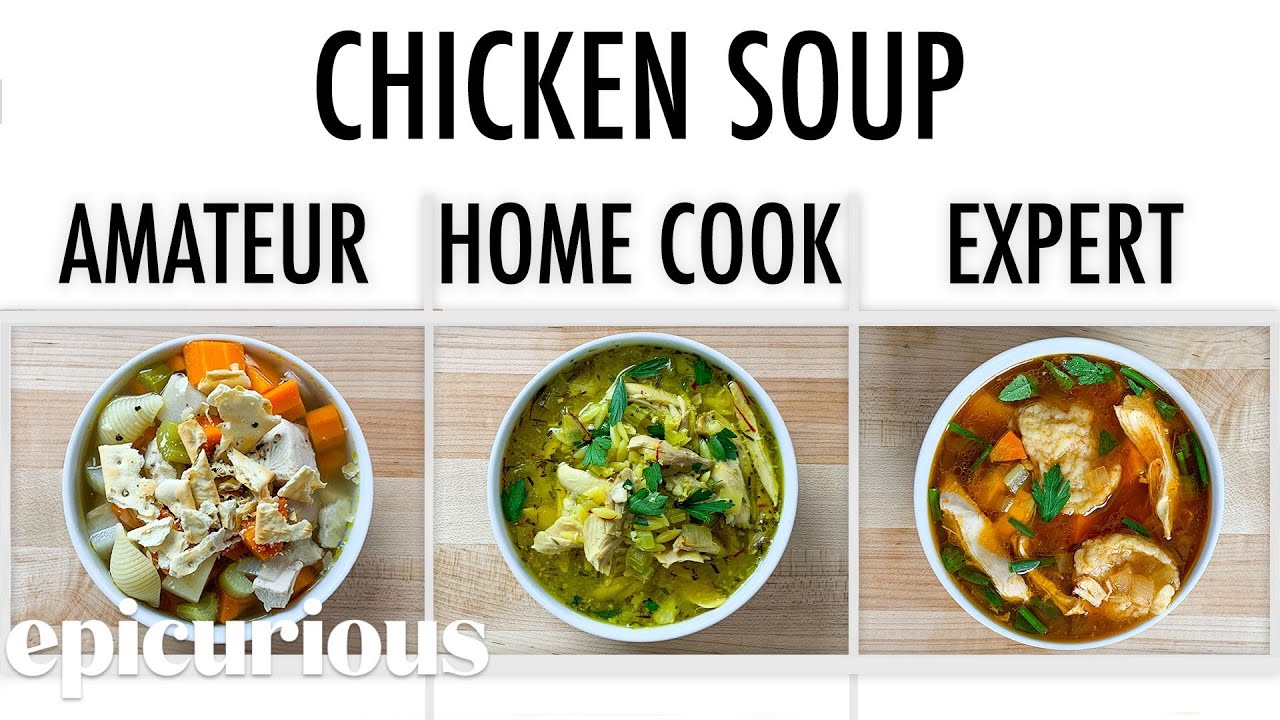
“Most chicken soup recipes give you one method and call it done. But the gap between a canned-broth weeknight soup and a bowl built on roasted bones and clarified consommé is enormous — and understanding why that gap exists is what turns a home cook into someone who can taste a broth and know exactly what it needs. This recipe teaches all four levels so you can cook at whatever skill level you're at today, and know exactly where to go next.”
Why This Recipe Works
Chicken soup is the most universal comfort food on earth, which means it's also the most universally misunderstood. Almost every home cook has a version. Almost no home cook knows why their version works — or why it sometimes doesn't. The four-level structure exists to fix that. It's not about making a harder recipe. It's about understanding the same ingredients at deeper and deeper levels until the soup becomes a tool for teaching yourself to cook.
Level 1: Getting the Foundation Right
The beginner version isn't dumbed down — it's disciplined. Two things separate a good Level 1 bowl from a mediocre one: properly sautéed aromatics and correctly poached chicken. The sauté step matters because raw onion, carrot, and celery added directly to cold broth taste raw and thin no matter how long they simmer. Five minutes in hot oil initiates the Maillard reaction, converting the vegetables' natural sugars into complex flavor compounds that carton broth alone can never provide.
The chicken is poached, not boiled. This distinction sounds precious until you understand the physics: boiling water is violent enough to agitate the proteins in chicken breast into a tough, stringy texture while simultaneously clouding the broth with emulsified fat and protein fragments. A gentle simmer at 180°F produces a tender, sliceable texture and a cleaner broth. Use your instant-read thermometer — guessing produces inconsistent results every time.
Level 2: The Mirepoix Upgrade
The intermediate level adds parsnip and leek to the aromatic base — a minor change with a disproportionate impact. Parsnip contains roughly twice the natural sugar of carrot, which means it caramelizes faster and contributes a warm, slightly sweet undertone that rounds out the broth's edges. Leek is milder and more complex than yellow onion, adding a subtle sweetness without the sharpness that raw onion can leave behind.
This is also where skimming becomes mandatory. As the proteins in chicken denature during simmering, they rise to the surface as gray foam. Leave it alone and it breaks back into the broth within 20 minutes, muddying the flavor with a slightly bitter, greasy quality that no amount of seasoning can correct. Skim every 30 minutes. It takes 30 seconds per pass.
Level 3: What Bones Actually Do
Most home cooks use boneless chicken and carton broth their entire lives without realizing they're cooking with a fraction of the available flavor. Bones are structural protein in concentrated form — primarily collagen and gelatin, which convert to rich, body-giving compounds during long, slow simmering. A properly made bone stock gels in the refrigerator into something closer to Jell-O than liquid. That gel is what gives restaurant soups their silky mouthfeel and why your homemade version always seems thinner.
Roasting the bones first at 400°F is the non-negotiable step. Raw bones produce a clean, pale stock with limited depth. Roasted bones — golden-brown, nearly mahogany — contribute hundreds of additional Maillard flavor compounds to the water, creating a stock with enough complexity to stand on its own. Your large heavy-bottomed pot matters here too: three to four hours of gentle simmering in a thin pot creates hot spots that scorch the bottom and bitter the entire batch.
Level 4: The Food Science of Clarity
Consommé is not a pretentious affectation. It is the best possible demonstration of one of cooking's most elegant principles: using proteins to filter proteins. The egg white raft works because albumin — the primary protein in egg whites — coagulates into a porous solid at around 140°F, physically trapping the microscopic particles that cloud the broth as they rise through it. The result is a liquid so clear you can read through it, with a flavor concentration that makes Level 1 broth taste like water by comparison.
The technique demands patience and temperature discipline. The raft must form slowly at exactly 180°F — hot enough to coagulate but not so hot that it boils apart. The clarification phase takes 45-60 minutes of mostly watching and not touching. A fine-mesh cheesecloth is the only way to transfer the finished consommé without re-clouding it.
The gap between Level 1 and Level 4 is not complexity for its own sake. It's the difference between knowing what chicken soup tastes like and understanding why it tastes that way.
Where Beginners Mess This Up
Before we start, read this. These are the 4 reasons your 4 levels of chicken soup (amateur to food scientist masterclass) will fail:
- 1
Boiling instead of simmering: A rolling boil agitates the proteins and fat in the broth, creating a cloudy, greasy result with a harsh rather than clean flavor. Chicken soup should always simmer — you want to see gentle, lazy bubbles breaking the surface, not a violent churn. This applies especially at Levels 3 and 4 where stock clarity matters enormously.
- 2
Overcooking boneless chicken breast: Chicken breast goes from tender to stringy and dry very quickly above 165°F. The trick is to poach it at a gentle 180°F simmer and pull it the moment it's cooked through. It will continue cooking slightly from residual heat. Check with an instant-read thermometer — don't guess.
- 3
Skipping the fat skim: As chicken and bones simmer, fat and protein impurities rise to the surface as gray foam. If you don't skim it every 30 minutes, it breaks back into the broth and turns the flavor muddy and slightly bitter. This is the most skipped step and the most visible difference between amateur and advanced broth.
- 4
Disturbing the consommé raft: At Level 4, the egg white raft is doing delicate filtration work. Stirring it, pressing it, or ladling through it aggressively will break the raft and re-cloud the consommé. Ladle gently from the edges. Treat it like it's alive.
The Video Reference Library
Want to see it in action? Here are the exact videos we analyzed and combined to build this foolproof recipe translation:
The original Epicurious format that popularized this progressive technique structure. Excellent for seeing the visual differences between each level's final result — especially the striking clarity of the consommé at Level 4.
🛠️ Core Equipment
- Large heavy-bottomed pot (6-8 quart)Even heat distribution is essential for maintaining a steady simmer without hot spots. A thin pot scorches the bottom while the top stays undercooked. For Levels 3 and 4, you need volume for the bones and skimming headroom.
- Instant-read thermometerPoaching chicken breast at the correct temperature (180°F) and maintaining consommé clarification temperature (exactly 180°F) both require precision. Guessing by visual cues alone produces inconsistent results.
- Fine-mesh sieve or cheeseclothFor straining the Level 3 stock and the Level 4 consommé. Cheesecloth produces noticeably clearer results than a sieve alone. Doubled cheesecloth is better than single-layer.
- LadleSkimming foam requires a wide, shallow ladle that can glide across the surface without breaking the liquid below. Also essential for gently extracting consommé without disturbing the raft.
4 Levels of Chicken Soup (Amateur to Food Scientist Masterclass)
🛒 Ingredients
- ✦1.75 pounds boneless, skinless chicken breasts
- ✦6 cups low-sodium chicken broth
- ✦2 medium yellow onions, finely diced
- ✦3 large carrots, cut into bite-sized rounds
- ✦3 celery stalks, chopped into half-inch pieces
- ✦4 garlic cloves, minced
- ✦2 cups egg noodles or small pasta
- ✦3 fresh thyme sprigs
- ✦2 bay leaves
- ✦1 teaspoon whole black peppercorns
- ✦3 tablespoons fresh flat-leaf parsley, chopped
- ✦1 tablespoon fresh dill, chopped
- ✦1 medium parsnip, diced
- ✦1 leek, white and light green parts only, cleaned and sliced
- ✦2 tablespoons extra-virgin olive oil
- ✦1.5 teaspoons fine sea salt, divided
- ✦0.5 teaspoon freshly cracked black pepper
- ✦1 tablespoon fresh lemon juice
- ✦Water as needed for stock-building levels
👨🍳 Instructions
01Step 1
Level 1 (Amateur — 45 minutes): Heat olive oil in a large pot over medium-high heat. Add diced onions, carrots, and celery, sautéing until softened and fragrant, about 5 minutes.
02Step 2
Add minced garlic and cook for 1 minute, stirring constantly to prevent browning.
03Step 3
Pour in chicken broth and bring to a gentle boil, then reduce heat to maintain a steady simmer.
04Step 4
Add whole chicken breasts, bay leaves, and thyme sprigs. Poach gently for 20-25 minutes until cooked through and reaching an internal temperature of 165°F.
05Step 5
Transfer cooked chicken to a cutting board, rest for 2 minutes, then shred into bite-sized pieces using two forks.
06Step 6
Return shredded chicken to the pot. Stir in egg noodles and simmer for 8-10 minutes until pasta is tender.
07Step 7
Season with sea salt and black pepper. Finish with fresh parsley and a squeeze of lemon juice before serving.
08Step 8
Level 2 (Intermediate — 60 minutes): Follow Steps 1-3 from Level 1, but add diced parsnip and sliced leek along with the carrots and celery.
09Step 9
After adding broth, bring to a simmer, then submerge chicken breasts and maintain gentle heat at 180°F for 22-28 minutes until fully cooked.
10Step 10
Remove chicken, shred, and return to pot. Add noodles and simmer for 10 minutes while occasionally skimming any foam that rises to the surface.
11Step 11
Finish with fresh dill, parsley, and lemon juice. Taste and adjust salt before serving.
12Step 12
Level 3 (Advanced — 90 minutes active, 3-4 hours total): Roast 2-3 pounds of chicken bones in a 400°F oven for 25 minutes until deeply browned. Transfer to your pot.
13Step 13
Sauté onion, carrot, and celery in a 2:1:1 mirepoix ratio (by weight) in olive oil until caramelized and golden, about 8 minutes.
14Step 14
Deglaze the pot with 1 cup of water, scraping up all browned bits. Add roasted bones and 8 cups of fresh water.
15Step 15
Add peppercorns, bay leaves, and thyme. Simmer gently at 160-165°F for 3-4 hours, skimming impurities every 30 minutes.
16Step 16
Strain stock through fine-mesh cheesecloth into a clean pot, discarding solids. Chill to remove solidified fat from the surface.
17Step 17
Reheat clarified stock, add diced vegetables, shredded chicken, noodles, and fresh herbs. Simmer until vegetables are tender, about 15 minutes.
18Step 18
Level 4 (Food Scientist — 4.5 hours): Prepare a consommé raft by whisking 3 egg whites with 1 pound finely minced chicken meat and reserved mirepoix scraps.
19Step 19
Slowly pour chilled Level 3 stock into the egg white mixture while stirring gently. Stop stirring and allow the raft to rise to the surface as the stock heats to exactly 180°F.
20Step 20
Maintain 180°F for 45-60 minutes as clarification occurs. Gently ladle the crystal-clear consommé through cheesecloth without disturbing the raft.
21Step 21
Measure sodium content (aim for under 800mg per serving), adjust seasoning with precise salt additions, and plate with tender noodles, paper-thin vegetable garnishes, and a whisper of fresh herbs.
Nutrition Per Serving
Estimates based on standard preparation. Adjustments alter macros.
🔄 Substitutions
Instead of Egg noodles...
Use Quinoa or brown rice
Higher fiber and complete protein profile. Slightly nuttier flavor. Quinoa cooks in about 15 minutes; brown rice needs 40-45 minutes so add it earlier.
Instead of Regular chicken broth...
Use Bone broth or homemade collagen-rich stock
Richer mouthfeel and deeper umami. Noticeably more body — the broth will gel when chilled. Reduces sodium if using homemade.
Instead of Olive oil...
Use 1 tablespoon avocado oil plus 1 tablespoon ghee
Higher smoke point for better browning of aromatics. Ghee adds a subtle nutty, savory depth. Works especially well at Levels 3 and 4.
Instead of Boneless, skinless chicken breast...
Use Bone-in, skin-on chicken thighs plus 1 pound chicken bones
Thighs have higher fat content and stay moist longer. Bones dramatically improve broth depth and body. Increase simmer time by 10-15 minutes.
🧊 Storage & Reheating
In the Fridge
Store broth and noodles separately in airtight containers for up to 4 days. Combined soup keeps for 3 days but noodles will continue absorbing liquid.
In the Freezer
Freeze broth alone for up to 3 months. Cooked noodles do not freeze well — cook fresh when reheating. Freeze in 2-cup portions for easy weeknight use.
Reheating Rules
Reheat gently on the stovetop over medium-low heat. Do not boil — it toughens the shredded chicken and can cloud a carefully made broth. Add a splash of water or fresh broth if the soup has thickened.
❓ Frequently Asked Questions
Why is my chicken soup broth cloudy?
Three common causes: boiling instead of simmering (agitates proteins and fat into emulsion), not skimming the foam during the first 30 minutes of cooking, or not chilling the stock before the final clarification step. For Levels 1 and 2, slight cloudiness is normal and harmless. For Level 3 and 4, it means one of those three steps was skipped.
Can I use a rotisserie chicken instead of raw chicken breasts?
Yes, for Levels 1 and 2. Skip the poaching step and add shredded rotisserie chicken in the last 5 minutes of simmering — just enough to warm through. You'll lose some of the chicken flavor that transfers to the broth during poaching, but the convenience is significant. Rotisserie carcasses are excellent for Level 3 stock.
Do I need to make all four levels?
No. Each level is a complete, standalone recipe. Think of them as four different recipes that happen to share the same core ingredients. Most home cooks will live happily at Level 2. Level 3 is a weekend project. Level 4 is an education.
Why does homemade soup taste so different from canned?
Three reasons: the Maillard reaction from sautéed aromatics builds flavor compounds that no canned product replicates; the gelatin extracted from chicken bones gives homemade broth a silky body that carton broth lacks; and you control the sodium, which lets the actual chicken and vegetable flavors come through instead of being masked by salt.
How do I know if my consommé clarification is working?
About 20-30 minutes into the Level 4 process, you should see the raft solidify into a spongy gray-brown disk floating on the surface. The broth below it will begin to look noticeably clearer. If the raft breaks apart, your temperature is too high. Reduce heat immediately and ladle out what you can before the raft fully disintegrates.
Can I make this in a slow cooker?
Levels 1 and 2 work well in a slow cooker on low for 6-8 hours. Add noodles in the final 30 minutes. Levels 3 and 4 require stovetop temperature control that a slow cooker cannot provide — the stock needs precise temperature management and active skimming.
The Science of
4 Levels of Chicken Soup (Amateur to Food Scientist Masterclass)
We turned everything on this page into a beautiful, flour-proof PDF cheat sheet. Print it out, stick it to your fridge, and never mess up your 4 levels of chicken soup (amateur to food scientist masterclass) again.
*We'll email you the high-res PDF instantly. No spam, just perfectly cooked meals.
AlmostChefs Editorial Team
We translate the internet's most popular cooking videos into foolproof, beginner-friendly written recipes. We analyze multiple methods, test them in our kitchen, and engineer a single "Master Recipe" that gives you the best possible result with the least possible stress.