Shockingly Good 3-Ingredient Peanut Butter Cookies (The Minimalist Cheat Code)
Crispy-edged, chewy-centered peanut butter cookies made with exactly three ingredients and zero flour. We broke down the chemistry behind why this shortcut actually works — and how to avoid the four mistakes that turn these from genius to garbage.
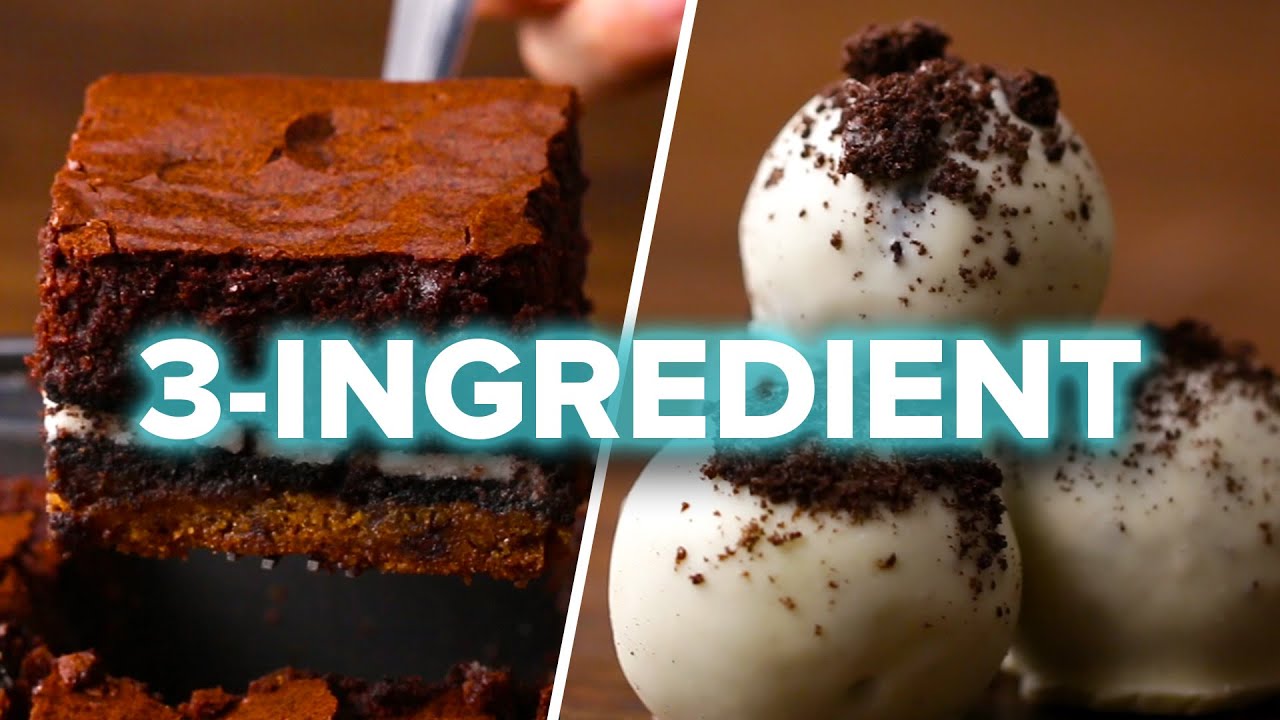
“No flour. No butter. No baking powder. Just peanut butter, sugar, and one egg — and somehow, unmistakably, a cookie. The internet has been posting this recipe for fifteen years and half of them still get it wrong. Wrong peanut butter. Wrong bake time. Wrong expectations about what texture you're actually targeting. This is the version that actually delivers.”
Why This Recipe Works
Three ingredients. One bowl. Twelve minutes. And somehow, unmistakably, a cookie — one that people who have never turned on an oven in their lives can pull off on the first attempt, while experienced bakers still manage to ruin. That paradox is the whole story of the 3-ingredient peanut butter cookie, and it explains exactly why understanding what is actually happening in the bowl matters more here than in almost any other dessert.
What Peanut Butter Actually Is
Conventional baking wisdom insists on flour. Flour provides gluten — the elastic protein network that gives cookies structure, chew, and the ability to hold their form through the thermal chaos of a 350-degree oven. Remove it and the whole thing should theoretically collapse into a greasy, formless puddle. Except it doesn't. The reason is that peanut butter is not simply a flavoring agent. It is approximately 50% fat, 25% protein, and 20% carbohydrate by weight, and each of those macronutrients performs a structural role that flour would otherwise fill.
The fat does what butter does in a conventional recipe — it tenderizes, controls spread rate, and carries aromatic flavor compounds. The peanut proteins coagulate during baking and create physical structure, the same way egg proteins and gluten do in standard cookies. The natural sugars in peanut butter contribute to the Maillard browning that produces those characteristic golden edges. Add one cup of granulated sugar and one egg to a cup of peanut butter, and you have replicated the essential functions of a full ingredient list in three components. The ratio has been stress-tested across thousands of home bakes over two decades, and it holds.
The Sugar Does More Than Sweeten
One cup of sugar to one cup of peanut butter sounds aggressive. It is not. In this formula, sugar performs three structural functions beyond flavor. First, it dilutes the fat concentration in the peanut butter, which prevents the cookies from spreading into thin, greasy lace on the pan. Second, it pulls moisture from the egg during mixing via osmosis, creating the cohesive, scoopable dough consistency that lets you portion and shape each cookie cleanly. Third, it caramelizes on the exposed surface during baking, building the slightly crispy exterior shell that contrasts with the dense, fudgy interior.
Reduce the sugar to cut sweetness and you compromise all three functions at once. The cookies spread irregularly, refuse to hold their shape under the fork press, and come out with a flat, uniform density rather than the crust-and-chew contrast that makes these worth making. If the standard ratio tastes too sweet, the correct fix is a pinch of flaky sea salt on top before baking — salt suppresses sweetness perception without touching the structure.
Why the Baking Sheet Changes Everything
A heavy aluminum baking sheet is not a preference — it's load-bearing. Dark-colored or thin pans conduct heat unevenly and run hot at the surface, browning the bottoms of these cookies before the centers have had time to set. Because there is no flour acting as a thermal buffer, peanut butter cookies are more sensitive to pan temperature than virtually any standard recipe. Light-colored, heavy aluminum gives you the window of time you need — that critical 10-12 minutes — for the interior to firm up before the bottom darkens beyond recovery.
Parchment paper is equally non-negotiable. The fat content is high enough that these cookies will bond to an unlined surface with impressive tenacity. Even a well-seasoned nonstick pan will give you problems. Parchment provides clean release every time, and the slight insulation it adds under the cookie slows bottom browning as a secondary benefit.
The Cooling Physics
The most counterintuitive moment in this recipe is the pull time. At 10-12 minutes, the cookies look categorically underdone. The centers appear soft and shiny, the whole tray giving every impression that another five minutes in the oven would be prudent. It would not. It would destroy them.
The cookies are not underdone — they are mid-set. The peanut butter proteins are still in the process of denaturing and the dissolved sugar is still in a semi-liquid state from the residual heat of the oven. As the pan cools on the counter, this process continues outside the oven. Over 15 minutes of resting time, the proteins lock into a solid matrix and the sugar re-crystallizes into structural form. The cookie that looked raw at 12 minutes is perfectly chewy-firm at 25 minutes.
That is the entire technique. Correct ratio. Correct oven temperature. Correct pull time. Enough patience to step back and let the cooling do its job. Everything else is optional.
Where Beginners Mess This Up
Before we start, read this. These are the 4 reasons your shockingly good 3-ingredient peanut butter cookies (the minimalist cheat code) will fail:
- 1
Using natural peanut butter without stirring it first: Natural peanut butter separates in the jar — oil on top, dry paste on the bottom. If you scoop from an unmixed jar, you're adding either pure oil or pure dry paste to your dough. Both produce inconsistent cookies that spread unevenly and fall apart on the pan. Stir the jar completely before measuring, every time.
- 2
Overbaking by even two minutes: These cookies have no flour to provide structural scaffolding, so they look completely underdone when they are actually finished. At 10-12 minutes they will appear soft, pale, and underset in the center. That is correct. They firm up entirely as they cool. Pull them at that point. If they look done in the oven, they are already overdone.
- 3
Skipping the fork press: The crosshatch fork pattern is not decorative tradition. These cookies don't spread naturally the way flour-based dough does. Without the press, you get a dome-shaped puck that bakes unevenly — crispy bottom, raw center. The fork press flattens the cookie to a consistent thickness so heat reaches the interior before the bottom burns.
- 4
Using a cold egg straight from the fridge: A cold egg doesn't incorporate into peanut butter smoothly. The fat in the peanut butter tightens around the cold proteins and the dough becomes streaky and uneven. Use a room-temperature egg, or drop the uncracked egg in a bowl of warm water for five minutes before using.
The Video Reference Library
Want to see it in action? Here are the exact videos we analyzed and combined to build this foolproof recipe translation:
The video that re-popularized this recipe for a modern audience. Honest about texture expectations, clear on the fork-press step most people skip, and demonstrates exactly what 'done' looks like when the cookies still appear raw.
A broader look at the minimalist dessert category — covers banana nice cream, 2-ingredient fudge, and flourless chocolate cake alongside the classic peanut butter cookie.
A food science breakdown of what peanut butter's fat and protein content does structurally in place of flour. Useful context for understanding why this recipe is chemistry, not a trick.
🛠️ Core Equipment
- Heavy light-colored aluminum baking sheetDistributes heat evenly and prevents the bottoms from browning before the centers set. Dark pans absorb excess heat and overbrown the base of these cookies — which have no flour buffer — long before the interior is done.
- Parchment paperNon-negotiable. The fat content of peanut butter means these cookies will bond aggressively to an unlined pan. Parchment gives you a clean release and provides slight insulation to slow bottom browning.
- Cookie scoop (1.5 tablespoon size)Consistent portioning means consistent baking times. If some cookies are twice the size of others, half the batch burns while the other half underbakes. A cookie scoop eliminates the problem entirely.
- Wire cooling rackThese cookies are structurally fragile when hot. Five minutes on the pan allows them to firm up enough to move. The rack then lets air circulate underneath, preventing the bottoms from steaming themselves soggy.
Shockingly Good 3-Ingredient Peanut Butter Cookies (The Minimalist Cheat Code)
🛒 Ingredients
- ✦1 cup creamy peanut butter, well-stirred
- ✦1 cup granulated white sugar
- ✦1 large egg, room temperature
- ✦Flaky sea salt for finishing (optional but strongly recommended)
👨🍳 Instructions
01Step 1
Preheat oven to 350°F (175°C). Line a baking sheet with parchment paper.
02Step 2
If using natural peanut butter, stir the jar thoroughly until the oil and solids are fully combined before measuring. Measure into a large mixing bowl.
03Step 3
Add the granulated sugar and room-temperature egg to the bowl. Mix with a sturdy spatula or wooden spoon until a cohesive dough forms — about 60 seconds of steady mixing.
04Step 4
Using a 1.5-tablespoon cookie scoop, portion the dough onto the prepared baking sheet, spacing cookies at least 2 inches apart.
05Step 5
Press each dough ball with the tines of a fork in two perpendicular directions to create the classic crosshatch pattern, flattening each cookie to about 1/3-inch thickness.
06Step 6
If using flaky sea salt, add a small pinch to each cookie now, before baking.
07Step 7
Bake for 10-12 minutes. The cookies will look soft, slightly pale, and underset in the center. This is correct. Do not overbake.
08Step 8
Let the cookies cool on the baking sheet for exactly 5 minutes before attempting to move them. They are too fragile before this point. Transfer carefully to a wire rack to finish cooling completely.
Nutrition Per Serving
Estimates based on standard preparation. Adjustments alter macros.
🔄 Substitutions
Instead of Peanut butter...
Use Almond butter or sunflower seed butter
Both work structurally. Almond butter produces a slightly drier, more crumbly cookie. Sunflower seed butter is nut-free and nearly identical in texture, though the flavor is earthier and less sweet.
Instead of Granulated white sugar...
Use Coconut sugar or light brown sugar
Coconut sugar gives a deeper caramel-adjacent flavor and slightly denser texture. Brown sugar adds chewiness through its molasses content. Both substitute one-for-one without adjusting anything else.
Instead of Egg...
Use Flax egg (1 tablespoon ground flaxseed mixed with 3 tablespoons water, rested 5 minutes)
Viable vegan option that binds adequately, though the cookies will be slightly more crumbly and the fork crosshatch won't hold as cleanly. The flavor difference is negligible.
🧊 Storage & Reheating
In the Fridge
Store in an airtight container at room temperature for up to 5 days. Refrigeration makes them hard and dry — keep them on the counter.
In the Freezer
Freeze baked cookies in a single layer, then transfer to a sealed bag for up to 3 months. Thaw at room temperature for 20 minutes.
Reheating Rules
30 seconds in the microwave restores the fresh-baked texture remarkably well. Avoid reheating in the oven — they dry out and lose the chewy center entirely.
❓ Frequently Asked Questions
Why do these cookies work without flour?
Flour's job in cookies is primarily structural — it provides the gluten network that holds everything together. Peanut butter replaces this with fat and protein. Its high fat content creates tenderness and controls spread while the peanut proteins coagulate during baking and form physical structure. The egg binds it all through emulsification. No flour required.
Can I use natural peanut butter?
Yes, but you must stir it completely before measuring so the oil and solids are fully incorporated. Natural peanut butter with separated oil at the top produces greasy, crumbly cookies that don't hold shape. If your natural peanut butter is very runny even when fully stirred, refrigerate the jar until it firms up slightly before using.
Why do my cookies fall apart when I try to move them?
They were moved too soon. These cookies have no flour for structural integrity — they are extremely fragile when hot and only firm up as they cool. Leave them on the pan for a full 5 minutes before transferring. If they still crumble, chill the dough for 15 minutes before baking next time.
Are these cookies gluten-free?
As written, yes — there are no gluten-containing ingredients. However, many commercial peanut butters are processed in facilities that handle wheat. If you're baking for someone with celiac disease, use a certified gluten-free peanut butter.
My cookies came out flat and greasy. What went wrong?
The peanut butter had too much free oil — either natural PB that wasn't fully stirred, or a particularly oily commercial brand. Chill the dough for 20-30 minutes before baking next time. Also confirm you used the full cup of sugar — reducing it drops the structural integrity significantly.
Can I double or triple the recipe?
Yes, the ratio scales perfectly in any direction. Bake in batches rather than crowding the pan — these cookies need airflow around each one to bake evenly. Doubled dough can sit at room temperature while the first batch bakes.

The Science of
Shockingly Good 3-Ingredient Peanut Butter Cookies (The Minimalist Cheat Code)
We turned everything on this page into a beautiful, flour-proof PDF cheat sheet. Print it out, stick it to your fridge, and never mess up your shockingly good 3-ingredient peanut butter cookies (the minimalist cheat code) again.
*We'll email you the high-res PDF instantly. No spam, just perfectly cooked meals.
AlmostChefs Editorial Team
We translate the internet's most popular cooking videos into foolproof, beginner-friendly written recipes. We analyze multiple methods, test them in our kitchen, and engineer a single "Master Recipe" that gives you the best possible result with the least possible stress.